How to Fix and Care for 9999 Gold Jewelry: A Troubleshooting Guide
Discover expert troubleshooting tips for 9999 gold jewelry. Learn how to fix bends, prevent scratches, and care for ultra-pure four nines gold pieces.

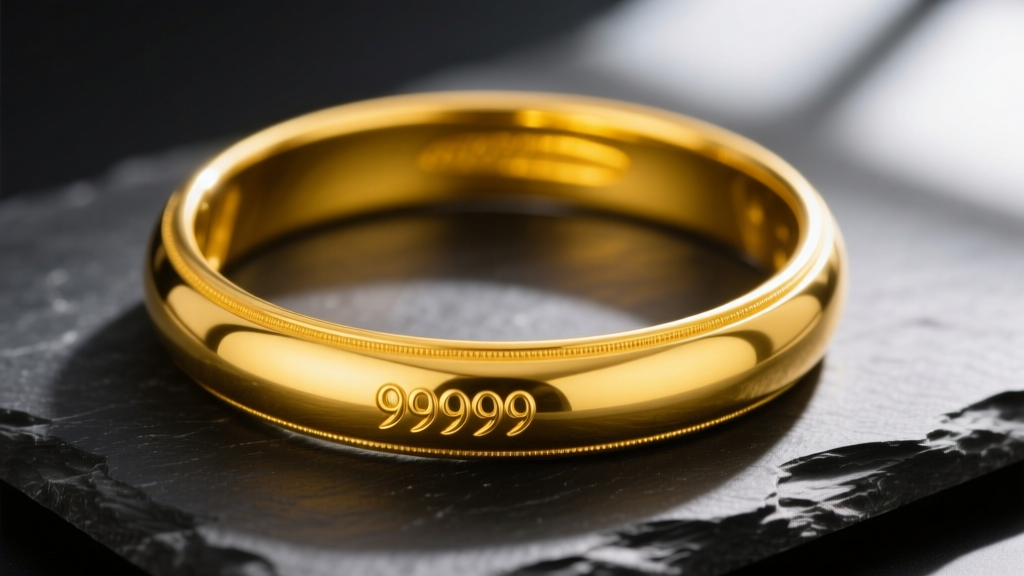
When it comes to ultra-pure precious metals, 9999 gold jewelry—often referred to as "four nines" gold—occupies a unique space at the intersection of investment-grade bullion and cultural adornment. Comprising 99.99% pure gold, this material is prized in Asian markets for its unmatched richness, hypoallergenic properties, and intrinsic value. However, from a metallurgical standpoint, 9999 gold presents a unique set of structural challenges. Without the stabilizing presence of alloying metals like copper, silver, or zinc, four nines gold is exceptionally soft, malleable, and prone to deformation.
If you own or are considering purchasing 9999 gold jewelry, you must understand how to troubleshoot its inherent vulnerabilities. This guide provides actionable, expert-level solutions for repairing bends, mitigating scratches, and maintaining the structural integrity of your ultra-pure pieces.
The Metallurgical Reality: Why 9999 Gold Fails Under Stress
To troubleshoot damage, you must first understand the material science of pure gold. On the Vickers Hardness (HV) scale, 9999 gold measures a mere 25 to 30 HV. By comparison, standard 18k gold (75% pure) measures between 120 and 150 HV, making it nearly five times harder. According to the Gemological Institute of America (GIA), the absence of alloy matrices means that the crystalline structure of 9999 gold allows its atoms to slide past one another with minimal resistance.
This extreme malleability means that 9999 gold jewelry does not "snap" or shatter under pressure; instead, it displaces, warps, and thins. A heavy 50-gram 9999 gold bangle can easily warp out of its circular shape simply from the repetitive motion of resting your wrist on a hard desk. Understanding this displacement is the first step in effective troubleshooting.
Troubleshooting Common 9999 Gold Jewelry Damage
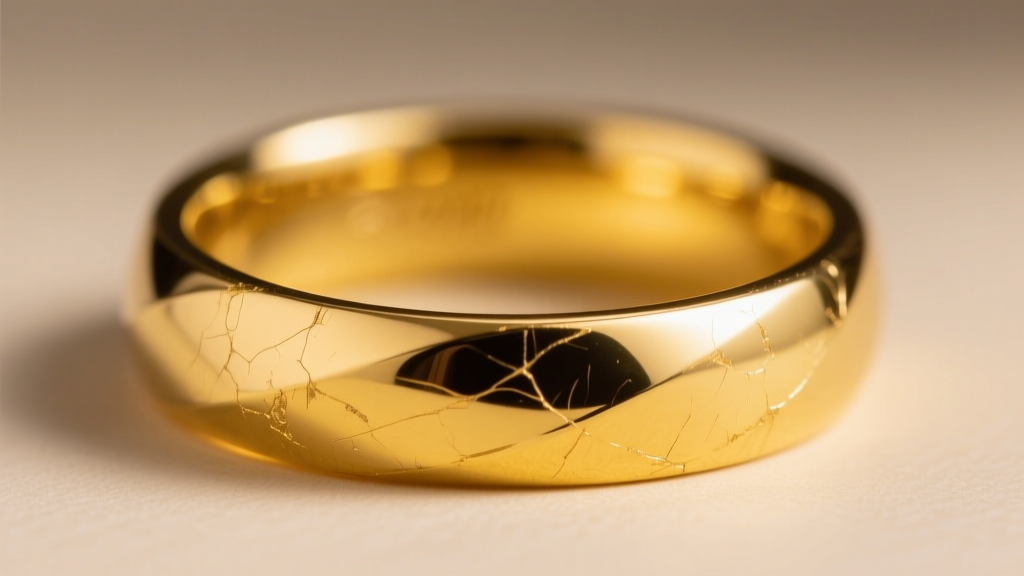
1. Reshaping Bent Rings and Warped Bangles
Because 9999 gold yields so easily, bent rings are the most common complaint. Do not attempt to bend the ring back into shape with your bare hands or standard pliers. Pliers will leave permanent, deep jaw marks that cannot be removed without severe weight loss.
- The Fix: Use a polished steel ring mandrel and a rawhide or solid rubber mallet. Slide the ring onto the mandrel and tap it gently, rotating the ring a few degrees with each strike. The rawhide transfers force without marring the soft gold.
- Warning on Work Hardening: While pure gold does not work-harden as aggressively as alloys, excessive hammering can cause microscopic surface crystallization, leading to brittleness. If the ring requires significant reshaping, it must be annealed (heated to a dull red and quenched) by a professional to restore its malleability.
2. Addressing Scratches: Burnishing vs. Polishing
Surface scuffing is inevitable with four nines gold. The critical mistake most jewelers make is using a motorized polishing wheel with rouge compound. Polishing is an abrasive process that removes a microscopic layer of metal. On a 20-gram 9999 investment bangle, aggressive polishing can remove 0.1 to 0.3 grams of gold—translating to a direct financial loss based on the current spot price tracked by the World Gold Council.
- The Fix (Burnishing): Instead of abrasion, use an agate or tungsten carbide burnishing tool. Burnishing applies high pressure to compress and smooth the displaced gold back into the scratch without removing any material. This preserves the exact weight and purity of the piece while restoring a mirror-like finish.
3. Clasp and Spring Ring Failures
A spring ring or lobster clasp made entirely of 9999 gold is a mechanical failure waiting to happen. The internal steel spring will eventually wear through the ultra-soft gold casing, or the gold lever will permanently deform, leaving the clasp stuck open.
- The Fix: Never use 9999 gold for mechanical tension components. If your 9999 necklace has a failing clasp, replace it with an 18k gold clasp or a specialized 999 gold magnetic clasp that houses a neodymium core inside a stainless steel sleeve. This maintains the aesthetic while providing the necessary mechanical shear strength.
Structural Integrity: 9999 vs. 999 vs. 18k Gold
When troubleshooting or deciding on a repair strategy, it helps to contextualize 9999 gold against other common purities. The table below outlines the mechanical differences that dictate how these metals respond to damage and repair.
| Property | 9999 Gold (Four Nines) | 999 Gold (24k / Three Nines) | 18k Gold (75% Pure) |
|---|---|---|---|
| Purity | 99.99% | 99.9% | 75.0% |
| Vickers Hardness (HV) | ~25 - 30 HV | ~30 - 35 HV | ~120 - 150 HV |
| Scratch Resistance | Extremely Poor | Poor | Good |
| Prong/Clasp Viability | Not Viable | High Risk | Highly Viable |
| Standard Repair Method | Laser Welding / Burnishing | Torch Soldering / Laser | Torch Soldering |
The Soldering Dilemma: Professional Repair Protocols
If your 9999 gold chain snaps, traditional torch soldering is highly risky. Standard gold solder relies on a lower melting point to flow into the joint without melting the parent metal. However, finding a true 9999 purity solder with a significantly lower melting point is metallurgically nearly impossible. If a jeweler uses standard 22k or 18k solder, the joint will no longer be 9999 pure, which ruins the investment grading of the piece.
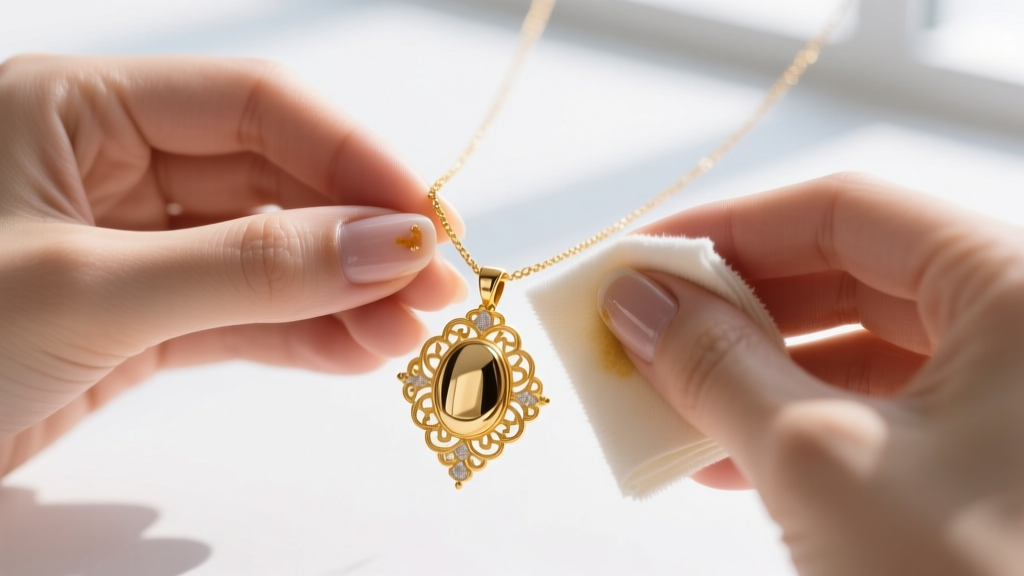
The Laser Welding Solution: For high-purity chains and structural breaks, laser welding is the only acceptable professional repair. A laser welder uses a concentrated pulse of light to fuse the parent 9999 metal back together without introducing foreign solder alloys. This preserves the 99.99% purity across the entire piece. Always verify that your jeweler possesses a dedicated laser welder before handing over four nines jewelry.
Authentication Troubleshooting: Testing Without Damage
Because 9999 gold commands a premium over 999 gold, verifying its authenticity is crucial. The traditional "acid test" (scratching the gold on a touchstone and applying nitric acid) is entirely inappropriate for 9999 jewelry. Acid testing cannot reliably distinguish between 99.9% and 99.99% purity, and the required scratching damages the pristine surface of the piece.
The Fix: Rely exclusively on X-Ray Fluorescence (XRF) spectrometry. XRF is a non-destructive testing method that bombards the surface with X-rays and measures the fluorescent emissions to determine elemental composition down to the hundredth of a percent. If you are buying or selling 9999 gold, insist on an XRF scan to verify the four nines standard without compromising the metal's integrity.
Preventative Care and Daily Wear Protocols
Troubleshooting is secondary to prevention. To maintain the structural geometry and surface finish of 9999 gold jewelry, adopt the following daily protocols:
- The "Last On, First Off" Rule: Put your 9999 jewelry on after applying cosmetics, perfumes, and lotions, and remove it immediately upon returning home. This minimizes exposure to environmental abrasives.
- Individual Storage: Never store 9999 gold in a communal jewelry box. The Mohs hardness of pure gold is 2.5, meaning it can be easily scratched by dust (which contains quartz, hardness 7) or other jewelry. Store each piece in a dedicated, soft flannel pouch.
- Avoid Ultrasonic Cleaners: While pure gold itself won't be damaged by ultrasonic waves, the intense vibrations can cause micro-fractures in any intricate, hand-carved 9999 filigree work. Stick to warm water, a drop of mild dish soap, and a baby-hair brush for cleaning.
By respecting the unique metallurgical properties of four nines gold, you can preserve both its breathtaking aesthetic and its precise investment weight for generations.


