Troubleshooting Italian Gold Jewelry: Hallmarks & Repairs
Learn how to authenticate hallmarks, fix broken hollow chains, and remove tarnish from your Italian gold jewelry with expert troubleshooting tips.


Italian gold jewelry represents the pinnacle of metallurgical artistry, boasting centuries of craftsmanship centered in manufacturing hubs like Arezzo and Vicenza. However, the very techniques that make these pieces so intricate—such as hollow-core extrusion, diamond-cutting, and complex alloy blending—also make them uniquely vulnerable to damage. When an Italian chain snaps or a vintage piece loses its luster, standard jewelry repair protocols often fail. Troubleshooting Italian gold jewelry requires a deep understanding of international hallmarking laws, specialized bench tools, and the chemical behavior of specific karat alloys.
Decoding Italian Hallmarks: Is It Real?
The most common issue consumers face when acquiring vintage or secondhand Italian gold jewelry is verifying authenticity. Unlike the United States, where a simple "14K" or "18K" stamp is common, Italy enforces a rigorous, dual-stamp hallmarking system. According to the Federal Trade Commission Jewelry Guides, international marks must be accurately represented, but misinterpretations of Italian stamps lead to thousands of pieces being falsely labeled as counterfeit or mis-karat every year.
The Purity Mark vs. The Maker's Mark
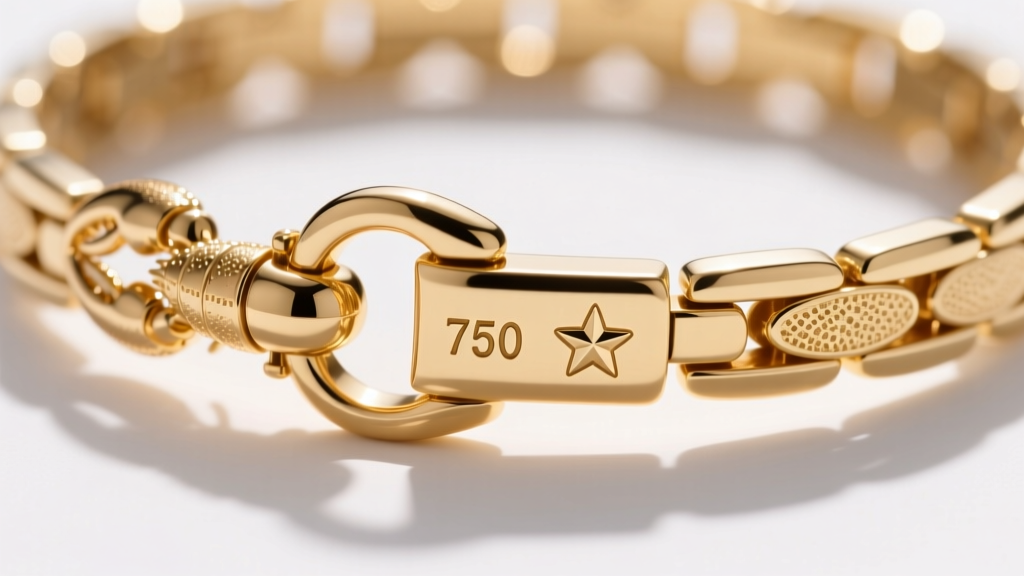
Genuine Italian gold jewelry will almost always feature two distinct stamps. The first is the millesimal fineness mark, indicating the pure gold content per 1,000 parts. The second is the manufacturer's identification mark, which consists of a number and a two-letter provincial code. If your piece only has a single "Italy" stamp with no purity or maker's mark, it is likely a mass-produced import that bypassed Italian assay offices.
| Stamp Type | Common Examples | Meaning & Troubleshooting Note |
|---|---|---|
| Purity Mark | 750, 585, 417 | 18k, 14k, and 10k gold respectively. "750" is the most common for high-end Italian pieces. |
| Province Code | AR, VI, MI | Arezzo, Vicenza, Milan. Helps trace the piece to its specific manufacturing district. |
| Maker's Number | 123, 45, 901 | Registered factory number. Often stamped inside a geometric outline (like a star or rhombus). |
Troubleshooting Common Italian Chain Failures
Italian manufacturers pioneered techniques to create voluminous, lightweight chains. While beautiful, these structural choices create specific failure modes that frustrate standard bench jewelers.
The Hollow Chain Conundrum
Chains like the Italian Foxtail, large-diameter Rope, and certain Figaro styles are frequently manufactured using a resin-core or electroforming process to keep them hollow. This reduces the gold weight—and the price—while maintaining a bold aesthetic. However, when a hollow Italian chain snaps, traditional torch soldering is catastrophic. The intense, broad heat of a jeweler's torch will instantly melt the microscopic outer gold shell, causing the chain to collapse into a hard, unworkable bead.
The Solution: Repairing hollow Italian gold jewelry requires a laser welder. Laser welding delivers a pinpoint pulse of heat that fuses the microscopic gold edges together without transferring thermal energy to the surrounding links. If a laser welder is unavailable, the jeweler must carefully insert a fine armature wire into the hollow link to provide internal structural support before applying low-temperature hard solder.
Diamond-Cut Link Snagging
Diamond-cutting is a hallmark of Italian chain design, where facets are machined into the gold to reflect light like gemstones. Over time, these sharp, faceted edges act like microscopic saw blades, cutting through silk threads, catching on wool, and eventually grinding down the links of the chain itself. If your diamond-cut Italian chain is thinning at the clasp connection, the troubleshooting fix is to have a jeweler install a "jump ring buffer"—a small, smooth, solid gold ring between the faceted chain and the clasp to absorb the friction.
Solving Clasp Malfunctions
Italian gold jewelry often utilizes specialized spring rings and elongated lobster clasps. A frequent troubleshooting scenario involves a clasp that becomes stiff, fails to snap shut, or rusts.
- The Rusting Clasp Issue: By law, the internal spring mechanism of a gold clasp can be made of steel to maintain tension. If the thin gold outer shell of an Italian spring ring wears through due to decades of friction, moisture reaches the steel spring, causing it to rust and seize. The fix is not to clean it, but to have a bench jeweler replace the entire clasp with a solid-cast 14k or 18k lobster clasp, which relies on a thicker gold housing.
- Lobster Clasp Alignment: Italian lobster clasps are often cast with tighter tolerances than American counterparts. If the tiny lever pad bends slightly out of alignment, the clasp will catch on the jump ring. A jeweler can carefully realign the lever using specialized parallel-jaw pliers, avoiding the stress fractures that occur when using standard tweezers.
Troubleshooting Tarnish and Discoloration
Pure 24k gold does not tarnish, but the Gemological Institute of America (GIA) notes that alloyed gold—particularly 14k (585) and lower—contains copper and silver, which are highly reactive. Italian gold jewelry is frequently alloyed with a slightly higher copper content to achieve a warmer, richer yellow hue compared to American brass-toned gold. This copper-heavy alloy is more susceptible to environmental sulfides.

Safe Cleaning Protocols for Italian Alloys
If your 14k or 18k Italian gold jewelry develops a dark, oily film or reddish-brown spots, avoid aggressive commercial silver dips. These solutions often contain thiourea, a chemical that can permanently etch the copper alloys in Italian gold, leaving a dull, matte finish that requires heavy polishing to remove.
Expert Bench Tip: Never place hollow Italian chains in an ultrasonic cleaner. The high-frequency cavitation bubbles can easily implode inside the hollow links, creating micro-fractures or completely shattering the thin gold walls from the inside out. Always clean hollow Italian jewelry manually using a soft baby-hair brush and a solution of warm distilled water and a single drop of phosphate-free dish soap.
Removing Surface Oxidation
For stubborn copper sulfide tarnish on solid Italian gold links, create a mild chemical reduction bath. Mix one part clear household ammonia with six parts warm water and a drop of mild detergent. Submerge the solid gold piece for no more than 60 seconds. The ammonia will gently break the sulfur bonds without abrading the gold surface. Rinse immediately in distilled water and dry with a microfiber cloth. Never use this method on pieces featuring porous gemstones like pearls, coral, or turquoise, which are common in vintage Italian cameo jewelry.
When to Seek a Professional Bench Jeweler
While basic maintenance and polishing can be done at home, the structural intricacies of Italian gold jewelry demand professional intervention for physical damage. If you are dealing with a crushed hollow link, a seized internal-spring clasp, or a snapped diamond-cut rope chain, bypass standard mall kiosks. Seek out a master bench jeweler equipped with a laser welder and a microscope. Italian gold craftsmanship is an investment in wearable art; troubleshooting it requires an equal commitment to precision and metallurgical expertise.