Decoding Gold Jewelry Stamps: Expert Guide to Hallmarks & Purity
Master the art of reading gold jewelry stamps. Learn to identify karat purity, maker's marks, and assay hallmarks to verify authenticity and value.

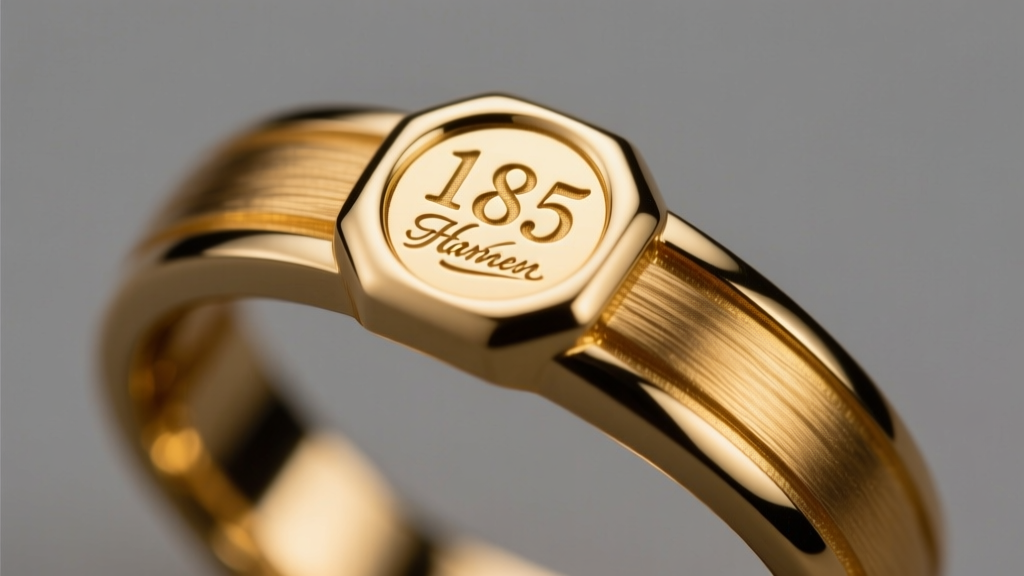
The Anatomy of Gold Jewelry Stamps
When evaluating fine jewelry, understanding gold jewelry stamps is the difference between an informed collector and a vulnerable buyer. A stamp is not merely a decorative engraving; in many jurisdictions, it is a legally binding guarantee of the metal's composition. However, the ecosystem of hallmarking is fraught with historical quirks, international variations, and outright deceptive practices. To accurately appraise a piece, one must deconstruct the stamp into its three potential components: the purity mark, the maker's mark (or sponsor's mark), and the assay office mark.
In the United States, the Federal Trade Commission (FTC) strictly regulates these engravings under the National Gold and Silver Stamping Act. If a piece is stamped with a karat purity, it must also bear a registered maker's mark to ensure traceability. Conversely, in the United Kingdom, the Hallmarking Act of 1973 mandates that any item sold as gold weighing over one gram must be tested and stamped by an independent Assay Office, making the UK system one of the most rigorous consumer protection frameworks in the world.
Karat Purity Marks: The Numbers Game
The most universally recognized gold jewelry stamps indicate the proportion of pure gold in the alloy. Pure gold is 24 karats, but it is too malleable for everyday wear. Therefore, it is alloyed with metals like copper, silver, zinc, or nickel to enhance durability and alter color. While the US predominantly uses the karat system (e.g., 14K, 18K), European and international markets heavily rely on millesimal fineness, which denotes the parts per thousand of pure gold.
| Karat Mark | Millesimal Stamp | Gold Percentage | Primary Use Case & Characteristics |
|---|---|---|---|
| 24K | 999 | 99.9% | Investment bullion, traditional Asian bridal jewelry. Highly prone to scratching and bending. |
| 22K | 916 | 91.6% | Middle Eastern and Indian heritage jewelry. Rich yellow hue, relatively soft. |
| 18K | 750 | 75.0% | High-end fine jewelry, engagement rings. Excellent balance of purity, color, and durability. |
| 14K | 585 | 58.5% | The US standard for everyday jewelry. Highly durable, resists tarnish, slightly paler yellow. |
| 10K | 417 | 41.7% | Budget-friendly, high-wear items (e.g., class rings). Contains more alloy than gold. |
According to the Gemological Institute of America (GIA), the US allows a negative tolerance of 3/1000ths for karat gold without solder, and 7/1000ths for items with solder (like chain links or ring settings). If a piece tests below this threshold, the karat stamp is legally considered misrepresentation.

Deceptive Stamps: When the Mark Lies
Not all gold jewelry stamps indicate solid gold. The secondary market is saturated with pieces bearing stamps that mimic solid gold hallmarks but actually denote plating or overlay. Recognizing these suffixes is critical for avoiding catastrophic overpayment.
- HGE (Heavy Gold Electroplate) / HGP (Heavy Gold Plate): A stamp reading "18K HGE" means the item is a base metal (often brass or copper) coated with a microscopic layer of 18-karat gold via an electrical process. It holds virtually no melt value.
- GF (Gold Filled): Regulated by the FTC, gold-filled items must contain a gold layer that constitutes at least 1/20th (5%) of the total weight of the item. A stamp like "1/20 14K GF" indicates a mechanically bonded layer of 14k gold over a brass core. It is highly durable but not solid gold.
- Vermeil: While rarely stamped with the word "vermeil," this refers to a thick layer of gold (minimum 2.5 microns) plated over a solid sterling silver base. It will often bear a "925" stamp rather than a gold purity mark, which can confuse novice buyers.
- Gold Plated (GP): A simple "GP" or "18K GP" stamp indicates a negligible layer of gold applied via electroplating. It will wear off rapidly with friction and exposure to skin oils.
International Variations: US vs. UK vs. European Systems
The geography of a piece's origin drastically alters the visual language of its gold jewelry stamps. While a US buyer looks for "14K" and a maker's trademark, a European buyer relies on state-controlled pictograms.
The UK Assay Office System
In the UK, a full traditional hallmark consists of three mandatory punches. First, the Sponsor's Mark (the maker's registered initials in a specific shield shape). Second, the Millesimal Fineness Mark (e.g., an oval shield containing the number 750 for 18k gold). Third, the Assay Office Mark, which identifies where the piece was tested. The four active UK offices use distinct symbols: a Leopard's Head for London, an Anchor for Birmingham, a Rose for Sheffield, and a Castle for Edinburgh. The UK Assay Office maintains strict archives of these marks, allowing experts to date antique pieces down to the exact year by cross-referencing the date letter punch.
European Pictograms
Many European nations use the Common Control Mark (CCM), which features a set of scales superimposed over the millesimal fineness number, indicating the piece meets international treaty standards for cross-border trade. You will rarely see the word "Karat" or the letter "K" on authentic vintage French or Italian pieces; they rely exclusively on the 750 or 585 numeric stamps, often accompanied by a state punch like the French eagle's head (tête d'aigle) for 18k gold.
What Happens When Stamps Fade or Disappear?
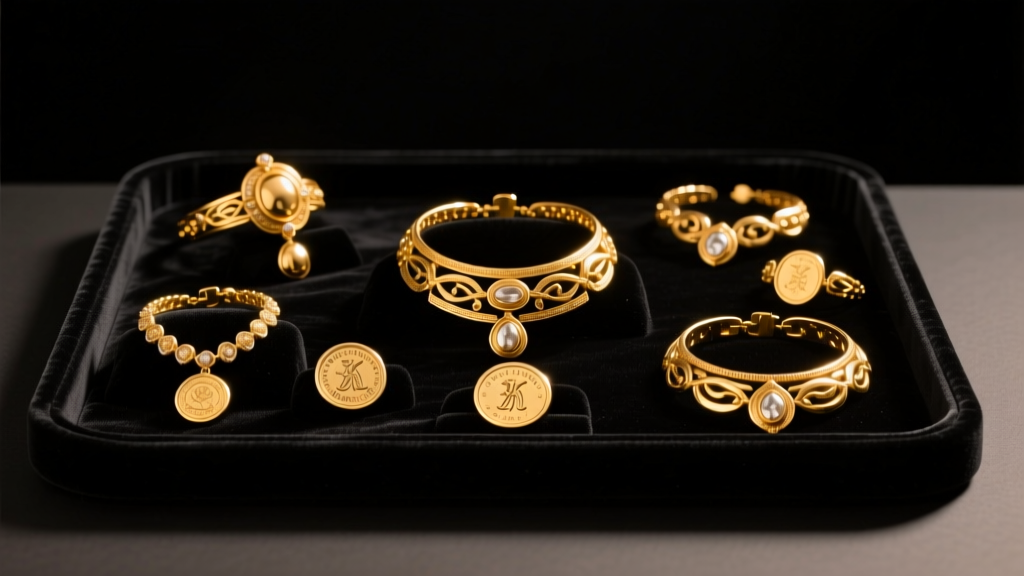
A missing stamp does not automatically mean a piece is counterfeit. Gold is a soft metal, and decades of wear, skin friction, and environmental exposure will inevitably erode shallow engravings. Furthermore, routine jewelry maintenance often obliterates hallmarks. Aggressive machine polishing removes microns of metal from the surface, gradually smoothing out stamps. Similarly, when a ring is resized, a small section of the shank is cut out and soldered back together—a process that frequently removes the original stamp located on the inner band.
Advanced Verification: XRF and Specific Gravity
When gold jewelry stamps are illegible or entirely absent, gemologists and precious metal buyers turn to non-destructive testing methodologies. The industry standard is X-Ray Fluorescence (XRF) spectrometry. An XRF gun bombards the metal with X-rays and measures the fluorescent radiation emitted, providing an exact elemental breakdown of the surface layer in seconds. However, XRF has a critical limitation: it only penetrates roughly 10 to 50 microns deep. It will easily be fooled by a thick gold-filled layer or a lead core heavily plated in 24k gold.
To counter this, experts pair XRF with Specific Gravity (SG) testing. By measuring the piece's weight in air versus its weight suspended in distilled water, one can calculate its density. Pure 24k gold has a specific gravity of 19.32, while 14k yellow gold sits around 13.5 to 14.0. If an unmarked chain yields an XRF reading of 14k but an SG test reveals a density of 10.5, the piece is definitively hollow or heavily plated over a lighter base metal, proving that while stamps can be faked or erased, the fundamental physics of the metal cannot lie.


