Gold and Black Jewelry: A Beginner's Guide to Dark Accents
Discover how to choose, wear, and care for gold and black jewelry. Learn about black enamel, rhodium, onyx, and karat pairings.

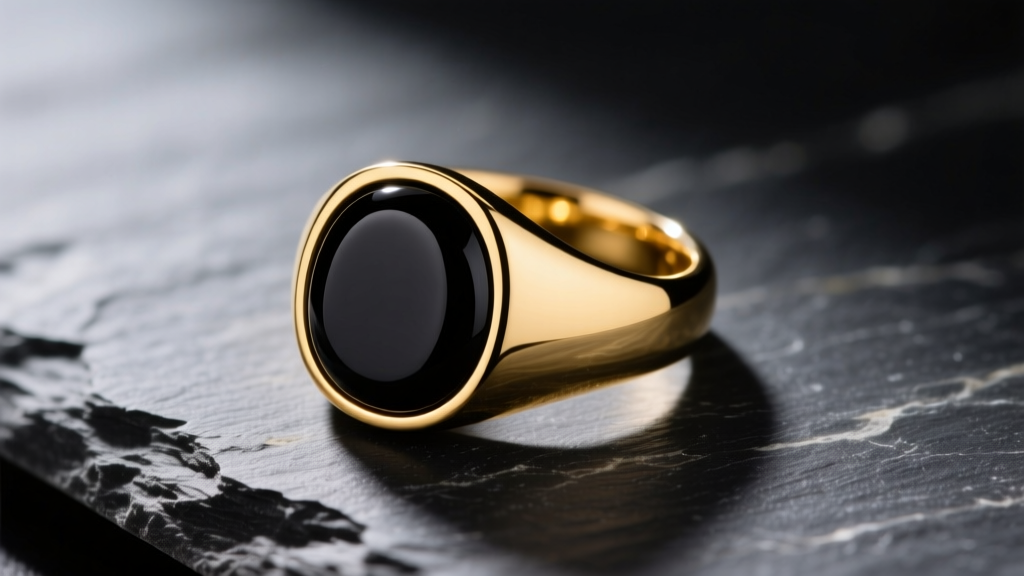
The Allure of High-Contrast Jewelry
When you first explore the world of fine accessories, the combination of gold and black jewelry stands out as a masterclass in contrast. The warmth of yellow or rose gold paired with the深邃 depth of black elements creates a striking, modern aesthetic that transcends fleeting trends. However, for beginners, navigating the terminology can be overwhelming. Is it black gold? Black enamel? Black rhodium? Understanding the exact materials and manufacturing techniques used to achieve these dark accents is crucial for making informed purchases and ensuring your pieces last a lifetime.
This guide breaks down the metallurgy, gemology, and care protocols behind gold and black jewelry, giving you the actionable knowledge needed to build a durable, high-contrast collection.
How Black Elements Are Created in Gold Jewelry
Pure gold is inherently yellow. To introduce black into the design, jewelers rely on specific surface treatments, alloys, or gemstone inlays. Here are the three primary methods used in modern jewelry making.
1. Black Enamel: Vitreous vs. Cold
Enameling is the process of fusing glass powder to a metal surface. Vitreous enamel is fired in a kiln at temperatures exceeding 1400°F (760°C), creating a hard, glass-like finish that is highly resistant to scratches and UV fading. In contrast, cold enamel (often an epoxy resin) is cured at room temperature. While cold enamel is cheaper and allows for a wider range of opaque black shades, it is significantly softer and prone to yellowing or chipping over time. Always ask your jeweler which method was used.
2. Black Rhodium Plating
Rhodium is a precious metal in the platinum family, typically used to plate white gold. To create a black finish, jewelers alloy rhodium with ruthenium or other dark metals. This black rhodium plating is electroplated onto the gold surface, usually at a thickness of 0.75 to 1.0 microns. It provides a sleek, metallic black sheen but is a surface treatment that will eventually wear away, requiring re-plating every few years depending on friction and skin acidity.
3. Natural and Treated Black Gemstones
Gemstones are the most permanent way to incorporate black into gold jewelry. Black onyx is a classic choice, though it is worth noting that most commercial black onyx is actually gray agate that has been treated with heat and carbon to achieve its uniform black color. For a more premium option, black diamonds (either natural carbonado or irradiated white diamonds) offer unparalleled brilliance and scratch resistance.
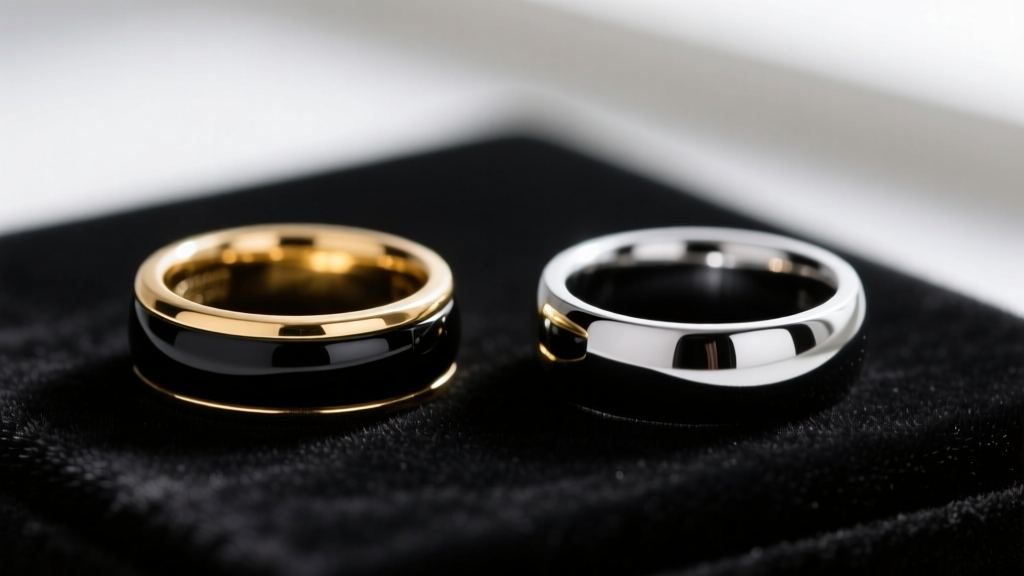
The 'Black Gold' Myth: What You Need to Know
A common misconception among beginners is that 'black gold' is a naturally occurring metal alloy you can buy off the shelf. In reality, natural black gold does not exist. When retailers use the term, they are almost always referring to one of two things:
- Plated Gold: Yellow or white gold that has been plated with black rhodium or black ruthenium.
- Laser-Treated Gold: A cutting-edge, expensive process where femtosecond lasers are used to alter the surface nanostructure of the gold, causing it to absorb light and appear black. This is rare in commercial jewelry and mostly found in high-end avant-garde pieces.
Pro-Tip for Buyers: If a product description simply says 'Black Gold' without specifying the base karat or the plating method, proceed with caution. Reputable jewelers will explicitly state '14k Yellow Gold with Black Rhodium Plating' or '18k Gold with Black Enamel.'
Karat Gold Pairings: Which Base Works Best?
The karat of the underlying gold drastically affects the durability, color contrast, and price of your gold and black jewelry. Below is a decision framework to help you choose the right base metal for your specific lifestyle.
| Gold Karat | Purity | Best Paired With | Durability & Use Case |
|---|---|---|---|
| 10k Gold | 41.7% | Black Enamel, Black Spinel | Highest durability. Ideal for everyday rings and bracelets that endure high impact. The pale yellow hue offers a softer contrast to black. |
| 14k Gold | 58.3% | Black Onyx, Black Rhodium | The industry sweet spot. Excellent balance of richness and hardness. Perfect for men's signet rings and daily-wear pendants. |
| 18k Gold | 75.0% | Black Diamonds, Vitreous Enamel | Softer and more prone to scratching, but offers a deeply saturated yellow that creates maximum visual contrast against dark stones. |
Durability and Common Failure Modes
Understanding how your jewelry will fail over time is a hallmark of an informed collector. When mixing gold with black elements, you are often combining materials with vastly different physical properties.
The Mohs Hardness Scale Factor
Gold is a relatively soft metal (Mohs 2.5-3). Black onyx sits at a 6.5-7, making it harder than gold but susceptible to chipping if struck against hard surfaces. Black diamonds, ranking at a 10, are virtually scratch-proof but can cleave if hit at the wrong angle. If you are buying a gold and black onyx ring for daily wear, ensure the onyx is set in a bezel or semi-bezel setting rather than prongs, which leave the edges of the stone exposed to impact.
Plating Wear and Tear
If your piece relies on black rhodium plating, expect the high-contact areas (like the inside of a ring band or the edges of a pendant) to show the underlying gold color within 12 to 24 months of daily wear. Budget for professional re-plating, which typically costs between $40 and $90 depending on the complexity of the piece.
The Care Protocol: Cleaning Gold and Black Jewelry
The most common mistake beginners make is treating gold and black jewelry exactly like plain gold. Standard jewelry cleaning methods can permanently ruin dark accents.
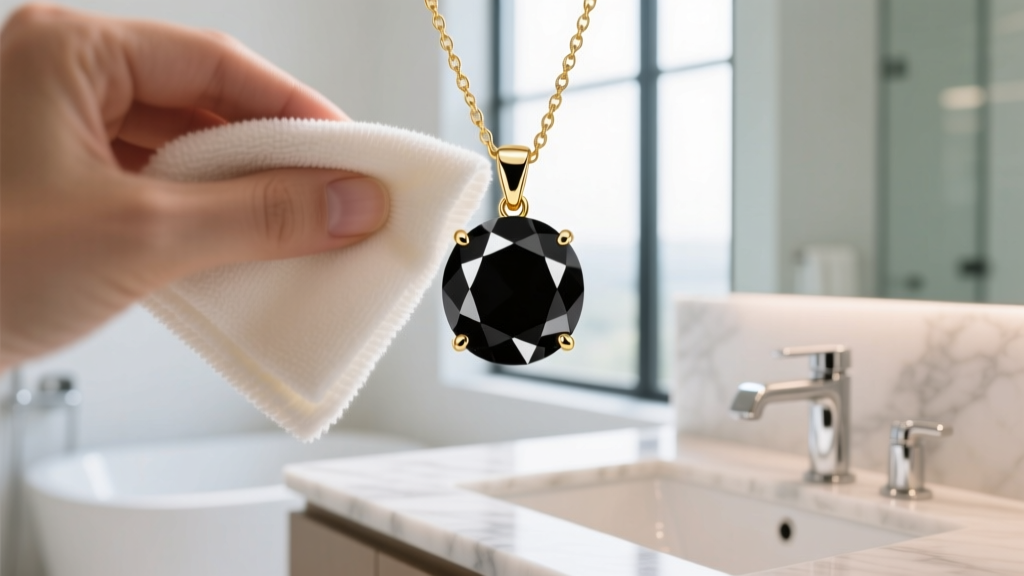
What to Avoid
- Ultrasonic Cleaners: The high-frequency vibrations can easily shatter black onyx and fracture treated black diamonds. They will also strip black rhodium plating.
- Steam Cleaners: Sudden temperature changes can cause thermal shock, cracking enamel inlays and gemstones.
- Harsh Chemicals: Bleach, ammonia, and commercial silver dips will corrode the alloys used in black rhodium and dull the polish of onyx.
The Safe Cleaning Method
To clean your high-contrast pieces, mix a few drops of mild, phosphate-free dish soap into a bowl of lukewarm water. Let the jewelry soak for no more than three to five minutes. Gently agitate the water, then use a soft-bristled baby toothbrush to lightly sweep away debris from behind the gemstones or out of the enamel grooves. Rinse under a gentle stream of lukewarm water and pat dry immediately with a lint-free microfiber cloth. Never let water air-dry on black onyx, as it can leave hard water spots that dull the stone's glassy luster.
Styling Framework: Maximizing the Contrast
Gold and black jewelry is inherently bold. To wear it effectively without overwhelming your look, apply the 'Anchor and Accent' framework. Use a substantial gold and black piece—such as a wide black enamel bangle or a large onyx signet ring—as your anchor. Keep the rest of your jewelry minimal and in the same gold karat to maintain a cohesive color story. For wardrobe pairing, these pieces pop brilliantly against neutral tones like charcoal, camel, and crisp white, allowing the metallic warmth and dark accents to take center stage.
By understanding the materials, respecting the durability limits, and following proper care protocols, your gold and black jewelry will remain a striking, sophisticated staple in your collection for decades to come.


