What Does Gold Plated Mean on Jewelry? Budget & Value Guide
Discover what gold plated means on jewelry, how to assess its true value, fair pricing tiers, and cost-per-wear frameworks for smart budget buying.

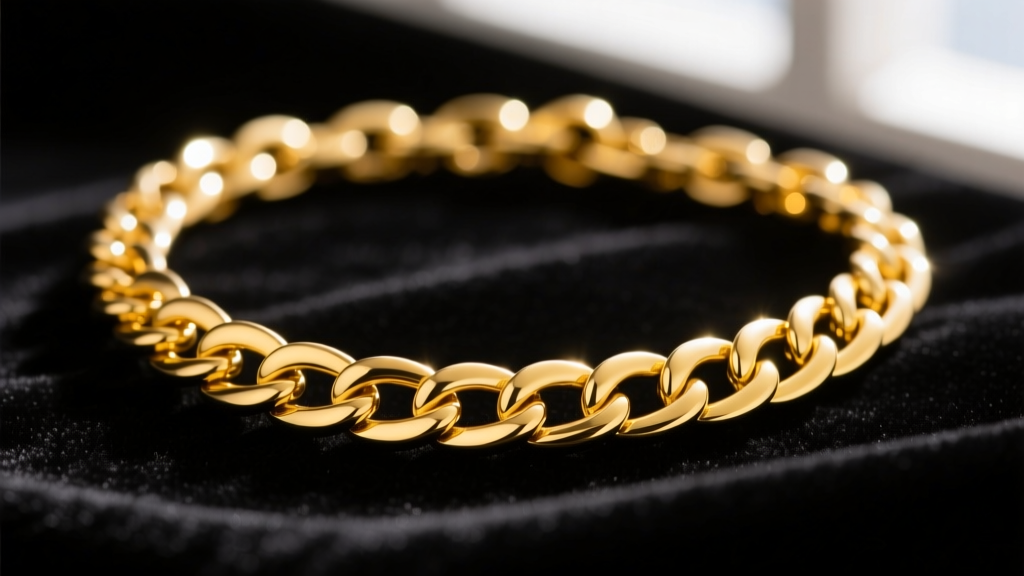
When navigating the affordable jewelry market, understanding material composition is the difference between a smart purchase and a frustrating waste of money. If you have ever asked yourself, what does gold plated mean on jewelry, you are likely trying to determine if a piece is worth your hard-earned cash. Gold plating is a cornerstone of budget-friendly fashion jewelry, but not all plated pieces are created equal. The value of gold plated jewelry hinges entirely on the thickness of the gold layer, the quality of the base metal, and the manufacturing standards of the brand.
In this comprehensive value assessment, we will decode the technical realities of gold plating, establish fair pricing tiers, and provide a cost-per-wear framework to help you make informed, budget-conscious decisions without sacrificing style.
The Anatomy of Gold Plated Jewelry: Beyond the Shine
To accurately assess value, you must first understand the manufacturing process. Gold plating involves using an electrical current to fuse a microscopic layer of real gold onto a base metal. This process, known as electroplating, requires a base metal (the cathode), a gold anode, and a chemical electrolyte solution. When the current runs through the solution, gold ions are deposited onto the base metal.
Decoding Micron Thickness
The most critical factor in determining the longevity and value of a gold plated item is the thickness of the gold layer, measured in microns (one-millionth of a meter). According to the Federal Trade Commission (FTC) Jewelry Guides, retailers must adhere to specific terminology based on these measurements:
- Gold Washed / Flashed (Under 0.175 microns): A microscopic dusting of gold. This offers zero long-term value and will wear off within weeks of regular use.
- Standard Gold Plated (0.175 to 0.5 microns): The industry standard for affordable fashion jewelry. It provides a rich color but will eventually wear through with daily friction.
- Heavy Gold Electroplate (2.5+ microns): The highest tier of plating. This substantial layer can last for years, even with regular wear, bridging the gap between cheap fashion jewelry and solid gold.
The Base Metal Variable
The metal hiding beneath the gold dictates the structural integrity and skin-safety of the piece. Cheap manufacturers use brass or copper alloys, which are prone to corrosion. Higher-end budget brands utilize 316L surgical stainless steel, which is hypoallergenic, highly resistant to tarnish, and provides a smoother surface for the gold to adhere to.
Decoding the Price Tag: What Should You Actually Pay?
One of the most common pitfalls in budget jewelry shopping is overpaying for marketing rather than materials. When evaluating what gold plated means on jewelry from a financial perspective, you must separate brand markup from intrinsic manufacturing costs. Below is a realistic pricing framework for standard items like a 2mm cable chain necklace (18 inches) or a simple band ring.
| Plating Tier | Base Metal | Expected Lifespan | Fair Retail Price Range |
|---|---|---|---|
| Flash Plated (<0.1 microns) | Brass / Zinc Alloy | 1 - 3 Months | $8 - $15 |
| Standard Plated (0.5 microns) | Brass / Copper | 6 - 12 Months | $20 - $35 |
| Standard Plated (0.5 microns) | 316L Stainless Steel | 1 - 2 Years | $35 - $55 |
| Heavy Electroplate (2.5 microns) | 316L Stainless Steel | 3 - 5+ Years | $60 - $95 |
Budget Buyer Rule of Thumb: If a brand is charging over $120 for a gold plated piece that does not explicitly state a minimum of 2.5 microns of gold over a stainless steel or sterling silver base, you are paying a luxury markup for a disposable product.
Cost-Per-Wear Analysis: Is Gold Plated a Smart Investment?
In the realm of personal finance and style, the concept of 'cost-per-wear' (CPW) is a vital metric. You calculate CPW by dividing the total cost of the item by the estimated number of times you will wear it before it degrades. Let us compare a $30 standard gold plated brass ring to a $75 heavy gold electroplated stainless steel ring.
The Brass Ring Scenario ($30)
Because brass is highly reactive to the acids and chlorides in human sweat, the gold layer (likely around 0.2 microns) will wear through at high-friction points within four months of daily wear. Once the brass is exposed, it will oxidize, turn your finger green, and become unwearable.
CPW Calculation: $30 / 120 wears = $0.25 per wear.
The Stainless Steel Scenario ($75)
A 2.5-micron gold layer over 316L stainless steel provides a robust barrier. Even if the gold eventually wears thin at the knuckle after three years of daily wear, the stainless steel beneath will not tarnish, turn your skin green, or cause allergic reactions. The ring remains wearable and structurally sound.
CPW Calculation: $75 / 1,095 wears = $0.06 per wear.
As the data shows, spending more upfront on superior base metals and heavier plating drastically reduces your long-term cost-per-wear, making it the superior budget strategy.
The Hidden Costs of Cheap Plating: Failure Modes & Tarnish
To truly understand what gold plated means on jewelry, you must understand how it fails. Cheap gold plating does not just fade; it triggers chemical reactions that can ruin the piece and irritate your skin.
Galvanic Corrosion and 'Brassing'
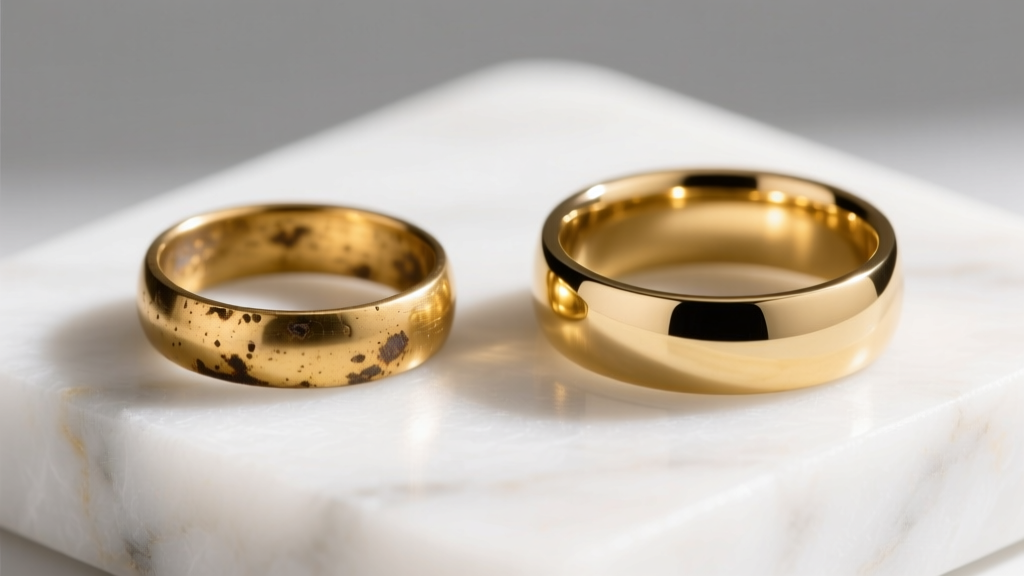
When the microscopic gold layer on a brass or copper ring wears thin, the base metal is exposed to moisture and oxygen. This creates a galvanic cell where the base metal corrodes rapidly. This phenomenon, known in the industry as 'brassing', results in a mottled, patchy appearance where the bright yellow gold is interrupted by dull, brownish-orange spots of oxidized copper.
The Nickel Allergy Trap
The Gemological Institute of America (GIA) notes that white gold alloys often contain nickel to achieve their silvery color. However, in cheap gold plated jewelry, the danger of nickel exposure comes from the base metal. Many low-cost manufacturers use nickel-silver (which contains no actual silver, just nickel, copper, and zinc) as a base. Once the thin gold plating wears off, direct skin contact with nickel can trigger severe contact dermatitis, resulting in red, itchy, and blistered skin.
Value Assessment Checklist: How to Buy Smart
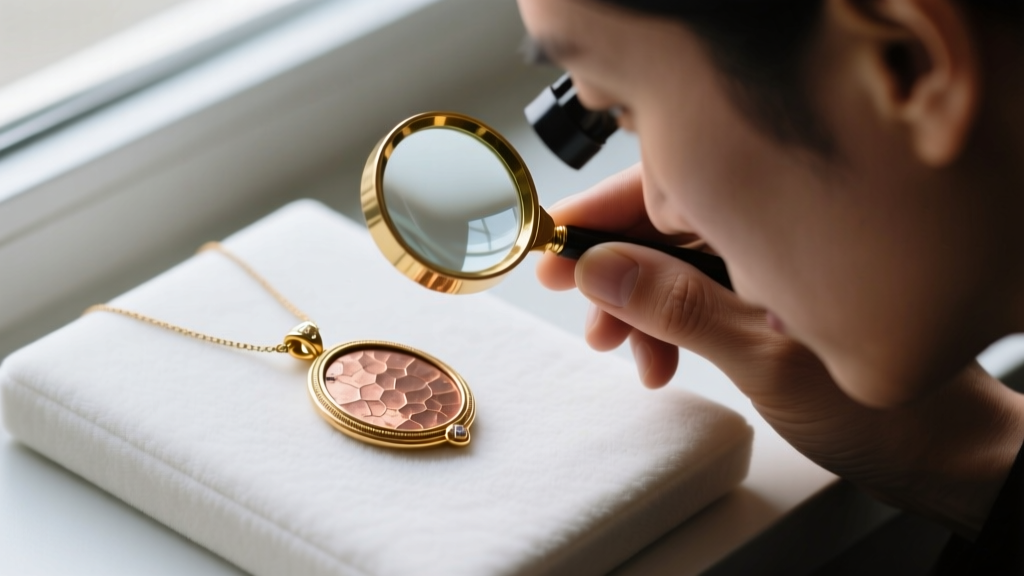
Before adding a gold plated item to your cart, run it through this rigorous value assessment checklist to ensure you are getting what you pay for:
- Demand Micron Transparency: Does the product description explicitly state the gold thickness? If it just says 'gold plated' without a micron count, assume it is flash plated (<0.1 microns) and price it accordingly (under $20).
- Verify the Base Metal: Look for '316L Stainless Steel' or '925 Sterling Silver' (note: gold over sterling silver is technically called Gold Vermeil, which commands a higher price but offers excellent value). Avoid unspecified 'alloy' or 'base metal' descriptions.
- Check the Karatage of the Plating: 14k and 18k gold plating offer the best balance of rich color and durability. 24k gold plating is a deeper, more orange-yellow, but pure gold is softer and wears away slightly faster than alloyed 14k gold.
- Assess the Clasp and Hardware: A high-quality gold plated necklace should feature a sturdy stainless steel lobster clasp. If the clasp feels lightweight, hollow, or is made of cheap spring-ring hardware, the manufacturer has cut corners on the entire piece.
Care Protocols to Maximize Your Budget Purchase
Even the heaviest gold electroplate requires proper maintenance to protect your investment. The goal of caring for gold plated jewelry is to minimize friction and prevent chemical degradation of the gold layer.
The 'Last On, First Off' Rule
Always put your gold plated jewelry on after applying perfumes, lotions, and hairsprays. The alcohols and volatile organic compounds (VOCs) in cosmetics can degrade the microscopic gold layer over time. Conversely, take your jewelry off first when showering or washing your hands to prevent prolonged exposure to harsh soaps.
Proper Storage to Prevent Micro-Scratches
Gold is a relatively soft metal. When multiple gold plated pieces are tossed into a communal jewelry box, they scratch against one another. These micro-scratches do not just dull the shine; they physically displace the thin gold layer, accelerating wear. Store each piece individually in a soft microfiber pouch or a ziplock bag with a silica gel packet to control ambient humidity and prevent base-metal oxidation.
Cleaning Without Stripping
Never use commercial jewelry dips, ultrasonic cleaners, or polishing cloths treated with abrasive compounds on gold plated jewelry. These methods will strip the gold layer entirely. Instead, use a few drops of pH-neutral dish soap in lukewarm water. Gently agitate the piece with your fingers, rinse thoroughly with distilled water (to avoid hard water mineral deposits), and pat completely dry with a lint-free microfiber cloth.
Ultimately, understanding what gold plated means on jewelry empowers you to navigate the market with confidence. By prioritizing transparent micron counts, inert base metals like stainless steel, and rigorous care routines, you can build a stunning, luxurious jewelry collection that respects your budget and stands the test of time.


