How to Tell if Gold Jewelry is Real: The Ultimate Buyer's Guide
Learn how to tell if gold jewelry is real with our expert buying guide. Discover hallmark checks, magnet tests, and acid testing tips before you buy.

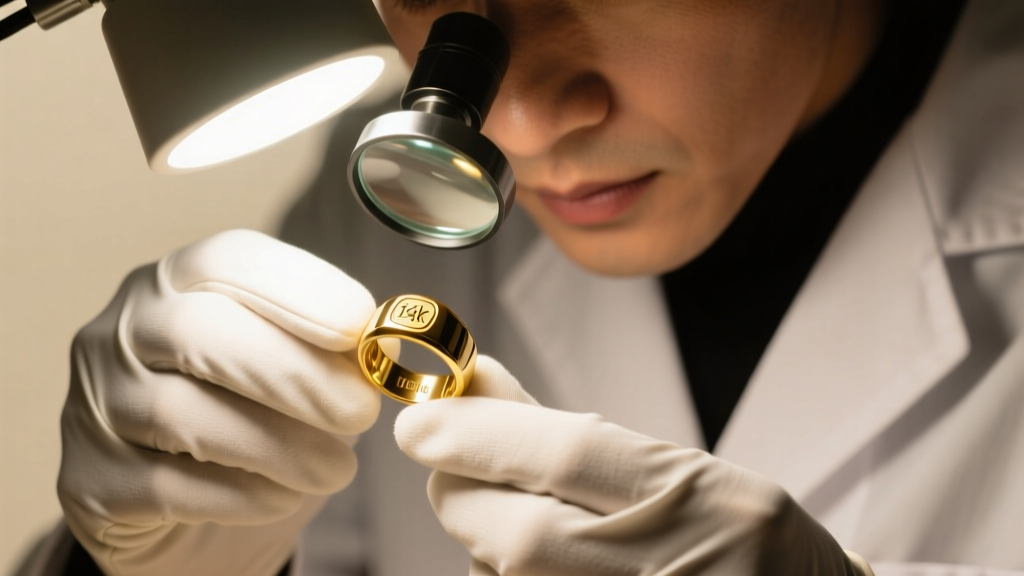
With gold prices reaching historic highs, the secondary market and online auction sites are flooded with sophisticated counterfeits. Knowing how to tell if gold jewelry is real is no longer just a skill for pawnbrokers and gemologists; it is an essential competency for any modern jewelry buyer. From gold-plated tungsten cores to brass alloys stamped with fraudulent hallmarks, counterfeiters are leveraging advanced manufacturing to deceive the naked eye. This comprehensive buying guide will equip you with the exact methodologies, physical tests, and professional verification techniques required to authenticate gold jewelry with absolute certainty.
The Anatomy of Authentic Gold: What You Are Actually Buying
Before you can authenticate gold, you must understand its metallurgical composition. Pure gold (24k) is exceptionally dense and malleable, boasting a specific gravity of 19.32 g/cm³. Because it is too soft for daily wear, it is alloyed with other metals to create the durable jewelry we wear. According to the Gemological Institute of America (GIA), the karat system dictates the ratio of pure gold to alloy metals:
- 24k Gold: 99.9% pure gold. Deep yellow, highly malleable, rarely used in Western jewelry.
- 18k Gold: 75.0% pure gold. The standard for high-end and fine jewelry, offering a rich color and excellent durability.
- 14k Gold: 58.5% pure gold. The most popular choice in the United States, balancing durability, cost, and color.
- 10k Gold: 41.7% pure gold. The minimum karatage that can legally be sold as "gold" in the US, highly durable but paler in color.
Understanding these baselines is critical because counterfeiters often manipulate the weight and color of base metals like brass (density ~8.5 g/cm³) or copper (density ~8.9 g/cm³) to mimic lower-karat gold, though they inevitably fail on precise density metrics.
Visual and Hallmark Inspections: The First Line of Defense
A visual inspection with a 10x or 20x jeweler's loupe is always your starting point. Authentic gold jewelry is almost always stamped with a fineness mark, but the presence of a stamp does not guarantee authenticity—scammers routinely stamp fake pieces.
Decoding Karat Stamps and Maker's Marks
In the United States, you will typically see karat marks like 10k, 14k, or 18k. In Europe and Asia, the metric system is preferred, utilizing three-digit numbers that represent parts per thousand. For example, 585 equates to 14k, and 750 equates to 18k. Furthermore, authentic pieces often feature a Maker's Mark or a registered trademark, which the Federal Trade Commission (FTC) notes is a strong indicator of accountability and authenticity. If a piece has a karat stamp but lacks a crisp, deeply engraved maker's mark, proceed with caution.
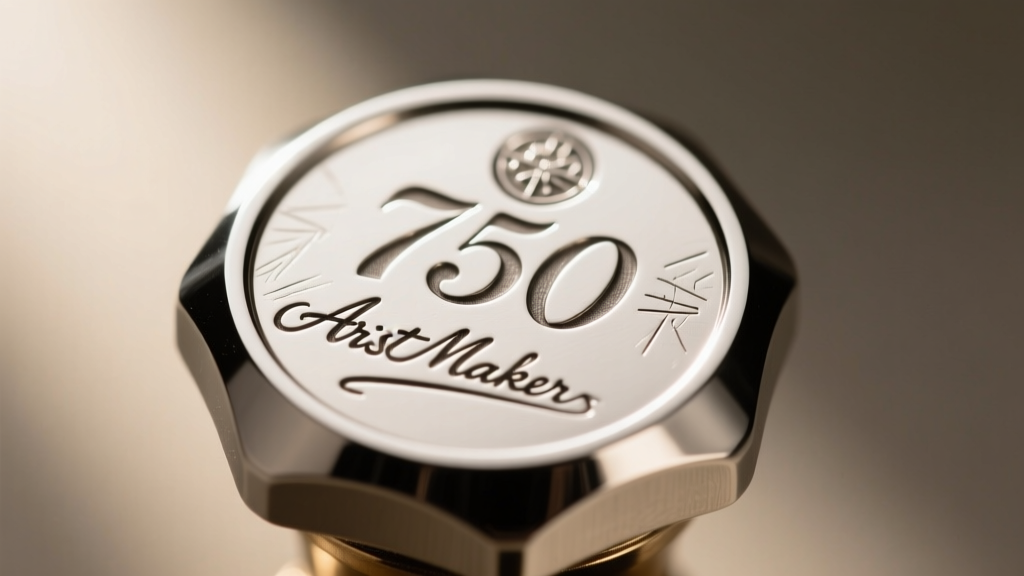
Pro Tip: Counterfeit stamps often appear shallow, blurred, or slightly crooked. Authentic hallmarks are struck with high-pressure steel punches, resulting in sharp, clean edges even under magnification.
At-Home Physical Tests: Separating Fact from Fiction
While visual inspections are helpful, physical tests exploit the unique chemical and magnetic properties of gold to reveal fakes.
The Neodymium Magnet Test
Gold is diamagnetic, meaning it is completely non-magnetic. To perform this test, you need a strong N52-grade neodymium magnet. Hold the magnet near the jewelry. If the piece is attracted to the magnet, it contains ferromagnetic metals like iron, nickel, or cobalt, and is definitively not solid gold. Note: The internal springs inside lobster clasps or tension mechanisms in earring posts are often made of steel and will react to a magnet; test the main body of the chain or ring instead.
The Ceramic Streak Test
Find an unglazed ceramic plate or tile. Gently drag the gold item across the surface. If it leaves a black or dark gray streak, the item is likely pyrite (fool's gold) or a brass alloy. If it leaves a distinct golden-yellow streak, it is highly likely to be real gold. Be aware that this test is mildly destructive and can leave a scratch on softer, high-karat gold pieces.
Skin Discoloration and Oxidation
Base metals like copper and silver react to the acids in human sweat, leaving a green or black residue on the skin. Pure gold and high-karat gold alloys do not oxidize in this manner. If a gold ring leaves a dark green band on your finger after a few hours of wear, you are dealing with gold-plated brass or copper.
Professional Verification: When to Call the Experts
For high-value purchases, estate jewelry, or investment-grade bullion, at-home tests are insufficient. Professional jewelers and assayers rely on advanced chemical and spectrometric analysis.
Acid Testing and Touchstones
The traditional acid test involves rubbing the gold item on a black touchstone to leave a visible streak of metal. The jeweler then applies drops of nitric acid or aqua regia of varying concentrations (formulated for 10k, 14k, 18k, and 22k). If the streak dissolves immediately, it is base metal. If it turns milky, it is likely silver or gold-plated silver. If the streak remains completely unaffected, the gold matches or exceeds the karatage of the acid used.

X-Ray Fluorescence (XRF) Spectrometry
For non-destructive, laboratory-grade accuracy, XRF scanners are the gold standard. These devices shoot X-rays into the metal and measure the fluorescent energy emitted back. This provides an exact elemental breakdown (e.g., 58.5% Gold, 25% Copper, 16.5% Zinc) in seconds, detecting hidden base-metal cores that acid tests might miss.
| Testing Method | Destructive? | Accuracy Level | Best Used For |
|---|---|---|---|
| Magnet Test | No | Low (Detects iron/nickel only) | Quick at-home screening |
| Acid Test | Yes (Micro-scratch) | High (Surface level) | Pawn shops, local jewelers |
| Specific Gravity | No | Medium (Fails on tungsten) | Coins, solid cast rings |
| XRF Spectrometry | No | Extremely High (Elemental) | High-value chains, bullion |
The Tungsten Threat: Advanced Counterfeits in the Modern Market
When learning how to tell if gold jewelry is real, you must be aware of the "tungsten threat." Tungsten has a density of 19.25 g/cm³, which is nearly identical to pure gold's 19.32 g/cm³. Because of this, counterfeiters create thick gold-plated tungsten cores, particularly in heavy Cuban link chains and gold bars. These fakes will easily pass the specific gravity water displacement test and the weight test. To defeat a tungsten counterfeit, a jeweler must use an XRF scanner, perform a deep-file acid test (cutting past the plating), or use ultrasonic thickness testing to detect the acoustic anomaly between the gold exterior and tungsten interior.
Final Buyer's Checklist for Gold Authentication
Before finalizing any gold jewelry purchase, run through this actionable checklist to protect your investment:
- Calculate the Melt Value: Check the daily spot price of gold via the World Gold Council. If a heavy 14k chain is being sold for less than its raw scrap melt value, it is almost certainly a scam.
- Inspect the Clasp and Links: Look for uneven coloring, flaking at the edges of links, or brass showing through worn areas near the clasp.
- Verify the Hallmarks: Ensure the stamps match the claimed karatage and look for a registered maker's mark.
- Perform the Magnet Test: Bring an N52 neodymium magnet to the flea market or estate sale to instantly weed out iron-core fakes.
- Request an XRF Scan: For any purchase over $1,000, insist that a local jeweler scans the piece with an XRF machine before you hand over the cash.
By combining metallurgical knowledge with rigorous physical testing, you can navigate the gold market with confidence, ensuring that every piece you add to your collection is genuinely authentic.


