The Science of Inexpensive Gold Jewelry That Won't Tarnish
Discover the metallurgy behind inexpensive gold jewelry that won't tarnish. Compare PVD coating, 14k solid, and vermeil for lasting, budget-friendly wear.

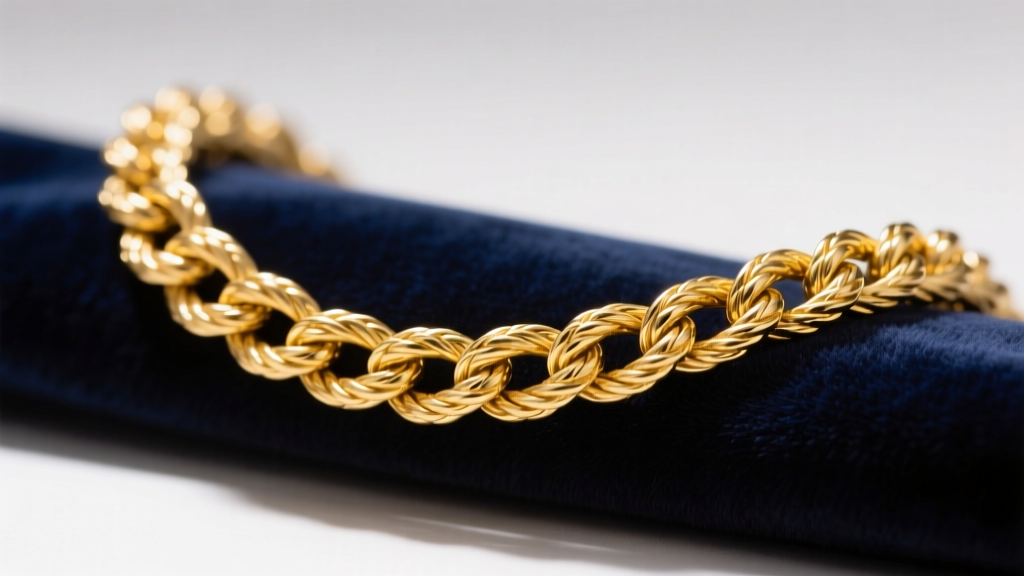
When shopping for everyday accessories, consumers often face a frustrating paradox: finding inexpensive gold jewelry that won't tarnish feels like chasing a metallurgical myth. Pure gold is famously inert and immune to oxidation, but it is also prohibitively expensive and too soft for daily wear. Conversely, budget-friendly gold alternatives often rely on base metals that quickly react with moisture, oxygen, and skin acids, leaving you with dull, discolored pieces and green-stained skin.
However, advances in materials science and a deeper understanding of alloy compositions have completely reshaped the market. As of 2026, you no longer need to spend thousands of dollars to secure a brilliant, lasting gold finish. By understanding the technical differences between Physical Vapor Deposition (PVD), entry-level solid karats, and heavy vermeil, you can make highly informed purchasing decisions. This expert deep dive explores the exact manufacturing technologies and chemical realities behind budget-friendly, tarnish-resistant gold jewelry.
The Metallurgy of Tarnish: Why Gold Discolors
To understand how to prevent tarnish, we must first look at the chemical properties of gold alloys. Pure 24-karat gold (99.9% Au) does not tarnish because it does not react with oxygen or sulfur under normal environmental conditions. However, because 24k gold is exceptionally malleable, it is alloyed with metals like copper, silver, zinc, and nickel to increase durability.
Tarnish is not the gold itself degrading; it is the alloyed metals oxidizing. When copper and silver are exposed to sulfur compounds in the air, lotions, or human sweat, they form copper sulfide and silver sulfide—dark, dull layers on the surface of the jewelry. The lower the karat, the higher the percentage of these reactive base metals, and the higher the risk of discoloration.
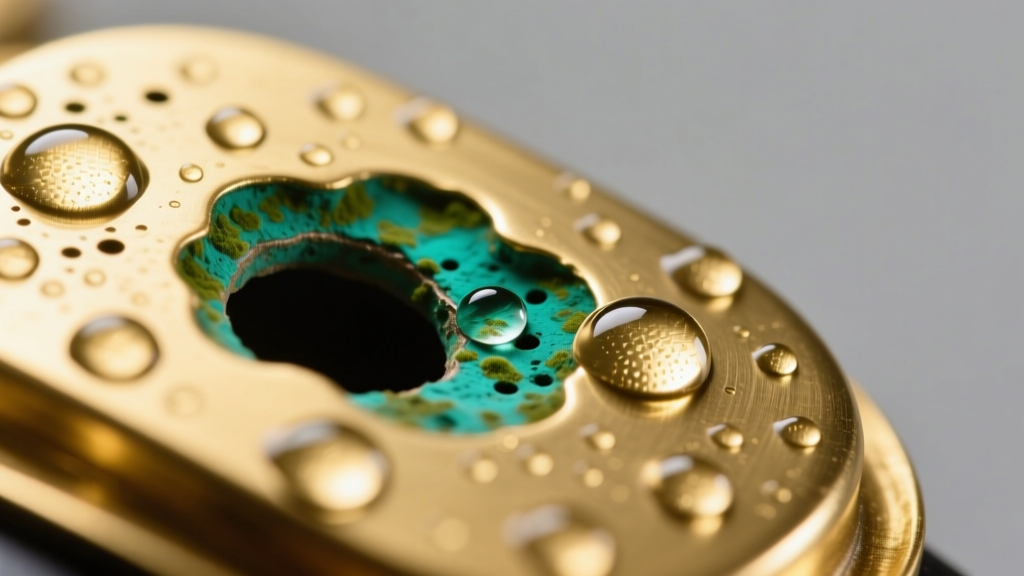
In traditional flash-plated jewelry, a microscopic layer of gold (often less than 0.1 microns) is electroplated over brass or copper. This layer is riddled with microscopic pores. When moisture and skin acids penetrate these pores, a galvanic cell is created, accelerating the corrosion of the base metal and resulting in the dreaded "green skin" effect.
PVD Coating: The Modern Standard for Budget Gold
If your primary goal is to find inexpensive gold jewelry that won't tarnish, Physical Vapor Deposition (PVD) over surgical-grade stainless steel is currently the undisputed champion of the market. Originally developed for the aerospace and medical device industries, PVD has revolutionized accessible jewelry.
How PVD Works
Unlike traditional electroplating, which uses a liquid chemical bath to deposit gold ions, PVD is a vacuum-coating process. The jewelry (usually 316L stainless steel) is placed in a vacuum chamber. Real gold or titanium nitride (TiN) is vaporized at the atomic level using high-energy ion bombardment. These vaporized atoms travel through the vacuum and bond to the steel substrate at a molecular level.
- Molecular Bonding: Because the coating bonds at an atomic level, it does not flake, peel, or blister like electroplated layers.
- Density and Hardness: PVD coatings are significantly harder than traditional gold plating. A PVD layer often registers between 1,500 and 2,500 on the Vickers hardness scale, making it highly scratch-resistant.
- Thickness: While a PVD gold layer might only be 0.3 to 1.0 microns thick, its density makes it up to 10 times more durable than a 2.5-micron electroplated layer.
Because the core is 316L stainless steel—an alloy containing molybdenum that resists chloride corrosion—the piece will never rust, turn green, or degrade, even if the gold-colored TiN top layer eventually wears down over a decade of heavy abuse.
Solid 10k and 14k: The Entry-Level Solid Tier
For purists who refuse to wear anything other than solid gold, 10-karat and 14-karat gold represent the most inexpensive solid options available. According to the Federal Trade Commission (FTC) Jewelry Guides, any item sold as "solid gold" must be at least 10k in the United States.
10k Gold (41.7% Pure Gold)
10k gold is the most affordable solid gold tier. Because it contains 58.3% alloy metals (usually copper and silver), it is incredibly hard and durable. However, this high alloy content means 10k gold can develop a slight patina or surface tarnish over years of exposure to harsh chemicals, sulfur, and chlorine. It requires occasional polishing with a jeweler's cloth to maintain its luster.
14k Gold (58.3% Pure Gold)
14k gold is the ultimate sweet spot for budget-conscious buyers seeking genuine, non-tarnishing gold. With a higher pure gold content, the alloy is stable enough to resist everyday oxidation and sulfur exposure. While a 14k solid gold chain will cost more upfront than a PVD-coated steel chain (typically ranging from $150 to $400 for a basic cable or rope chain), it holds intrinsic melt value and will easily last multiple lifetimes without structural degradation.
Technical Comparison Chart: Budget Gold Alternatives
To help you navigate the market, we have compiled a technical comparison of the most common gold jewelry types available at accessible price points. This matrix evaluates core materials, coating thickness, and real-world tarnish resistance.
| Jewelry Type | Core Material | Gold Layer / Purity | Tarnish Resistance | Expected Daily Lifespan | Avg. Price Range |
|---|---|---|---|---|---|
| PVD Gold | 316L Stainless Steel | 0.3 - 1.0 µm (TiN + Au) | Exceptional (Will not oxidize) | 5 - 15+ Years | $30 - $120 |
| Solid 14k Gold | Solid Gold Alloy | 58.3% Pure Gold | High (Resists everyday sulfur) | Lifetime (Generations) | $150 - $800+ |
| Solid 10k Gold | Solid Gold Alloy | 41.7% Pure Gold | Moderate (Can patina over time) | Lifetime (Generations) | $100 - $400 |
| Gold Vermeil | 925 Sterling Silver | 2.5 µm min (10k+) | Moderate (Silver sulfide risk) | 1 - 3 Years (Daily wear) | $60 - $200 |
| Flash Plated | Brass / Copper | < 0.1 µm | Poor (Rapid galvanic corrosion) | 1 - 6 Months | $10 - $40 |
The Vermeil Compromise and Galvanic Corrosion
Gold vermeil (pronounced ver-may) is a step up from standard plating. By FTC definition, vermeil must feature a sterling silver (925) base coated with at least 2.5 microns of 10k gold or higher. Because silver is a precious metal, vermeil avoids the "green skin" issue associated with copper and brass cores.
However, vermeil is not entirely immune to tarnish. Sterling silver contains 7.5% copper. If the thick gold layer is worn down through friction (such as on the back of a ring or the clasp of a necklace), the exposed silver will react with sulfur in the environment to form silver sulfide—a black, stubborn tarnish. While vermeil is an excellent choice for earrings or pendants that experience low friction, it is not recommended for everyday rings or bracelets if your goal is zero maintenance.
Expert Maintenance Protocols for Longevity
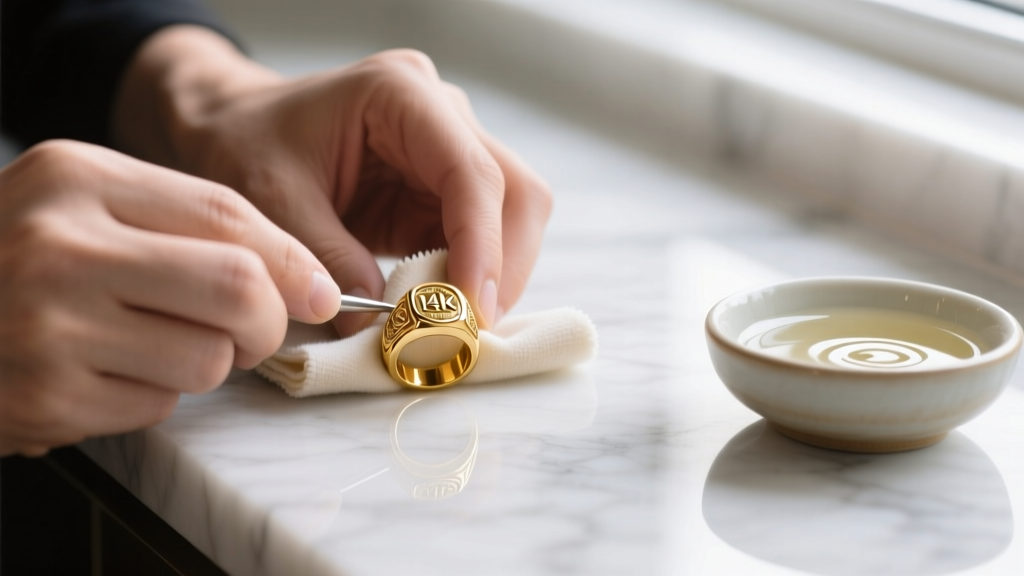
Even the most stable, inexpensive gold jewelry that won't tarnish under normal conditions can be compromised by extreme chemical exposure. To maximize the lifespan of your PVD or solid 14k pieces, adhere to these metallurgical best practices:
The Chlorine Warning: Never wear solid gold (10k, 14k, or 18k) in a chlorinated swimming pool or hot tub. Chlorine reacts with the copper and zinc alloys in karat gold to form gold chloride, a compound that is highly soluble in water. This causes microscopic stress corrosion cracking, which can literally cause a solid gold ring to shatter or snap over time.
Routine Cleaning Framework
- The Soak: Mix a few drops of phosphate-free dish soap into a bowl of lukewarm (not hot) water. Let the jewelry soak for 5 to 10 minutes to break down sebum and lotion buildup.
- The Agitation: Use an ultra-soft baby toothbrush to gently agitate the crevices of chains or ring settings. Never use hard-bristled brushes, which can induce micro-scratches that trap future dirt.
- The Dry: Rinse thoroughly under distilled water (tap water contains trace minerals and chlorine) and pat completely dry with a lint-free microfiber cloth. Moisture trapped against the skin or in chain links is the primary catalyst for localized corrosion in lower-karat alloys.
Final Verdict: What Should You Buy?
The search for inexpensive gold jewelry that won't tarnish ultimately comes down to your definition of "gold." If you require the intrinsic value and prestige of real gold, solid 14k gold is the most cost-effective entry point that guarantees lifetime structural integrity and high tarnish resistance. If, however, you are prioritizing aesthetic durability, waterproof wear, and strict budget constraints, PVD-coated 316L stainless steel represents the pinnacle of modern jewelry engineering. By avoiding flash-plated brass and understanding the limitations of vermeil, you can curate a collection that remains brilliantly golden for years to come.
For further reading on precious metal standards and global gold demand, consult resources provided by the World Gold Council.


