Gold Plating Jewelry: Technical Guide to Microns and Electroplating
An expert technical guide to gold plating jewelry, covering electrochemistry, micron thickness standards, barrier layers, and XRF testing methods.


When evaluating gold plating jewelry, the untrained eye often focuses solely on the initial color and luster. However, from a metallurgical and engineering perspective, the quality of a plated piece is dictated by complex electrochemical processes, precise micron thicknesses, and the strategic use of metallic barrier layers. This deep dive explores the technical realities of gold electrodeposition, moving beyond marketing terms to examine the science that determines whether a piece will tarnish in a month or endure for a decade.
The Electrochemistry of Gold Deposition
Gold plating is not a simple surface coating; it is an electrodeposition process. According to fundamental principles outlined by Britannica's guide on electroplating, the process requires an electrolytic cell where the jewelry piece acts as the cathode (negative electrode) and a gold source or inert anode acts as the positive electrode. A direct current (DC) rectifier forces gold ions in the electrolyte solution to reduce and deposit onto the cathode's surface.
Current Density and Grain Structure
The most critical variable in this process is current density, measured in Amps per Square Foot (ASF). If the ASF is too high, the gold deposit becomes 'burnt'—characterized by a rough, brittle, and porous grain structure that will flake off under mechanical stress. Conversely, operating at the optimal low-to-moderate ASF yields a fine-grained, dense, and highly burnishable deposit. Master platers constantly adjust the voltage based on the surface area of the jewelry to maintain this delicate electrochemical balance.
Bath Chemistry: Acid vs. Alkaline Formulations
The chemical composition of the plating bath determines the karat, color, and hardness of the final deposit. There are two primary families of gold plating solutions used in modern jewelry manufacturing:
- Alkaline Cyanide Baths: Traditionally used for depositing pure 24-karat gold. These baths offer excellent 'throwing power' (the ability to plate evenly into deep recesses and intricate filigree). However, the resulting deposit is relatively soft, with a Knoop hardness of roughly 70-90, making it highly susceptible to scratching.
- Acid Gold Baths (Non-Cyanide): The industry standard for durable gold plating jewelry. These baths allow for the co-deposition of alloying metals like cobalt, nickel, or iron alongside gold. This creates a 14k or 18k gold alloy deposit that is significantly harder (Knoop hardness 130-200) and far more resistant to everyday friction and abrasion.
Micron Thickness: FTC Standards vs. Real-World Wear
The terminology used to describe gold thickness is heavily regulated to prevent consumer deception. The Federal Trade Commission (FTC) Jewelry Guides establish strict micron and micro-inch thresholds for marketing claims. Understanding these thresholds is vital for assessing the lifecycle of a plated garment.
| FTC Classification | Minimum Thickness (Microns) | Minimum Thickness (Micro-inches) | Estimated Wear Lifecycle (Daily Use) |
|---|---|---|---|
| Gold Flashed / Gold Washed | < 0.175 µm | < 7 µ" | 1 - 3 Months |
| Gold Electroplated | 0.175 µm | 7 µ" | 6 - 12 Months |
| Heavy Gold Electroplated | 2.5 µm | 100 µ" | 2 - 5+ Years |
| Vermeil (on Sterling Silver) | 2.5 µm | 100 µ" | 3 - 5+ Years |
It is important to note that 1 micron equals approximately 40 micro-inches. While 'heavy gold electroplated' sounds substantial, 2.5 microns is still thinner than a human hair. The longevity of this layer depends heavily on the friction points of the specific jewelry type; a heavy gold-plated pendant will outlast a similarly plated ring by years due to the lack of continuous skin friction and environmental exposure.
Substrate Preparation: The Hidden Barrier Layers
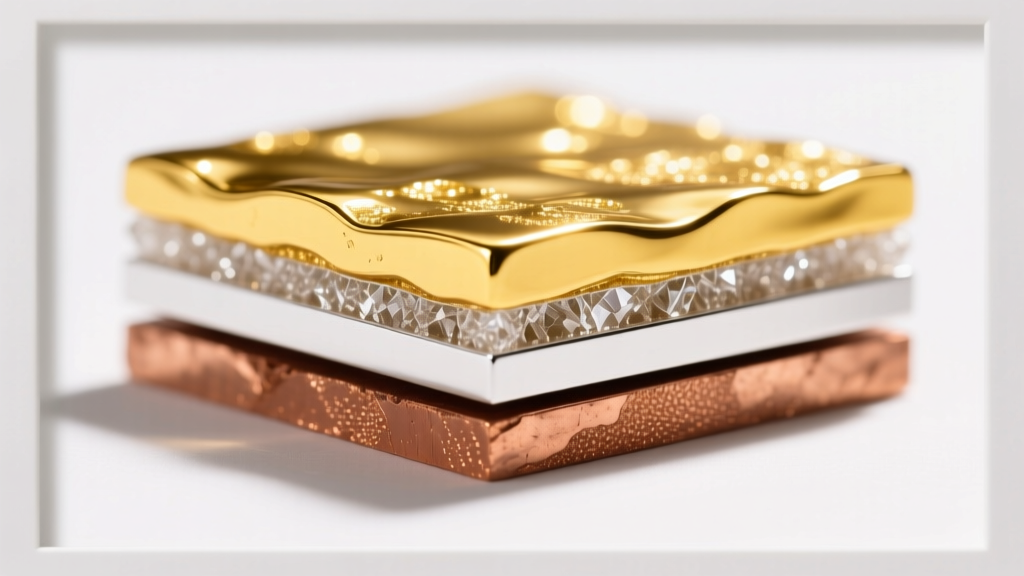
The most common cause of failure in gold plating jewelry is not the wear of the gold itself, but the migration of the base metal beneath it. When gold is plated directly over copper or brass, a metallurgical phenomenon known as solid-state diffusion occurs. Over time, copper atoms migrate upward into the gold crystal lattice, while gold atoms migrate downward. This results in a visible reddish-green tarnish that no amount of polishing can remove, as the contamination is molecular.
Palladium and White Bronze Barriers
To halt the Kirkendall effect (the unequal diffusion rates of two metals), a barrier layer must be electroplated between the substrate and the gold. Historically, a 'nickel strike' was used. However, due to the EU's REACH regulations and widespread nickel allergies, the modern industry standard has shifted. High-end manufacturers now utilize a palladium strike or a white bronze (copper-tin-zinc) alloy barrier. Palladium is exceptionally noble, entirely non-allergenic, and provides a brilliant, bright undercoat that enhances the final color of 18k or 14k yellow and rose gold deposits.
Non-Destructive Testing: Verifying Plating Thickness
Because visual inspection cannot accurately differentiate between a 0.5-micron flash and a 2.5-micron heavy plate, professional jewelers and metallurgical labs rely on advanced analytical equipment. The gold standard for non-destructive testing is X-Ray Fluorescence (XRF).
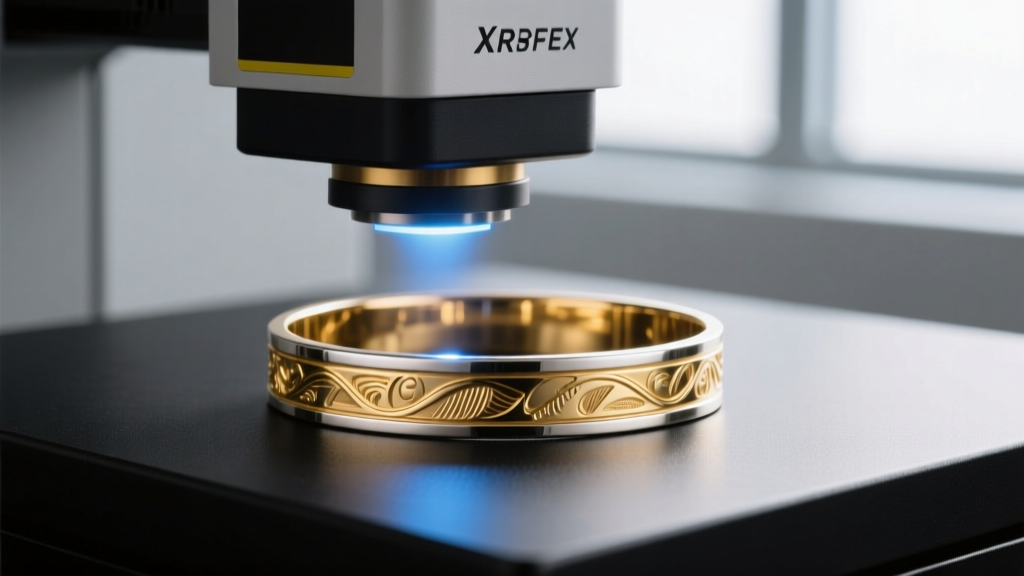
An XRF analyzer fires primary X-rays at the jewelry surface, which ejects inner-shell electrons from the atoms in the metal. As outer-shell electrons fall into the vacancies, they emit secondary fluorescent X-rays. The XRF sensor reads the specific energy signatures of these secondary rays, allowing the software to calculate not only the exact micron thickness of the top gold layer but also the composition and thickness of the underlying barrier layers and base substrate. This technology ensures that when a manufacturer stamps a piece as 'Heavy Gold Electroplated,' the claim is backed by empirical, verifiable data rather than guesswork.
Engineering for Longevity
Ultimately, the creation of high-quality gold plating jewelry is an exercise in precision engineering. It requires the meticulous preparation of the substrate, the strategic application of diffusion barriers, the careful management of current density during electrodeposition, and rigorous XRF verification. By understanding these technical parameters, both manufacturers and consumers can make informed decisions that prioritize structural integrity and lasting beauty over superficial, short-lived finishes.


