Is It a Good Time to Sell Gold Jewelry in 2026? Market & Style Trends
Discover if it is a good time to sell gold jewelry in 2026. We analyze spot prices, vintage style trends, and karat values to maximize your return.

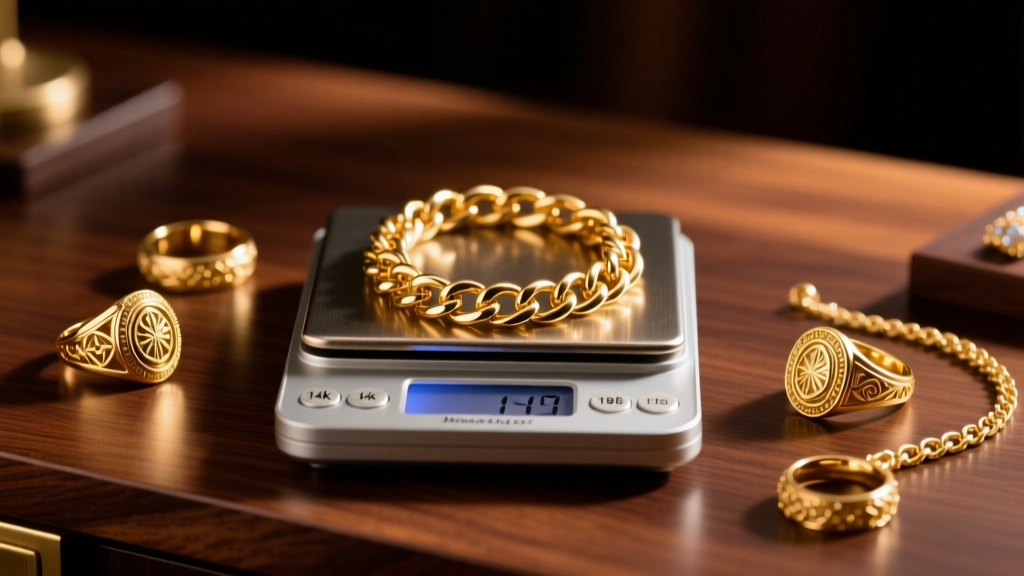
With macroeconomic shifts and evolving fashion cycles colliding in 2026, many collectors and casual owners are asking a critical question: is it a good time to sell gold jewelry? The answer requires looking beyond the daily spot price of raw bullion. While the raw commodity value of gold has reached historic highs this year, the secondary jewelry market is simultaneously experiencing a massive shift in style trends, elevating the resale value of specific vintage and designer pieces well above their mere melt value.
Whether you are holding onto inherited Art Deco rings, heavy 1980s rope chains, or modern minimalist bands, understanding the intersection of precious metal markets and jewelry style trends is essential for maximizing your return. In this comprehensive guide, we break down the 2026 gold market, calculate exact melt values, and identify which stylistic categories are currently commanding premium payouts from collectors and dealers.
The 2026 Gold Market: Spot Prices vs. Jewelry Premiums
To determine if now is the right time to liquidate, we must first look at the macroeconomic drivers of gold. According to the World Gold Council, sustained central bank purchasing and global inflation hedging have kept gold spot prices remarkably robust throughout 2025 and into 2026. Tracking daily fluctuations via Kitco reveals that the spot price has comfortably stabilized in the $2,400 to $2,550 per Troy ounce range this year.
However, jewelry is rarely sold at pure spot value. The "melt value" is the baseline—the intrinsic value of the pure gold content in your piece, minus the alloys used to create the karat. Below is a breakdown of approximate melt values per gram based on a $2,450/oz spot price ($78.77 per pure gram).
| Karat | Purity % | Pure Gold per Gram | Approx. Melt Value/Gram | Common Jewelry Types |
|---|---|---|---|---|
| 24k | 99.9% | 1.000g | $78.77 | Investment coins, traditional Asian bridal jewelry |
| 22k | 91.6% | 0.916g | $72.15 | Indian and Middle Eastern heirloom pieces |
| 18k | 75.0% | 0.750g | $59.08 | High-end luxury, European vintage, engagement rings |
| 14k | 58.5% | 0.585g | $46.08 | Standard US jewelry, class rings, everyday chains |
| 10k | 41.7% | 0.417g | $32.85 | Discount retail, durable men's signet rings |
Note: These are pure melt baselines. Actual dealer payouts will deduct a refining margin, typically 10% to 25%, unless the piece possesses high stylistic or collector value.
Style Trends: Which Gold Pieces Command a Premium?
If you are only selling for melt value, you are potentially leaving thousands of dollars on the table. In 2026, the secondary jewelry market is heavily driven by the "Heirloom Maximalism" and "Quiet Luxury" trends. Buyers are actively hunting for specific silhouettes, eras, and weights, paying massive premiums over the gold content.
The Y2K and 1980s Chunky Chain Revival
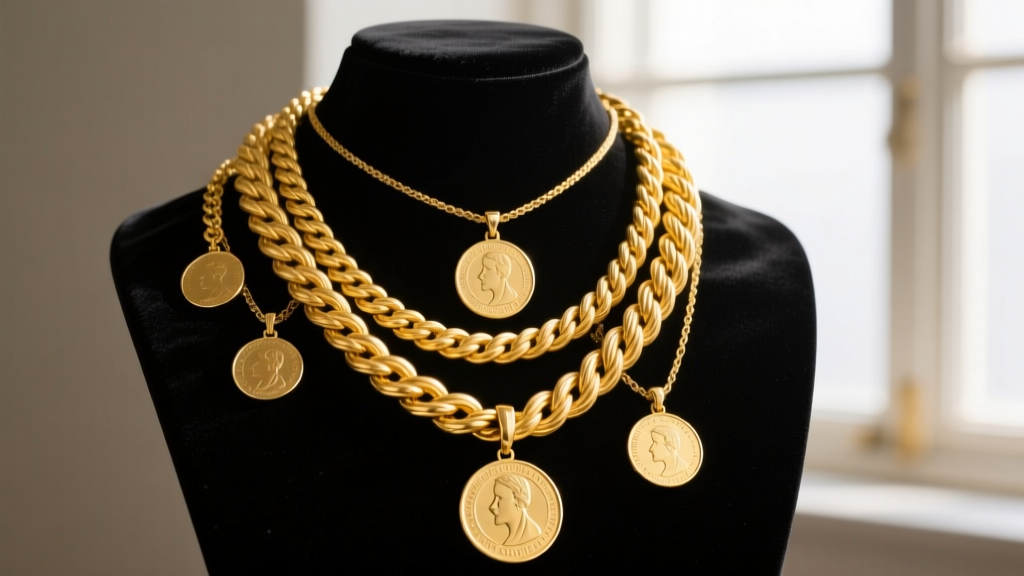
Heavy, solid gold chains from the 1980s and early 1990s are experiencing a massive resurgence. Gen Z and Millennial collectors are driving up the prices for 14k and 18k rope, curb, Figaro, and box chains. If you possess a solid 14k yellow gold rope chain weighing over 50 grams, do not sell it for melt. Vintage jewelry dealers and specialized Instagram resellers will pay a 30% to 60% premium over melt value for pieces in excellent condition with original clasps intact. The "bigger is better" aesthetic has made heavy gold chains a primary status symbol, bypassing traditional diamond-centric luxury.
Art Deco and Edwardian Rarity
Pieces from the 1920s (Art Deco) and 1910s (Edwardian) that feature intricate filigree, milgrain detailing, and platinum-gold combinations are highly sought after by serious collectors. The craftsmanship of these eras is virtually impossible to replicate today at scale. If you are selling an Art Deco ring, the value lies in the design, the specific geometric calibré-cut gemstones, and the maker's mark—not the scrap gold weight. Selling these to a pawn shop or a scrap refiner is a critical financial mistake; they must be routed through specialized auction houses or vintage estate buyers.
Signed Luxury and Iconic Motifs
Brands like Cartier (specifically the Love and Juste un Clou collections), Bulgari (B.zero1), and Van Cleef & Arpels (Alhambra) hold their value exceptionally well. In 2026, authenticated, signed pieces with original boxes and papers can fetch 80% to 120% of their retail replacement value, entirely decoupling them from the daily spot price of gold.
Calculating Your Melt Value: A Step-by-Step Framework
If your piece is broken, heavily worn, or lacks stylistic merit, it will be evaluated strictly on its melt value. To negotiate effectively with buyers, you must understand the math they use. As noted in Forbes Advisor's gold investment guide, understanding weight metrics is your best defense against lowball offers.
- Understand the Troy Ounce: Precious metals are weighed in Troy ounces (31.103 grams), not standard culinary ounces (28.35 grams).
- Pennyweights (dwt): Many US-based pawn shops and coin dealers use pennyweights. There are 20 pennyweights in a Troy ounce. One gram equals exactly 0.643 pennyweights.
- Deduct for Gemstones: Refiners will not pay for diamonds or gemstones unless they are large enough to be resold individually (typically over 0.50 carats). Small melee diamonds are considered a nuisance and are often smashed or melted away.
- Account for Solder and Enamel: Gold jewelry is assembled using solder, which is often a lower karat than the piece itself. Heavy enamel work (like black rhodium or guilloché) must be chemically stripped, and refiners will deduct 5% to 10% from the gross weight to account for this refining loss.
Where to Sell: Comparing Buyer Types in 2026
Choosing the right venue is just as important as knowing your gold's value. The landscape of gold buyers has shifted, with online refiners offering highly competitive rates, while local consignment shops capture the style premium.
| Buyer Type | Expected Payout (% of Melt) | Best Suited For | Turnaround Time |
|---|---|---|---|
| Local Coin & Bullion Shop | 85% - 95% | Fast cash, transparent XRF testing, scrap chains | Same day |
| Online Mail-In Refiner | 90% - 98% | High volume, broken jewelry, dental gold | 1 - 2 weeks |
| Vintage Consignment / Dealer | 110% - 300%+ | Signed pieces, Art Deco, trendy chunky chains | 1 - 6 months |
| Traditional Pawn Shop | 60% - 80% | Emergency liquidity, unverified karat items | Same day |
The Importance of XRF Testing
When selling locally, insist that the buyer uses an XRF (X-ray Fluorescence) spectrometer rather than a traditional nitric acid touchstone. Acid testing only evaluates the surface layer of the gold, which can be misleading if a piece is heavily soldered or has a surface plating anomaly. XRF provides a precise, non-destructive elemental breakdown of the entire alloy, ensuring you are paid accurately for the exact karat purity.
Final Verdict: Should You Hold or Fold?
So, is it a good time to sell gold jewelry in 2026? The verdict depends entirely on the nature of your pieces and your financial objectives.
The Seller's Matrix: If you hold broken, outdated, or low-karat (10k/14k) scrap gold, 2026 is an excellent time to liquidate. Spot prices are near all-time highs, allowing you to maximize your return on items that offer no stylistic utility. However, if you possess heavy 18k vintage chains, signed luxury items, or pristine Art Deco rings, hold onto them. The "Heirloom Maximalism" trend is still gaining momentum, and the collector premiums for these specific styles are projected to outpace raw gold inflation over the next 24 months.
Ultimately, knowledge is your greatest leverage. By separating your scrap gold from your stylistic assets, weighing your items in grams, and targeting the correct buyer archetype, you can navigate the 2026 gold market with confidence and secure the highest possible payout for your jewelry.


