Is Dorado Jewelry Real Gold? The Ultimate Value Assessment
Wondering if Dorado jewelry is real gold? We break down the metal composition, plating thickness, and true cost-per-wear value for budget buyers.


With the price of raw gold surging to historic highs in the 2026 jewelry market, budget-conscious shoppers are increasingly turning to affordable alternatives. Among the most common search queries from value-driven buyers is a simple, yet critical question: is dorado jewelry real gold? Whether you are looking at a specific fashion brand named 'Dorado' or reading product descriptions featuring the Spanish term 'baño dorado' (gold bath), understanding what you are actually paying for is the difference between a smart wardrobe investment and a frustrating waste of money.
In this comprehensive budget and value assessment, we strip away the marketing jargon to analyze the exact metallurgy, longevity, and true cost-per-wear of 'dorado' jewelry. We will help you decide when it makes financial sense to buy plated fashion pieces, and when you should stretch your budget for solid gold.
The Short Answer: Is Dorado Jewelry Real Gold?
The short answer is no, it is not solid gold. In the jewelry industry, the word 'dorado' translates from Spanish to 'golden' or 'gilded.' When a brand uses 'Dorado' in its name, or when a retailer describes a piece as 'oro dorado' or 'baño dorado,' they are legally and metallurgically referring to gold-plated or gold-vermeil jewelry, not solid gold.
According to the Federal Trade Commission (FTC) Jewelry Guides, a piece can only be described as 'gold' without qualifiers if it is solid gold throughout. If it is coated, it must be explicitly labeled as gold-plated, gold-filled, or vermeil. Therefore, 'dorado' jewelry consists of a base metal core—typically brass, stainless steel, or sterling silver—that has been electroplated with a microscopic outer layer of real gold (usually 14k or 18k).
Decoding the Metal: What You Are Actually Buying
To accurately assess the value of dorado jewelry, you must understand the relationship between the base metal and the plating thickness. The longevity of your jewelry is entirely dependent on these two factors. The Gemological Institute of America (GIA) notes that the durability of gold-plated items varies wildly based on the micron thickness of the gold layer.
Material Composition & Expected Lifespan
| Jewelry Type | Base Metal | Gold Thickness | Expected Daily Lifespan | Average Price Range |
|---|---|---|---|---|
| Flash Plated ('Dorado') | Brass or Steel | 0.1 - 0.5 microns | 3 to 6 months | $15 - $40 |
| Standard Gold Plated | Brass or Copper | 0.5 - 1.0 microns | 1 to 2 years | $40 - $80 |
| Gold Vermeil | Sterling Silver | 2.5+ microns | 3 to 5 years | $80 - $180 |
| Solid 10k / 14k Gold | Gold Alloy | Solid throughout | Lifetime / Heirloom | $200 - $800+ |
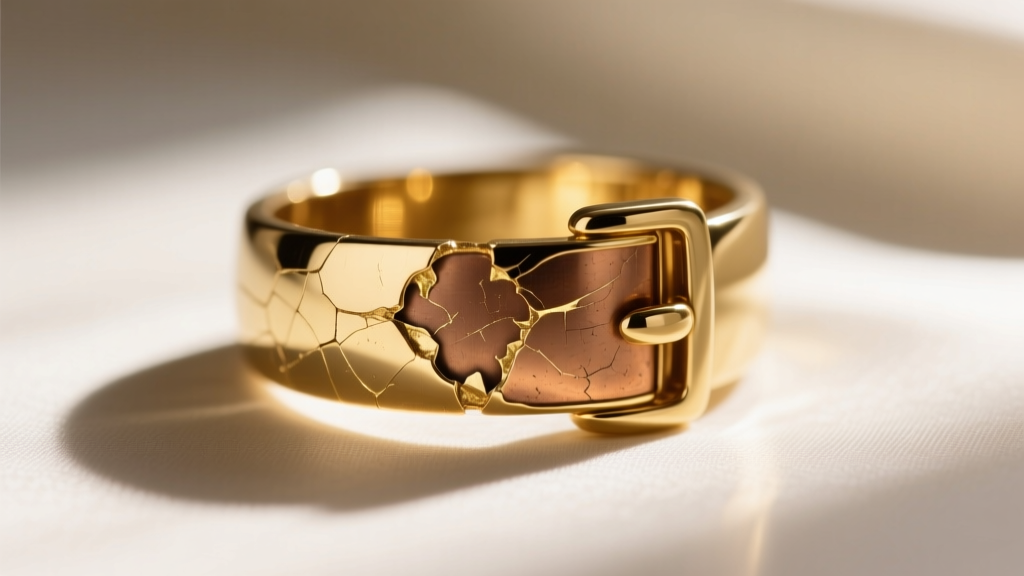
Most budget-friendly 'dorado' pieces fall into the flash-plated or standard gold-plated categories. While the outer layer is indeed real gold, it is so thin that daily friction from clothing, skin oils, and environmental moisture will eventually wear it away, revealing the base metal beneath.
The Budget Breakdown: Price vs. Longevity
When assessing value, professional jewelers and stylists use a metric called Cost Per Wear (CPW). A $50 dorado necklace might seem like a steal compared to a $400 solid 14k gold chain, but the math changes when you factor in replacement costs and lifespan.
The Cost Per Wear Formula
CPW = Total Cost / Number of Times Worn Before Replacement
- The Dorado Plated Scenario: You buy a $50 gold-plated brass chain. You wear it 3 times a week. After 8 months (approx. 100 wears), the plating wears off the clasp and links, and the brass begins to tarnish your skin. CPW = $0.50 per wear.
- The Solid 14k Scenario: You invest $350 in a solid 14k gold chain. You wear it 3 times a week for 10 years (approx. 1,560 wears). It never tarnishes, requires zero replating, and retains scrap value. CPW = $0.22 per wear.
From a purely financial perspective, solid gold is actually cheaper over a multi-year horizon. However, if your budget strictly caps at $50, or you are buying a highly specific trend-driven silhouette that you will only wear for one season, dorado jewelry offers excellent short-term aesthetic value.
Real-World Wear & Tear: What Happens After 6 Months?
To truly evaluate the budget proposition of dorado jewelry, we must look at the failure modes of plated metals. When the gold layer inevitably breaches, the underlying base metal reacts with your environment.
Common Failure Modes in Plated Jewelry
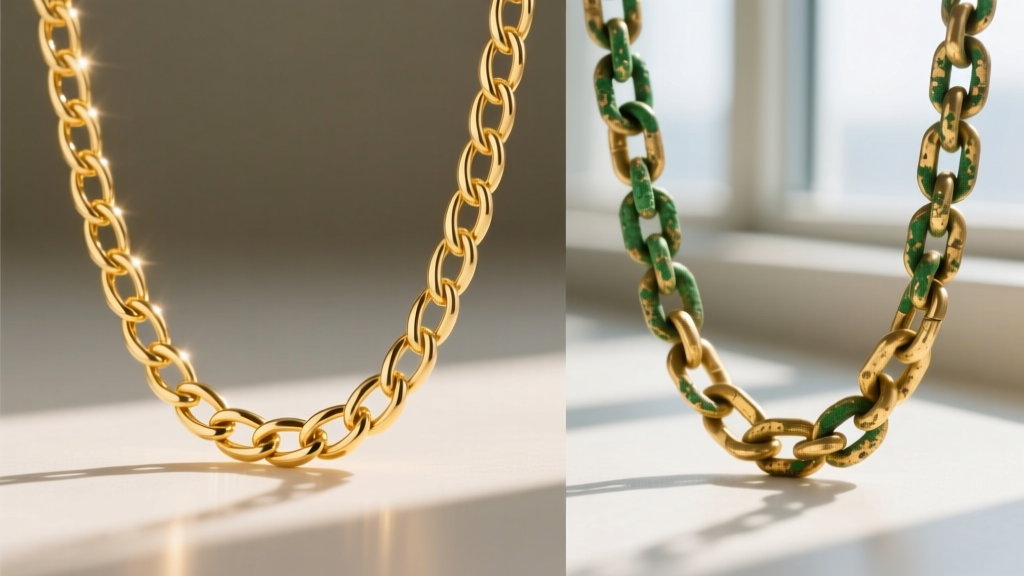
- The 'Green Skin' Effect: Most affordable dorado jewelry uses brass (an alloy of copper and zinc) as a base. When copper is exposed to the oxygen, moisture, and salts in your sweat, it creates copper chloride. This manifests as a harmless but highly undesirable green stain on your skin.
- Galvanic Corrosion: If your dorado jewelry features stainless steel clasps attached to brass chains, the two dissimilar metals can create a micro-galvanic battery when exposed to sweat, accelerating the rusting and degradation of the clasp area.
- Nickel Contact Dermatitis: Cheaper base metals often contain trace amounts of nickel to increase hardness. Once the gold plating wears thin, direct skin contact with nickel can trigger severe allergic reactions, characterized by red, itchy rashes.
- Micro-Abrasion: Dust and dirt contain microscopic silica particles. When these get trapped between your skin and a plated ring, they act like sandpaper, stripping the 0.5-micron gold layer away in a matter of weeks.
The Verdict: Who Should Buy Dorado Jewelry?
Dorado and similarly plated fashion jewelry is not inherently a 'scam'—it serves a very specific, valid purpose in the jewelry market. It allows consumers to participate in luxury aesthetics without the barrier to entry of precious metal pricing. Here is our decision framework for buyers:
Buy Dorado / Plated Jewelry If:
- You are purchasing statement pieces or oversized hoops that would be prohibitively heavy and expensive in solid gold.
- You want to test-drive a specific jewelry trend (like chunky signet rings or paperclip chains) before committing to a solid gold investment.
- You frequently lose jewelry and prefer a low-risk financial replacement cost.
- You are buying earrings (specifically posts), as earlobes experience significantly less friction and sweat exposure than fingers or necks.
Invest in Solid 10k or 14k Gold If:
- You are buying 'everyday essentials' like wedding bands, herringbone chains, or stud earrings that will never be taken off.
- You have sensitive skin or known metal allergies.
- You want jewelry that can be worn in the shower, the ocean, and the gym without catastrophic damage.
- You view jewelry as a long-term asset or an heirloom to pass down.
How to Maximize the Value of Your Plated Pieces
If you decide that dorado jewelry fits your current budget, you can significantly extend its lifespan by altering your maintenance routine. Plated jewelry requires a defensive care strategy to protect the fragile micron layer.
- The 'Last On, First Off' Rule: Always apply your perfumes, lotions, and hairsprays before putting on your jewelry. The alcohol and chemicals in cosmetics will dissolve gold plating rapidly. Take your jewelry off immediately upon returning home.
- Avoid Ultrasonic Cleaners: Never use ultrasonic jewelry cleaning machines or harsh chemical dips on dorado pieces. The high-frequency vibrations will literally shake the microscopic gold layer off the base metal. Instead, use a drop of mild dish soap, warm water, and a microfiber cloth.
- Control the Humidity: Store plated jewelry in airtight ziplock bags with anti-tarnish silica strips. Oxygen and ambient humidity are the primary catalysts for base-metal oxidation. Keeping the jewelry in a dark, dry environment can add years to its visual lifespan.
- Create a Barrier: For dorado rings worn on the hands, some stylists recommend applying a microscopically thin coat of clear nail polish to the inside of the band. This creates a physical barrier between your sweat and the brass base metal, preventing both tarnish and green skin.
Ultimately, understanding what you are buying is the key to smart jewelry shopping. Dorado jewelry offers real gold aesthetics at a fraction of the cost, provided you respect its material limitations and calculate its true value based on your personal wearing habits.