Expert Guide to Cleaning and Caring for Blue Gold Jewelry
Discover expert care, cleaning, and maintenance tips for blue gold jewelry. Learn how to protect brittle alloys and PVD coatings from damage and fading.

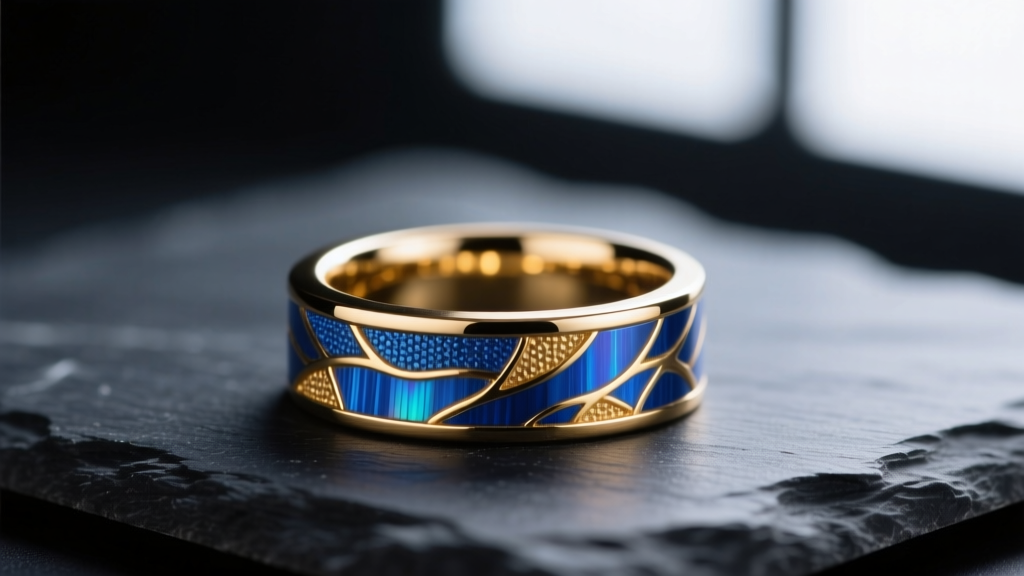
The Metallurgy of Blue Gold: Why Standard Care Fails
Blue gold jewelry represents one of the most captivating and metallurgically complex frontiers in modern fine jewelry. Whether you own a piece featuring a true intermetallic blue gold alloy or a cutting-edge PVD-coated white gold design, maintaining its striking azure hue requires a strict departure from standard jewelry care routines. As we navigate the jewelry landscape in 2026, advanced metallurgical treatments have made blue gold more accessible, yet its fundamental vulnerabilities remain unchanged. This comprehensive guide provides actionable, expert-level maintenance protocols to protect your investment from irreversible damage.
Identifying Your Blue Gold Type
Before applying any cleaning solution, you must identify the exact composition of your piece. True blue gold is not a traditional alloy; it is an intermetallic compound. According to the Gemological Institute of America (GIA), true blue gold is typically created by alloying pure gold with gallium (AuGa2) or indium (AuIn2), resulting in a material that is roughly 46% gold (approximately 11 karats). It is almost exclusively used as an inlay or accent due to its extreme brittleness.
Conversely, much of the 'blue gold' on the market today is actually white gold treated with a Physical Vapor Deposition (PVD) coating or blue rhodium plating. These surface treatments are incredibly thin—often measured in microns—and are highly susceptible to chemical delamination and abrasive scratching. Check the hallmarks and ask the retailer for the specific metallurgical breakdown before proceeding with maintenance.
The 4-Step Safe Cleaning Protocol
Because of the extreme brittleness of true alloys and the delicate nature of PVD coatings, you must abandon aggressive cleaning methods. Follow this precise, low-impact protocol to remove oils and environmental debris safely.
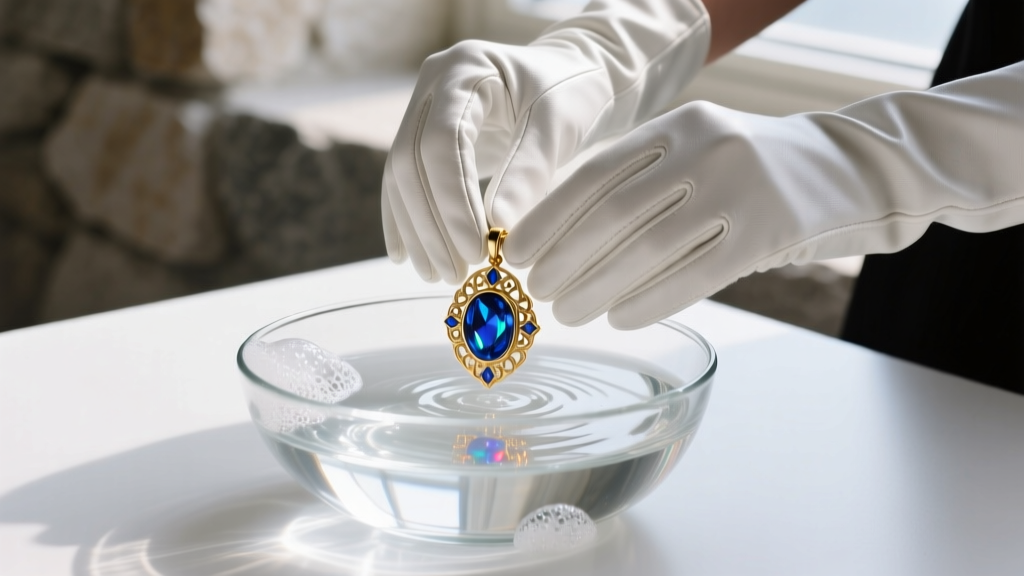
Step 1: The Distilled Water Bath
Never use tap water. Tap water contains chlorine, fluorides, and dissolved minerals that can react with gallium or leave micro-calcification spots on PVD surfaces. Fill a glass bowl with room-temperature distilled water. Add exactly two drops of a pH-neutral, dye-free dishwashing liquid. Submerge the jewelry for no more than three minutes to loosen sebum and cosmetic residue.
Step 2: Microfiber Agitation
Do not use a toothbrush, even one labeled 'extra-soft.' The bristles can harbor microscopic silica particles from previous use, which will easily scratch a PVD coating or gallium alloy. Instead, use a pristine, lint-free optical microfiber cloth. Gently dab and wipe the surface while the piece is submerged. For intricate settings, use a wooden cotton swab with the cotton tip slightly dampened in the soapy solution.
Step 3: The Distilled Rinse
Remove the piece and rinse it under a slow stream of distilled water to remove all soap residue. Soap film will dull the optical reflectivity of the blue surface, making it appear muddy or gray over time.
Step 4: Air and Pat Dry
Place the jewelry on a dry microfiber towel and gently pat it dry. Allow it to air-dry completely in a dust-free environment before storage. Never use a hairdryer or heat source, as rapid thermal expansion can cause PVD coatings to craze or true blue gold inlays to fracture along their crystalline cleavage planes.
Critical Hazards: What Destroys Blue Gold
The most common way collectors ruin blue gold jewelry is by treating it like standard 14k or 18k yellow gold. Avoid these catastrophic mistakes at all costs.
- Ultrasonic Cleaners: Ultrasonic cleaners use high-frequency sound waves to create cavitation bubbles. When these bubbles collapse against a surface, they generate intense localized shockwaves. These shockwaves will instantly shatter the brittle crystalline structure of a true blue gold (AuGa2) inlay. For PVD-coated pieces, the cavitation can cause microscopic pitting and delamination.
- Steam Cleaners: The sudden, extreme temperature shift of a pressurized steam cleaner is lethal to blue gold. Thermal shock will cause surface coatings to peel and can fracture the intermetallic bond between gold and gallium. The Federal Trade Commission (FTC) warns consumers that improper heat treatments can permanently alter the surface integrity of specialized jewelry finishes.
- Chemical Solvents and Ammonia: Standard commercial jewelry dips often contain ammonia or thiourea. Ammonia will aggressively oxidize the gallium or indium in a true alloy, turning the vibrant blue surface into a dull, corroded gray. Similarly, chlorine (found in pools and household bleach) will cause rapid pitting and structural degradation.
Cleaning Method Compatibility Chart
| Cleaning Method | True Blue Gold Alloy (AuGa2) | PVD / Rhodium Coated White Gold |
|---|---|---|
| Distilled Water & Neutral Soap | Safe (Gentle Dabbing Only) | Safe |
| Ultrasonic Cavitation | Destructive (Will Shatter) | Destructive (Causes Pitting) |
| Pressurized Steam | Destructive (Thermal Shock) | Destructive (Delamination) |
| Ammonia / Silver Dips | Destructive (Oxidizes Alloy) | Destructive (Strips Coating) |
| Polishing Cloths (Treated) | Destructive (Abrasives) | Destructive (Removes Microns) |
Long-Term Storage and Daily Wear Rules
Proper storage and mindful wearing habits are just as critical as the cleaning process itself. True blue gold alloys rank relatively low on the Mohs hardness scale and possess exceptionally poor fracture toughness.
Compartmentalization is Mandatory
Never store blue gold jewelry in a communal jewelry box. The diamond or sapphire accents in adjacent pieces will easily scratch the blue gold. Store each piece individually in an anti-tarnish flannel pouch or a dedicated, velvet-lined compartment to prevent friction-based micro-abrasions.
Environmental and Chemical Controls
Gallium and indium are reactive metals. While the gold component provides some nobility, prolonged exposure to high humidity and sulfur-rich environments (such as a bathroom) will accelerate surface oxidation. Use silica gel desiccant packets in your storage drawers to maintain a relative humidity level below 40%. Furthermore, human sweat has a pH ranging from 4.5 to 7.0; the acidic nature of perspiration can slowly degrade indium-based alloys over years of daily wear. Always apply perfumes, lotions, and hairsprays at least 15 minutes before putting on your blue gold pieces.

Expert Tip: If you are purchasing a blue gold piece for daily wear, always opt for a PVD-coated white gold design set in a protective bezel. True intermetallic blue gold alloys should be reserved for low-impact pieces like pendants or brooches, as a single sharp impact against a granite countertop can cleave the gallium alloy in half.
When to Seek Professional Restoration
If your blue gold jewelry loses its color or sustains physical damage, the restoration path depends entirely on its composition. If a PVD-coated white gold ring loses its blue hue due to friction and wear, a specialized jeweler with access to a PVD vacuum chamber can strip and re-deposit the coating. However, if a true AuGa2 inlay cracks or shatters, it cannot be soldered or welded like traditional gold. The piece must be sent back to a master metallurgist or the original foundry to have the intermetallic compound re-cast and carefully fitted back into the setting. Always consult a jeweler who specializes in alternative metallurgy, such as those affiliated with advanced manufacturing networks like Rio Grande, before attempting any structural repairs.


