K & D Jewelry & Gold Buyers: 2026 Gold Trend Analysis
Explore 2026 gold market trends with K & D Jewelry & Gold Buyers. Discover shifting karat preferences, trade-in styles, and expert buying insights.

The Intersection of High Spot Prices and Shifting Aesthetics
The gold market in 2026 is defined by a fascinating dichotomy: historic spot prices driving mass liquidation, coupled with a fierce consumer demand for high-karat, solid gold statement pieces. To understand the micro-economics of this shift, we analyze the buying patterns, trade-in behaviors, and style preferences observed at prominent regional hubs like K & D Jewelry & Gold Buyers. As a benchmark for the modern precious metals market, their counters reveal exactly what consumers are discarding, what they are hoarding, and what styles are commanding premium retail markups over melt value.
According to recent data from the World Gold Council, jewelry demand has remained resilient despite fluctuating macroeconomic pressures, largely driven by a cultural shift away from fast fashion and toward 'forever metals.' However, the types of gold crossing the buying counter have changed dramatically. The era of the delicate, hollow-chain layering trend is officially over, replaced by a demand for substantial, high-gram-weight pieces that serve as both wearable art and liquid assets.
The 2026 Trade-In Shift: What Consumers Are Selling
Walk into K & D Jewelry & Gold Buyers on any given Tuesday, and the melting pot tells a clear story of past trends meeting current economic realities. The most common items being liquidated for scrap in 2026 are remnants of the 2010s jewelry boom. Specifically, we are seeing a massive influx of hollow 10k and 14k white gold chains, as well as rose gold pieces that have fallen out of favor.
The Death of the Hollow Chain
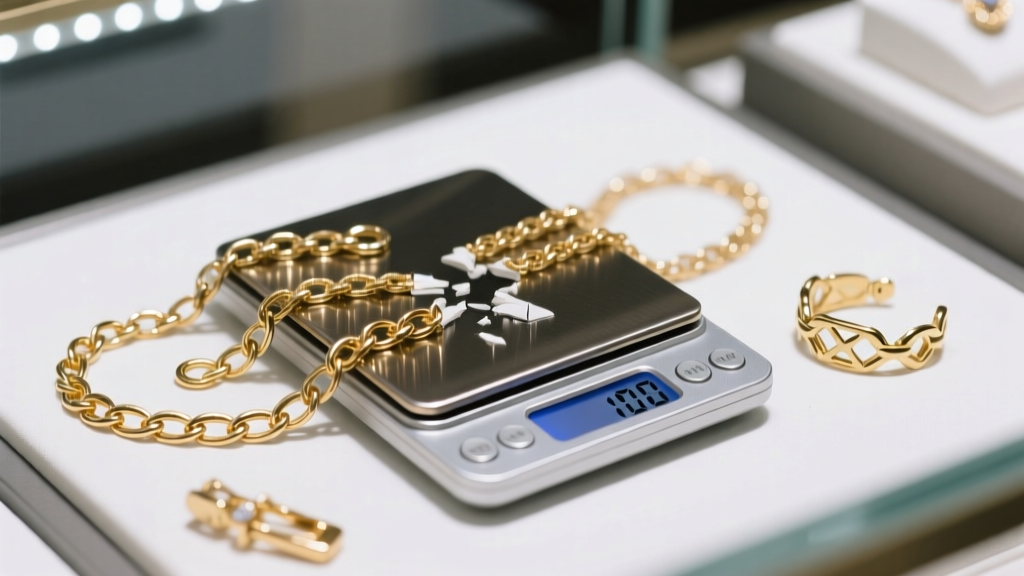
Hollow chains—particularly 2.5mm to 4mm figaro and rope styles—were mass-produced to offer the look of heavy gold at a fraction of the cost. In 2026, these pieces are failing structurally. Because they cannot be easily repaired by laser welding without collapsing the tubular links, consumers are bringing them in for scrap. Buyers typically deduct 15% to 20% from the melt value of hollow chains to account for the trapped resin or base-metal armatures sometimes used in older manufacturing processes.
The Rose Gold Liquidation
Rose gold, which peaked in popularity around 2018, is now heavily represented in the trade-in pile. Consumers are swapping out 14k rose gold lariat necklaces and geometric earrings to fund purchases in rich, high-karat yellow gold. The copper alloy in rose gold makes it slightly more brittle, and as these pieces age and suffer micro-fractures, owners are opting to melt them down rather than pay for complex soldering repairs.
Karat Preferences: The Data Behind the Buying Counter
Not all karats are treated equally in the current market. While 14k remains the volume leader in the United States, the premium segment has shifted aggressively toward 18k and 22k. Below is a breakdown of how different purities are performing at the buying counter in 2026.
| Karat | Purity % | 2026 Trade-In Volume | Primary Market Driver | Melt vs. Premium |
|---|---|---|---|---|
| 10k | 41.7% | High (Scrap) | Economic liquidation; pawn market overflow | Strict Melt Value |
| 14k | 58.3% | Very High | Everyday wear upgrades; estate cleanouts | Melt + 5-10% for vintage hallmarks |
| 18k | 75.0% | Moderate | Luxury daily wear; European estate imports | High Premium for signed pieces |
| 22k / 24k | 91.6% - 99.9% | Low (Hoarded) | Investment; cultural bridal markets | Spot + Premium (Rarely melted) |
As noted by industry analysts at JCK Online, the modern consumer is highly educated on gold purity. Buyers at K & D Jewelry report that customers are now negotiating based on real-time spot price apps, demanding transparency in the pennyweight (dwt) calculations. The days of flat-rate 'cash for gold' offers are dead; today's transactions require itemized spectrometer readouts.
Style Trends: What Buyers Are Sourcing for Resale
While the melting pot handles the scrap, the display cases at K & D Jewelry & Gold Buyers highlight the styles that command a premium. In 2026, the aesthetic is undeniably bold, textured, and unapologetically heavy.
The Resurgence of the Solid Rope Chain
The solid rope chain has reclaimed its throne as the ultimate staple of gold jewelry. However, the specifications have changed. Buyers are actively sourcing ropes in the 4mm to 7mm range, with weights starting at 25 grams and easily exceeding 60 grams for a 24-inch length. The key metric for buyers is the 'crush test'—ensuring the links are solid gold through and through, not gold-filled or heavily plated base metal. A genuine 5mm solid 14k rope chain weighing 40 grams is currently one of the most liquid and highly sought-after assets in the secondary market.
Architectural Signets and Cigar Bands
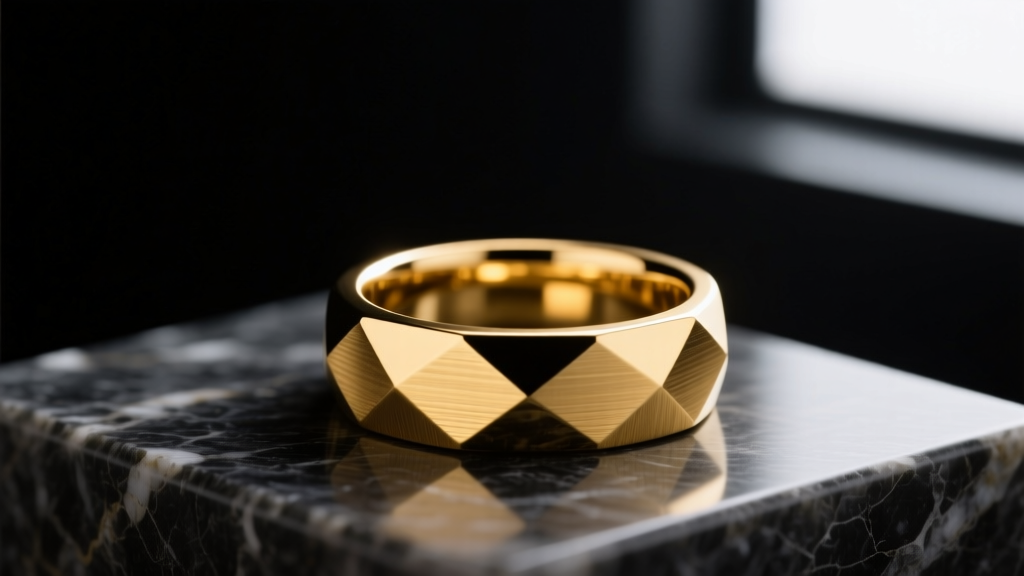
Signet rings have evolved from family crest vessels to architectural statement pieces. The 2026 trend favors sharp, geometric edges, deep brushed finishes, and unadorned faces. Weights for these rings typically range from 12 grams to 25 grams in 14k or 18k yellow gold. Similarly, the 'cigar band' ring—a wide, flat band measuring 8mm to 12mm in width—has become a unisex staple. Buyers pay a 15% to 25% premium over melt for these items if they are in pristine, un-polished condition, as the heavy satin finishing is expensive to replicate in a workshop.
Expert Framework: Evaluating Gold in a High-Fraud Market
With gold prices pushing historic highs, the market has seen a corresponding spike in sophisticated counterfeits. Tungsten-core chains and advanced gold-plating techniques require buyers to employ rigorous testing frameworks. The Gemological Institute of America (GIA) consistently emphasizes that surface-level testing is no longer sufficient for high-value transactions.
The Multi-Step Authentication Protocol
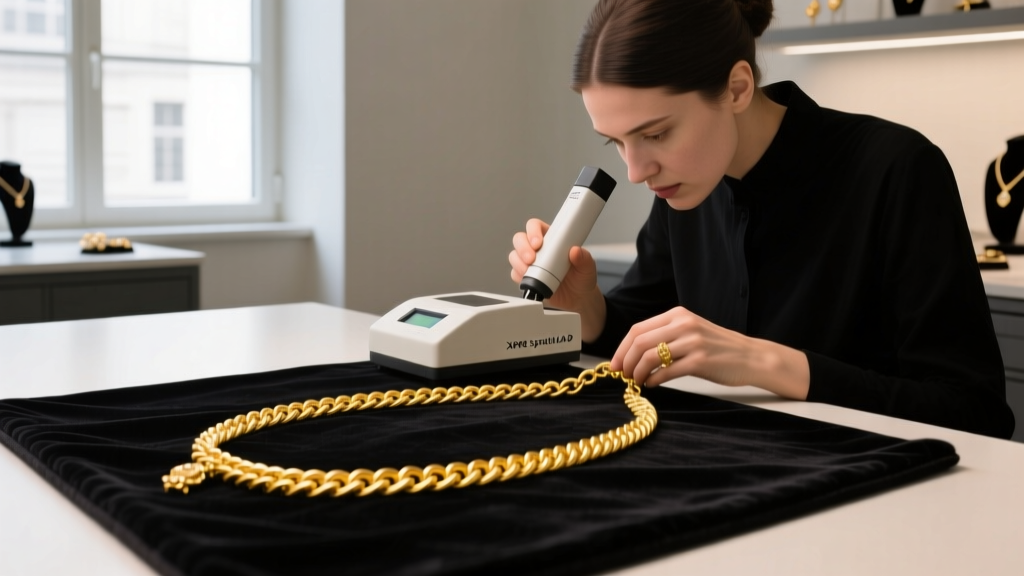
At top-tier buying establishments, the evaluation process follows a strict, multi-tiered protocol to protect margins and ensure authenticity:
- XRF Spectrometry (Surface): X-ray Fluorescence provides an exact elemental breakdown of the surface layer. However, it cannot detect tungsten or lead cores hidden beneath 2mm of solid gold.
- Specific Gravity Testing: By measuring the displacement of water, buyers calculate the exact density of the piece. Gold has a specific gravity of 19.32 g/cm³. Tungsten (19.25 g/cm³) will fool an XRF machine but requires precise hydrostatic weighing to detect when alloyed in complex chain links.
- Ultrasonic Thickness Gauging: Used primarily on thick bangles and heavy signet rings, this tool measures the time it takes for sound waves to bounce back from the core, revealing if a piece is solid or merely a thick gold shell over a base metal interior.
- The 'File and Acid' Fallback: When XRF and specific gravity yield conflicting data, a deep file into an inconspicuous link, followed by 18k nitric acid application, remains the undisputed final arbiter of truth.
'In 2026, trust is verified, not assumed. The most valuable tool a gold buyer possesses isn't the XRF machine; it's the skepticism to know when a 50-gram chain feels exactly two grams too light for its volume.'
Conclusion: The 2026 Gold Paradigm
The insights gathered from K & D Jewelry & Gold Buyers paint a clear picture of the 2026 gold landscape. Consumers are shedding the lightweight, trend-driven pieces of the past decade, liquidating hollow chains and rose gold to consolidate their wealth into heavy, high-karat yellow gold staples. For the informed buyer and collector, gold is no longer just an accessory; it is a wearable ledger. By understanding the structural integrity of chains, the shifting premiums of specific karats, and the necessity of advanced testing protocols, market participants can navigate the 2026 gold rush with precision and confidence.