Melting Gold Jewelry: The Ultimate Heirloom Repurposing Gift Guide
Discover the art of melting gold jewelry to create bespoke heirloom gifts. Learn karat mixing rules, casting costs, and occasion-matching ideas.

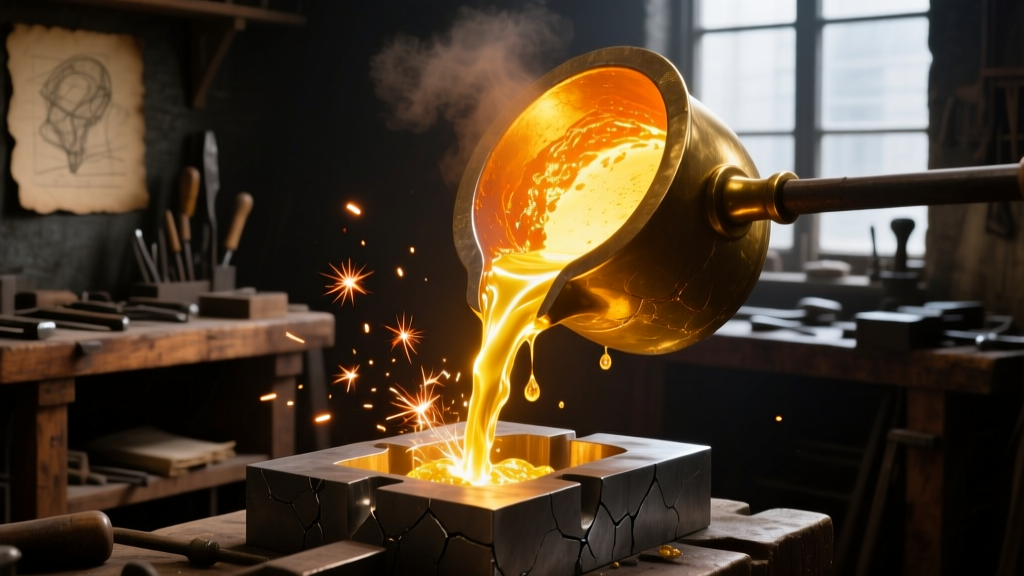
In an era where mass-produced accessories dominate the market, the most profound gifts are those that carry a narrative. Melting gold jewelry to forge a new, bespoke piece has become the ultimate gesture of love, legacy, and sustainability. Whether you are looking to honor a late grandparent, celebrate a milestone anniversary, or mark a major graduation, repurposing scrap or heirloom gold transforms dormant metal into a wearable testament to your relationships.
However, the journey from a tangled box of broken chains and outdated rings to a polished, modern heirloom requires a deep understanding of metallurgy, casting techniques, and design limitations. This comprehensive guide will walk you through the exact science, costs, and occasion-matching strategies for commissioning melted gold jewelry in 2026.
The Emotional Power of Repurposed Gold
Gold is virtually indestructible. It does not rust, tarnish, or decay, making it the perfect physical metaphor for enduring relationships. When you choose the route of melting down family gold, you are not just saving money on raw materials; you are transferring the emotional resonance of the past into a design that fits the recipient's modern aesthetic. According to the Gemological Institute of America (GIA), gold's malleability and resistance to corrosion allow it to be melted and recast endlessly without losing its fundamental elemental properties, provided the alloys are managed correctly by a master bench jeweler.
Occasion Matching: What to Melt and What to Make
Not every milestone calls for the same design approach. Matching the occasion to the structural reality of your scrap gold is the first step in the commissioning process.
Engagements & Weddings: The Heirloom Reset
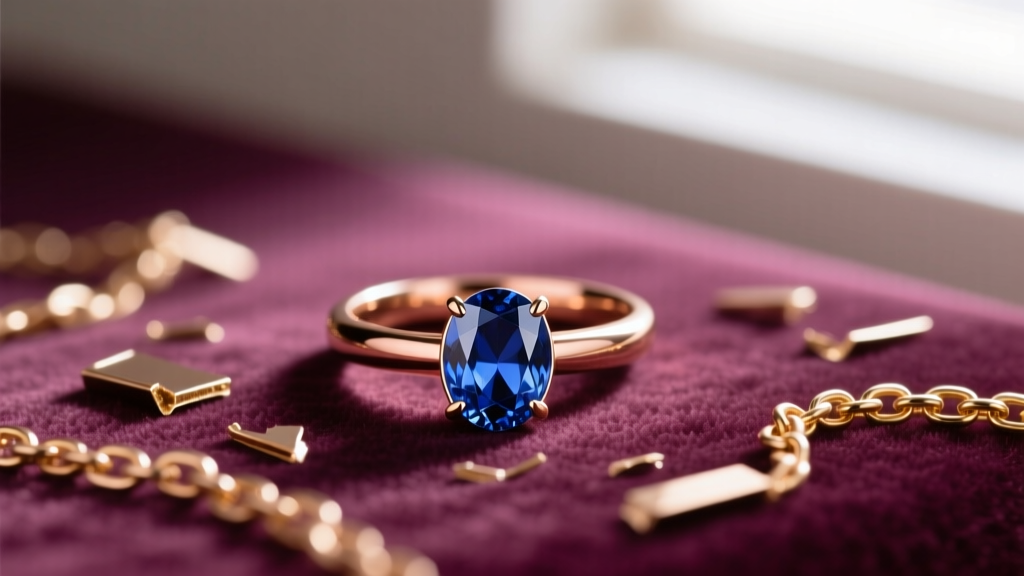
For engagements, the most common request is melting down a grandmother’s or mother’s yellow gold wedding band to create a new setting for a diamond or sapphire. Expert Tip: If the original ring is 18k yellow gold, it is exceptionally soft. A master jeweler will often recommend alloying it down to 14k or adding copper and silver to increase the tensile strength required to securely hold prongs for a center stone.
Major Anniversaries: The Union Melt
Celebrating a 20th or 30th anniversary? A growing trend is the "Union Melt," where both partners contribute outdated jewelry from their past (such as old class rings, broken chains, or single earrings) to be melted together into a pair of interlocking custom bands or a shared pendant. This requires careful karat matching, which we will detail in the metallurgy section below.
Graduations & Coming-of-Age: The Legacy Pendant
For high school or college graduations, heavy, outdated gold chains or vintage brooches can be melted into sleek, minimalist signet rings or medallion pendants. These pieces serve as a daily reminder of family support as the graduate enters the professional world.
The Metallurgy of Melting: Karats, Alloys, and Solder
The biggest misconception about melting gold jewelry is that you can simply throw a mix of old rings into a crucible and expect a perfect result. Gold jewelry is an alloy. Pure 24k gold is too soft for daily wear, so it is mixed with metals like copper, silver, zinc, and nickel to create 18k, 14k, or 10k gold. When you melt different karats together, you must adhere to the Lowest Common Denominator Rule.
The Solder Problem
Before any melting occurs, a jeweler must inspect the pieces for solder joints. Older jewelry was often repaired using cadmium-based solders to lower the melting point of the repair. If melted into a new batch, cadmium causes severe porosity (microscopic air bubbles) and structural weakness. A skilled jeweler will use a laser welder or a precise torch technique to "sweat" and remove old solder joints before the bulk gold is ever melted.
Karat Mixing Matrix
| Original Scrap Mix | Target Karat | Required Action | Structural Risk if Ignored |
|---|---|---|---|
| 18k and 14k mixed | 14k | Add copper/silver alloy grain to dilute the 18k down to a stable 14k. | High. Uneven alloy distribution causes brittle spots and cracking during polishing. |
| 14k Yellow & 14k White | 14k Yellow | Must be refined by a commercial refinery. White gold contains nickel/palladium which ruins yellow gold's color. | Catastrophic. The resulting metal will be a muddy, pale greenish-grey and highly porous. |
| 24k Coins/Bullion | 18k or 14k | Must add precise weights of master alloys (zinc, copper, silver) to achieve the desired karat and color. | High. Pure gold will bend and warp if used for rings or prong settings. |
The Custom Process: Weight Loss and 3D CAD
Understanding the physical realities of the casting process will save you from disappointment when you receive your final quote and design.
The 15% Loss Rule
When melting gold jewelry, you will never get a 1:1 weight return. The lost-wax casting process (or modern 3D-printed resin casting) requires a "sprue"—a channel through which the molten gold flows into the mold. This sprue must be cut off and filed down. Combined with oxidation, filing, and high-polish buffing, expect a 10% to 15% weight loss. If you bring in 10 grams of 14k gold, your final piece will weigh approximately 8.5 grams. If your chosen CAD design requires 12 grams, you will need to purchase supplemental casting grain from the jeweler to make up the difference.
Modern 2026 Casting Tech
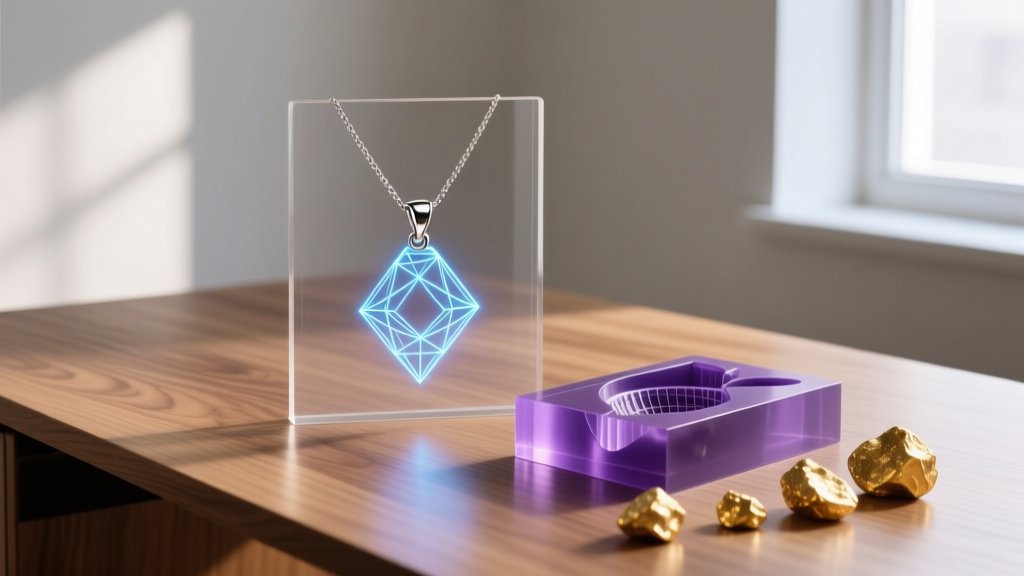
Today, the melting process is paired with advanced 3D CAD (Computer-Aided Design). Instead of hand-carving wax, jewelers design the piece digitally, allowing you to see exact millimeter dimensions and stone placements on a screen. A 3D printer then creates a photopolymer resin mold that burns out cleanly in the kiln, leaving a perfect cavity for your melted heirloom gold to fill.
Cost Breakdown: Budgeting for a Melted Gold Commission
Repurposing gold is often more cost-effective than buying new, but it is not "free" since you are paying for highly specialized bench labor. Here is a realistic 2026 pricing framework for a standard custom melt commission:
- Consultation & CAD Design Fee: $250 – $600 (Covers the 3D modeling and rendering).
- Casting & Labor Fee: $400 – $900 (Includes investing the mold, melting your specific gold, cutting the sprue, and initial polishing).
- Refining Fee (If applicable): $100 – $300 (Required if mixing white and yellow gold, or if the scrap is heavily contaminated with non-gold metals).
- Supplemental Gold Grain: Priced at daily spot market rates plus a 15-20% jeweler markup if your scrap falls short of the design's weight requirements.
Pro-Tip: Always ask your jeweler if they offer a "guaranteed yield" contract. Some master casters will absorb the 15% loss risk and guarantee the final weight, while others will bill you for supplemental grain if the casting comes up short.
Finding the Right Master Jeweler
Not every retail jewelry store has the capability to melt and cast gold in-house. Many simply mail your heirloom gold to a massive commercial casting house, which increases the risk of your gold being mixed with other clients' scrap. You want a jeweler with an in-house bench and casting equipment. Look for professionals affiliated with organizations like Jewelers of America or those holding Graduate Jeweler (GJ) diplomas from the GIA. Ask them directly: "Will my gold be melted in a dedicated crucible, and can I watch the pour?" A true artisan will welcome the transparency.
Final Thoughts
Melting gold jewelry is an alchemy of emotion and science. By understanding the strict rules of karat alloys, preparing for the realities of casting weight loss, and matching the final design to the significance of your milestone, you ensure that your family's history is preserved in a beautiful, wearable form for generations to come.


