Will 14k Gold Filled Jewelry Tarnish? A Troubleshooting Guide
Discover if 14k gold filled jewelry tarnishes. Learn the science behind discoloration, troubleshooting steps, and expert cleaning methods to restore it.

The Short Answer: Will 14k Gold Filled Jewelry Tarnish?
When investing in demi-fine jewelry, one of the most common questions we encounter at Jewel Style Radar is: will 14k gold filled jewelry tarnish? The short, metallurgical answer is no, the gold layer itself will not tarnish. Solid 14k gold is highly resistant to oxidation and corrosion. However, the jewelry piece as a whole can absolutely exhibit tarnish-like symptoms, discoloration, or fading if the outer gold layer is compromised, mechanically worn down, or subjected to specific chemical attacks that reach the base metal core.
To troubleshoot and solve discoloration issues, you must first understand the anatomy of your jewelry. According to the Federal Trade Commission (FTC), for an item to be legally stamped and sold as "14k Gold Filled" (often marked as 1/20 14K GF), exactly 5% (or 1/20th) of the total weight of the item must be solid 14k gold. This gold layer is not electroplated; it is mechanically bonded to a base metal core—usually jeweler's brass or copper—using extreme heat and pressure. Because the core metal is highly reactive to oxygen, sulfur, and moisture, any breach in that 5% gold shield will result in rapid tarnishing.
The Culprits: Why Your Gold Filled Jewelry is Discoloring
If your 14k gold filled piece is turning black, green, or dull, you are likely dealing with one of three specific failure modes. Identifying the exact culprit is the first step in our troubleshooting framework.
1. Mechanical Abrasion and Core Exposure
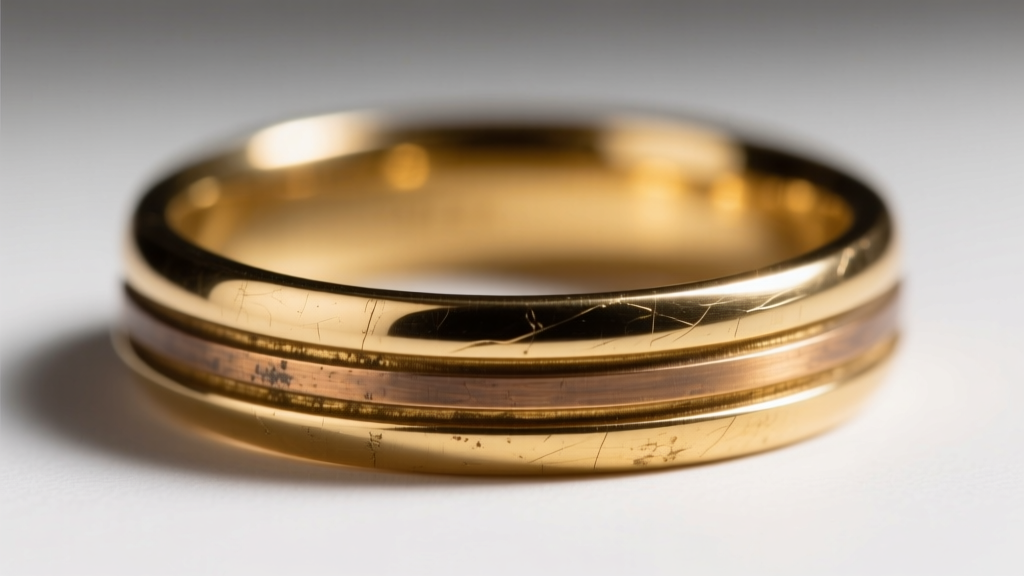
Gold filled wire is typically manufactured as either "single-clad" (gold on one side) or "double-clad" (gold on both sides). Rings, bracelets, and chains endure immense friction. Over time, microscopic layers of the 14k gold are worn away. Once the brass or copper core is exposed to the air and the natural pH of your skin (which ranges from 4.5 to 7.0), the copper rapidly oxidizes, creating a dark, sometimes greenish patina that spreads across the surface of the jewelry.
2. Chemical Attacks and Dezincification
Jeweler's brass is an alloy of copper and zinc. When exposed to chlorine (found in swimming pools, hot tubs, and harsh household bleach), a chemical process called dezincification occurs. The chlorine strips the zinc from the brass core at a microscopic level, leaving behind a porous, dark copper residue that bleeds through microscopic fissures in the gold layer. This is why you should never wear gold filled jewelry in chlorinated water.
3. Sulfur Exposure and Cosmetic Buildup
While the gold won't react to sulfur, the microscopic pores in the mechanical bond can trap sulfur-rich compounds found in lotions, perfumes, hairsprays, and even certain foods (like onions and eggs). This buildup creates a dull, dark film that mimics tarnish but is actually an accumulation of cosmetic debris and sulfur compounds reacting with trace base metals at the seams and clasps.
Troubleshooting Chart: Diagnosing the Discoloration
Use this diagnostic table to identify the exact nature of your jewelry's discoloration and apply the correct troubleshooting protocol.
| Visual Symptom | Root Cause Diagnosis | Actionable Solution |
|---|---|---|
| Dull, cloudy film over the gold | Cosmetic, oil, and lotion buildup masking the gold layer. | Mild dish soap soak and gentle brushing. |
| Dark black or brown spots | Sulfur exposure reacting with trace base metals at seams. | Baking soda and aluminum foil ion-exchange bath. |
| Greenish hue on the skin | Copper oxidation from sweat acids reacting with exposed core. | Remove, clean, and coat inner band with clear jeweler's lacquer. |
| Fading to a silver or brassy tone | Severe mechanical abrasion exposing the core metal. | Irreversible. Consider professional re-plating or retirement. |
Step-by-Step Restoration Protocols
According to the Gemological Institute of America (GIA), proper cleaning of gold alloys requires gentle, non-abrasive methods. When dealing with gold filled jewelry, you must be exceptionally careful not to strip the remaining 1/20th gold layer. Never use commercial silver dips (like Tarn-X) or ultrasonic cleaners, as the harsh chemicals and high-frequency vibrations can delaminate the gold from the brass core.
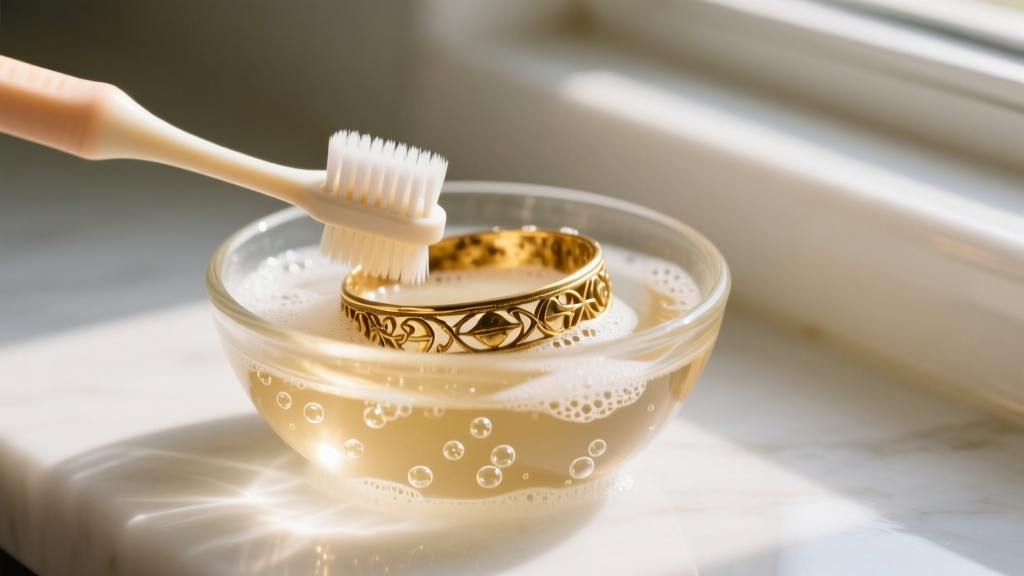
Protocol A: The Mild Surfactant Soak (For Surface Buildup)
- Mix the Solution: Combine 1 cup of lukewarm distilled water with 3 drops of a mild, phosphate-free dish soap (like Dawn).
- Soak: Submerge the jewelry for exactly 5 to 10 minutes. Do not exceed this, as prolonged water exposure can weaken the adhesive in gemstone settings.
- Agitate: Using a brand-new, ultra-soft baby toothbrush, gently sweep the bristles over the chain links or ring settings to dislodge trapped oils.
- Dry: Rinse under cool distilled water and immediately pat dry with a lint-free microfiber cloth. Air drying can leave hard water spots that mimic tarnish.
Protocol B: The Ion-Exchange Bath (For Sulfur Tarnish)
If your piece has dark, stubborn spots caused by sulfur, use this electrochemical reaction to lift the tarnish without abrasive rubbing.
- Line a small glass bowl with aluminum foil, shiny side up.
- Place the gold filled jewelry on the foil, ensuring it makes direct contact with the metal.
- Sprinkle 1 tablespoon of baking soda over the jewelry.
- Pour boiling water into the bowl until the piece is submerged. You will see bubbles and smell a faint sulfur (rotten egg) odor as the ion exchange pulls the sulfur off the metal and onto the aluminum.
- Remove after 2 minutes, rinse thoroughly, and dry completely.
Advanced Prevention: Securing the Gold Layer
Troubleshooting is only half the battle; preventing core exposure is the key to making 14k gold filled jewelry last a lifetime. Implement these specific storage and wear habits:
- Micro-Climate Storage: Store pieces in individual, airtight polyethylene ziplock bags. Add a 3M anti-tarnish strip and a small silica gel desiccant packet to absorb ambient moisture and neutralize sulfur gases.
- The "Last On, First Off" Rule: Always put your gold filled jewelry on after applying perfumes, lotions, and hairsprays, and take it off before showering or exercising.
- Avoid Polishing Cloths: Never use standard jeweler's polishing cloths (like the popular Sunshine cloths) on gold filled jewelry. These cloths are impregnated with micro-abrasives designed to remove tarnish from solid silver, but they will aggressively sand away your microscopic gold layer.
When to Give Up: Recognizing Irreversible Core Exposure
There is a point of no return in gold filled jewelry maintenance. If your ring band has faded to a dull, brassy color on the bottom half, or if a chain link has turned permanently dark and rough to the touch, the gold layer has been entirely worn away. Because the gold is mechanically bonded and not electroplated, you cannot simply "re-dip" it at home. At this stage, the piece must either be retired, melted down, or sent to a specialized refinery for heavy electroplating, which is often more expensive than replacing the demi-fine piece entirely. By understanding the limits and proper care of the 1/20th gold layer, you can keep your collection radiant for decades.