Can You Wear Gold Jewelry in an MRI? The Safety Truth
Wondering if you can wear gold jewelry in an MRI? Discover the risks of alloy metals, RF burns, and imaging artifacts in our expert safety guide.


The Short Answer: Pure Gold vs. Gold Alloys
If you have an upcoming medical imaging appointment, you have likely been handed a plastic bin and told to remove all metallic objects. But what about your favorite gold pieces? The question of whether can you wear gold jewelry in an mri is one of the most common queries we receive at Jewel Style Radar. The short answer is no; you should never wear gold jewelry inside an MRI suite. However, the scientific reasoning behind this rule goes far beyond simple hospital policy. It comes down to material science, electromagnetic physics, and the specific alloy composition of your jewelry.
Pure 24-karat gold is diamagnetic, meaning it is weakly repelled by magnetic fields and will not become a dangerous projectile. However, 24k gold is exceptionally soft and rarely used for everyday jewelry, body piercings, or structural pieces. The gold you actually wear—whether 10k, 14k, or 18k—is an alloy. It is mixed with metals like copper, silver, zinc, nickel, and occasionally trace amounts of iron or cobalt to increase durability. It is these secondary alloy metals that introduce severe safety risks in a magnetic resonance environment. According to the U.S. Food and Drug Administration (FDA), the powerful superconducting magnets used in MRI machines (typically 1.5 to 3 Tesla) can interact unpredictably with mixed-metal alloys, posing risks to both the patient and the diagnostic integrity of the scan.
The Three Major Risks of Wearing Gold in an MRI
Understanding the specific hazards of keeping your jewelry on during a scan is crucial for your safety and the maintenance of your pieces. The risks fall into three distinct categories:
1. The Projectile Effect (Ferromagnetism)
While the gold itself is not ferromagnetic, the alloy metals might be. Lower-karat gold, particularly 10k gold (which is only 41.7% pure gold), contains a high percentage of secondary metals. If a piece of jewelry was manufactured with trace iron, nickel, or cobalt to alter its color or hardness, the MRI's magnetic field can exert a massive translational pull on the item. A heavy gold chain or a thick signet ring can be violently ripped from your body, causing severe soft tissue damage or lacerations. Furthermore, if the jewelry features magnetic clasps or hidden steel springs (common in some vintage or complex jewelry designs), the pull is guaranteed and highly dangerous.
2. Radiofrequency (RF) Thermal Burns
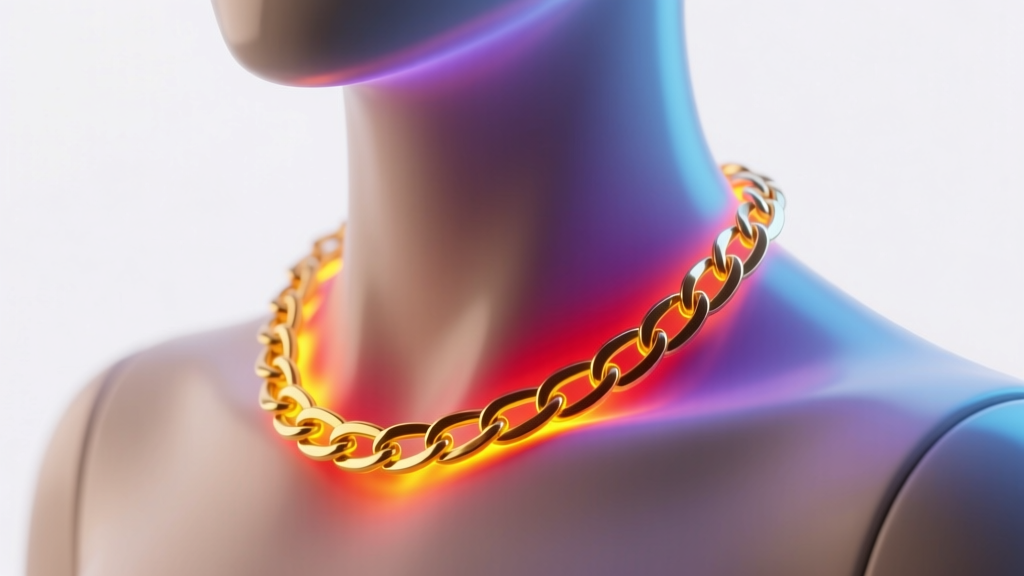
This is the most common and insidious danger associated with wearing any metal, including high-purity gold, in an MRI. The machine uses radiofrequency (RF) pulses to excite hydrogen protons in your body. Metal loops—such as a gold chain necklace, a hoop earring, or even a ring resting against the skin—act as conductive antennas. The RF pulses induce electrical currents within the gold loop, leading to rapid, localized heating. A study published in the National Institutes of Health (NIH) notes that these induced currents can heat metal jewelry to over 50°C (122°F) in seconds, resulting in second- or third-degree thermal burns where the metal touches the skin. Because patients are often sedated or inside a loud, enclosed tube, they may not feel the burn until the scan is over and the tissue is severely damaged.
3. Image Artifacts and Diagnostic Ruin
Even if your jewelry is perfectly safe from a physical standpoint, it can ruin the medical purpose of the scan. Gold has a very high atomic number (79) and high density. When left in or near the imaging field, it causes "susceptibility artifacts." On the resulting images, this appears as massive black signal voids or bright starburst distortions that obscure the surrounding anatomy. A gold dental crown can ruin a cervical spine or brain MRI, while a gold belly button ring can obscure critical abdominal or pelvic imaging, forcing the technician to restart the scan or the physician to misdiagnose a condition.
Karat Breakdown: MRI Safety by Gold Purity
To understand how your specific jewelry might react, it helps to look at the alloy composition. The American College of Radiology (ACR) mandates that all metallic objects be evaluated for safety, but as a general rule, all wearable gold should be removed. Below is a breakdown of why different karats pose unique issues:
| Gold Karat | Purity | Common Alloy Metals | MRI Risk Profile |
|---|---|---|---|
| 24k Gold | 99.9% | None (Pure Gold) | Low magnetic risk, but high RF burn risk if formed into a loop. High artifact distortion. |
| 18k Gold | 75.0% | Copper, Silver, Zinc, Palladium | Moderate RF burn risk. High image artifact risk. Zero projectile risk unless clasps contain steel. |
| 14k Gold | 58.3% | Copper, Silver, Zinc, Nickel | High RF burn risk. Nickel content may cause mild magnetic pull. Severe image artifacts. |
| 10k Gold | 41.7% | Copper, Zinc, Nickel, trace Iron | Very High Risk. Potential ferromagnetic projectile hazard depending on the exact alloy mix. |
Piercings and Permanent Jewelry: What to Do?
Body jewelry presents a unique challenge. Many people assume that because their piercings were done with "implant-grade" materials, they are safe. However, while implant-grade titanium (ASTM F136) is completely MRI-safe, gold body jewelry is almost always 14k or 18k. The primary danger with gold piercings in an MRI is the RF thermal burn. Because a captive bead ring (CBR) or a seamless hoop forms a perfect conductive loop directly through a fleshy, highly vascularized piercing tract, the induced heat can cook the tissue from the inside out, leading to severe scarring and rejection of the piercing.
If you have permanent gold jewelry (like a soldered bracelet or anklet) that cannot be easily removed, you must inform the MRI technologist well in advance. They may use specialized padding and cold compresses to monitor the skin, or in many cases, they will require the permanent piece to be cut off with specialized jewelry shears before the scan can proceed. Do not attempt to hide permanent jewelry under clothing or tape; the RF currents will still induce heating, and the tape can trap the heat against your skin, worsening a potential burn.
Post-MRI Care: Cleaning and Maintenance
Once your scan is complete and you are cleared to put your jewelry back on, the care and maintenance process begins. Hospital environments, medical adhesives, and the stress of the appointment can leave your gold pieces needing immediate attention.
Removing Medical Tape Residue
If a technician taped your jewelry down (a common, albeit outdated, practice for wedding bands that won't slide over swollen knuckles), the adhesive residue left behind can be stubborn. Never use acetone, nail polish remover, or harsh abrasive pads on your gold. Acetone can strip the rhodium plating off white gold and dull the polish on yellow and rose gold. Instead, apply a few drops of jojoba oil or mineral oil to the residue. Let it sit for three minutes to break down the adhesive bonds, then gently wipe it away with a microfiber cloth. Follow up with a standard gold wash.
Sanitizing After Hospital Exposure
Hospitals are high-traffic environments, and your jewelry has likely been exposed to airborne pathogens, harsh surface sanitizers, and sweat. To properly sanitize your gold without causing stress corrosion cracking, mix four parts warm water with one part mild, phosphate-free dish soap (like Dawn). Submerge your rings, earrings, and chains for 15 minutes. Use a soft-bristled baby toothbrush to gently agitate the crevices, particularly around prongs and under gallery wires where hospital grime accumulates.

The Chlorine and Bleach Warning
It is tempting to use household bleach or chlorine-based cleaners to "disinfect" your jewelry after a hospital visit. This is a catastrophic mistake. Chlorine reacts violently with the copper and silver alloys in 10k and 14k gold, causing a phenomenon known as stress corrosion cracking. This microscopic degradation weakens the metal's crystalline structure, leading to sudden, irreparable snapping of ring shanks and chain links. Always stick to mild surfactants and warm water for post-hospital sanitization.
Expert Checklist Before Your Scan
To ensure your safety and protect your valuable pieces, follow this pre-MRI checklist:
- Inventory Everything: Remove all rings, necklaces, bracelets, earrings, and body piercings. Do not forget hairpins or metallic threads in hair extensions.
- Secure Your Items: Leave valuable gold jewelry at home in a secure safe if possible. If you must bring it, store it in a zipped, soft-lined jewelry roll and hand it to a trusted companion or the front desk receptionist, rather than leaving it in an unsecured locker.
- Check for Hidden Metals: Inspect your gold pieces for hidden steel springs in lobster clasps or magnetic closures. These are highly ferromagnetic and pose the greatest projectile risk.
- Consult on Permanent Pieces: Call the imaging center 48 hours in advance if you have permanent gold jewelry or gold dental work to discuss their specific protocols and whether the piece must be removed.
- Prepare Your Cleaning Kit: Bring a small microfiber cloth and a travel-sized bottle of mild dish soap to the appointment so you can quickly sanitize your pieces before putting them back on in the waiting room.
Ultimately, the rule for MRI safety is absolute: if it is metal, it comes off. By understanding the material science behind your gold jewelry and practicing proper post-scan maintenance, you protect both your health and the longevity of your most cherished pieces.


