Gold Floral Jewelry: Technical Guide to Casting & Karats
Explore the technical craftsmanship behind gold floral jewelry. Learn about lost-wax casting, ideal karats, and structural care for delicate petals.

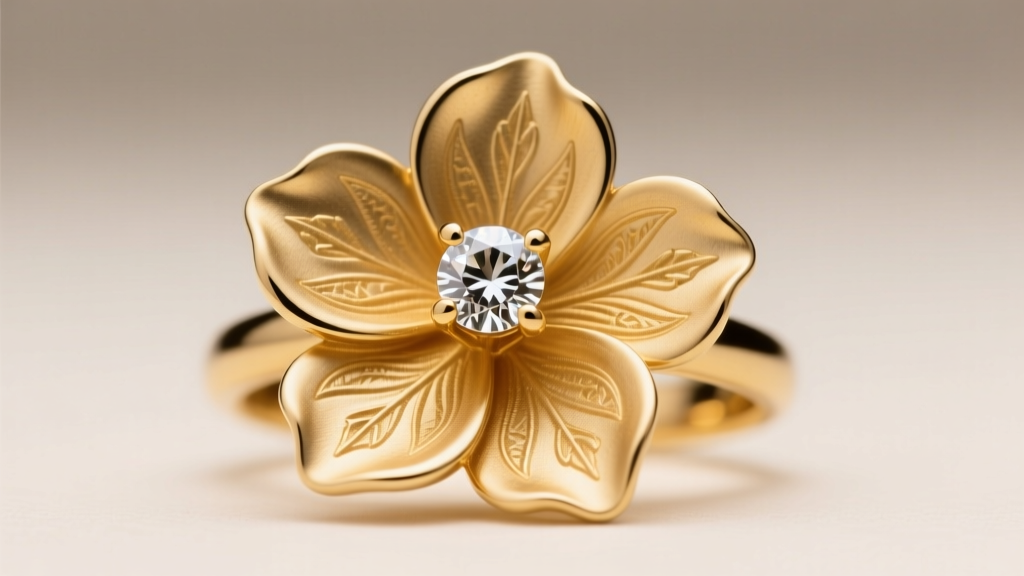
Gold floral jewelry represents a unique intersection of natural aesthetics and rigorous metallurgical engineering. Translating the delicate, asymmetrical geometry of a rose, orchid, or sprawling vine into a durable metal requires precise control over alloy composition, casting temperatures, and structural support. Unlike standard geometric jewelry, botanical designs feature extended, cantilevered structures that push the physical limits of gold alloys. This deep dive explores the technical realities of manufacturing, alloy selection, and maintaining gold floral jewelry.
The Metallurgy of Botanical Designs: 14k vs. 18k
When engineering gold floral jewelry, the selection of karat weight is not merely a matter of color or prestige; it is a critical structural decision. Floral designs inherently feature thin, asymmetrical geometries—think of a sprawling vine ring or an orchid pendant with protruding stamens. These thin structures are highly susceptible to mechanical stress and deformation.
18k yellow gold, comprising 75% pure gold, possesses a Vickers hardness (HV) of approximately 125. While this yields a rich, saturated yellow hue, the metal's relatively low yield strength makes it prone to permanent deformation in thin floral appendages. A delicate 18k gold leaf or stem can easily bend if caught on clothing. Conversely, 14k gold (58.3% pure gold) alloyed with copper, silver, and zinc pushes the Vickers hardness to roughly 155 HV. According to metallurgical data published by the Gemological Institute of America (GIA), the increased presence of alloying metals in 14k gold creates a denser crystalline lattice, significantly improving tensile strength.
For floral rings and bracelets that endure high-impact daily wear, 14k gold is the superior technical choice. However, for intricate floral brooches, earrings, or pendants where structural stress is minimal and color depth is paramount, 18k gold remains the industry standard for high-end botanical jewelry.
Fabrication Methods: Lost-Wax Casting vs. Electroforming
Translating a wax model of a delicate rose into solid gold requires precise fabrication techniques. The two primary methods for producing gold floral jewelry are traditional lost-wax casting and electroforming. Each method dictates the final piece's weight, wall thickness, and overall durability.
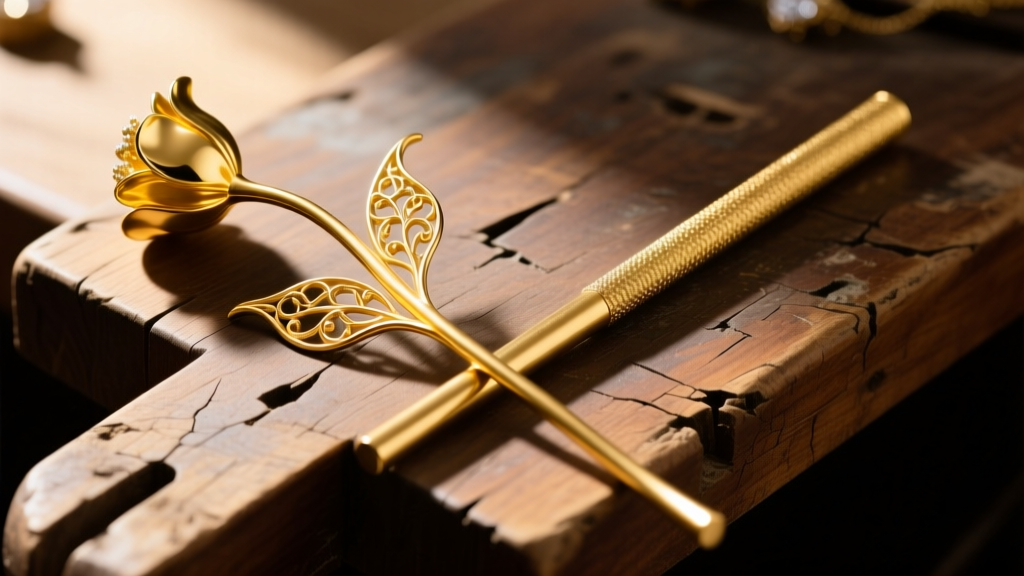
Lost-Wax Casting and Sprue Dynamics
In lost-wax casting, molten gold is forced into a plaster investment mold. For floral designs, the placement of the sprue (the channel through which molten metal flows) is critical. If a sprue is attached to a thin petal tip, the metal will cool too quickly, resulting in incomplete fills or severe gas porosity. Expert casters attach sprues to the thickest part of the botanical design—usually the stem, calyx, or central pistil—to ensure proper directional solidification. Furthermore, gold alloys shrink between 1.25% and 1.5% during cooling. In asymmetrical floral designs, improper spruing can cause the piece to warp as it contracts, ruining the delicate symmetry of the petals.
The Electroforming Advantage for Large Florals
When designing oversized floral pendants or hollow botanical cuffs, solid casting results in a piece that is prohibitively heavy and expensive. Electroforming solves this by depositing gold atom by atom onto a conductive wax or resin mandrel. This process allows for wall thicknesses as thin as 0.2mm to 0.4mm, creating voluminous, highly detailed floral structures that are remarkably lightweight. The World Gold Council notes that electroforming maximizes the visual impact of gold while minimizing the raw material required, though it demands specialized post-processing to remove the internal mandrel.
Technical Comparison of Fabrication Methods
| Parameter | Lost-Wax Casting (Solid) | Electroforming (Hollow) |
|---|---|---|
| Minimum Wall Thickness | 0.8mm - 1.2mm | 0.2mm - 0.4mm |
| Structural Integrity | High (Solid core) | Moderate (Hollow, prone to denting) |
| Weight-to-Volume Ratio | Heavy | Extremely Light |
| Best Application | Rings, small studs, prong settings | Large pendants, hollow cuffs, brooches |
| Repairability | High (Can be soldered easily) | Low (Heat can melt internal resin) |
Structural Vulnerabilities and Failure Modes in Floral Settings
Floral jewelry frequently utilizes "petal prongs" or "leaf claws" to secure central gemstones. While aesthetically cohesive, these organic prong shapes present unique failure modes. Unlike standard round or V-prongs that maintain a consistent cross-sectional thickness, petal prongs often taper and curve, creating stress concentrators at the base of the prong.
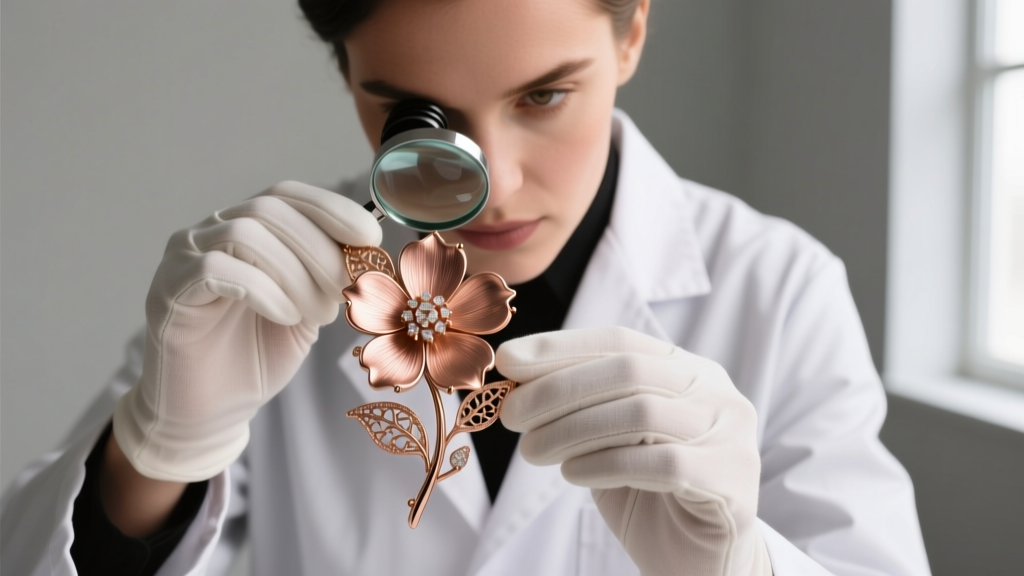
Over time, the repeated micro-flexing of a tapered petal prong can lead to metal fatigue and eventual fracture. To mitigate this, master jewelers will often laser-weld a microscopic bead of hard solder at the prong's base or design the prong with a hidden internal strut of higher-karat white gold for added rigidity. Additionally, thin cast floral petals are highly susceptible to "sink marks"—depressions on the metal surface caused by localized shrinkage during cooling. These marks are often mistaken for dents by consumers but are actually inherent casting defects that require aggressive filing and polishing to remove, which in turn compromises the petal's structural thickness.
Alloy Coloration and Botanical Realism
Beyond structural integrity, the choice of gold alloy deeply impacts the visual realism of floral jewelry. The natural world is rarely a single, uniform shade of yellow. To capture the organic essence of botanicals, jewelers manipulate the alloying metals to create nuanced color shifts.
Rose gold, achieved by increasing the copper content (often up to 20% or more in 14k alloys), provides a warm, pinkish hue that perfectly mimics the delicate tones of cherry blossoms, peonies, and roses. However, high-copper alloys are notoriously difficult to cast in thin sections due to copper's high oxidation rate. When molten rose gold is exposed to oxygen during the casting process, it forms copper oxide inclusions, leading to a brittle surface layer known as "fire scale." For delicate floral pieces, casters must use an inert gas atmosphere, such as argon, during the melting phase to prevent this oxidation and ensure the thin petals remain malleable and defect-free.
Conversely, white gold alloys—typically mixed with palladium or nickel—are frequently used for the stems, thorns, or dew-drop accents in floral designs. Palladium-white gold offers excellent ductility, making it ideal for crafting the slender, winding vines that often serve as the structural backbone of a floral ring or bracelet. Because palladium-white gold does not require rhodium plating to maintain its color, it is highly preferred for textured botanical elements where polishing away a rhodium layer would ruin the intricate matte or bark-like finishes applied to the metal.
Advanced Care Protocols for Delicate Gold Florals
Maintaining gold floral jewelry requires an understanding of its specific structural vulnerabilities. Standard jewelry cleaning protocols can be disastrous for delicate botanical pieces.
- Ultrasonic Cleaners: Never place hollow electroformed floral jewelry in an ultrasonic cleaner. The high-frequency cavitation bubbles can easily implode against the 0.3mm gold walls, causing microscopic fractures or completely collapsing the hollow petals. Furthermore, the vibrations can loosen gemstones secured in delicate petal prongs.
- Steam Cleaning: While safe for solid cast 14k florals, high-pressure steam can force water and chemical residues into the microscopic seams of multi-part floral assemblies, leading to trapped moisture and subsequent galvanic corrosion if dissimilar solder alloys were used.
- Manual Cleaning: The safest method for intricate gold florals is a soak in warm water with a few drops of mild, phosphate-free dish soap, followed by gentle agitation with a soft-bristled baby toothbrush. Pay special attention to the underside of the floral elements (the calyx and stem joints), where skin oils and lotions accumulate and accelerate tarnishing in the copper-rich alloys of 10k and 14k gold.
By understanding the metallurgy, fabrication constraints, and specific failure modes of gold floral jewelry, collectors and wearers can better appreciate the technical mastery required to turn raw gold into blooming, wearable botanical art.


