Symbols for Gold on Jewelry: A Complete Buyer's Guide
Learn to identify symbols for gold on jewelry. This buyer's guide decodes hallmarks, karat stamps, and maker's marks to ensure authentic purchases.

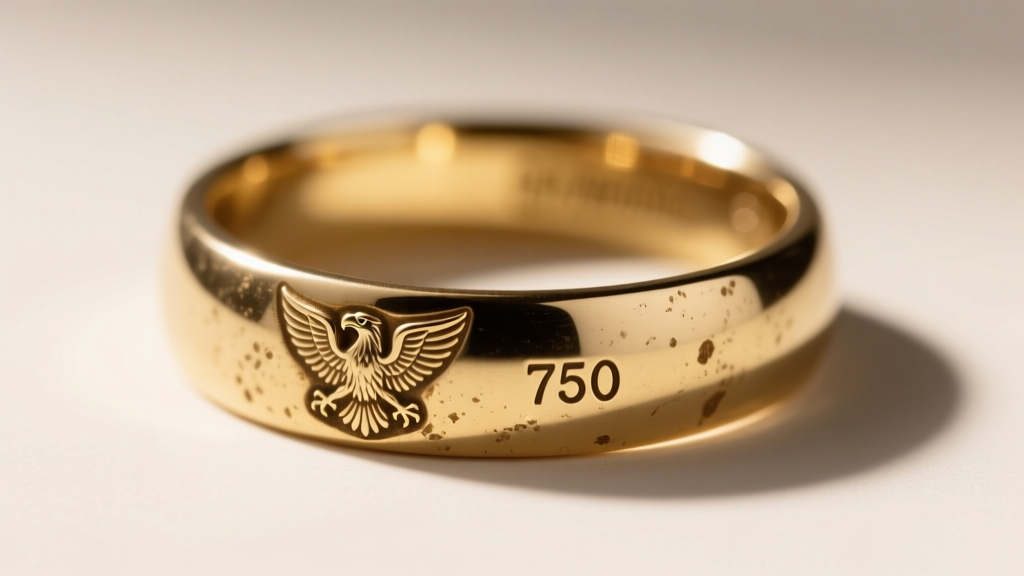
The Anatomy of a Gold Hallmark
When shopping for vintage, estate, or even modern luxury pieces, understanding the symbols for gold on jewelry is your first line of defense against counterfeits and overpriced imitations. A hallmark is not merely a stamp; it is a legally binding guarantee of metal purity, origin, and sometimes the exact year of manufacture. In the United States, the National Gold and Silver Stamping Act of 1906 established strict penalties for misrepresenting metal content, requiring that any piece stamped with a karat mark must also bear a registered maker's mark. However, international standards vary wildly, making it crucial for buyers to decode these microscopic engravings before making a purchase.
The symbols for gold on jewelry generally fall into four distinct categories: purity marks (karats or millesimal fineness), assay marks (government or independent testing guarantees), maker's marks (the manufacturer's signature), and date letters. Missing or altered stamps are immediate red flags that warrant professional verification.
Decoding the Numbers: Karat Stamps Explained
While American buyers are accustomed to the karat system (10k, 14k, 18k), the global market relies heavily on millesimal fineness—a three-digit number representing the parts per thousand of pure gold in the alloy. Pure gold is 24 karats, meaning it is 99.9% gold. Because pure gold is too soft for daily wear, it is alloyed with metals like copper, silver, zinc, and nickel to increase durability and alter color.
| Karat | Numeric Stamp | Gold Purity (%) | Common Markets | Durability & Use Case |
|---|---|---|---|---|
| 10k | 417 | 41.7% | USA, UK | Highly durable, pale color, ideal for everyday rings and class rings. |
| 14k | 585 (or 583) | 58.5% | USA, Global | Excellent balance of rich color and scratch resistance for all jewelry. |
| 18k | 750 | 75.0% | Europe, Asia, Luxury | Rich yellow hue, softer metal, best for earrings, necklaces, and high-end watches. |
| 22k | 916 | 91.6% | India, Middle East | Very soft, vibrant orange-yellow, primarily used in traditional bridal and investment jewelry. |
| 24k | 999 | 99.9% | China, Investment | Pure gold, easily bends and scratches, reserved for bullion or ceremonial pieces. |
Buyer's Note on "Plumb" Gold: If you encounter a stamp reading 14KP or 18KP, the "P" stands for "Plumb," not "Plated." This is an older American designation guaranteeing that the piece contains exactly the stated karat weight, with no allowable negative tolerance. It is a highly desirable mark for vintage collectors.
European vs. American Gold Symbols
The symbols for gold on jewelry change dramatically when you cross borders. The US relies on a manufacturer-honor system regulated by the Federal Trade Commission (FTC), meaning the maker stamps the piece and assumes legal liability. Europe, conversely, utilizes a rigorous, government-mandated assay system where an independent office tests and stamps the metal.
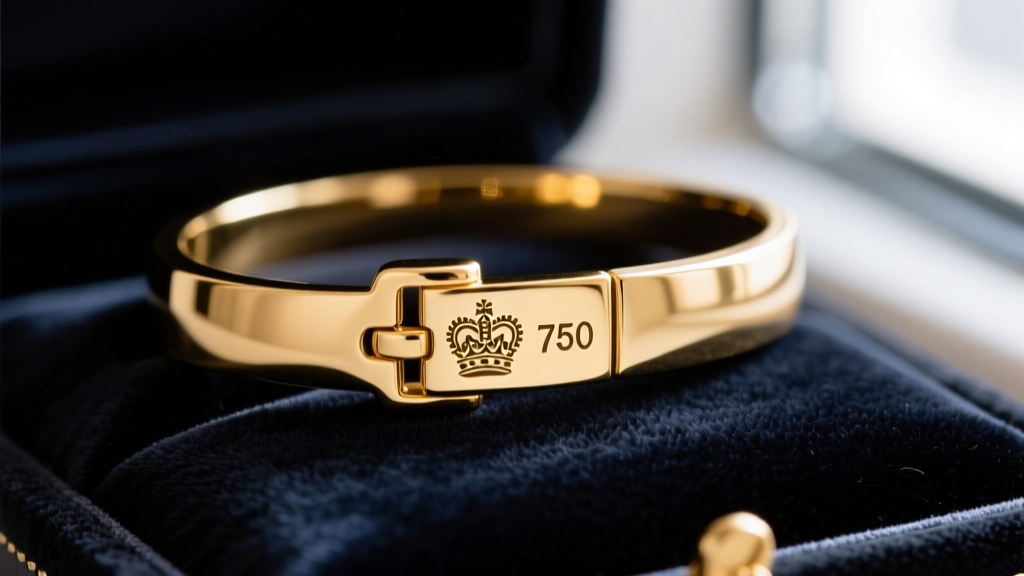
Common European Assay Marks
- The French Eagle Head (Tête d'Aigle): Introduced in 1838, this profile of an eagle guarantees the piece is a minimum of 18k (750) gold. If you see a boar's head or a dog's head, you are looking at silver or platinum, not gold.
- The UK Crown: According to the London Assay Office, the crown mark was introduced in 1798 to denote gold. It will always be accompanied by a numeric fineness stamp (e.g., 375 for 9k, 750 for 18k) and a sponsor's mark.
- The Swiss Helvetia: A profile of a woman's head indicates 18k gold, while a squirrel or hare denotes 14k or lower purities in vintage Swiss watch cases and jewelry.
Identifying Gold Plated and Filled Symbols
One of the most costly mistakes a buyer can make is misinterpreting symbols for gold on jewelry that indicate surface treatments rather than solid alloys. Unscrupulous sellers often rely on buyer confusion regarding these abbreviations. Memorize these acronyms to protect your wallet:
- GF (Gold Filled): A thick layer of gold mechanically bonded to a base metal. By US law, it must constitute at least 1/20th (5%) of the item's total weight. Often stamped as 1/20 14k GF.
- HGE (Heavy Gold Electroplate): Indicates a minimum of 2.5 microns of gold plating. While more durable than standard plating, it is still a surface treatment over brass or copper.
- GP (Gold Plated): A microscopic flash of gold (less than 0.175 microns). It will wear off quickly with daily friction.
- Vermeil: Not always stamped with an abbreviation, but true vermeil requires a sterling silver (.925) base plated with at least 2.5 microns of 10k or higher gold. Look for a .925 stamp alongside a gold appearance.
Maker’s Marks and Date Letters
Beyond purity, authentic vintage pieces feature a maker's mark (or sponsor's mark in the UK). These are typically initials enclosed in a specific geometric shape—a shield, rectangle, or diamond. For example, a rectangular cartouche with clipped corners often indicates a specific era of French manufacturing. Lang Antiques maintains an extensive database of these marks, which can help you trace a piece back to a specific artisan or jewelry house like Cartier, Tiffany & Co., or Boucheron. Date letters, primarily found on British and French pieces, use a rotating alphabet with varying fonts and shield shapes to denote the exact year the piece was assayed.

Red Flags: Fake Stamps and Missing Hallmarks
Counterfeiters have become highly sophisticated, often using laser engraving to replicate authentic symbols for gold on jewelry. Here is how to spot a fake stamp:
- Inconsistent Wear: If a ring is heavily worn on the bottom of the shank, showing brass or copper underneath, but the karat stamp on the inside is crisp, deep, and perfectly legible, the stamp was likely added after the plating wore off, or the piece is a modern fake designed to look vintage.
- Font and Depth Anomalies: Authentic vintage stamps were struck with a steel punch, resulting in a slight displacement of metal around the edges (a "halo"). Laser-etched fake stamps often look perfectly flat, overly sharp, or exhibit microscopic dot-matrix patterns under magnification.
- Missing UK Marks: Under the UK Hallmarking Act of 1973, it is illegal to sell an item described as gold if it weighs more than 1 gram and lacks a full hallmark (Sponsor, Assay Office, Fineness). A UK piece with only a "18k" stamp and no assay symbols is highly suspect.
Tools for Verifying Gold Symbols at Home
While decoding symbols is essential, it should never be your only verification method. Equip yourself with the right tools:
- 10x Triplet Loupe: The industry standard for inspecting stamps. A "triplet" lens corrects for color and spherical distortion, allowing you to read microscopic maker's marks clearly.
- Specific Gravity Test: Pure gold has a density of 19.32 g/cm³. By weighing the piece in air and then suspended in water, you can calculate its density. A 14k gold item should yield a density of approximately 13.0 to 14.0 g/cm³. If it reads 8.5 g/cm³, you are holding brass, regardless of the stamp.
- Professional XRF Spectrometer: For high-value purchases, insist on an X-ray Fluorescence (XRF) test from a certified gemologist. This non-destructive test penetrates the surface to provide an exact elemental breakdown of the alloy, instantly exposing gold-plated tungsten or lead fakes.
"A hallmark is a promise, but a loupe and a scale are the proof. Never let a microscopic stamp override the physical properties of the metal in your hand." — Master Bench Jeweler Adage
By mastering the symbols for gold on jewelry, you transition from a passive shopper to an informed collector. Whether you are hunting for a mid-century 18k French eagle-head brooch or a modern 14k American wedding band, the ability to read, interpret, and verify these marks ensures your investment is built on solid gold.


