Fixing Faded Gold Plated Jewelry: Expert Troubleshooting
Discover expert troubleshooting steps to restore faded gold plated jewelry. Learn safe cleaning methods, replating costs, and when to replace pieces.

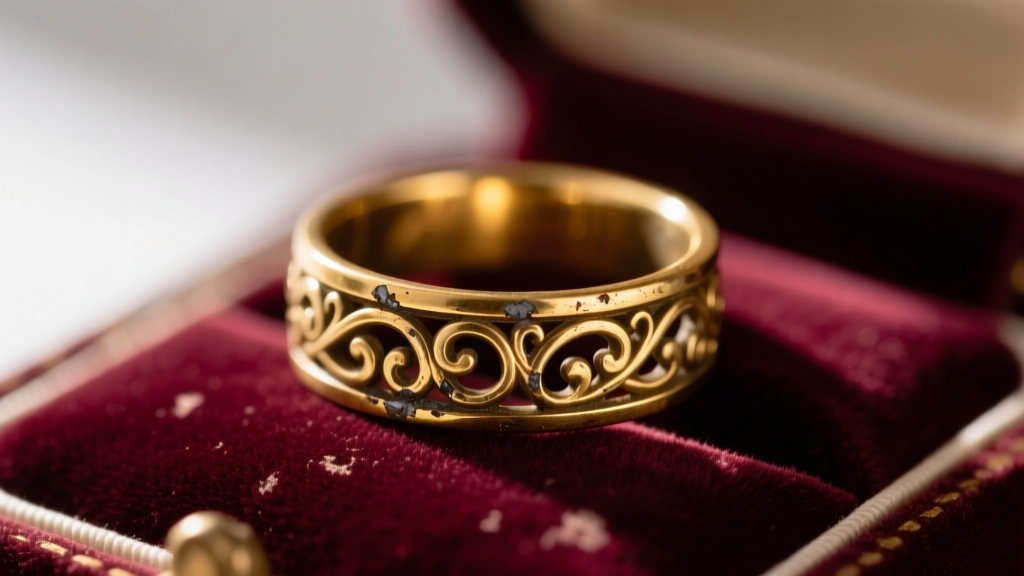
The Science of Gold Plating Wear: Why Fading Happens
Gold-plated jewelry offers the luxurious aesthetic of solid gold at a fraction of the cost, but it comes with an inherent structural vulnerability: the gold layer is merely a surface coating. When you are dealing with faded gold plated jewelry, you are witnessing the gradual depletion of this microscopic layer. According to the Federal Trade Commission (FTC) Jewelry Guides, gold plating must be at least 0.175 microns thick to be legally marketed as such, but many fast-fashion pieces utilize 'flash plating' that is significantly thinner.
The fading process is rarely uniform. It accelerates at high-friction contact points—such as the inner shank of a ring, the clasp of a necklace, or the posts of earrings. When the gold layer wears away, the underlying base metal (typically brass, copper, or stainless steel) is exposed to oxygen, moisture, and the acidic pH of human sweat. This exposure triggers oxidation, resulting in dullness, tarnish, and the notorious green or black skin discoloration caused by copper and brass alloys reacting to lactic acid.
Triage: Assessing the Damage Level
Before attempting any restoration, you must accurately diagnose the severity of the wear. Treating heavily worn plating with aggressive polishing will only strip the remaining gold. Use the following diagnostic framework to determine your next steps.
| Damage Level | Visual Indicators | Underlying Cause | Recommended Action |
|---|---|---|---|
| Level 1: Surface Grime | Dullness, loss of luster, slightly yellowish tint | Accumulation of sebum, lotions, and environmental dust | Gentle DIY cleaning with pH-neutral soap |
| Level 2: Micro-Scratches | Visible swirl marks under direct light, muted reflection | Contact with harder surfaces or abrasive clothing | Professional micro-polishing or careful buffing |
| Level 3: Pinhole Wear | Tiny specks of darker metal visible, slight skin discoloration | Localized friction wearing through the gold layer | Professional electroplating (replating) |
| Level 4: Severe Flaking | Large patches of base metal, peeling gold, green skin | Complete depletion of plating, poor initial adhesion | Replace the piece or melt down if base is precious |
Safe Cleaning Protocols for Faded Pieces
If your jewelry falls into Level 1 or Level 2, a meticulous cleaning can often restore the illusion of fresh plating by removing the oxidized oils masking the surface. However, standard jewelry cleaning methods can be catastrophic for plated items.
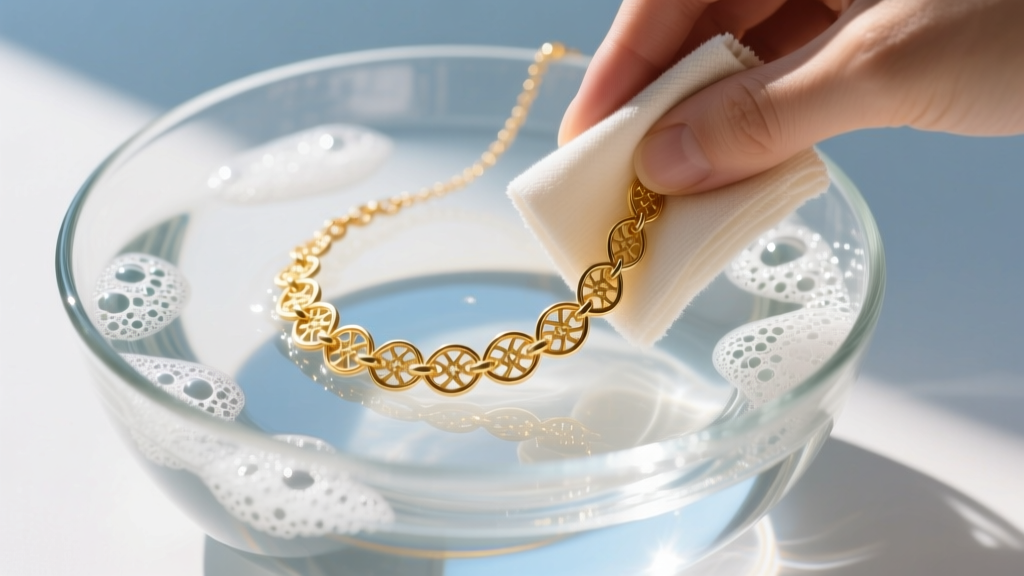
The Only Safe DIY Cleaning Method
- Prepare the Solution: Mix three drops of pH-neutral dish soap (like original Dawn) into a bowl of lukewarm distilled water. Avoid tap water, as dissolved minerals and chlorine can accelerate base metal oxidation if micro-fractures exist in the plating.
- Soak Briefly: Submerge the jewelry for no more than 3 to 5 minutes. Prolonged water exposure can weaken the adhesive bonds in glued settings and seep into microscopic cracks.
- Agitate Gently: Use a baby-hair toothbrush (ultra-soft) to lightly sweep crevices. Never scrub the flat surfaces of the plating.
- Rinse and Dry: Rinse under a gentle stream of distilled water. Immediately pat dry with a lint-free microfiber cloth, then allow it to air-dry completely on a paper towel before storage.
Critical Troubleshooting: What to Avoid
- Ultrasonic Cleaners: Never use them. The high-frequency cavitation bubbles will literally blast the fragile gold layer off the base metal.
- Baking Soda and Toothpaste: These are highly abrasive. Gold plating is softer than the base metals underneath; abrasive pastes will sand the gold away in seconds.
- Commercial Silver Dips: Chemical tarnish removers formulated for sterling silver contain harsh acids (like thiourea) that will instantly strip gold plating.
The Replating Process: Costs and Considerations
When faded gold plated jewelry reaches Level 3 wear, cleaning will not restore it. The only viable solution is professional electroplating. This involves a jeweler chemically stripping the remaining gold, polishing the raw base metal to a mirror finish, and submerging it in an electrochemical bath to deposit a fresh layer of gold.
Understanding Replating Thickness
When requesting a replating service, you must specify the desired micron thickness. As noted by industry suppliers like Rio Grande, standard decorative plating is often 0.5 to 1.0 microns. For rings and bracelets that endure high friction, demand a 'heavy gold electroplate' (HGE) of at least 2.5 microns to ensure longevity.
Estimated Replating Costs (2026 Benchmarks)
Replating is a labor-intensive process. The cost is driven more by the prep work (stripping, polishing, masking stones) than the gold itself. Below are average market rates for professional replating:
- Simple Bands / Pendants (No Stones): $35 – $65
- Intricate Chains (e.g., Cuban Links, Figaro): $80 – $150 (requires meticulous brushing to avoid pooling)
- Rings with Gemstones: $75 – $120 (stones like turquoise, opal, or pearls must be physically removed or heavily masked, as the plating chemicals will destroy them)
Expert Troubleshooting Tip: If your faded piece is gold-plated over sterling silver (known as gold vermeil), replating is highly successful because silver provides an excellent, non-reactive base. However, if the base is brass or copper, the jeweler must first apply a microscopic barrier layer of nickel or palladium before plating the gold. Without this barrier, the copper ions will migrate through the gold layer over time, causing the new plating to tarnish from the inside out within months.
Preventative Maintenance to Delay Future Fading
Once you have restored or replated your jewelry, implementing strict maintenance protocols is essential. The Gemological Institute of America (GIA) emphasizes that environmental factors are the primary catalysts for jewelry degradation.
The 'Last On, First Off' Rule
Gold plating is highly susceptible to chemical etching. Always put your jewelry on after applying perfumes, hairsprays, lotions, and sunscreen. The alcohol and volatile organic compounds (VOCs) in cosmetics break down the molecular bonds of thin gold layers. Conversely, remove your jewelry first when undressing to prevent it from catching on fabrics and sustaining micro-scratches.
Optimal Storage Environments
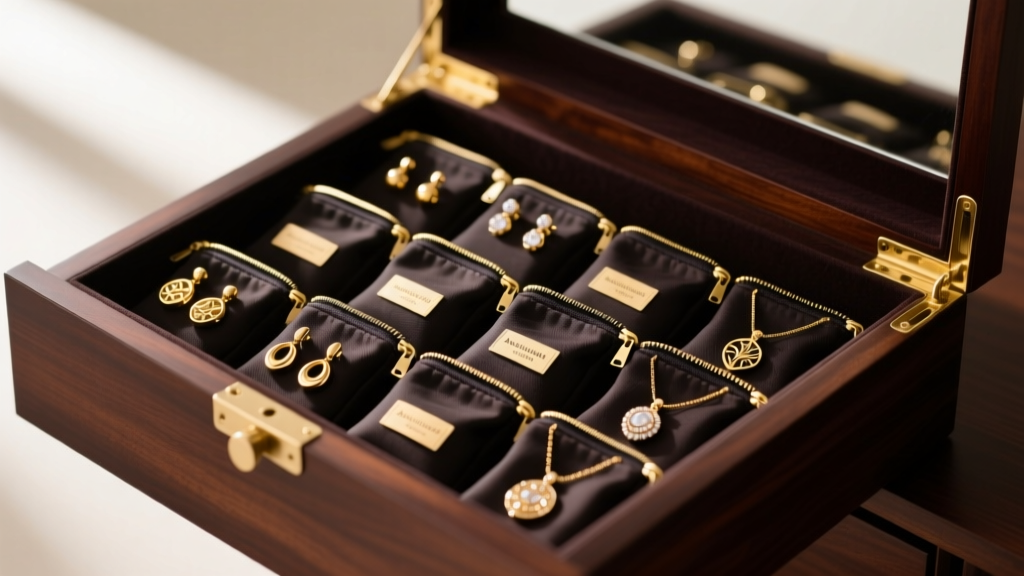
Do not toss gold-plated pieces into a communal jewelry box. The friction of metal-on-metal contact will grind the plating away. Store each piece individually in an airtight, anti-tarnish polyethylene bag. For maximum protection, include a 3M anti-tarnish strip or a piece of silica gel in the bag to absorb ambient moisture and sulfur compounds that cause the underlying base metals to oxidize if micro-cracks are present.
When to Let Go: Upgrading to Solid Alternatives
Troubleshooting faded gold plated jewelry eventually reaches a point of diminishing returns. If a piece requires replating every 12 to 18 months, the cumulative cost of professional electroplating will soon exceed the cost of replacing the item entirely. For everyday staples—like wedding bands, signature hoop earrings, or daily-wear chains—it is financially and practically wiser to retire the plated version and invest in solid 14k or 18k gold. Solid gold alloys do not fade, can be aggressively polished, and will outlast a lifetime of wear, making them the ultimate solution to the perpetual cycle of plating maintenance.


