Decoding Stamper Gold Jewelry: Hallmarks, Tools & Testing
Explore the technical side of stamper gold jewelry. Learn to decode hallmarks, understand karat stamps, and identify authentic maker's marks.


In the highly specialized world of precious metals, the term "stamper" carries significant weight. When evaluating stamper gold jewelry, collectors, gemologists, and master jewelers are not merely looking at a decorative motif; they are examining the legal and metallurgical identity of the piece. Whether referring to the physical steel punch used to strike a hallmark into a gold blank, or the resulting impression that certifies the metal's purity, understanding the mechanics and regulations behind gold stamping is critical for authentication and valuation.
This expert deep dive explores the technical realities of gold stamping, the metallurgy of the tools involved, international hallmarking tolerances, and the forensic methods used to identify counterfeit stamps in the modern market.
The Dual Definition of "Stamper" in Goldsmithing
To communicate effectively within the jewelry trade, one must recognize that "stamper" refers to two distinct but interconnected concepts:
- The Physical Tool (The Punch/Die): A hardened steel or tungsten carbide rod featuring a raised, reverse-engraved motif (such as "18K" or a maker's logo) at its tip. This tool is struck with a hammer or driven by a hydraulic press to displace the gold molecules, leaving a permanent indentation.
- The Resulting Impression (The Hallmark): The actual stamped marking on the jewelry piece that denotes karatage, origin, and manufacturer. In many jurisdictions, applying this stamp without an official assay is a criminal offense.
For bench jewelers, selecting the correct stamper tool is a matter of metallurgical compatibility. The stamper must possess a significantly higher Rockwell hardness (HRC) than the gold alloy being marked to prevent the tool from deforming upon impact.
Anatomy of Authentic Gold Hallmarks
The anatomy of a gold stamp varies drastically depending on the geographic origin of the piece. While the United States relies on a relatively relaxed system governed by the Federal Trade Commission Jewelry Guides, the United Kingdom and much of Europe utilize a rigorous, state-sponsored assay system.
In the US, a legal gold stamp requires only two elements: the karat purity (e.g., 14K) and a registered maker's mark or trademark. The FTC mandates that the maker's mark be placed in close proximity to the karat stamp to ensure accountability. If a piece is stamped "18K" but lacks a maker's mark, it is technically in violation of US federal guidelines, making it difficult to trace the origin of potentially under-karated metal.
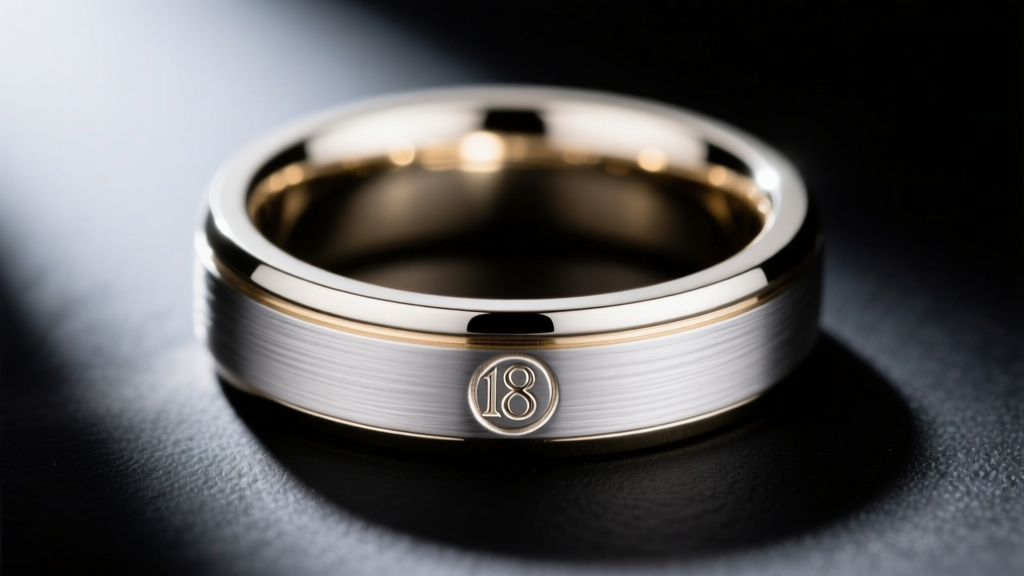
Conversely, the British Hallmarking Council requires a full traditional hallmark consisting of three compulsory marks:
- Sponsor's Mark: The unique registered mark of the company or individual submitting the piece for assaying (often initials within a specific shield shape).
- Millesimal Fineness Mark: A numerical stamp indicating the exact parts-per-thousand of pure gold (e.g., 750 for 18k gold), often enclosed in an octagonal shield.
- Assay Office Mark: The symbol of the specific regional office that tested and verified the metal (e.g., the Leopard's Head for London, the Anchor for Birmingham).
Technical Tolerances: Karat Stamps vs. Actual Purity
A common misconception among consumers is that a "14K" stamp means the jewelry is exactly 58.5% pure gold. In reality, manufacturing processes, solder joints, and alloy mixing introduce microscopic variances. Regulatory bodies establish strict tolerance limits to account for these variances. Understanding these tolerances is vital when performing X-ray Fluorescence (XRF) testing on stamper gold jewelry.
| Karat Mark | Millesimal Fineness | US FTC Tolerance (Without Solder) | US FTC Tolerance (With Solder) | UK Assay Standard |
|---|---|---|---|---|
| 24K | 999 / 999.9 | 995 minimum | N/A | 999 minimum |
| 22K | 916 | 913 minimum | 891 minimum | 916 minimum |
| 18K | 750 | 747 minimum | 725 minimum | 750 minimum |
| 14K | 585 | 582 minimum | 557 minimum | 585 minimum |
| 10K | 417 | 414 minimum | 389 minimum | 417 minimum |
Note: Solder joints used in chain links or ring sizing inherently contain lower-karat metals to ensure a lower melting point. The US FTC allows a wider tolerance (a 3/1000 drop) for pieces containing solder, whereas the UK assay system generally requires the entire piece, including solder, to meet the minimum fineness or be marked down to the next lowest karat.
The Physical Stamper: Metallurgy and Tooling
The creation of the physical stamper tool is an exercise in precision metallurgy. Standard jeweler's punches are typically forged from high-carbon steel or tool steel (such as O1 or A2), which are then heat-treated to achieve a hardness of 60-64 HRC. This ensures the stamper can displace 18k or 14k gold—which typically ranges from 120 to 150 on the Vickers hardness scale—without the stamper's tip mushrooming or chipping.
Hydraulic Presses vs. Hand Striking
For bespoke or artisanal stamper gold jewelry, a bench jeweler will use a chasing hammer to strike the punch. This requires immense skill to ensure the stamp is perfectly level; an angled strike results in a "ghosted" or partial hallmark, which can render the piece legally unmarkable in strict jurisdictions. In mass manufacturing, however, hydraulic or pneumatic stamping presses are utilized. These machines apply anywhere from 5 to 50 tons of localized pressure, forcing the gold blank into a steel die or driving the stamper into the metal with uniform, microscopic precision.
Laser Engraving vs. Traditional Punching
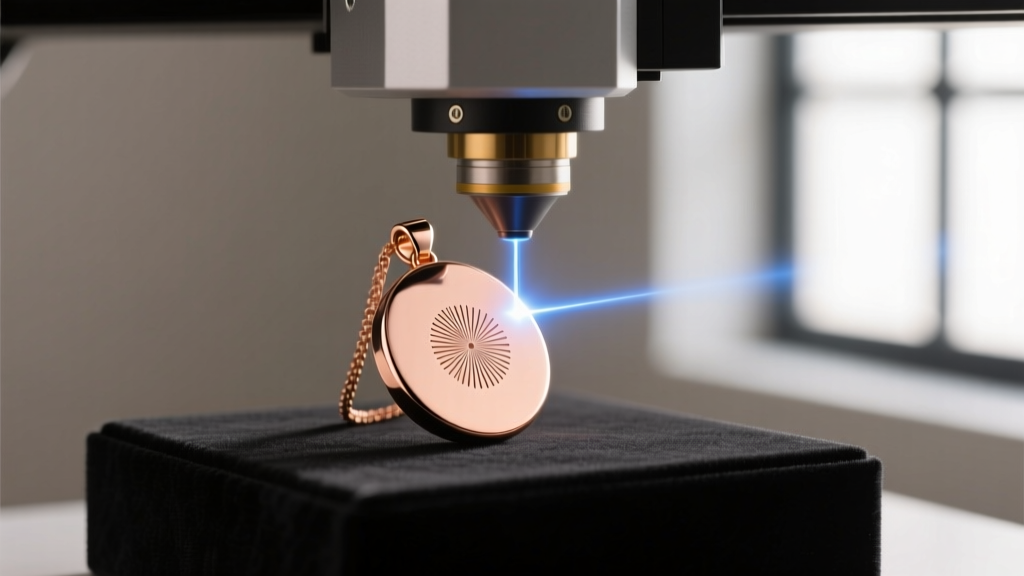
In 2026, fiber laser marking has largely supplemented traditional steel stampers in high-end manufacturing. Unlike a physical stamper that displaces metal (which can cause structural stress or warp thin-walled hollow jewelry), a 20W to 50W fiber laser alters the surface topology of the gold through localized melting and oxidation. Laser stamping allows for 2D Data Matrix codes and micro-marks that are invisible to the naked eye but readable via digital loupe, providing a modern layer of anti-counterfeiting security that physical stampers cannot achieve.
Identifying Counterfeit Stamps and Forgery
Because a simple karat stamp can exponentially increase the perceived value of a base metal or gold-plated item, counterfeiters frequently utilize illegal stampers to mark brass, tungsten, or gold-filled items as solid 18K or 14K gold. Forensic gemologists look for specific mechanical failures in counterfeit stamps:
- Soft Edges and Rounding: Genuine steel stampers displace metal sharply. Counterfeit stamps, often made from softer, cheaper alloys or applied via electroforming, show rounded, mushy edges under 10x magnification.
- Font Discrepancies: Official assay offices use highly specific, standardized serif and sans-serif fonts for their fineness marks. A "750" stamp with an incorrect font weight or improper spacing is an immediate red flag.
- The "Hollow" Sound and Feel: A physical stamper struck into solid gold leaves a slight raised burr on the reverse side of thin sheet metal. If a piece is heavily cast or tungsten-filled, the stamp may appear artificially shallow or laser-etched to mimic a punch.
Expert Verification Framework
When acquiring vintage or high-value stamper gold jewelry, visual inspection of the hallmark is only the first step. The Jewelers Vigilance Committee recommends a multi-tiered verification framework to ensure the stamp matches the metallurgical reality of the piece:
- Visual Microscopy (10x - 30x): Examine the stamp's floor. Is it clean, or is it filled with polishing compound? A stamp applied after years of wear will show differential patina compared to the surrounding metal.
- Specific Gravity Testing: Calculate the density of the piece. Solid 14k gold should yield a specific gravity of approximately 13.2 to 14.0. Tungsten-core fakes will read significantly higher (closer to 19.3), while brass fakes will read lower (around 8.5).
- XRF (X-Ray Fluorescence) Spectrometry: The ultimate non-destructive test. An XRF gun will read the exact elemental composition of the surface layer, verifying if the "18K" stamper mark aligns with a 75% gold reading, or if it exposes a silver or copper substrate beneath a micron-thin layer of gold plating.
Mastering the nuances of stamper gold jewelry transforms a buyer from a passive consumer into an informed horologist and metallurgical detective. Whether you are examining the strike of a 19th-century maker's mark or verifying a modern laser-etched millesimal fineness, the stamp remains the ultimate bridge between raw geology and human artistry.


