Expert Guide to Gold Time Jewelry and Watches Katy Locals Trust
Discover expert technical insights on evaluating 18k gold watches and fine jewelry. Learn hallmark decoding, XRF testing, and buying tips in Katy.

The Metallurgy of Luxury: Decoding Gold Timepieces
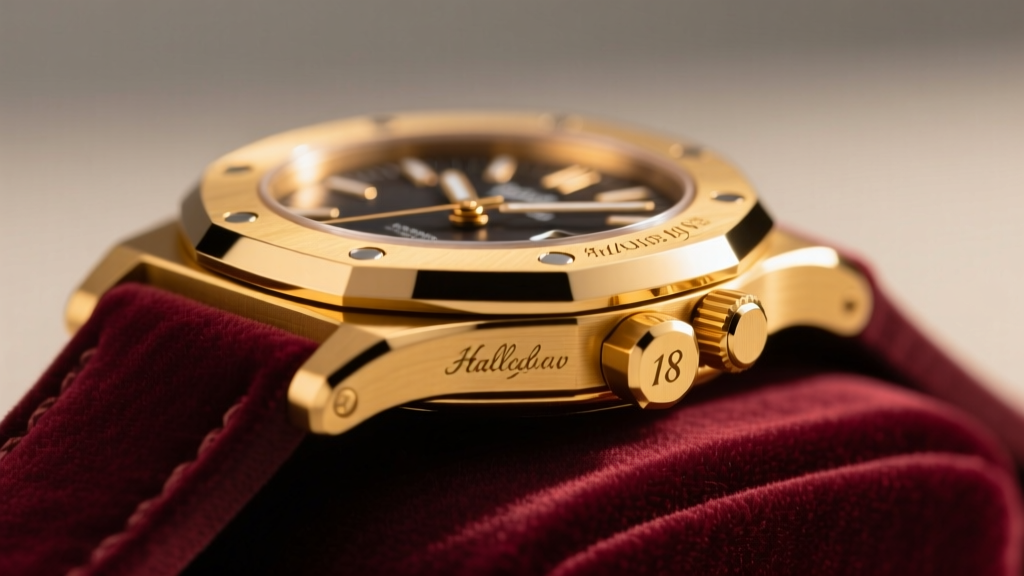
When discerning collectors search for gold time jewelry and watches Katy experts recommend, they are not merely looking for accessories; they are seeking masterclasses in metallurgy and horology. The intersection of precious metals and precision mechanics requires a deep understanding of alloy compositions, case construction, and movement architecture. In the competitive Katy, Texas luxury market, distinguishing between a true investment-grade timepiece and a mass-produced gold-plated alternative demands technical literacy.
At the core of any luxury gold watch is the case material. Pure 24-karat gold, with a Vickers hardness (HV) of roughly 25, is entirely unsuitable for watchmaking due to its extreme malleability. It will warp under the torque of a screw-down crown and scratch from the friction of a shirt cuff. To achieve structural integrity, master watchmakers alloy gold with copper, silver, and palladium. The industry standard for high horology is 18k gold (75% pure gold), which yields a Vickers hardness of approximately 130 to 150 HV. This provides the necessary durability for daily wear while maintaining the rich, untarnished luster that defines luxury.
Solid Gold vs. Gold-Capped (Plaque d'Or) Construction
A critical distinction often overlooked by novice buyers is the difference between solid gold cases and gold-capped (or plaqué or) cases. Solid 18k gold cases are machined from a single block of alloy, ensuring that even deep scratches can be polished out by a master bench jeweler without exposing a base metal core. Conversely, gold-capped watches feature a thick layer of 18k gold (usually between 200 and 800 microns) mechanically bonded to a brass or steel base. While gold-capped vintage pieces from brands like Omega or Longines offer historical charm, they possess a finite polishing lifespan. Once the micron layer is breached during restoration, the structural integrity and aesthetic value are permanently compromised.
Deciphering Hallmarks and Provenance in Estate Jewelry
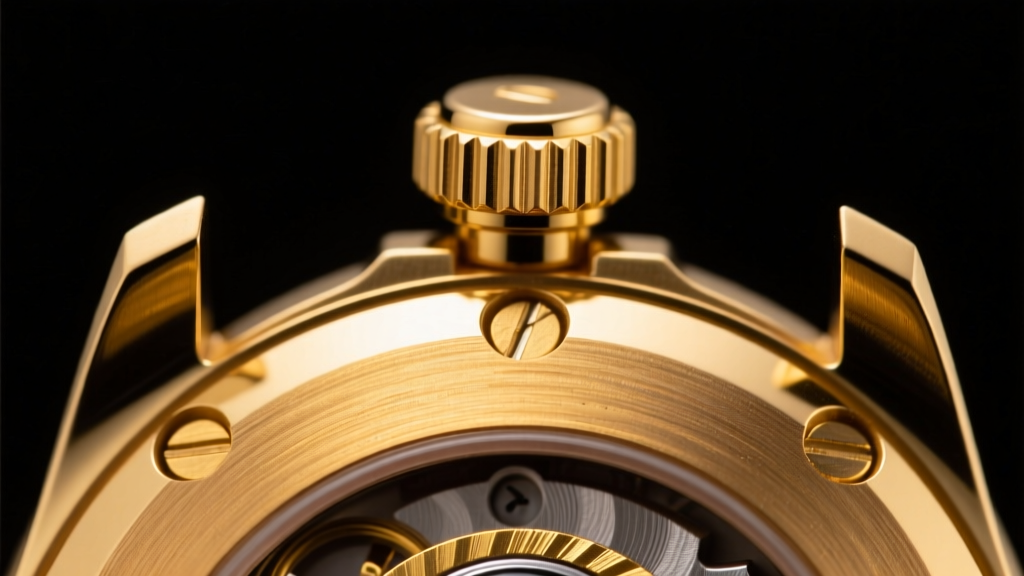
Evaluating estate gold jewelry requires more than a visual inspection; it demands a forensic approach to hallmark decoding. A reputable jeweler in Katy will always verify the stamped hallmarks against the piece's physical properties. According to the Birmingham Assay Office, a traditional hallmark consists of the sponsor's mark, the standard of fineness, and the assay office mark. For international estate pieces, you must also recognize continental stamps.
| Stamp / Mark | Purity | Karat | Origin / Context |
|---|---|---|---|
| 750 | 75.0% | 18k | International standard for luxury watch cases and fine jewelry. |
| 585 | 58.5% | 14k | Common in US and German markets; offers higher scratch resistance. |
| Eagle Head (Tête d'Aigle) | 75.0% | 18k | French state guarantee mark, stamped only after rigorous assay testing. |
| Dog Head (Tête de Chien) | 75.0% | 18k | French hallmark specifically used for platinum and high-karat gold watch cases. |
| 417 | 41.7% | 10k | Minimum US standard for "gold"; high copper/zinc content, prone to oxidation. |
When examining vintage pieces, look for the maker's mark (often a lozenge-shaped stamp with initials and a symbol) alongside the fineness mark. The presence of a French Eagle Head or a Swiss Helvetia stamp on a watch case significantly elevates the piece's provenance, indicating it passed stringent government assay protocols upon its original manufacture.
Advanced Verification: XRF Spectrometry vs. Acid Testing
While traditional nitric acid testing remains a staple in pawn shops, top-tier jewelers specializing in gold time jewelry and watches Katy collectors rely on have upgraded to X-Ray Fluorescence (XRF) spectrometry. Acid testing is inherently destructive; it requires filing a notch into the piece to test the core, which is entirely unacceptable for luxury timepieces or tension-set jewelry.
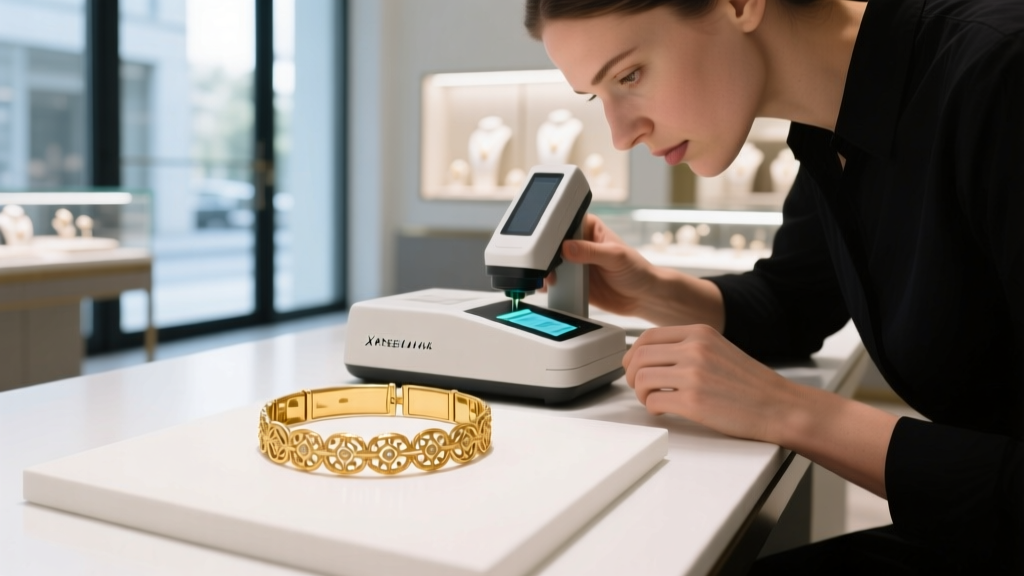
XRF technology bombards the gold item with X-rays, causing the atoms to emit secondary fluorescent X-rays. By measuring the energy spectrum of these emitted rays, the machine provides a non-destructive, exact elemental breakdown of the alloy within seconds. This reveals not only the gold content but also the precise ratios of copper, silver, nickel, and zinc. This is crucial for identifying sophisticated counterfeits, such as tungsten-core gold-plated bars or cadmium-laced gold alloys that pose severe health risks during resizing. The Gemological Institute of America (GIA) emphasizes that non-destructive testing is paramount for preserving the numismatic and horological value of estate pieces.
Horological Valuation: Intrinsic Melt vs. Craftsmanship Premium
A common pitfall for new investors is conflating the intrinsic melt value of a gold watch with its true horological value. To accurately appraise a luxury gold timepiece, experts use a tripartite valuation framework:
- Intrinsic Metal Value: Calculated by multiplying the case weight (minus the movement and crystal) by the daily spot price of gold, adjusted for the karat purity (e.g., 0.75 for 18k).
- Movement Complexity Premium: A solid gold case housing a basic quartz movement holds minimal premium over its melt value. However, an 18k case housing a hand-finished mechanical movement with complications (e.g., a tourbillon, perpetual calendar, or minute repeater) commands a massive multiplier. Finishing techniques like Côtes de Genève, anglage, and black polishing require hundreds of hours of manual labor.
- Brand Heritage and Scarcity: Limited production runs, historical significance (such as a specific reference number from the 1970s), and original factory documentation (box and papers) can increase the valuation by 300% to 1000% above the sum of its parts.
Additionally, the condition of the dial plays a pivotal role. In the vintage market, a tropical dial (where the black or blue paint has faded to a rich brown due to UV exposure and chemical reactions with the gold case) can exponentially increase the watch's value, provided the degradation is natural and not the result of water damage.
Expert Care Protocols for High-Karat Gold and Complications
Maintaining luxury gold jewelry and mechanical watches requires strict adherence to material science. The most frequent error owners make is over-polishing. Every time a gold watch case is polished, a microscopic layer of metal is removed. Over-polishing softens the crisp, factory-original bevels on the lugs and rounds out the sharp edges of the bezel, drastically reducing the resale value among serious collectors. A true expert will only perform "case-up" polishing using specialized diamond lapping films to preserve the original geometry.
Furthermore, ultrasonic cleaners—while excellent for degreasing diamond solitaires—can be catastrophic for certain gold jewelry and watches. The high-frequency cavitation can shake loose stones set in soft 18k gold prongs, fracture emeralds (which are typically oil-treated), and destroy the delicate lubricants inside a mechanical watch movement. For routine maintenance of gold timepieces, a simple solution of distilled water and pH-neutral dish soap, applied with a soft-bristled horsehair brush, is the only universally safe protocol.
Finally, chlorine is the ultimate enemy of karat gold. The copper and zinc alloys mixed with gold to create 14k and 18k are highly susceptible to stress corrosion cracking when exposed to chlorinated water (like swimming pools or hot tubs). This phenomenon, known as "chlorine embrittlement," causes the microscopic crystalline structure of the alloy to fracture, leading to sudden, catastrophic failure of prongs or watch case lugs. Always remove gold jewelry and timepieces before entering chlorinated environments. By understanding these technical nuances, buyers and collectors can confidently navigate the luxury market, ensuring their investments retain both their physical brilliance and their financial integrity for generations.


