What Is Gold Used For Besides Jewelry? A Buyer's Value Guide
Discover what gold is used for besides jewelry and how industrial demand impacts your jewelry budget, resale value, and smart buying strategies.

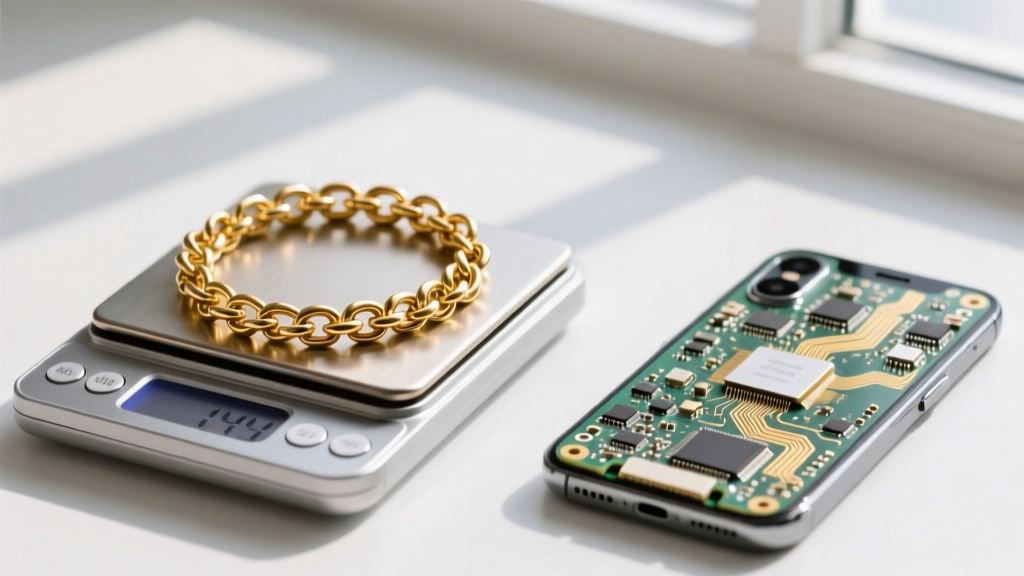
When consumers shop for rings, necklaces, or bracelets, they rarely consider the macroeconomic forces dictating the price tag. Most view the precious metal strictly through an aesthetic lens. However, if you want to master budget and value assessment in the luxury market, you must ask a critical question: what is gold used for besides jewelry? Understanding the vast industrial, technological, and medical applications of gold is the key to decoding spot price fluctuations, predicting retail premiums, and making highly strategic jewelry purchases.
Gold is not merely a decorative element; it is an irreplaceable industrial commodity. Its unique properties—unmatched electrical conductivity, extreme malleability, and absolute resistance to corrosion—make it a foundational material in modern technology. For the savvy jewelry buyer, recognizing these alternative uses transforms how you evaluate karat values, time your purchases, and assess the true intrinsic worth of your collection.
The Hidden Demand: Industrial and Technological Applications
To accurately assess the budget required for fine jewelry, we must first quantify the non-jewelry demand that competes for the global gold supply. According to the United States Geological Survey (USGS), hundreds of tonnes of gold are consumed annually by non-aesthetic sectors.
Electronics and Telecommunications
Gold is the ultimate conductor. It does not tarnish, ensuring reliable electrical connections over decades. A standard smartphone contains approximately 0.034 grams of gold, primarily in the printed circuit board connectors and microchip bond wires. While this seems negligible per device, the global production of over 1.5 billion smartphones annually creates a massive, continuous drain on the gold supply. Furthermore, advanced computing servers and AI infrastructure rely heavily on gold-plated connectors to prevent data-loss from micro-corrosion.
Aerospace and Defense
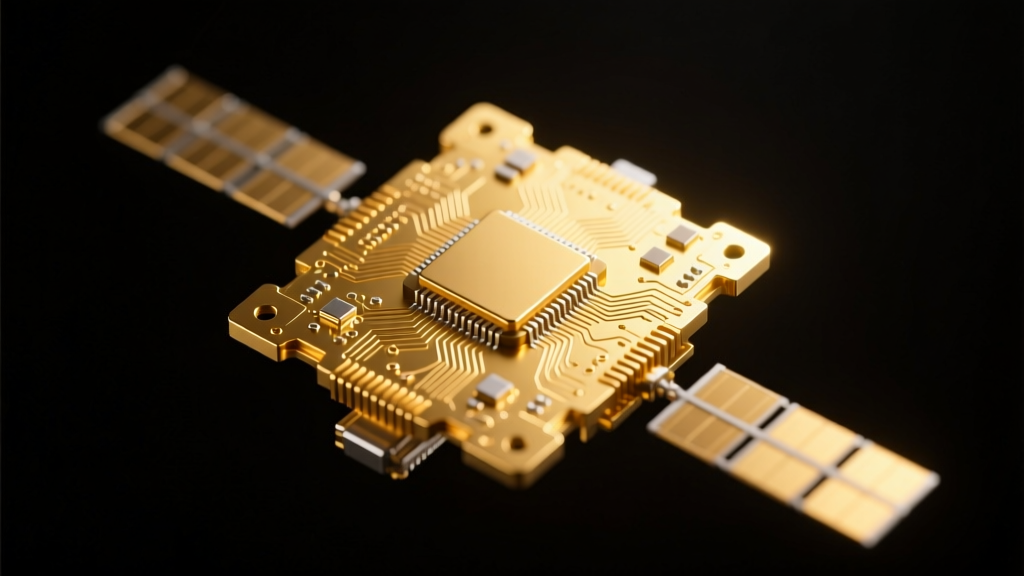
In the vacuum of space, mechanical lubricants fail and temperatures fluctuate wildly. Gold is used as a highly effective radiation reflector and thermal stabilizer. The James Webb Space Telescope, for instance, utilizes a microscopically thin coating of pure gold on its beryllium mirrors to optimize infrared light reflection. Similarly, commercial aerospace relies on gold-coated visors for astronaut helmets and specialized wiring in commercial jet engines where failure is not an option.
Medical and Dental Innovations
Gold's biocompatibility makes it invaluable in medicine. Beyond traditional dental crowns and bridges (which account for a steady baseline of demand), gold nanoparticles are increasingly used in targeted cancer therapies and rapid diagnostic tests, such as lateral flow assays. Additionally, gold salts (like auranofin) are actively prescribed as disease-modifying antirheumatic drugs (DMARDs) for severe rheumatoid arthritis.
How Industrial Demand Dictates Your Jewelry Budget
When tech sectors boom or geopolitical tensions cause central banks to hoard physical bullion, the available supply for jewelry manufacturers shrinks. This supply squeeze directly inflates the 'making charges' and retail premiums on gold jewelry. To budget effectively, you must understand the global demand breakdown.
| Sector | Market Share | Impact on Jewelry Pricing |
|---|---|---|
| Jewelry & Adornment | ~45% | Direct baseline demand; highly sensitive to cultural trends and bridal markets. |
| Investment (Bars/Coins) | ~25% | Spikes during inflation; drives up spot prices and retail premiums. |
| Central Banks | ~20% | Massive bulk buying removes physical gold from the open market entirely. |
| Technology & Electronics | ~8% | Steady, inelastic demand; tech booms create a high price floor. |
| Dentistry & Medical | ~2% | Declining slightly due to alternative materials, but medically vital. |
Value Insight: Because technology demand is inelastic (tech companies must have gold regardless of the price), it creates a permanent 'price floor' for the metal. When you buy an 18k gold chain, you are competing for supply against Apple, Samsung, and global defense contractors.
Value Assessment: Navigating Karats and Premiums
Knowing what is gold used for besides jewelry helps you understand why prices are high, but value assessment requires analyzing what you are actually buying. The purity of your jewelry dictates its intrinsic melt value versus its craftsmanship premium.

The Melt Value Calculation Framework
To assess if a piece of jewelry is fairly priced, you must calculate its melt value based on the current spot price (readily available via Kitco). Here is the exact breakdown of pure gold content by karat:
- 24k (99.9%): Pure gold. Rarely used in structural jewelry due to extreme softness. Melt value equals spot price.
- 18k (75.0%): The luxury standard. Multiply the item's gram weight by 0.75, then multiply by the current per-gram spot price.
- 14k (58.3%): The durability standard for everyday wear (especially rings). Multiply gram weight by 0.583.
- 10k (41.7%): The budget-friendly, highly durable option. Contains more alloy (copper/zinc) than actual gold.
Example Assessment: If the spot price is $75.00 per gram, an 8-gram 14k gold bracelet contains 4.66 grams of pure gold. The intrinsic melt value is roughly $349.50. If a retail jeweler is selling this chain for $1,200, you are paying an 243% premium for the brand name, design, and retail overhead. Understanding this gap is the core of budget assessment.
The E-Waste Gold Rush and Future Supply
As natural ore grades decline (yielding as little as 1 to 5 grams of gold per ton of mined earth), 'urban mining' is becoming critical. E-waste contains up to 300 grams of gold per ton of discarded circuit boards. However, the recycling infrastructure is currently insufficient to meet the combined tech and jewelry demand. According to the World Gold Council, this supply bottleneck means jewelry buyers should expect sustained high baseline prices for the foreseeable future.
Strategic Buying: Maximizing Your Gold Jewelry Budget
Armed with the knowledge of gold's industrial applications and macroeconomic pressures, you can deploy specific strategies to maximize your budget without sacrificing quality.
- Target the Secondary Market: Because industrial demand keeps spot prices elevated, buying vintage or estate 14k and 18k jewelry allows you to bypass the massive retail 'making charges' of new pieces. You pay closer to the intrinsic metal value plus a modest antique premium.
- Opt for 14k in High-Wear Scenarios: If you are budgeting for an everyday item like a wedding band or a hoop earring, 14k offers the optimal intersection of intrinsic value and structural integrity. The copper and silver alloys in 14k prevent the metal from warping, saving you future repair costs.
- Avoid 'Fashion' Gold Plated Items for Investment: Gold vermeil and plated jewelry contain microscopic layers of gold—often less than 0.05 microns. Their value is entirely aesthetic. If your budget assessment includes long-term value retention, you must purchase solid gold (minimum 10k, ideally 14k or 18k).
- Monitor Tech Cycles: While difficult for casual buyers, keeping an eye on global semiconductor manufacturing trends can offer clues to gold demand. When tech manufacturing slows, spot prices occasionally soften, presenting a brief window for jewelry acquisition at lower premiums.
Ultimately, recognizing what is gold used for besides jewelry elevates you from a passive consumer to an informed investor. By respecting the metal's critical role in global infrastructure, you can accurately assess value, negotiate better prices, and build a jewelry collection that holds its ground in a complex, high-demand global market.


