Troubleshooting 18 kt Gold Jewelry: Scratches, Bending & Tarnish
Is your 18 kt gold jewelry scratching or bending? Learn expert troubleshooting for prong wear, surface scratches, and alloy tarnish with real fixes.

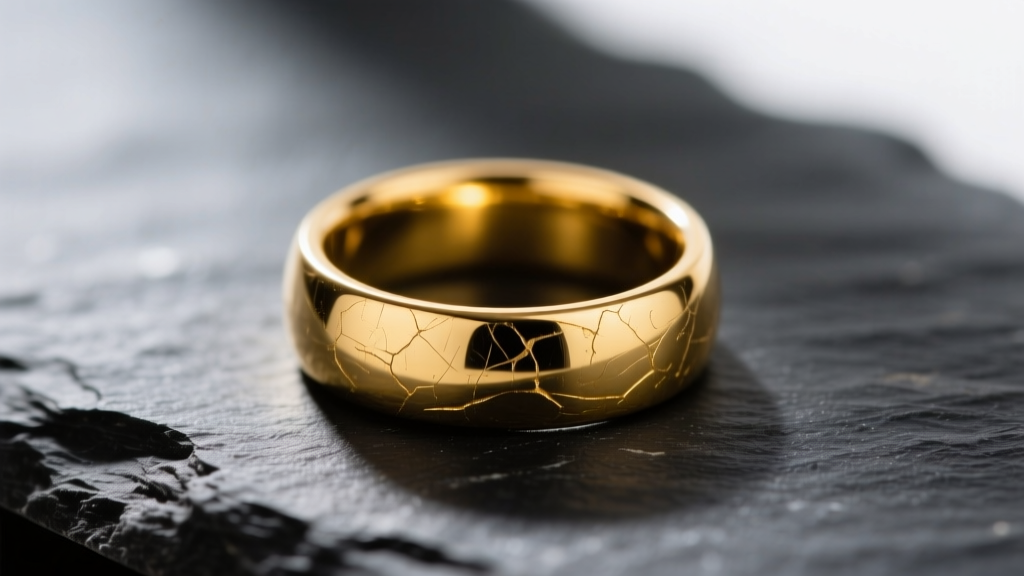
The Reality of 75% Purity: Understanding 18k Gold Vulnerabilities
When you invest in 18 kt gold jewelry, you are paying for a rich, saturated color and a high precious metal content. By definition, 18k gold is 75% pure gold and 25% alloyed metals (like copper, silver, zinc, or palladium). While this purity delivers an unmatched warm luster, it also introduces specific mechanical vulnerabilities that owners frequently mistake for defects. Unlike 14k gold (58.3% pure) or 10k gold (41.7% pure), the higher gold content in 18k pieces makes the metal inherently softer, more malleable, and more reactive to specific environmental chemicals.
Troubleshooting damage to 18k pieces requires a departure from generic jewelry care advice. You cannot treat an 18k ring the same way you treat a platinum band or a 14k chain. This guide provides a metallurgical breakdown of the most common structural and cosmetic failures in 18k gold, offering actionable, professional-grade solutions to restore and protect your investment.
The Metallurgy of Wear: Hardness vs. Malleability
To troubleshoot physical damage, you must first understand the Vickers Hardness (HV) scale as it applies to gold alloys. Pure 24k gold sits at roughly 60 HV, making it easily deformable by hand. When alloyed to create 18k yellow gold (typically 75% Au, 12.5% Cu, 12.5% Ag), the hardness increases to approximately 125–135 HV. By comparison, standard 14k yellow gold reaches 140–160 HV.
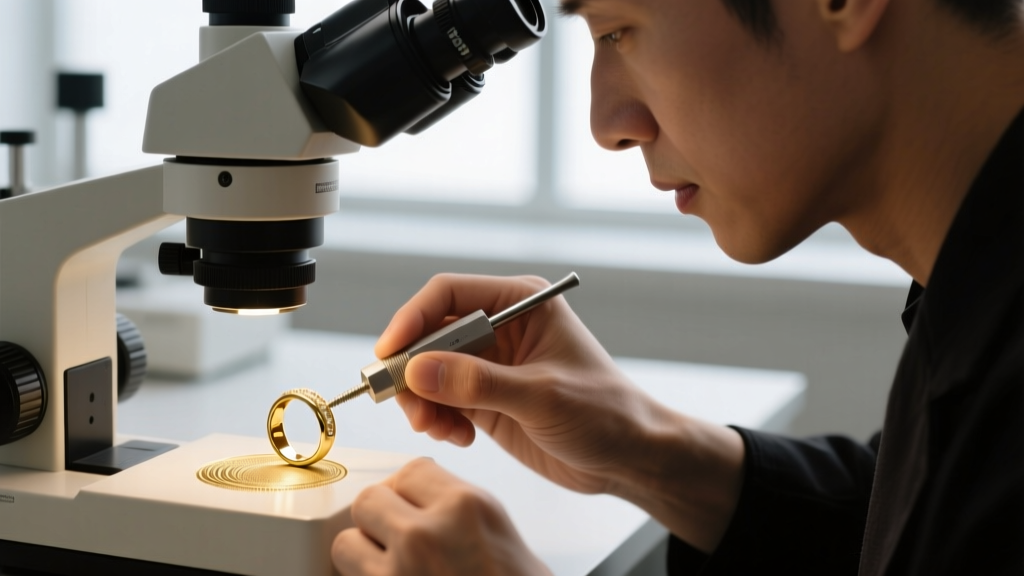
This 15-20% drop in hardness means that 18k gold does not just scratch; it displaces and loses metal mass much faster than lower-karat alternatives. According to the Gemological Institute of America (GIA), the specific alloy mix dictates not just the color, but the wear-resistance. For example, 18k white gold alloyed with palladium is significantly softer and more prone to bending than 18k white gold alloyed with nickel, though nickel alloys carry a high risk of contact dermatitis.
Troubleshooting Surface Scratches and Scuffs
Surface scratching is the most common complaint among owners of 18k gold. Because the metal is relatively soft, daily contact with ceramics, glass, and even hardened steel (like door handles) will result in micro-abrasions.
| Damage Type | Visual Indicator | 18k Gold Specific Risk | Professional Repair Method |
|---|---|---|---|
| Micro-Scratches | Dull, cloudy finish reflecting light poorly | High accumulation rate due to softer alloy | Light polishing with red rouge (iron oxide) |
| Deep Gouges | Visible metal displacement, catches on fabric | Permanent metal loss; structural weakening | Laser welding to fill, followed by filing |
| Prong Flattening | Gemstone rattles, sits unevenly, or snagging | Rapid wear cycle (requires checks every 6 months) | Retipping with matching 18k gold wire |
| Shank Bending | Ring no longer perfectly circular | High malleability leads to oval deformation | Mandrel reshaping and localized annealing |
The Over-Polishing Trap: A critical mistake jewelers and consumers make is aggressively polishing 18k gold to remove every micro-scratch. Polishing is an abrasive process; it removes a microscopic layer of metal. Using a coarse compound like Tripoli on an 18k band can remove up to 0.05mm of metal per pass. Over a decade, frequent aggressive polishing will thin the shank of an 18k ring to the point of structural failure. Limit machine polishing to once a year, and use a non-abrasive polishing cloth for monthly maintenance.
Structural Failures: Bent Bands and Worn Prongs
Because 18k gold yields under pressure rather than resisting it, structural deformation is a frequent troubleshooting scenario. If your 18k ring has bent out of shape, do not attempt to bend it back with pliers or by hand. Cold-working (bending without heat) causes 'work hardening,' making the gold brittle and highly susceptible to snapping.
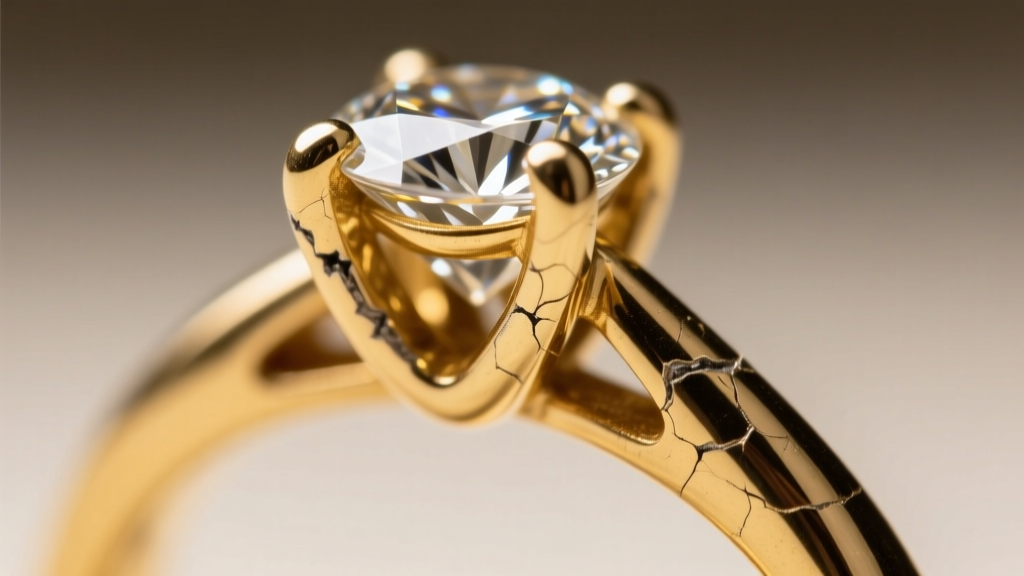
The Prong Wear Acceleration Factor
Prongs on 18k gold settings wear down approximately 30% faster than those on 14k gold or platinum. While platinum displaces when scratched (meaning the metal moves but stays on the prong), 18k gold sheds material. A prong that secures a 1-carat diamond in 18k gold should be inspected by a professional every 6 to 9 months. If you notice the prong heads looking flat rather than rounded, or if the stone shifts when tapped gently, immediate retipping is required. Retipping involves laser-welding a new piece of 18k gold wire to the worn prong, restoring its structural integrity without risking thermal shock to the gemstone.
Reshaping a Bent Shank
When an 18k band bends, a professional jeweler will place it on a steel mandrel and gently tap it back into a perfect circle using a rawhide or nylon mallet. If the metal has become too stiff from work-hardening, the jeweler must anneal it. Annealing involves heating the 18k gold to roughly 700°C (1292°F) with a torch and then quenching it in water or allowing it to air cool, which realigns the crystalline structure of the alloy, restoring its malleability and preventing cracks.
The Tarnish Myth: Diagnosing Discoloration in 18k Gold
A pervasive myth in the jewelry industry is that 'real gold doesn't tarnish.' While pure 24k gold is entirely immune to oxidation, your 18 kt gold jewelry contains 25% base metals that are highly reactive. The Federal Trade Commission (FTC) mandates accurate karat stamping, but it does not regulate the specific base metals used in the 25% alloy, which is where tarnish originates.
- Copper Reactions (Darkening/Red Tarnish): Common in 18k yellow and rose gold. Copper reacts with sulfur compounds in the air, sweat, and cosmetics to form cuprous oxide, resulting in a dark, sometimes reddish film.
- Silver Reactions (Black/Gray Tarnish): Silver in the alloy reacts with chlorine (found in swimming pools, bleach, and tap water) to form silver chloride, creating a stubborn gray or black crust.
- Rhodium Depletion (Yellowing): Exclusive to 18k white gold. The metal is naturally pale yellow and plated with rhodium for a bright white finish. As the plating wears off, the underlying 18k alloy is exposed, which many owners misdiagnose as 'tarnish' or 'fading.'
Safe Cleaning Protocols for Tarnished 18k Gold
Do not use harsh chemical dips or silver polish on 18k gold; these can strip the copper and silver from the surface layer, leaving behind a porous, weakened surface of pure gold (a process called depletion gilding). Instead, use a solution of warm water, a few drops of mild dish soap (free of lotions or heavy moisturizers), and a soft-bristled baby toothbrush. For stubborn copper oxidation, a brief soak in a 50/50 mixture of distilled water and ammonia (no longer than 60 seconds) can lift the tarnish, followed by an immediate and thorough water rinse.
Note on Ultrasonic Cleaners: While ultrasonic cleaners are excellent for removing dirt from under gemstone settings, the high-frequency vibrations and heated alkaline solutions can accelerate the degradation of 18k white gold's rhodium plating and loosen fracture-filled diamonds. Use ultrasonics sparingly on 18k pieces.
Your Preventative Maintenance Framework
Troubleshooting is reactive; preservation is proactive. To maximize the lifespan of your 18 kt gold jewelry, implement this maintenance framework based on guidelines from the World Gold Council and master bench jewelers:
- The 6-Month Prong Audit: Have a jeweler inspect the prongs and shank thickness of all 18k rings every six months. Catching a worn prong early costs $30-$50; replacing a lost diamond costs thousands.
- Chemical Isolation: Remove 18k jewelry before entering chlorinated pools, hot tubs, or using household bleach. Chlorine causes 'stress corrosion cracking' in karat gold alloys, which can cause a ring to literally snap in half without warning.
- Proper Storage Mechanics: Store 18k pieces individually in soft flannel pouches or separate compartments. Because 18k gold is softer than many gemstones (diamonds, sapphires, and even quartz dust), storing them together will result in the gems scratching the gold.
- Strategic Replating: If you own 18k white gold, budget for rhodium replating every 12 to 18 months, depending on your skin's pH and wear habits. Acidic skin chemistry can strip rhodium plating in as little as six months.
Owning 18k gold is an exercise in appreciating luxury materials that interact with the world around them. By understanding the metallurgical realities of its 75% purity, you can accurately diagnose scratches, prevent structural failures, and safely reverse alloy tarnish, ensuring your jewelry remains pristine for generations.


