Smart Buying: What Is Gold Used For Other Than Jewelry?
Discover what is gold used for other than jewelry and how industrial demand, tech applications, and market trends impact your fine jewelry buying decisions.

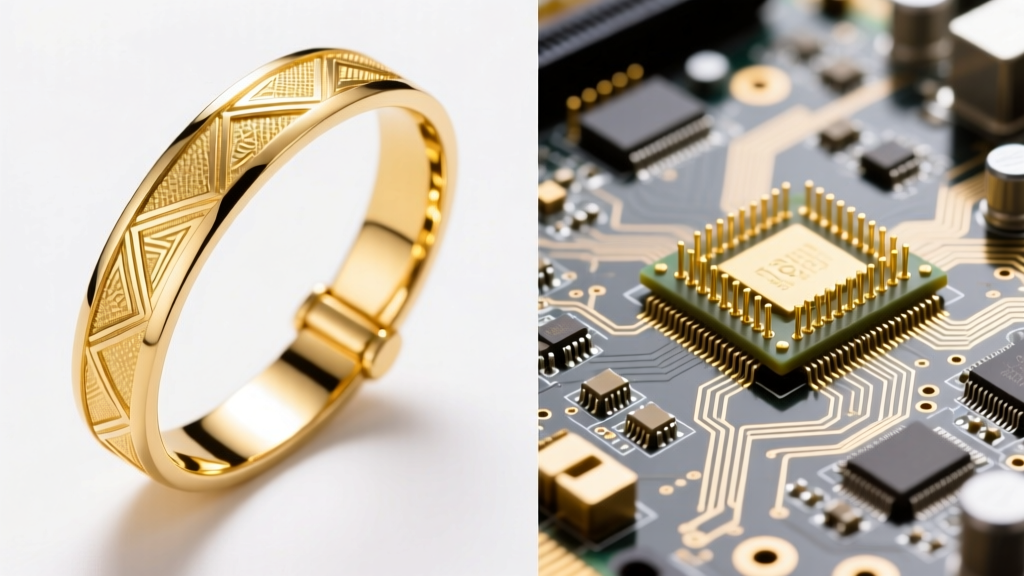
When most consumers begin their search for fine accessories, they rarely stop to ask: what is gold used for other than jewelry? It is a question that separates casual shoppers from truly informed buyers in 2026. While gold is universally celebrated for its luster and prestige in rings, necklaces, and bracelets, its identity as a critical industrial metal profoundly impacts the jewelry market. Understanding the hidden life of gold—from artificial intelligence server farms to aerospace engineering—provides a massive advantage when navigating pricing, purity, and sustainability in the fine jewelry sector.
The Hidden Demand: What Is Gold Used For Other Than Jewelry?
To understand why jewelry prices fluctuate, you must first look at the industrial applications of gold. Unlike silver or copper, gold is virtually immune to tarnish and corrosion, and it is an exceptional conductor of electricity. These properties make it irreplaceable in high-stakes environments where failure is not an option.
Electronics and AI Hardware
In the modern tech landscape, gold is the backbone of reliable connectivity. Every smartphone, laptop, and advanced AI server relies on gold-plated connectors, switches, and relay contacts. In 2026, the explosion of advanced AI hardware has driven a surge in demand for ultra-fine gold wire bonding in semiconductors. According to the World Gold Council, the technology sector consistently consumes hundreds of tons of gold annually. When tech companies stockpile gold for microchip manufacturing, the global supply tightens, directly pushing up the spot price that jewelers pay for raw materials.
Aerospace and Medical Devices
Beyond consumer electronics, gold is vital in aerospace and medicine. Satellites and space telescopes utilize ultra-thin gold coatings to reflect infrared radiation and stabilize temperatures in the vacuum of space. In the medical field, gold's biocompatibility makes it ideal for surgical stents, pacemaker components, and even rapid diagnostic tests.

How Industrial Demand Dictates Your Jewelry Price Tag
Many buyers assume that jewelry pricing is solely based on craftsmanship and brand prestige. In reality, the baseline cost of your 14k or 18k gold piece is tethered to global industrial demand. When you understand the macro-economic forces at play, you can make smarter purchasing decisions, such as timing your buys or opting for alternative karats when the spot price spikes.
| Demand Sector | Primary Use Case | Impact on Jewelry Buyer |
|---|---|---|
| Technology (AI & Telecom) | Microchip wire bonding, connectors | High: Spikes in tech manufacturing raise the global spot price floor. |
| Investment & Central Banks | Bullion reserves, hedge against inflation | Medium: Central bank hoarding reduces available raw gold for jewelers. |
| Aerospace & Medical | Radiation shielding, biocompatible implants | Low: Niche volume, but requires ultra-high purity (24k), removing it from jewelry alloys. |
Pro Buyer Tip: If you are tracking the market to buy a high-carat gold investment piece (like a heavy 22k or 24k chain), monitor the tech sector's quarterly earnings and semiconductor supply chain reports. A slowdown in tech manufacturing often precedes a slight dip in the gold spot price, offering a narrow window for jewelry buyers to secure better pricing on raw gold weight.
Purity Standards: Why Tech Gets 24K and You Get 14K
One of the most fascinating aspects of gold allocation is how purity is distributed based on utility. Industrial applications almost exclusively require 24-karat (99.99% pure) gold. For example, the wire bonding used to connect silicon dies to microchip leads uses 99.999% pure gold wire, often drawn to a diameter of just 15 to 50 micrometers. Pure gold is used here because its electrical conductivity and resistance to oxidation are unparalleled.
However, this exact purity is a catastrophic flaw for everyday jewelry. Pure 24k gold has a Vickers hardness (HV) of roughly 25 to 30, making it as soft as modeling clay. A 24k gold ring would bend out of shape within days of daily wear. This is why the jewelry industry relies on precise alloying:
- 18k Gold (75% Pure): Alloyed with copper, silver, and zinc. It achieves a Vickers hardness of about 125 HV, offering a rich yellow color with enough durability for fine engagement rings and luxury watches.
- 14k Gold (58.3% Pure): The workhorse of the American jewelry market. With a hardness of roughly 135 to 150 HV, it provides exceptional scratch resistance for active lifestyles while maintaining a warm hue.
- 10k Gold (41.7% Pure): Highly durable (up to 170 HV) but prone to tarnishing due to the high copper and zinc content. Best reserved for heavy, structural pieces like signet rings or chainmaille bracelets.
The E-Waste Connection: Buying Recycled Gold Jewelry
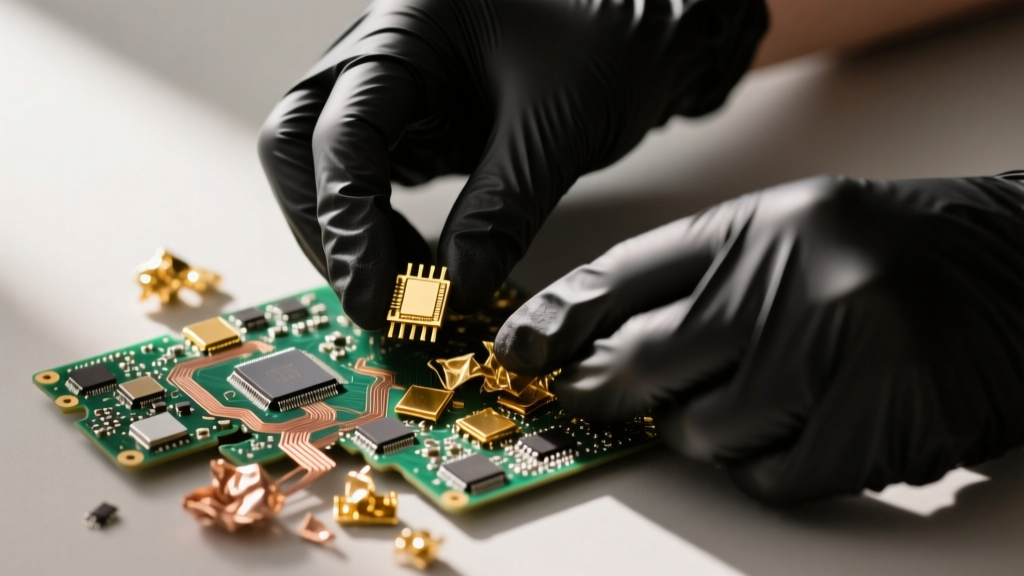
Because gold is indestructible, nearly all the gold ever mined in human history still exists in some form. Today, a significant portion of "new" jewelry is actually born from the industrial sector's waste. According to the United States Geological Survey (USGS), urban mining—the process of extracting precious metals from discarded electronics—has become a critical pillar of the global gold supply chain.
For the eco-conscious jewelry buyer in 2026, this presents a unique purchasing avenue: recycled gold. However, greenwashing is rampant. To ensure your jewelry is genuinely sourced from reclaimed industrial or post-consumer materials, you must look for specific verifications.
What to Look For in Sustainable Gold
- SCS Global Services Certification: The gold standard for recycled content. Brands that carry the SCS Recycled Content mark have undergone rigorous third-party chain-of-custody audits.
- Refinery Transparency: Premium sustainable jewelers will disclose their refining partners (e.g., Hoover & Strong or Precious Metals Group), ensuring the gold was processed using closed-loop, non-toxic chemical methods rather than traditional cyanide leaching.
- Single-Origin vs. Recycled: Understand that "recycled" often means a mix of old jewelry and melted-down industrial circuit boards. If you want strictly post-consumer jewelry recycling, you must ask the brand for their specific sourcing breakdown.
2026 Buyer’s Checklist: Navigating the Gold Market
Armed with the knowledge of gold's dual life as a luxury adornment and an industrial powerhouse, you are now equipped to navigate the market with authority. Use this checklist before making your next fine jewelry purchase:
- Check the Spot Price Trend: Use financial apps to view the 30-day gold spot trend. If industrial demand has caused a massive spike, consider opting for 14k over 18k to offset the premium, or delay your purchase.
- Verify the Hallmark: Always look for the stamped karat mark (e.g., 14K, 585, 18K, 750) and the maker's mark. In an era of sophisticated counterfeits, a hallmark is your first line of defense.
- Ask About the Alloy Mix: If you have metal sensitivities, ask the jeweler about the specific alloy mix. Nickel is sometimes used in white gold alloys to achieve a bright color, but palladium-based white gold is a superior, hypoallergenic alternative.
- Request Sustainability Docs: If a brand claims their gold is "eco-friendly" or "recycled," politely ask for their SCS certification or refinery chain-of-custody documentation.
Ultimately, recognizing the broader utility of gold transforms the way you value your jewelry. You are not just buying a beautiful accessory; you are investing in one of the most versatile, indestructible, and technologically vital elements on the periodic table. By understanding the industrial forces that shape the market, you ensure that every piece you add to your collection is a triumph of both style and smart economics.


