A Step-by-Step Guide to Cleaning Garnet and Pearl Jewelry
Learn how to safely clean, maintain, and store garnet and pearl jewelry. Expert step-by-step guide protecting both delicate pearls and hard garnets.

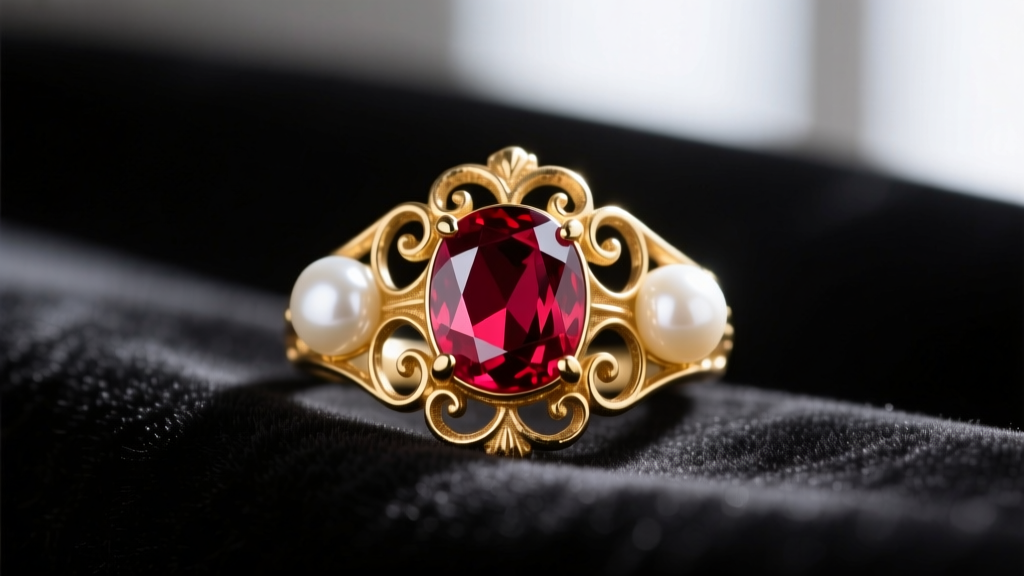
The juxtaposition of deep, fiery garnets and the soft, luminescent nacre of cultured pearls creates some of the most striking mixed-gemstone jewelry on the market. However, from a gemological perspective, pairing these two stones is a high-risk endeavor. Garnets are durable silicate minerals, while pearls are delicate organic gems composed of calcium carbonate. When it comes to maintaining garnet and pearl jewelry, standard cleaning protocols will inevitably result in catastrophic damage to the pearls. This comprehensive, step-by-step guide will teach you how to safely clean, inspect, and store these complex pieces without compromising their structural or aesthetic integrity.
The Mohs Scale Dilemma: Why Garnets and Pearls Clash
To understand why cleaning garnet and pearl jewelry requires such meticulous care, you must first understand the Mohs scale of mineral hardness. According to the GIA Garnet Encyclopedia, garnets (ranging from pyrope to demantoid) sit between 6.5 and 7.5 on the Mohs scale. This makes them highly resistant to scratching and suitable for everyday wear. Pearls, conversely, rank at a mere 2.5 to 4.5.
This massive hardness discrepancy creates two primary failure modes in mixed jewelry:
- Friction Damage: If a garnet bead rubs against a pearl on a strung necklace, the garnet will act like sandpaper, slowly grinding away the pearl's nacre and leaving permanent, dull flat spots.
- Cleaning Cross-Contamination: Methods used to restore the brilliance of a garnet (like ultrasonic waves or harsh chemical dips) will dissolve the aragonite platelets of a pearl, destroying its luster and structural cohesion.
Step-by-Step Cleaning Guide for Garnet and Pearl Jewelry
Forget commercial jewelry dips and automated cleaners. Cleaning these mixed-media pieces requires a gentle, manual approach that respects the organic nature of the pearl while still lifting oils from the garnet's facets.
Step 1: Dry Dusting and Debris Removal
Before introducing any moisture, remove surface dust. Use a clean, ultra-soft horsehair jewelry brush or a brand-new, fluffy makeup brush. Gently sweep the bristles around the prongs of the garnets and the drill holes of the pearls. This prevents you from grinding microscopic silica dust into the pearl's nacre during the wet-washing phase.
Step 2: The pH-Neutral Damp Wipe
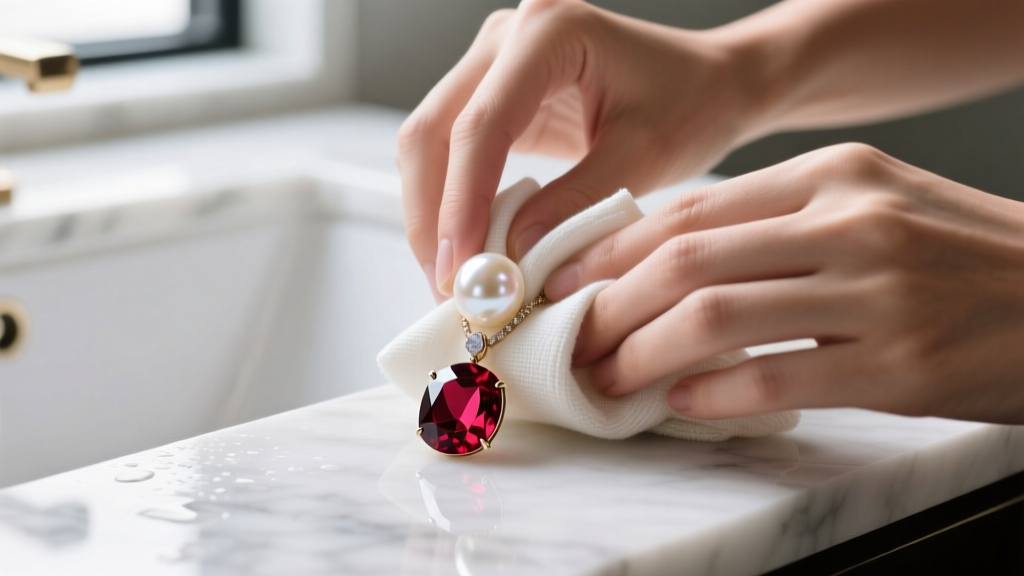
Pearls are highly sensitive to acidity and alkalinity. You must use a pH-neutral solution. Mix two drops of unscented, phosphate-free castile soap (like Dr. Bronner's Unscented Baby) into a bowl of lukewarm distilled water. Tap water contains chlorine and trace minerals that can leave a cloudy film on pearls. Dip a lint-free microfiber cloth into the solution and wring it out until it is barely damp.
Step 3: Targeted Garnet Cleaning
Garnets attract grease and skin oils, which dull their refractive index. While you cannot submerge the piece, you can target the garnets. Dip a cotton swab into the soapy solution, squeeze out the excess moisture, and carefully trace the facets and the underside (pavilion) of the garnet. Avoid letting the soapy water pool around the pearl's drill hole, as moisture trapped inside can rot the silk threading or weaken the adhesive in half-drilled pearl pegs.
Step 4: The Rinse and Dry
Dampen a second microfiber cloth with pure distilled water and wipe down the entire piece to remove any soap residue. Immediately dry the jewelry with a soft, absorbent cotton towel. Never air-dry strung pearl and garnet necklaces. If the silk thread remains damp, it will stretch under the weight of the garnet beads, leading to gaps in the knotting and eventual structural failure.
Cleaning Method Safety Matrix
It is crucial to know which common jewelry cleaning methods are safe for mixed pieces. The Gemological Institute of America (GIA) strictly warns against automated cleaning for organic gems. Refer to this matrix before attempting any alternative cleaning methods:
| Cleaning Method | Garnet Safety | Pearl Safety | Verdict for Mixed Pieces |
|---|---|---|---|
| Ultrasonic Cleaners | Safe (unless fractured) | Destructive | NEVER USE |
| Steam Cleaners | Safe | Destructive | NEVER USE |
| Ammonia / Bleach | Risky (can damage treatments) | Destructive | NEVER USE |
| Mild Soapy Water (Manual) | Safe | Safe (Briefly) | RECOMMENDED |
| Commercial Silver Dips | Safe | Destructive | NEVER USE |
Structural Integrity: Checking Prongs and Silk Threads
Cleaning is only half the maintenance battle. Because garnets are heavier and harder than pearls, the physical stress on the jewelry's mounting is significant. Every six months, perform the following structural checks:
- The Floss Test for Strands: Take a piece of unwaxed dental floss and gently slide it between the knots separating the pearls and garnets. If the floss catches on frayed silk or slips through gaps, the necklace requires immediate professional restringing. The American Gem Society recommends annual restringing for heavily worn pieces.
- Prong Tension Check: Use a 10x jeweler's loupe to inspect the prongs holding the garnets. If a prong is lifted, it can easily snag on clothing. More importantly, a loose garnet can fall out and scratch adjacent pearls on its way down.
- Peg Adhesion: For pearl rings or earrings where the pearl is mounted on a metal post with epoxy, gently attempt to twist the pearl. If there is any rotational movement, the adhesive has failed and the pearl must be re-pegged by a jeweler.
Styling and Storage Best Practices
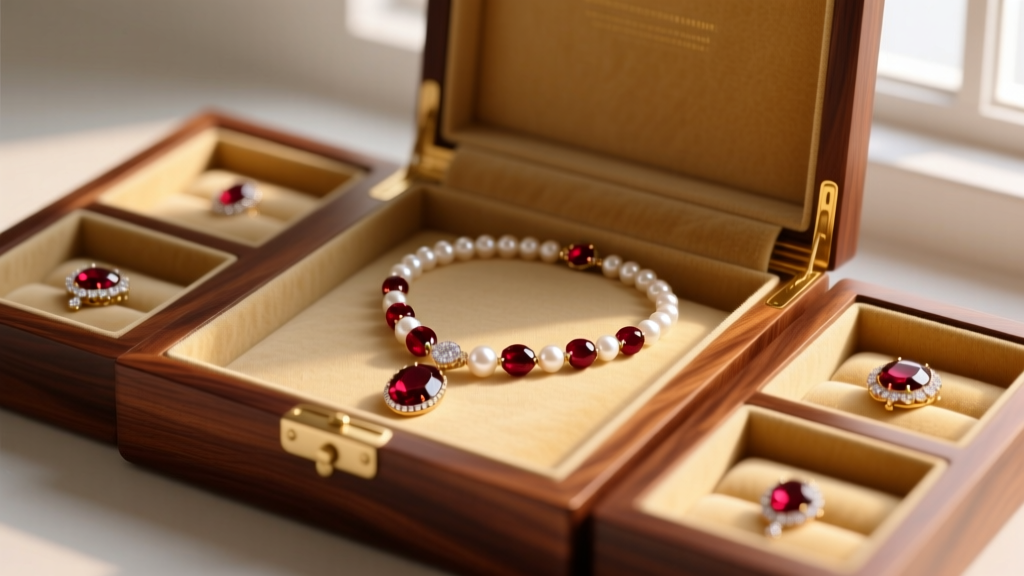
How you store garnet and pearl jewelry is just as critical as how you clean it. Tossing a mixed-gemstone bracelet into a communal jewelry box guarantees that the faceted edges of the garnets will micro-scratch the nacre of the pearls over time.
The Isolation Rule
Always store garnet and pearl pieces in individual, soft-lined compartments or breathable flannel pouches. Avoid airtight plastic bags; pearls require a slight amount of ambient moisture to prevent their organic conchiolin matrix from drying out and cracking. If you live in a very dry climate, place a damp (not wet) cotton ball in the corner of the jewelry box, ensuring it does not touch the metal or gems.
The 'Last On, First Off' Protocol
Pearls are notoriously vulnerable to the chemicals found in modern cosmetics, hairsprays, and perfumes. These chemicals can cause the nacre to yellow and degrade the epoxy holding the garnets in their settings. Always put your garnet and pearl jewelry on after your makeup, perfume, and hairspray have completely dried. When you return home, take the jewelry off first, wipe it down with a dry microfiber cloth to remove daily skin acids, and store it immediately.
By respecting the distinct mineralogical properties of both stones, you can ensure that your garnet and pearl jewelry remains vibrant, structurally sound, and beautifully preserved for generations to come.


