What Is Platinum Jewelry? A Technical Guide to Alloys & Hallmarks
Discover what is platinum jewelry through a technical lens. We break down Pt950 alloys, hallmark identification, density metrics, and pricing.

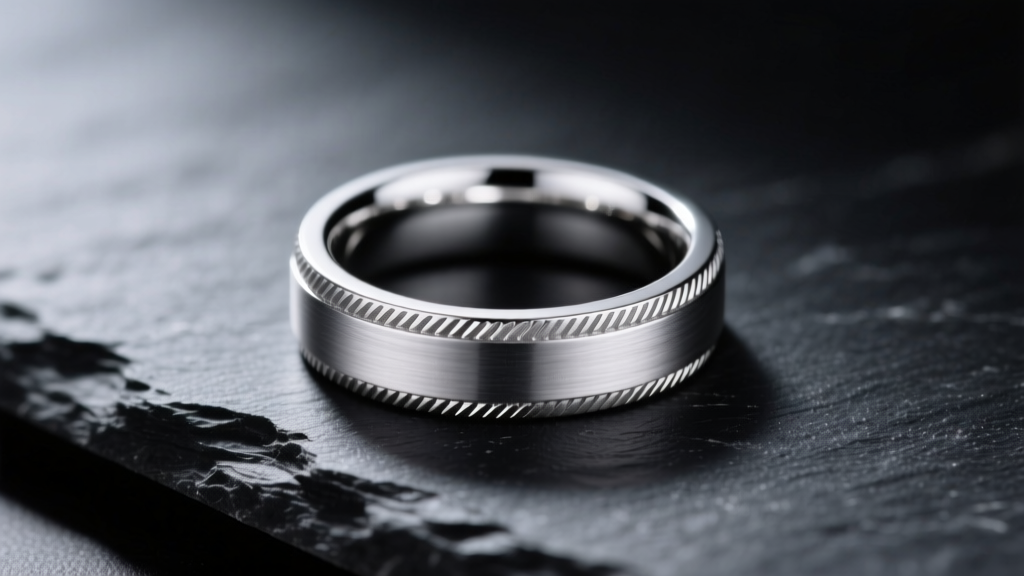
The Metallurgical Reality: What Is Platinum Jewelry Really Made Of?
When consumers and collectors ask what is platinum jewelry, they are frequently met with marketing narratives centered on rarity and prestige. However, from a metallurgical and gemological perspective, the answer requires a deep dive into alloy chemistry and fabrication mechanics. Pure platinum (Pt) is a dense, malleable, and highly ductile transition metal. In its pure state, it is far too soft for daily wear, registering a mere 40 on the Vickers hardness scale (HV). To transform it into a durable medium for fine jewelry, it must be alloyed with other platinum group metals (PGMs).
The industry standard is Pt950, meaning the alloy contains 95% pure platinum and 5% secondary metals. The choice of this 5% drastically alters the physical properties of the final piece:
- Pt950/Ruthenium (Ru): This is the preferred alloy for modern casting. Ruthenium increases the hardness to approximately 135 HV and refines the grain structure, resulting in a smoother cast surface. However, it requires precise temperature control during melting.
- Pt950/Iridium (Ir): A traditional alloy that is softer (around 80 HV) and more malleable. It is highly favored by bench jewelers for hand-fabrication, sizing, and intricate stone setting, as it is less prone to cracking under stress.
- Pt950/Cobalt (Co): This alloy is notably harder and possesses a slight magnetic property. It casts exceptionally well with a very tight grain structure but requires an argon gas environment during melting to prevent the cobalt from oxidizing and ruining the ingot.
Decoding the Stamps: Hallmarks and Purity Standards
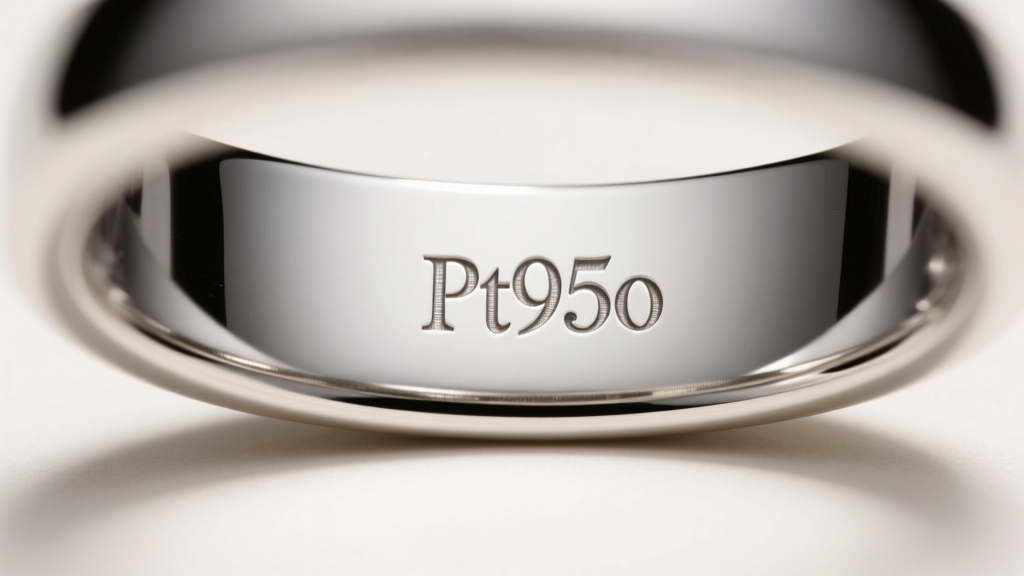
Identifying the exact composition of a piece is critical for valuation and repair. Unlike gold, which uses karatage (e.g., 18k, 14k), platinum is stamped by its parts-per-thousand purity. According to the Gemological Institute of America (GIA), international hallmarking laws dictate specific markings based on regional standards.
| Hallmark | Purity | Common Alloying Elements | Primary Use Case |
|---|---|---|---|
| Pt950 or 950Pt | 95.0% | Ruthenium, Iridium, Cobalt | Modern fine jewelry, engagement rings |
| Pt900 or 900Pt | 90.0% | Palladium, Copper | Vintage pieces, Japanese market jewelry |
| Pt850 | 85.0% | Palladium, Gold | Chains, findings, budget-conscious markets |
| PLAT or Platinum | Varies | Must be 95%+ in US | Legacy stamps, antique estate jewelry |
Always inspect the interior shank of a ring or the clasp of a chain with a 10x jeweler's loupe. A genuine Pt950 stamp will have sharp, clean edges, whereas counterfeit stamps often appear shallow or blurred due to inferior die-striking processes.
Density, Tensile Strength, and the Patina Phenomenon
One of the most defining technical characteristics of platinum is its specific gravity. Pure platinum has a density of 21.45 g/cm³, while standard Pt950 alloys sit around 20.8 g/cm³. By comparison, 18k white gold is approximately 15.5 g/cm³. This means a platinum ring will weigh roughly 35% more than the exact same design cast in 18k gold. This heft is often the first tactile indicator of authenticity.
Furthermore, platinum exhibits a unique wear characteristic known as the patina. When scratched, gold loses microscopic particles of metal to the environment. Platinum, due to its high tensile strength and ductility, merely displaces the metal. The metal is pushed aside, creating a matte, frosted appearance over time. According to Platinum Guild International, this patina is highly sought after by connoisseurs as it proves the metal's authenticity and adds a vintage luster, though it can be easily polished away to restore a high-mirror finish without any loss of structural integrity.
Platinum vs. 18k White Gold: A Structural Comparison
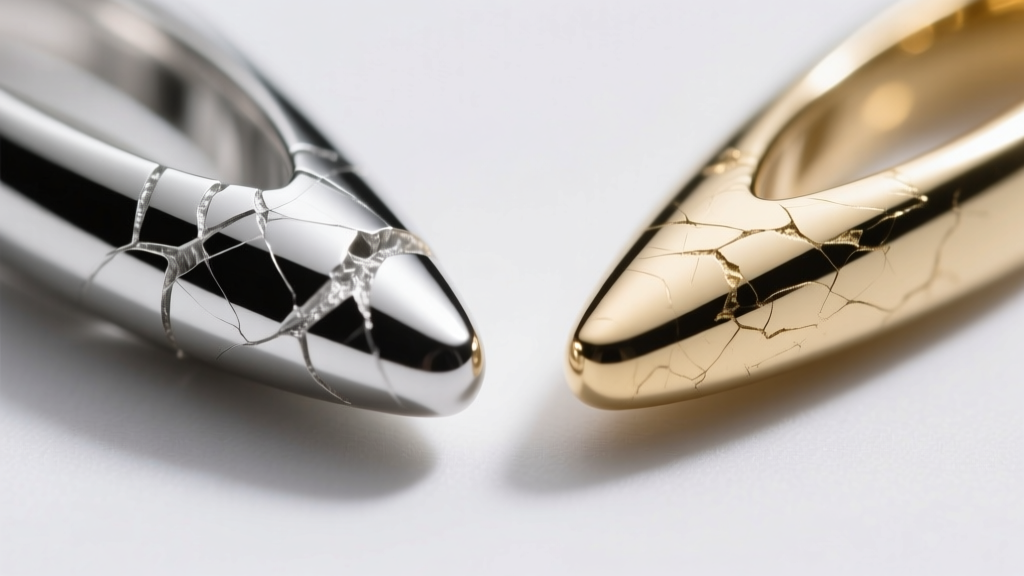
Bench jewelers and gemologists frequently compare platinum to 18k white gold, particularly regarding prong security and long-term maintenance. The structural differences are profound:
- Prong Security: Platinum's ductility allows a prong to bend if caught on fabric, keeping the diamond secure. White gold is more brittle and can snap under similar shear stress, leading to stone loss.
- Color Stability: 18k white gold is naturally a pale yellow/grey and requires rhodium plating to achieve a bright white finish. This plating wears off in 1 to 3 years, requiring costly re-dipping. Platinum is naturally white and will never require plating.
- Work Hardening: When platinum is forged or rolled, it work-hardens significantly, increasing its surface durability. Gold does not work-harden to the same degree without becoming too brittle to work with.
Market Pricing and Fabrication Realities
A common point of confusion is the pricing structure of platinum jewelry. Historically, the spot price of platinum has occasionally dipped below that of gold. Yet, platinum jewelry almost always commands a higher retail premium. The reason lies in fabrication complexity and melting points.
Pure platinum melts at 1,768°C (3,215°F), whereas 18k gold melts at roughly 1,064°C (1,947°F). This extreme heat requirement dictates the entire manufacturing pipeline:
- Crucibles and Investments: Gold can be cast using standard gypsum-bonded investments and clay-graphite crucibles. Platinum requires specialized phosphate-bonded investments and fused silica or high-tech ceramic crucibles that can withstand the intense heat without breaking down and contaminating the metal.
- Equipment Wear: The high casting temperatures degrade casting machines, torch tips, and polishing motors much faster, increasing overhead costs for the manufacturer.
- Scrap and Refining: Because of the high density and the need to avoid cross-contamination with gold in the polishing bags, platinum scrap must be meticulously separated and sent to specialized refineries like Johnson Matthey, which adds logistical costs.
Expert Insight: When pricing a custom platinum commission, expect the fabrication labor and casting premium to account for 40% to 60% of the final metal cost, whereas gold fabrication premiums rarely exceed 20%.
Expert Care: Ultrasonic, Steam, and Polishing Protocols
Maintaining platinum requires specific protocols to preserve both the metal and the gemstones it holds. While platinum is highly resistant to chemical corrosion and will not tarnish or react to chlorine like karat gold, improper cleaning can still cause issues.
- Ultrasonic Cleaning: Platinum is exceptionally safe for ultrasonic cleaners. Its density and rigidity mean it will not vibrate loose or fracture under high-frequency sound waves, making it the ideal metal for securing fragile inclusions in diamonds during deep cleaning.
- Steam Cleaning: High-pressure steam is perfectly safe for platinum and is the preferred method for removing polishing compounds from intricate pave settings.
- Polishing Compounds: If you are having a piece re-polished, ensure your jeweler uses dedicated platinum polishing wheels and aluminum oxide or specialized platinum rouge compounds. Using a wheel contaminated with gold rouge can embed microscopic gold particles into the platinum surface, which can later oxidize and cause unsightly pitting if the piece is ever resized with a laser welder.
Understanding the metallurgical and structural realities of this precious metal transforms the way you buy, wear, and maintain it. It is not merely a white alternative to gold; it is a fundamentally superior engineering material for fine jewelry.


