Does Stainless Steel Jewelry Rust? Prevention & Cleaning Guide
Does stainless steel jewelry rust? Learn the science of 316L surgical steel, discover why rust happens, and follow our step-by-step cleaning guide.

When investing in everyday jewelry, durability is just as important as aesthetics. A common question we receive at Jewel Style Radar is: does stainless steel jewelry rust? The short answer is no, high-quality stainless steel will not rust under normal conditions. However, the complete metallurgical truth is more nuanced. If you have noticed orange-brown spots on your favorite rings or chains, you are likely dealing with surface contamination, improper alloy grading, or environmental damage to the metal's protective layer.
In this comprehensive guide, we will break down the exact science behind surgical steel, identify the hidden culprits that cause localized corrosion, and provide a professional step-by-step protocol for restoring and passivating your jewelry.
The Science: Why True 316L Stainless Steel Resists Rust
To understand corrosion resistance, we must look at the elemental composition of the metal. Genuine jewelry-grade stainless steel is typically 316L surgical steel. According to the AZoM materials database, 316L is an austenitic chromium-nickel alloy that contains a crucial addition: 2% to 3% molybdenum.
While chromium (present at 16-18%) reacts with oxygen to form an invisible, self-healing shield known as the chromium oxide passivation layer, it is the molybdenum that specifically protects against chloride-induced pitting. The "L" in 316L stands for "Low Carbon" (max 0.03%), which prevents chromium carbide precipitation during manufacturing, ensuring the metal remains uniformly corrosion-resistant.
Expert Insight: If your jewelry is stamped "304" or has no stamp at all, it likely lacks molybdenum. 304 stainless steel is perfectly fine for indoor architectural fixtures, but it is highly susceptible to pitting and rust when exposed to the chlorides found in human sweat and swimming pools.
Why Your Stainless Steel Might Be Rusting (The Culprits)
If 316L is virtually impervious to rust, why do some pieces develop orange spotting? The passivation layer is incredibly thin (just a few nanometers thick) and can be compromised by specific environmental and mechanical factors.
1. Chloride and Halide Exposure
Chlorine is the natural enemy of stainless steel. Frequent exposure to heavily chlorinated swimming pools, hot tubs with bromine, or harsh household bleach can cause "pitting corrosion." This creates microscopic craters in the metal where localized rust begins to form.
2. Surface Contamination (Free Iron)
Sometimes, the rust isn't coming from your jewelry at all. If your stainless steel ring is stored in a toolbox, worn while working with carbon steel tools, or manufactured in a facility that also cuts standard iron, microscopic particles of "free iron" can embed into the surface. These foreign iron particles rust rapidly, making it appear as though the stainless steel itself is corroding.
3. Galvanic Corrosion
Wearing 316L stainless steel in direct physical contact with more anodic metals (like cheap brass, copper, or aluminum) in the presence of an electrolyte (sweat or saltwater) creates a galvanic cell. The lesser metal will corrode rapidly, and the resulting metallic salts can stain the surface of your steel, mimicking rust.

Step-by-Step Guide to Removing Rust and Restoring Shine
If your jewelry has developed surface rust or orange spotting, do not discard it. Follow these metallurgical cleaning steps to remove the iron oxide and restore the passivation layer.
Method 1: The Alkaline Baking Soda Paste (For Light Surface Rust)
This method is ideal for removing free-iron contamination and light surface spotting without scratching the polished finish.
- Mix the Paste: Combine two parts baking soda (sodium bicarbonate) with one part distilled water to form a thick paste.
- Apply and Agitate: Apply the paste to the affected areas. Using a baby toothbrush (which has ultra-soft bristles that won't mar the metal), gently scrub in the direction of the metal's grain or polish lines.
- Rinse and Dry: Rinse thoroughly under warm distilled water. Immediately dry with a lint-free microfiber cloth to prevent water spotting.
Method 2: Acetic Acid Soak (For Moderate Tarnish and Grime)
White vinegar contains acetic acid, which is highly effective at dissolving iron oxide (rust) and hard water mineral deposits.
- The Soak: Submerge the jewelry in a small glass bowl of undiluted white vinegar.
- Time Limit: Leave it for no more than 5 minutes. Prolonged exposure to strong acids can etch the surface of the steel and degrade gemstone settings.
- Neutralize: Remove the piece and immediately rinse it in a baking soda/water solution to neutralize the acid, followed by a clean water rinse.
Method 3: Citric Acid Passivation (For Severe Cases and Restoring the Shield)
According to the British Stainless Steel Association, passivation is a chemical process that removes free iron and promotes the reformation of the chromium oxide layer. You can do this at home.
- Create the Solution: Dissolve 10% food-grade citric acid powder in warm distilled water.
- Submerge: Place your cleaned stainless steel jewelry in the solution for 20 minutes at room temperature.
- Oxygenate: Remove the piece and let it air-dry undisturbed in the open air for 24 hours. The combination of citric acid stripping away impurities and ambient oxygen will rebuild a flawless, rust-proof chromium oxide barrier.
Daily Maintenance & Environmental Risk Matrix
Prevention is vastly superior to restoration. Understanding how different environments affect your jewelry will help you make informed decisions about when to wear your pieces. Below is a risk assessment matrix comparing 316L surgical steel against common jewelry alternatives.
| Environment | 316L Surgical Steel | 304 Stainless Steel | Sterling Silver (925) |
|---|---|---|---|
| Freshwater (Showers) | No Risk | No Risk | Low Risk (Tarnish) |
| Saltwater (Ocean) | Very Low Risk | Moderate Risk (Pitting) | High Risk (Tarnish) |
| Chlorine (Pools/Spas) | Moderate Risk (Pitting) | High Risk (Rust) | High Risk (Damage) |
| Heavy Sweat (Gym) | No Risk | Low Risk | Moderate Risk |
How to Verify Your Jewelry is True 316L Surgical Steel
Many fast-fashion brands market cheap, magnetic carbon steel or low-grade 304 alloys as "surgical steel." Here is how you can perform a basic field test to verify your jewelry's integrity.
The Magnet Test (And Its Limitations)
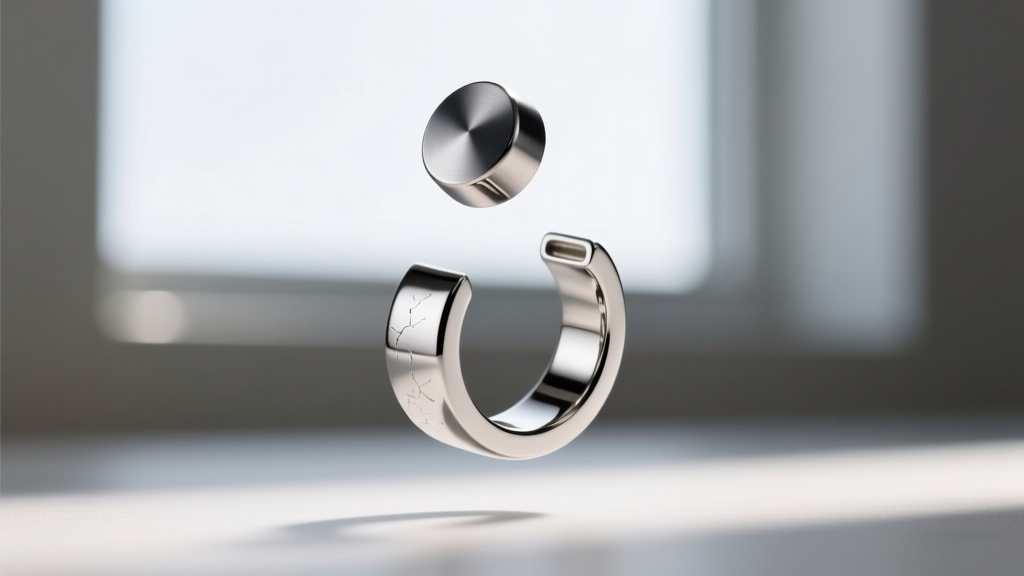
True 316L stainless steel is an austenitic alloy, meaning its crystalline structure is largely non-magnetic. If you hold a strong neodymium magnet to your ring or chain, it should exhibit zero to very weak magnetic pull. If the magnet snaps firmly to the metal, your jewelry is likely made from a ferritic or martensitic stainless steel (like the 400 series), which contains higher carbon and lower nickel, making it highly prone to rusting.
Note: Cold-working processes (like bending a wire or stamping a clasp) can slightly alter the crystalline structure, causing localized, weak magnetic spots. This is normal and does not indicate poor quality.
Ultrasonic Cleaning Maintenance
For routine maintenance of intricate pieces like Cuban links or gemstone-set signet rings, use an ultrasonic cleaner operating at 40kHz to 45kHz. Fill the tank with distilled water and a single drop of mild dish soap. Run it for 3 minutes. This cavitation process safely blasts away sebum, dead skin, and environmental chlorides from crevices that a toothbrush cannot reach, preserving the passivation layer without chemical abrasion.
Final Verdict
So, does stainless steel jewelry rust? Genuine 316L surgical steel will not rust from water, sweat, or time. However, it requires basic respect for its chemical boundaries. By avoiding prolonged chlorine exposure, preventing galvanic contact with cheap base metals, and utilizing citric acid passivation when necessary, your stainless steel collection will remain pristine, hypoallergenic, and brilliantly polished for a lifetime.


