Is Stainless Steel Jewelry Good? Troubleshooting Tarnish & Allergies
Is stainless steel jewelry good for daily wear? Troubleshoot green skin, nickel allergies, and rust with our expert 316L grading and care guide.

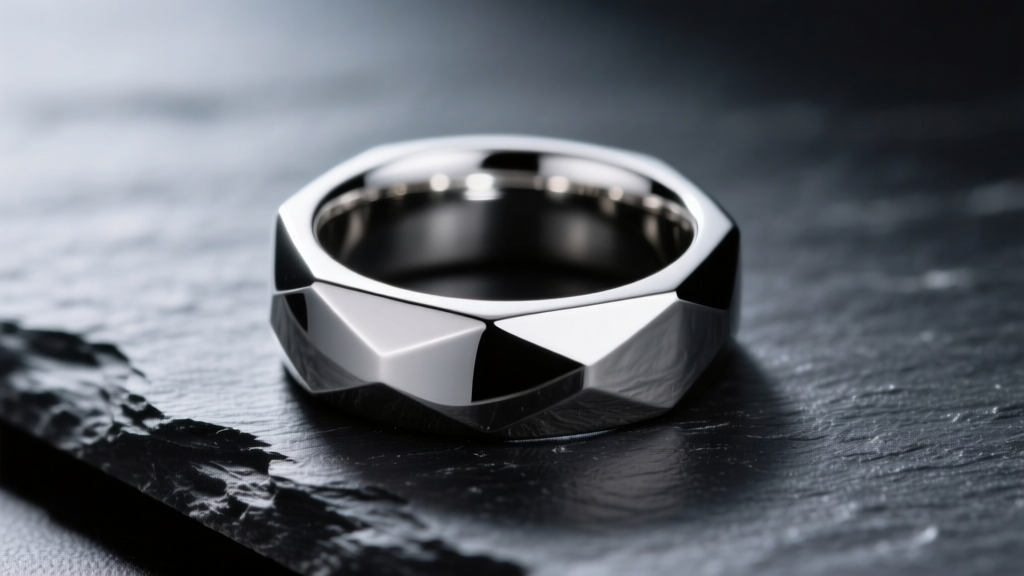
The Core Question: Is Stainless Steel Jewelry Good for Daily Wear?
When navigating the crowded market of affordable body adornments, the most common question we encounter is: is stainless steel jewelry good for everyday wear? The short answer is yes, but with critical caveats. Stainless steel is not a single metal; it is a family of iron-based alloys containing at least 10.5% chromium. This chromium reacts with oxygen to form a microscopic, self-healing passive layer of chromium oxide that prevents rust. However, the jewelry industry frequently blurs the lines between industrial grades, leading to consumer frustration when pieces tarnish, break, or cause skin reactions.
To truly answer whether stainless steel jewelry is 'good,' we must move beyond generic marketing claims and troubleshoot the specific failure modes that plague buyers. In this guide, we will diagnose the four most common problems associated with stainless steel jewelry—green skin, allergic contact dermatitis, pitting corrosion, and mechanical breakage—and provide actionable, metallurgical solutions to ensure your next purchase lasts a lifetime.
Troubleshooting Problem 1: 'My Stainless Steel Ring Turned My Finger Green'

Let us establish a fundamental metallurgical fact: genuine stainless steel does not contain copper, and therefore cannot turn your skin green. The green discoloration (copper chloride) is the result of an electrochemical reaction between copper alloys (like brass or bronze) and the acids in your sweat. If your 'stainless steel' ring leaves a green band on your finger, you are experiencing a material deception.
The Deception: Electroplated Base Metals
Many fast-fashion brands manufacture jewelry from cheap brass or copper cores and apply a microscopic flash-plating of stainless steel or chromium. Once this plating wears through—often within weeks of daily friction—the copper core is exposed to your skin's moisture.
- The Magnet Test: Austenitic stainless steels (like 304 and 316L) are generally non-magnetic or only very weakly magnetic. If a heavy ring strongly attracts a neodymium magnet, it is likely carbon steel or a ferritic alloy, which will rust.
- The Weight Test: Stainless steel has a density of roughly 8.0 g/cm³. It should feel notably heavier than aluminum or hollow-cast base metals of the same volume.
- The Acid Test: For absolute certainty, a drop of nitric acid on an inconspicuous area will turn green if the underlying metal is copper or brass, but will remain clear on genuine stainless steel.
The Fix: Only purchase solid, unplated 316L stainless steel. Avoid any piece described as 'stainless steel plated' or 'stainless steel filled,' as these terms indicate a base metal core disguised by a superficial coating.
Troubleshooting Problem 2: Allergic Reactions and Contact Dermatitis
The second major issue prompting buyers to ask if stainless steel jewelry is good for sensitive skin involves nickel allergies. Approximately 15% to 20% of the population suffers from nickel contact dermatitis. The confusion arises from the unregulated marketing term 'surgical steel.' While 316L stainless steel is used in surgical instruments, it still contains between 10% and 14% nickel by weight.
So, why do most people not react to 316L? The chromium oxide passivation layer effectively traps the nickel ions inside the alloy matrix. However, if the jewelry is heavily scratched, subjected to high-acidity sweat, or manufactured from a lower grade like 304 or 201, the nickel leaching rate can exceed the safety thresholds established by the American Academy of Dermatology and the EU Nickel Directive (EN 1811), which limits nickel release to 0.5 µg/cm²/week.
The Nickel Release & Corrosion Matrix
| Alloy Grade | Composition Highlights | Corrosion Resistance | Nickel Leaching Risk | Best Use Case |
|---|---|---|---|---|
| 201 Series | High Manganese, Low Nickel | Poor (Rusts easily) | High | None (Avoid for jewelry) |
| 304 Series | 18% Chromium, 8% Nickel | Good (Food Grade) | Moderate | Occasional wear, non-piercing |
| 316L Series | 16% Cr, 10% Ni, 2% Molybdenum | Excellent (Marine Grade) | Very Low | Daily wear, body jewelry |
| Implant Grade (ASTM F138) | Highly controlled 316L variant | Superior | Negligible | Fresh piercings, sensitive skin |
The Fix: If you have a known nickel allergy, seek out jewelry explicitly certified as ASTM F138 implant-grade stainless steel, or pivot to solid titanium (ASTM F136). For standard 316L pieces, avoid wearing them during intense workouts where high-acidity sweat can compromise the passive layer and accelerate nickel ion release.
Troubleshooting Problem 3: Tarnish, Rust, and Water Damage
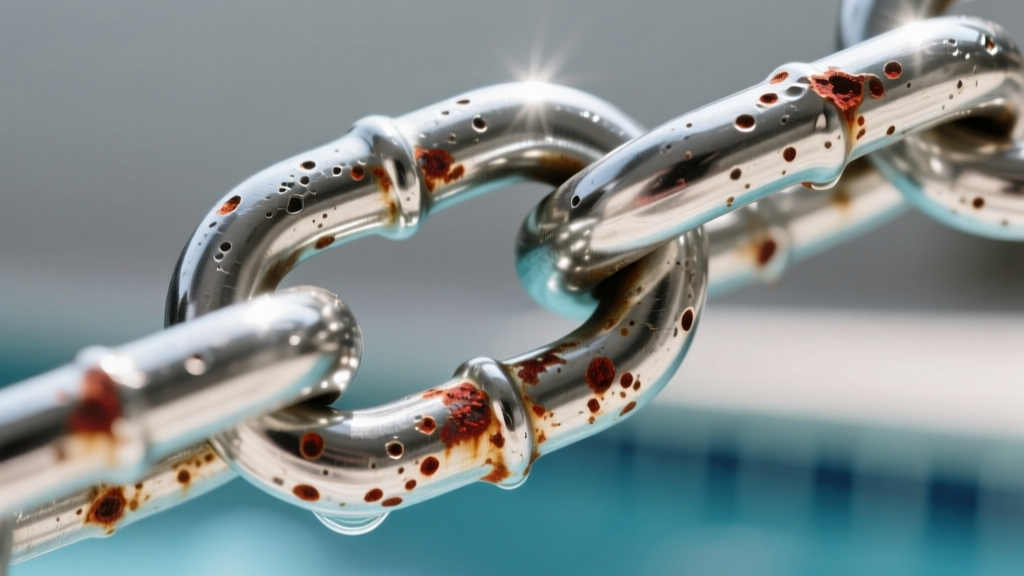
While stainless steel does not tarnish or oxidize in the traditional sense that silver does (forming black silver sulfide), it is entirely vulnerable to pitting corrosion. The passive chromium oxide layer requires oxygen to maintain and repair itself. When exposed to environments that strip oxygen or introduce aggressive halogens, the layer breaks down, leading to localized rust spots that look like irreversible tarnish.
The Chlorine Threat
The most common culprit for stainless steel jewelry failure is chlorine. Swimming pools, hot tubs, and household bleach contain chlorides that actively attack the passive layer. Once the chlorides penetrate the matrix, they create microscopic pits where localized rust begins. According to FDA guidelines on medical device materials, even high-grade stainless steels require meticulous cleaning and passivation after exposure to harsh chemicals to maintain their structural integrity.
The Fix: Never wear stainless steel jewelry in chlorinated pools or while cleaning with bleach. If your piece develops minor surface rust or dullness, do not use silver polish or abrasive chemical dips. Instead, create a paste of baking soda and water, gently rub it along the grain of the metal with a soft microfiber cloth, rinse thoroughly, and dry immediately. This mild alkaline treatment neutralizes surface acids and lifts minor oxidation without damaging the alloy.
Troubleshooting Problem 4: Snagging, Breakage, and Clasp Failures
Stainless steel is incredibly hard, boasting a tensile strength significantly higher than sterling silver or 14k gold. Paradoxically, this hardness makes it brittle under extreme stress and difficult for jewelers to resize or solder. The most frequent mechanical failures occur not in the chain links themselves, but at the connection points.
Jump Rings and Clasp Springs
- Unsoldered Jump Rings: Many mass-produced stainless steel pendants are attached to chains using split jump rings. Because stainless steel cannot be easily soldered with standard jeweler's torches, these rings are often left unsoldered. A sharp tug will pull the ring apart, losing the pendant.
- Lobster Clasp Springs: The outer shell of a lobster clasp may be 316L stainless steel, but the tiny internal spring is frequently made of carbon steel or brass to save manufacturing costs. When exposed to sweat, this internal spring rusts and snaps, rendering the clasp useless.
The Fix: Inspect the gauge of the chain and the connection points. For heavy pendants, insist on chains with a minimum wire thickness of 2.5mm (roughly 10-gauge) and look for 'soldered' or 'welded' jump rings, which are laser-welded shut. When buying online, check reviews specifically for clasp longevity, and consider upgrading to a stainless steel spring ring clasp if you are prone to breaking lobster mechanisms.
The Ultimate Troubleshooting Checklist for Buyers
To ensure the stainless steel jewelry you are purchasing is genuinely 'good' and built to last, run it through this final quality-assurance checklist before checking out:
- Verify the Grade: Look for explicit mentions of '316L' or 'Surgical/Marine Grade.' Avoid generic 'stainless steel' listings that do not specify the alloy.
- Check for Plating: Ensure the piece is solid and unplated. PVD (Physical Vapor Deposition) coatings in gold or black are acceptable, but avoid electroplated base metals.
- Inspect the Connections: Ensure jump rings are tightly closed, laser-welded, or soldered. Check that the chain gauge is appropriate for the weight of the pendant (e.g., 18-gauge or thicker for heavy items).
- Confirm Clasp Quality: Ask the seller if the clasp contains a stainless steel spring, or plan to swap the clasp at a local jeweler for a high-quality titanium or steel alternative.
- Evaluate the Finish: A high-quality mirror polish or brushed finish should be even and free of microscopic pitting, which indicates poor manufacturing conditions or recycled, impure scrap metal.
Ultimately, stainless steel jewelry is an excellent, durable, and hypoallergenic choice for daily wear—provided you know how to identify true 316L craftsmanship and avoid the counterfeit alloys that give the metal a bad reputation. By troubleshooting these common pitfalls, you can build a resilient, tarnish-free collection that withstands the rigors of everyday life.


