How to Choose the Right Stainless Steel Jewelry Cleaner
Learn how to safely use a stainless steel jewelry cleaner on 316L surgical steel. Discover DIY solutions, ultrasonic tips, and PVD coating care.

Why 316L Surgical Steel Needs Specific Cleaning Approaches
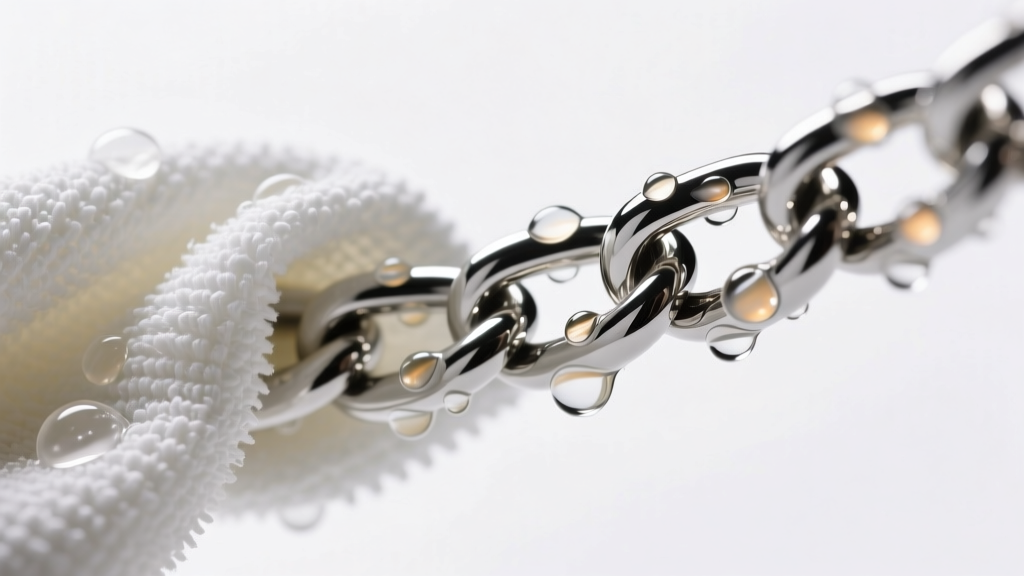
Stainless steel jewelry, particularly the 316L surgical grade favored by premium brands, is celebrated for its incredible durability and resistance to tarnish. However, the belief that stainless steel is entirely maintenance-free is a common beginner misconception. Over time, environmental pollutants, sebum, hard water minerals, and cosmetic residues create a microscopic film that dulls the metal's natural luster. Finding the right stainless steel jewelry cleaner is not about scrubbing harder; it is about understanding the metallurgy of your pieces and selecting a cleaning agent that removes grime without compromising the metal's protective layers.
At a molecular level, 316L stainless steel owes its corrosion resistance to a phenomenon called passivation. The alloy contains 16-18% chromium, which reacts with oxygen in the air to form an invisible, self-healing chromium oxide layer just 3 to 5 nanometers thick. According to the International Stainless Steel Forum, this passivation layer is what prevents rust and pitting. When you use harsh, highly alkaline, or chloride-based cleaners, you strip away this nanometer-thin shield, leaving the underlying iron vulnerable to oxidation and localized pitting. Therefore, the best cleaner is one that respects this delicate chemical balance while effectively lifting organic oils and environmental dirt.
Commercial vs. DIY Stainless Steel Jewelry Cleaner Options
Walk down any jewelry aisle, and you will find dozens of commercial liquid dips and polishing cloths. While some are formulated specifically for steel, many are designed for sterling silver or gold and contain ammonia or thiourea—chemicals that are entirely unnecessary and potentially harmful to surgical steel. For 95% of your cleaning needs, a properly formulated DIY approach outperforms expensive commercial dips.
The Gold Standard: Mild Surfactant Blends
The most effective, safest, and most economical stainless steel jewelry cleaner is a mild, pH-neutral surfactant. A simple mixture of warm distilled water and a few drops of a gentle dish soap (such as Dawn Free & Clear or a dedicated castile soap) breaks down the surface tension of body oils and lotions without attacking the chromium oxide layer. The key here is distilled water; tap water often contains dissolved calcium and magnesium, which can leave stubborn hard water spots on high-polish finishes as it evaporates.
Isopropyl Alcohol (For Sanitization, Not Polishing)
If you are cleaning body jewelry (like captive bead rings or barbells) and need to sanitize the piece before insertion, 70% to 91% isopropyl alcohol is highly effective. It cuts through sebum and evaporates rapidly without leaving a residue. However, alcohol should be used as a targeted sanitizing wipe rather than a prolonged soaking bath, as extended exposure can dry out and degrade certain gemstone adhesives or rubber O-rings used in clicker closures.
Cleaner Compatibility Matrix
| Cleaner Type | Best Used On | Avoid On | Primary Mechanism |
|---|---|---|---|
| Mild Dish Soap & Distilled Water | All finishes, PVD coatings, most gemstones | Porous stones (if soaked) | Surfactant oil suspension |
| 70% Isopropyl Alcohol | Bare steel body jewelry, sanitizing | PVD coatings, glued settings | Solvent degreasing |
| Baking Soda Paste | Heavily soiled bare steel (matte/brushed) | High-polish, PVD, gemstones | Mild abrasive friction |
| Ultrasonic Waves (40kHz) | Intricate bare steel filigree, chains | PVD, soft/porous gems, pave | Cavitation implosion |
Step-by-Step Cleaning Framework for Different Finishes
The physical texture of your stainless steel jewelry dictates the mechanical action you should apply. What restores a mirror finish can easily ruin a sandblasted texture. Here is how to tailor your stainless steel jewelry cleaner routine to the specific finish of your piece.
High-Polish and Mirror Finishes
Mirror-polished 316L steel reflects light beautifully but shows every micro-scratch and fingerprint. To clean these pieces, soak them in the warm distilled water and mild soap solution for 3 to 5 minutes to loosen debris. Use a baby-soft toothbrush or a dedicated, ultra-soft jewelry brush to gently agitate the crevices. Never use standard toothbrushes, as the nylon bristles are often stiff enough to leave microscopic swirl marks on a mirror finish. Rinse with clean distilled water and immediately pat dry with a lint-free microfiber cloth to prevent water spotting.
Matte, Brushed, and Sandblasted Textures
Textured finishes are more forgiving regarding fingerprints but are notorious for trapping dead skin cells, soap scum, and polishing compounds in their microscopic grooves. For brushed steel, you can use a slightly firmer brush. If grime is deeply embedded in a sandblasted crevice, a wooden toothpick or a soft interdental brush can gently dislodge the debris without scratching the surrounding matte surface. Avoid using polishing cloths on matte finishes, as the mild abrasives embedded in the cloth can inadvertently burnish the texture, creating unwanted shiny patches.
PVD-Coated (Gold, Rose Gold, and Black) Steel
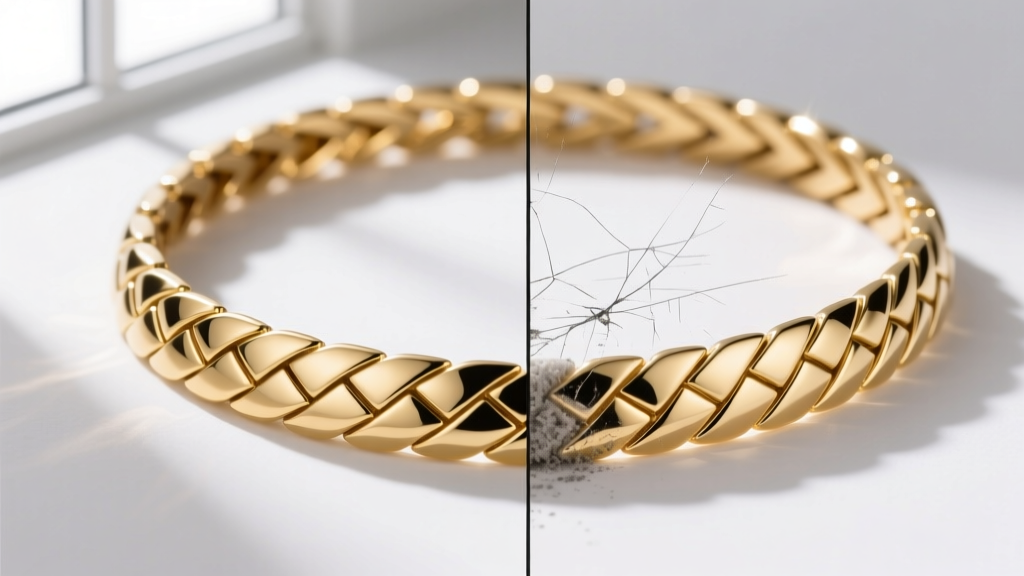
Physical Vapor Deposition (PVD) is a vacuum-plating process that bonds a microscopic layer (usually 0.25 to 1.0 microns thick) of titanium nitride or zirconium nitride to the steel. While PVD is significantly more durable than traditional electroplating, it is not invincible. Never use abrasive pastes, baking soda, or commercial silver dips on PVD jewelry. The only safe stainless steel jewelry cleaner for PVD is the mild soap and distilled water solution, applied with a soft cloth. Avoid soaking PVD pieces for extended periods, and never use ultrasonic cleaners, as the high-frequency vibrations can cause micro-fractures in the PVD layer, leading to peeling or flaking.
The Ultrasonic Deep Dive: When and How to Use It
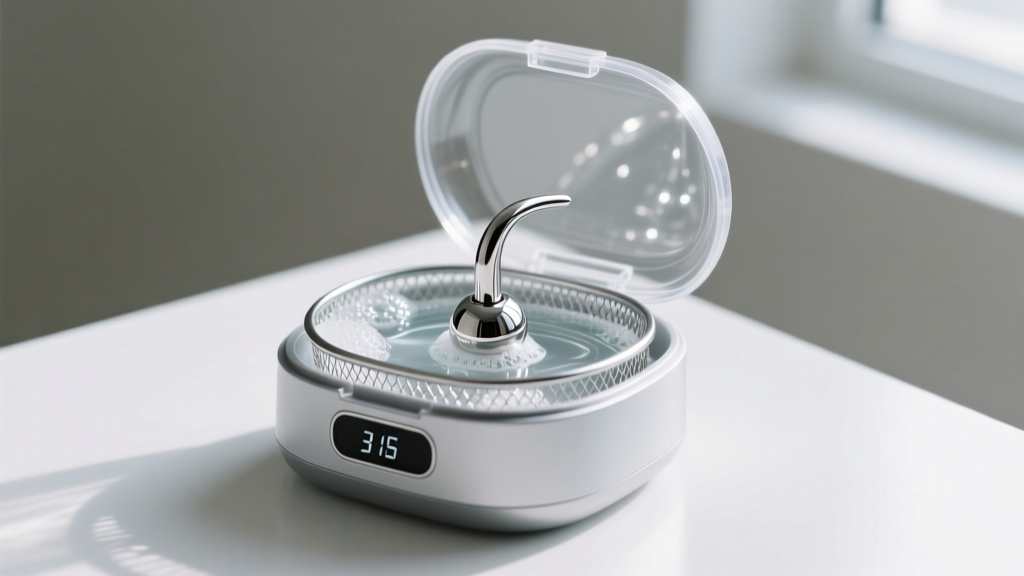
Ultrasonic cleaners use high-frequency sound waves (typically 40,000 to 45,000 Hz) to create microscopic vacuum bubbles in a liquid solution. When these bubbles collapse against the jewelry, they generate localized shockwaves that blast away dirt from areas a brush cannot reach. While they are miraculous for intricate 316L steel chains or heavily textured cast rings, they require strict operational parameters to avoid damaging your pieces.
- Always use the plastic basket: Never drop bare steel directly into the stainless steel tank of the ultrasonic cleaner. The high-frequency vibrations will cause the jewelry to bounce against the tank, resulting in severe "ultrasonic pitting" and deep scratches. Always use the provided plastic insert basket.
- Degas the water first: Fresh tap water contains dissolved gases that absorb the ultrasonic energy, reducing cleaning efficiency. Run the machine for 5-10 minutes with just water and a drop of dish soap to degas it before adding your jewelry.
- Know your gemstones: According to the Gemological Institute of America (GIA), ultrasonic waves can easily shatter stones with internal inclusions (like emeralds or opals) and can violently shake loose stones held in pave or tension settings. Only use ultrasonics on bare steel or pieces set with durable, bezel-set stones like cubic zirconia or sapphire.
What to Avoid: The "Never Use" List
Many beginners accidentally ruin their surgical steel jewelry by reaching for common household cleaners that are far too aggressive for metallurgical applications. To preserve the integrity and passivation layer of your 316L pieces, strictly avoid the following:
- Bleach (Sodium Hypochlorite): Chlorine is the natural enemy of stainless steel. Exposure to bleach, even in diluted forms or swimming pool water, attacks the chromium oxide layer and causes rapid, irreversible pitting corrosion.
- Toothpaste: A common internet myth suggests using toothpaste to polish steel. Toothpaste contains silica or calcium carbonate abrasives with a high Relative Dentin Abrasivity (RDA) value. These particles are harder than the PVD coatings and can leave a hazy web of micro-scratches on high-polish bare steel.
- Ammonia-Based Glass Cleaners: While ammonia is excellent for cutting grease on windows, it is highly alkaline and can cause surface etching and dulling on stainless steel alloys over prolonged exposure.
Troubleshooting: Why Did My Steel Jewelry Leave a Dark Mark?
A frequent complaint among beginners is that a stainless steel ring or bracelet leaves a greenish-black smudge on the skin, leading to the assumption that the jewelry is cheap or corroding. In genuine 316L surgical steel, this is almost never a sign of rust. Instead, it is a reaction between the metal and a highly acidic skin pH, excessive sweating, or residual cosmetics (like liquid foundation or self-tanner) trapped against the skin. The friction creates microscopic metallic dust that oxidizes and stains the skin. If this occurs, clean the jewelry thoroughly with the mild surfactant blend mentioned above, wash the skin, and apply a thin coat of clear nail polish to the inside band of the ring to create a temporary physical barrier.
Expert Takeaway: The best stainless steel jewelry cleaner is rarely a harsh chemical dip. By relying on mild surfactants, distilled water, and finish-specific mechanical action, you can maintain the pristine condition of 316L surgical steel and PVD coatings for decades without compromising their structural or aesthetic integrity.
For further reading on the specific alloy compositions and corrosion resistance of surgical steels, the British Stainless Steel Association (BSSA) provides excellent metallurgical data sheets detailing the exact elemental breakdown of 316L and its superior performance in high-chloride environments compared to lower-grade 304 steel.


