316L Stainless Steel Jewelry vs Titanium: Metal Properties Compared
Compare 316L stainless steel jewelry with titanium and surgical steel. Discover exact alloy properties, nickel risks, and best uses for daily wear.

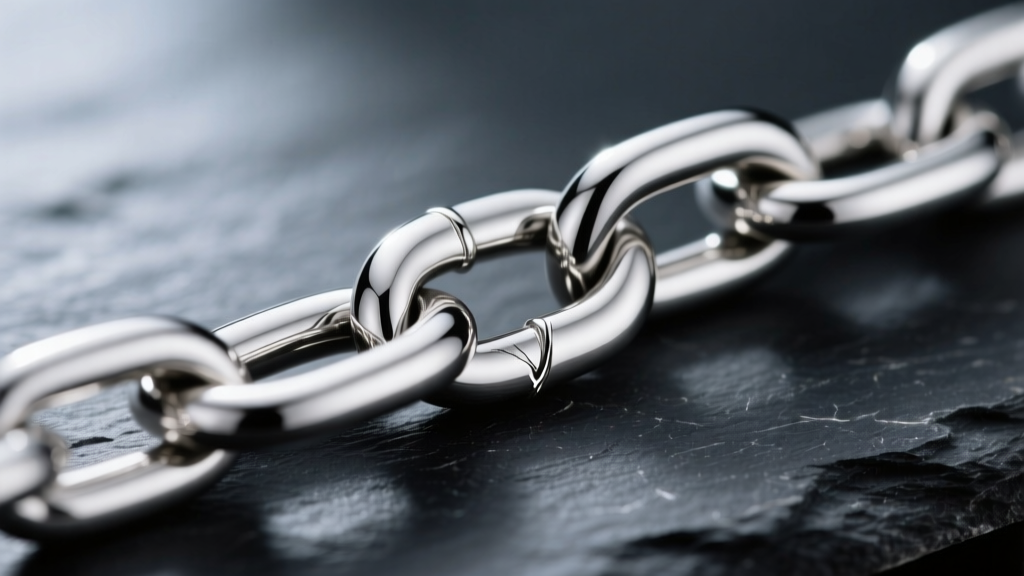
Introduction to 316L Stainless Steel Jewelry
When navigating the modern jewelry market, understanding the exact metallurgical properties of your accessories is no longer optional—it is essential for both longevity and skin health. Among the most prevalent materials in contemporary accessory design is 316L stainless steel jewelry. Often marketed under ambiguous terms like "surgical steel" or "hypoallergenic metal," 316L is a specific austenitic alloy with distinct advantages and notable limitations when compared to premium alternatives like implant-grade titanium. This guide strips away the marketing jargon to provide a deep, technical comparison of 316L stainless steel against titanium and other common alloys, helping you make informed decisions based on material science rather than brand claims.
The Metallurgy of 316L: Beyond Basic Stainless Steel
To understand why 316L stainless steel jewelry performs the way it does, we must examine its atomic structure. The "316" designation refers to an austenitic chromium-nickel-molybdenum stainless steel. The "L" stands for "Low Carbon," meaning the carbon content is kept below 0.03%. This reduction in carbon is critical for jewelry manufacturing because it prevents carbide precipitation during the high-heat soldering and welding processes used to close jump rings and attach clasps, thereby maintaining the metal's corrosion resistance.
The Molybdenum Advantage
While standard 304 stainless steel (commonly found in kitchen appliances and budget jewelry) contains roughly 18% chromium and 8% nickel, 316L introduces a crucial element: 2% to 3% molybdenum. According to the Nickel Institute, molybdenum drastically enhances the alloy's resistance to pitting and crevice corrosion in chloride environments. In practical terms, this means 316L stainless steel jewelry can withstand prolonged exposure to human sweat (which contains sodium chloride) and chlorinated swimming pools far better than 304 steel, resisting the microscopic pitting that leads to dullness and structural weakening over time.
316L vs. Implant-Grade Titanium (ASTM F136)
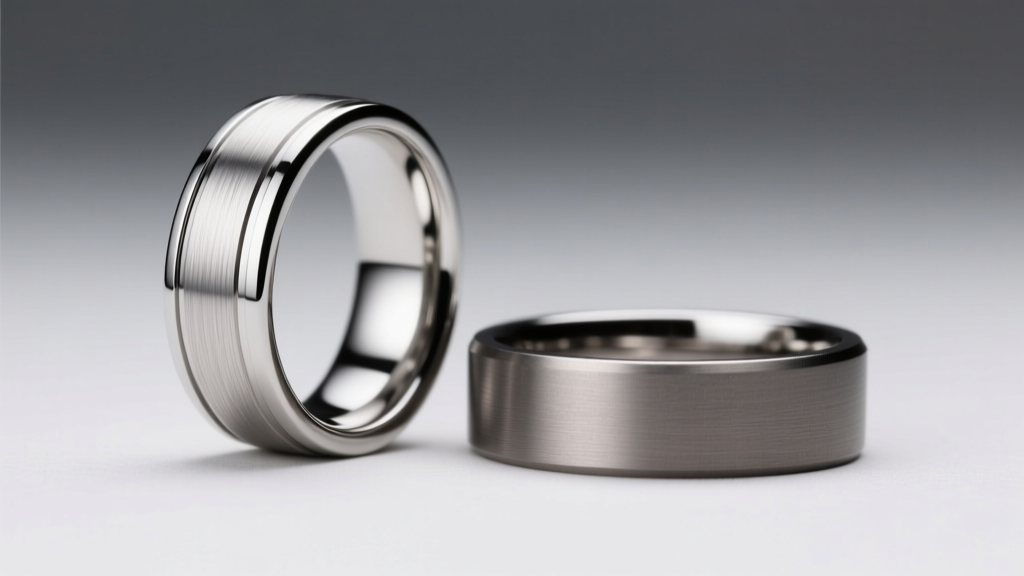
The most common debate in body jewelry and high-end daily wear is the choice between 316L stainless steel and ASTM F136 implant-grade titanium. While 316L is an excellent material for external fashion jewelry, titanium holds the crown for biocompatibility. Below is a technical breakdown of their physical properties.
| Property | 316L Stainless Steel | ASTM F136 Titanium | 304 Stainless Steel |
|---|---|---|---|
| Density (g/cm³) | 8.00 | 4.43 | 8.00 |
| Vickers Hardness (HV) | 150 - 190 | 330 - 350 | 200 - 220 |
| Nickel Content | 10% - 14% | 0% (Trace only) | 8% - 10.5% |
| Average Price (Simple Band) | $15 - $45 | $50 - $120 | $10 - $25 |
| Magnetic Permeability | Slightly magnetic (cold worked) | Non-magnetic | Slightly magnetic |
As the data illustrates, titanium is nearly half the weight of 316L, making it vastly superior for large-gauge body jewelry or heavy statement earrings where structural fatigue on the piercing is a concern. Furthermore, titanium's higher Vickers hardness means it is more resistant to micro-scratches that can harbor bacteria, though this same hardness makes it more difficult and expensive for jewelers to machine and polish.
The "Surgical Steel" Marketing Myth
One of the most pervasive misconceptions in the accessory industry is the term "surgical steel." It is vital to understand that "surgical steel" is not a standardized metallurgical classification; it is a marketing colloquialism.
"True surgical instruments are typically manufactured from 400-series martensitic stainless steels (like 420 or 440), which have higher carbon content for edge retention and lower nickel content, but they are highly susceptible to rust if not meticulously oiled. The jewelry industry co-opted the word 'surgical' to describe 316L because it is used in some temporary medical devices and scalpels, but 316L is fundamentally an austenitic marine-grade steel."
When a brand advertises 316L stainless steel jewelry as "surgical steel," they are attempting to imply medical-grade biocompatibility. However, as we will explore in the next section, the presence of nickel in 316L prevents it from achieving true medical-grade status for prolonged internal tissue contact.
Hypoallergenic Realities: Nickel Migration Rates
Is 316L stainless steel jewelry truly hypoallergenic? The answer depends entirely on whether the skin barrier is intact. 316L contains 10% to 14% nickel, which is tightly bound within the austenitic crystal lattice. Under normal conditions, a highly polished 316L surface releases very little nickel.
The EN 1811:2011 Standard
In Europe, the REACH regulation restricts nickel release from articles intended to come into direct and prolonged contact with the skin. The benchmark is the EN 1811:2011 artificial sweat test, which mandates a nickel migration limit of 0.5 µg/cm²/week. Highly polished 316L stainless steel jewelry generally passes this test for intact skin. However, if the jewelry features brushed finishes, microscopic scratches, or is exposed to highly acidic sweat, the passive chromium-oxide layer can be compromised, leading to nickel leaching that triggers contact dermatitis in sensitized individuals.
For fresh piercings (where the skin barrier is broken and the metal is in direct contact with the bloodstream and interstitial fluid), 316L fails the stricter 0.2 µg/cm²/week limit required for post-assemblies. In these scenarios, ASTM F136 titanium is the only medically recommended choice, as it contains zero nickel and forms an impenetrable titanium dioxide passive layer.
Practical Buying Guide and Failure Modes
When investing in 316L stainless steel jewelry, material grade is only half the battle. The hardware engineering and finishing processes dictate the actual lifespan of the piece. Watch out for these specific failure modes:
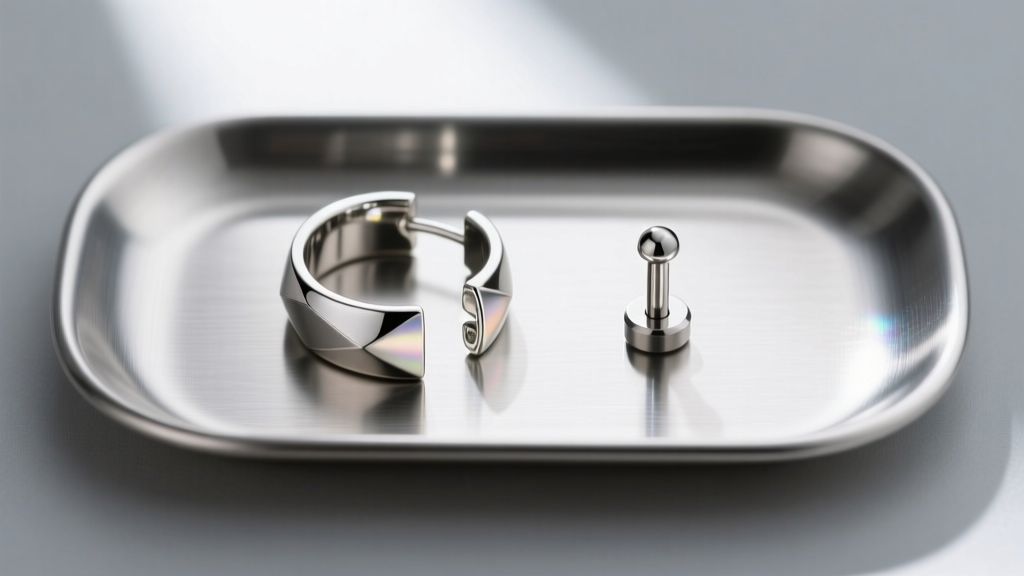
- Threading Mechanics: For any body-piercing adjacent jewelry, avoid external threading (where the screw is on the post). External threads act like a file, tearing tissue and harboring bacteria. Always demand internally threaded (screw on the ball) or threadless (push-pin) designs, even if the base metal is 316L.
- Clasp Spring Failures: The lobster clasp is the weakest link in 316L chains. While the clasp body may be 316L, the internal tension spring is almost always made of a cheaper, highly corrosive carbon steel. If you wear your necklace in the shower, the spring will rust and snap within months. Look for brands that use solid box clasps or magnetic closures without internal steel springs.
- PVD Coating Delamination: Black or rose-gold 316L jewelry is usually coated via Physical Vapor Deposition (PVD). While PVD is durable, cheap manufacturers skip the crucial ultrasonic cleaning phase before coating, leading to peeling within weeks. Always check reviews specifically for "color fading" or "chipping" before buying coated 316L pieces.
- Porosity in Castings: High-end 316L jewelry is CNC machined or die-struck, resulting in a dense, non-porous surface. Budget brands use wax-casting for 316L, which can trap microscopic air bubbles. These pores trap sweat and dead skin, causing the jewelry to smell and tarnish despite the alloy's inherent corrosion resistance.
Final Verdict: When to Choose 316L
316L stainless steel jewelry remains a powerhouse material for everyday fashion accessories, heavy chain necklaces, and external body jewelry (like ear cuffs or healed lobe hoops). Its high density gives it a premium, weighty feel in the hand, and its molybdenum content ensures it survives daily exposure to the elements. However, consumers must remain vigilant about the "surgical steel" marketing trap. For fresh piercings, severe nickel allergies, or ultra-lightweight requirements, ASTM F136 titanium is the undisputed superior choice. By understanding the exact metallurgical boundaries of 316L, you can curate a jewelry collection that is both aesthetically striking and biologically safe.


