Stainless Steel Permanent Jewelry: Welding & Alloy Guide
Explore the metallurgy, pulse-arc welding physics, and gauge tolerances of 316L stainless steel permanent jewelry for lasting durability.

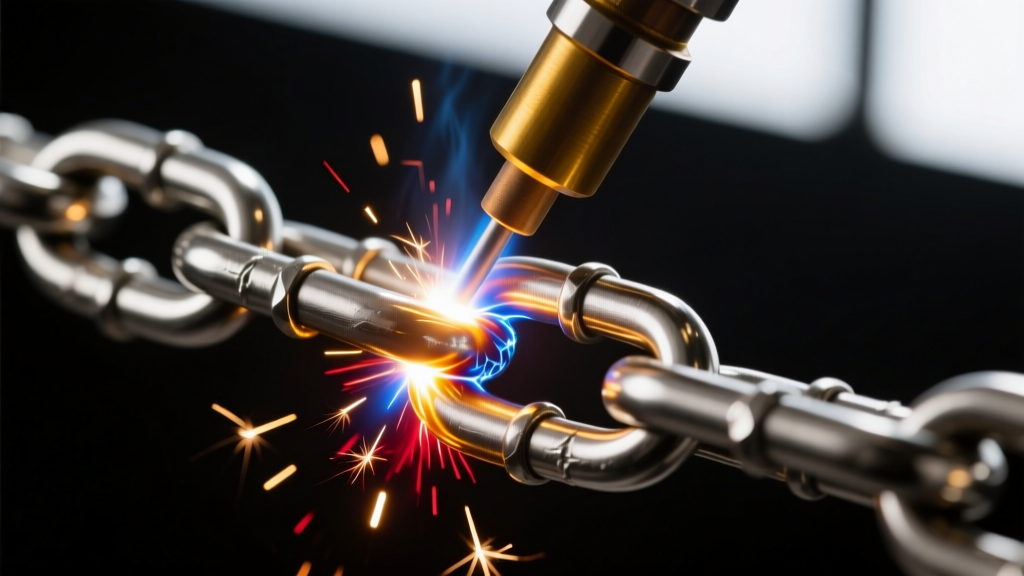
The explosive growth of stainless steel permanent jewelry has transformed a niche parlor service into a mainstream metallurgical art form. Unlike traditional clasped jewelry, permanent pieces are designed to withstand continuous, 24/7 exposure to human skin, sweat, chlorinated water, and environmental friction. As of 2026, the industry has matured significantly, moving away from rudimentary soldering techniques toward highly controlled pulse-arc welding and strict alloy verification. For jewelers and consumers alike, understanding the technical parameters of these pieces is no longer optional; it is the baseline for safety, durability, and hypoallergenic compliance.
This expert deep dive dissects the material science, welding physics, and structural engineering that dictate the success or failure of stainless steel permanent jewelry.
The Metallurgy of Permanent Wear: Why 316L is Non-Negotiable
Not all stainless steel is created equal. The term 'stainless' simply implies a minimum of 10.5% chromium content, which forms a passive, self-healing chromium oxide layer on the surface. However, when selecting materials for stainless steel permanent jewelry, only one grade meets the rigorous demands of continuous dermal contact: 316L surgical steel.
The Role of Molybdenum and Low Carbon
While 304 stainless steel is common in industrial hardware and cheap fashion jewelry, it lacks the elemental fortitude for permanent wear. 316L contains an additional 2% to 3% molybdenum. This specific alloying element drastically increases resistance to pitting and crevice corrosion, particularly in chloride-rich environments like human sweat and swimming pools.
The 'L' in 316L stands for 'Low Carbon' (typically under 0.03%). This is a critical distinction for permanent jewelry because the welding process introduces intense, localized heat. In standard 316 steel, high carbon levels combine with chromium during welding to form chromium carbides—a phenomenon known as sensitization or carbide precipitation. This depletes the surrounding Heat Affected Zone (HAZ) of chromium, rendering the weld joint highly susceptible to rust and allergic reactions. 316L prevents this, ensuring the weld remains as corrosion-resistant as the parent chain.
According to the National Institutes of Health (NIH), the superior biocompatibility and corrosion resistance of 316L stainless steel make it the benchmark for long-term surgical implants and continuous dermal contact devices.
Micro-TIG vs. Laser: The Physics of the Permanent Weld
The structural integrity of stainless steel permanent jewelry relies entirely on the quality of the weld joining the final link. As of 2026, the industry standard has firmly shifted toward Pulse-Arc (Micro-TIG) welding over traditional laser welding for stainless steel applications.
Pulse-Arc Welding Parameters
Pulse-arc welders, such as those engineered by Sunstone Welders, utilize a tungsten electrode to create a microscopic, high-energy electrical arc. This arc melts the stainless steel links together at a molecular level. The energy output is measured in Joules, and dialing in the exact parameter is crucial:
- 1.2mm Gauge Chain: Requires approximately 12 to 16 Joules. Too much energy will vaporize the thin wire, causing a brittle, porous weld.
- 1.5mm to 1.8mm Gauge Chain: The industry sweet spot. Requires 18 to 25 Joules, providing deep penetration without blowing through the link.
- 2.5mm+ Heavy Chains: Requires 30 to 45 Joules, often necessitating a dual-pulse setting to ensure the core of the wire reaches melting temperature.
The Necessity of Argon Shielding
Stainless steel is highly reactive to oxygen at welding temperatures. If a pulse-arc weld is performed in ambient air, the molten metal will instantly oxidize, creating a dark, crusty, and structurally weak joint. Professional permanent jewelry setups must use an automated Argon gas shield. Argon is an inert gas that displaces oxygen around the weld pool, resulting in a clean, bright, and fully passivated joint that requires zero post-weld polishing.
Chain Architecture: Gauges, Tensile Strength, and Safety
A permanent bracelet is only as strong as its weakest link. When designing stainless steel permanent jewelry, jewelers must balance aesthetic delicacy with mechanical tensile strength. The gauge (wire thickness) and the chain weave dictate how the piece will handle sudden snags.
| Chain Weave | Standard Gauge | Tensile Yield Point | Best Use Case |
|---|---|---|---|
| Delicate Cable | 1.0mm - 1.2mm | ~15 lbs (6.8 kg) | Anklets, children's bracelets (built-in safety breakaway) |
| Standard Curb | 1.5mm | ~35 lbs (15.8 kg) | Everyday wrist bracelets (optimal balance of strength and comfort) |
| Figaro / Rope | 1.8mm - 2.2mm | ~60 lbs (27.2 kg) | Statement pieces, high-friction environments |
| Heavy Cuban | 3.0mm+ | 100+ lbs (45+ kg) | Permanent necklaces, heavy-duty wristwear |
The 'Safety Breakaway' Engineering
Unlike clasped jewelry, a permanent bracelet cannot simply unhook if caught on machinery or a door handle. Therefore, the chain must be engineered to fail safely. A 1.5mm 316L curb chain will typically deform and snap at around 35 pounds of lateral force. This is sufficient to withstand the rigors of typing, sleeping, and exercising, but low enough to break before causing severe degloving injuries or wrist trauma during a high-impact snag.

Failure Modes: Troubleshooting the Heat Affected Zone
Even with premium 316L materials and advanced pulse-arc welders, stainless steel permanent jewelry can fail if the technician lacks metallurgical discipline. The most common failure modes occur within the Heat Affected Zone (HAZ)—the microscopic border between the molten weld pool and the untouched chain link.
Weld Porosity and Micro-Cracking
Porosity occurs when microscopic gas bubbles become trapped inside the cooling weld metal. In stainless steel, this is almost always caused by inadequate Argon shielding or surface contaminants like skin oils and lotions. A porous weld acts as a stress concentrator; under repetitive bending, micro-cracks will propagate from these voids, leading to a sudden snap weeks after the initial application.
Galvanic Corrosion from Mixed Metals
A critical error in the permanent jewelry space is the use of gold-filled or sterling silver jump rings to attach charms to a stainless steel chain. When two dissimilar metals are in constant contact in the presence of an electrolyte (sweat), galvanic corrosion occurs. The less noble metal (usually the zinc or copper core of the gold-filled jump ring) will rapidly corrode and disintegrate. For permanent wear, all structural jump rings and charms must be either solid 14k/18k gold, titanium, or matching 316L stainless steel.
Passivation and Long-Term Maintenance
The final step in creating durable stainless steel permanent jewelry is ensuring the passivation layer is intact. Passivation is the natural process where chromium in the alloy reacts with oxygen to form a microscopically thin, invisible shield of chromium oxide.
After a piece is welded and worn, exposure to harsh chemicals, chlorinated hot tubs, or abrasive exfoliants can temporarily strip this layer. Fortunately, 316L is 'self-healing.' As long as there is oxygen in the environment, the chromium will immediately re-bond and rebuild the oxide layer. To accelerate this process and remove any superficial surface contamination, experts recommend an occasional wipe-down with a mild citric acid solution or a specialized stainless steel passivation gel. This guarantees the jewelry remains completely hypoallergenic and tarnish-free for its entire lifespan.
Ultimately, the success of stainless steel permanent jewelry lies not in the marketing, but in the meticulous adherence to material science. By respecting the atomic requirements of 316L, mastering the thermodynamics of pulse-arc welding, and engineering for safe tensile failure, jewelers can provide pieces that truly live up to the promise of permanence.


