Identifying High Quality Stainless Steel Jewelry: A Technical Guide
Learn the metallurgical differences, PVD coating standards, and testing methods to verify high quality stainless steel jewelry before you buy.

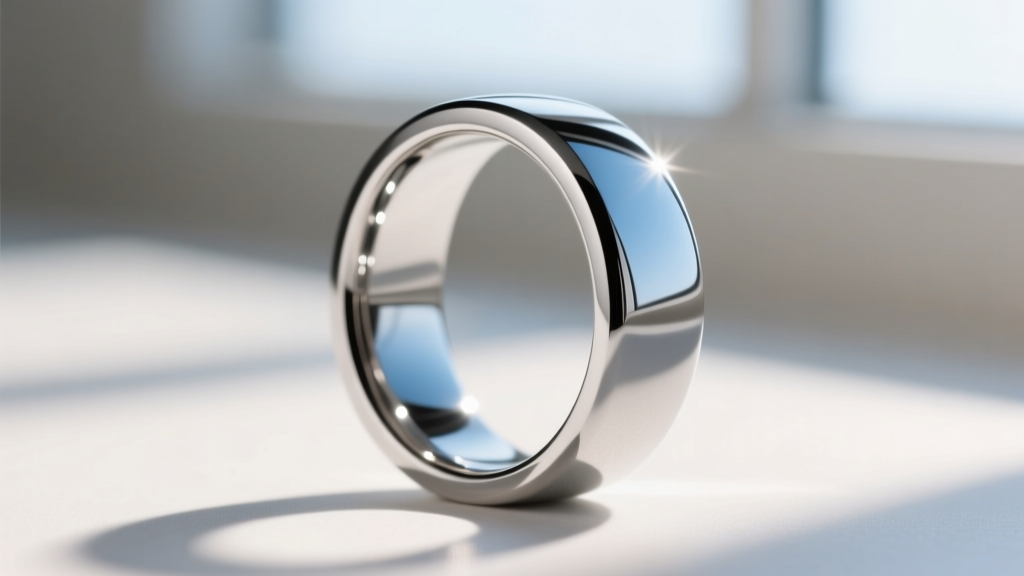
The Metallurgical Reality of High Quality Stainless Steel Jewelry
In the modern jewelry market, the term 'stainless steel' is frequently weaponized as a marketing buzzword, obscuring vast differences in material integrity. As we navigate the 2026 landscape of sustainable and durable accessories, understanding what constitutes high quality stainless steel jewelry requires looking past the polish and examining the atomic structure. Genuine surgical-grade jewelry relies on specific austenitic alloys, precise carbon limits, and advanced surface engineering to withstand the corrosive realities of human wear.
For jewelry professionals and informed consumers, the distinction between commercial-grade steel and true surgical steel dictates not only the longevity of the piece but also its biocompatibility. This technical deep dive explores the exact metallurgical profiles, coating technologies, and structural verification methods that separate premium 316L pieces from substandard imitations.
316L vs. 304: The Molybdenum and Carbon Factors
The foundation of high quality stainless steel jewelry is almost exclusively 316L stainless steel, often referred to as marine or surgical grade. While 304 stainless steel is perfectly adequate for kitchen appliances and architectural trim, it lacks the chemical resilience required for prolonged contact with human sweat, cosmetics, and environmental chlorides.
The Role of Molybdenum
The primary differentiator between 304 and 316 alloys is the addition of molybdenum. According to standards set by ASTM International, 316 stainless steel contains between 2.0% and 3.0% molybdenum. This specific elemental addition drastically increases the alloy's resistance to pitting and crevice corrosion, particularly in chloride-rich environments (like human perspiration or swimming pools). Without molybdenum, microscopic pits can form on the jewelry surface, harboring bacteria and degrading the structural integrity of the metal over time.
| Element | 304 Stainless Steel | 316L Stainless Steel | Function in Jewelry |
|---|---|---|---|
| Chromium | 18.0 - 20.0% | 16.0 - 18.0% | Forms the passive oxide layer for base corrosion resistance. |
| Nickel | 8.0 - 10.5% | 10.0 - 14.0% | Stabilizes the austenitic crystal structure for ductility. |
| Molybdenum | None | 2.0 - 3.0% | Prevents pitting from chlorides and localized acids. |
| Carbon | 0.08% max | 0.03% max (Low) | Prevents carbide precipitation during laser welding/soldering. |
The 'L' Designation: Low Carbon
The 'L' in 316L stands for 'Low Carbon'. Standard 316 contains up to 0.08% carbon, whereas 316L is restricted to a maximum of 0.03%. In jewelry manufacturing, components are frequently joined using laser welding or high-temperature soldering. High carbon levels can lead to 'carbide precipitation' in the heat-affected zones, depleting the local chromium and creating micro-fissures where corrosion initiates. High quality stainless steel jewelry strictly utilizes 316L to ensure welded jump rings and clasps remain as corrosion-resistant as the base chain.
Surface Engineering: PVD Coating vs. Flash Plating
Raw 316L possesses a beautiful, cool-toned silver luster. However, when manufacturers produce gold, rose gold, or black stainless steel pieces, the coating process dictates the lifespan of the finish. In 2026, the undisputed industry standard for premium colored steel is PVD (Physical Vapor Deposition), specifically utilizing Titanium Nitride (TiN) or Zirconium Nitride (ZrN).

Unlike traditional electroplating—which relies on chemical baths to deposit a thin, easily scratched layer of gold or rhodium—PVD is a vacuum-based process. The jewelry is placed in a vacuum chamber (typically pumped down to 10^-4 Torr), where argon gas is ionized to bombard a solid titanium target. The vaporized titanium reacts with nitrogen gas, depositing a ceramic-like nitride layer onto the steel substrate at an atomic level.
Micron Thickness and Wear Ratings
When evaluating gold-toned high quality stainless steel jewelry, the thickness of the PVD layer is paramount. Substandard manufacturers use 'flash' PVD coatings measuring a mere 0.05 to 0.1 microns. These will wear through to the silver substrate within months of daily friction. Genuine premium brands specify PVD thicknesses between 1.0 and 2.5 microns. A 2.0-micron TiN coating will easily withstand 5 to 10 years of daily wear without fading, scratching, or reacting with skin acids. Furthermore, the Association for Materials Protection and Performance (AMPP) notes that PVD coatings exhibit a surface hardness exceeding 2000 HV (Vickers Hardness), making it significantly more scratch-resistant than the underlying steel or traditional 14k gold.
Hardware and Findings: The Hidden Weak Points
A common deception in mid-tier jewelry involves using genuine 316L for the primary visual elements (like a large pendant or thick chain links) while cutting costs on the 'findings'—the clasps, jump rings, and ear wires. This creates a bimetallic couple that is prone to galvanic corrosion and premature mechanical failure.
- Lobster Clasps: Ensure the internal spring mechanism is also stainless steel. Many cheap clasps use carbon steel springs that rust internally, locking the clasp permanently.
- Jump Rings: High quality stainless steel jewelry utilizes laser-welded jump rings. If the jump ring is merely 'butted' (cut and squeezed shut), the constant tension and friction will eventually pry it open, resulting in lost pendants.
- Earring Posts: For stud earrings, the post must be 316L. The National Institutes of Health (NIH) has published extensive dermatological data confirming that while 316L binds its nickel tightly within the alloy lattice, cheaper 304 or nickel-silver posts will leach free nickel ions into pierced tissue, triggering severe contact dermatitis.
How to Verify Authenticity and Grade
Verifying high quality stainless steel jewelry without destroying the piece requires an understanding of both metallurgical myths and professional testing methodologies.
The Magnet Test Myth
A pervasive myth suggests that genuine stainless steel should be completely non-magnetic. While fully annealed austenitic 316L is technically non-magnetic, the manufacturing processes used in jewelry—specifically cold-working, wire-drawing for chains, and stamping for pendants—alter the crystalline structure. This cold-working induces a partial transformation from austenite to martensite, rendering the finished jewelry slightly magnetic. If a stainless steel chain exhibits a weak magnetic pull, it is likely genuine cold-worked 316L. If it exhibits a strong, heavy magnetic pull, it is likely a cheaper ferritic steel (like 430 grade) masquerading as surgical steel.
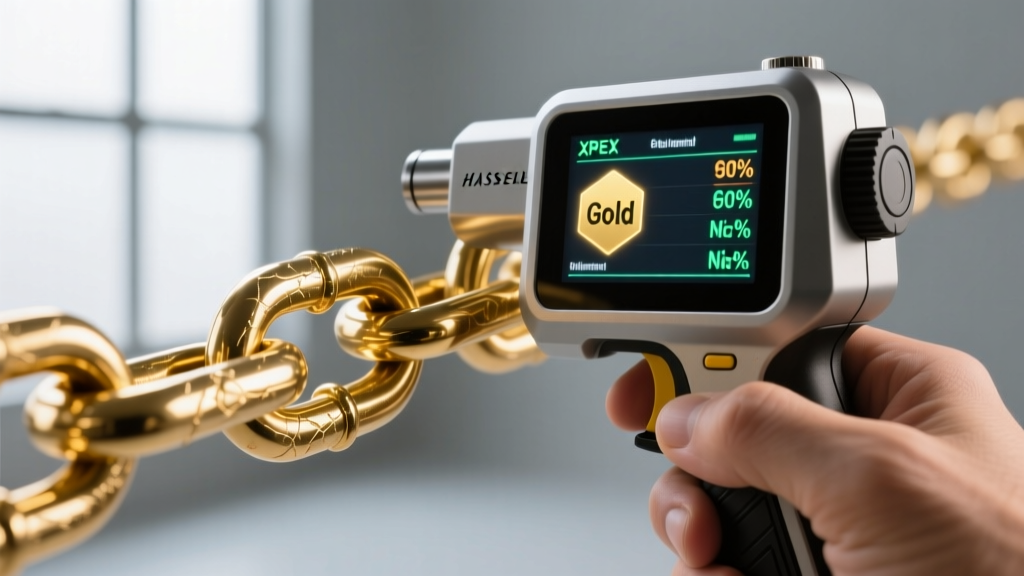
Professional XRF Testing
The only definitive, non-destructive method to verify the exact alloy composition is X-ray Fluorescence (XRF) spectrometry. Jewelers and metallurgical labs use XRF scanners to bombard the piece with X-rays, measuring the fluorescent emission to determine the exact percentage of chromium, nickel, and molybdenum. If you are sourcing wholesale high quality stainless steel jewelry, requiring an XRF material certificate from the foundry is the standard practice to guarantee 316L compliance.
Failure Modes and Troubleshooting
Even premium 316L jewelry can fail if subjected to specific environmental stressors. Understanding these failure modes is critical for both manufacturers and consumers.
Crevice Corrosion: Despite its molybdenum content, 316L is vulnerable in tight, oxygen-deprived crevices. Overlapping chain links that trap dead skin cells, soap scum, and moisture can create a localized acidic environment that breaks down the passive chromium oxide layer. Regular ultrasonic cleaning is required to prevent this specific failure mode.
Another critical issue is chemical discoloration of PVD. While Titanium Nitride is highly inert, exposure to harsh halogen-based cleaning chemicals (like undiluted bleach or industrial pool shock) can cause the gold-toned PVD layer to develop a permanent, cloudy iridescence. This is not a defect in the steel, but a chemical reaction on the nitride surface that cannot be polished out.
Price Benchmarks for Genuine 316L PVD Pieces
Understanding the economic reality of manufacturing helps identify counterfeit or substandard claims. Producing high quality stainless steel jewelry requires expensive CNC machining, precise casting, and multi-hour vacuum PVD cycles. Below are the baseline wholesale and retail price expectations for genuine 316L/TiN jewelry in the current market:
| Jewelry Type | Wholesale Cost (316L + 2µm PVD) | Expected Retail Range |
|---|---|---|
| Cuban Link Chain (5mm, 20') | $14.00 - $22.00 | $55.00 - $95.00 |
| Signet Ring (Solid, 12g) | $8.00 - $14.00 | $35.00 - $65.00 |
| Huggie Hoops (Hinged) | $5.00 - $9.00 | $25.00 - $45.00 |
If a retailer is offering a heavy, gold-toned 316L chain for $12.99, it is metallurgically and economically impossible for it to feature a durable PVD coating. It is almost certainly 304 steel with a microscopically thin flash-plate that will degrade within weeks.
Conclusion: Investing in Material Integrity
The pursuit of high quality stainless steel jewelry is ultimately an exercise in material science. By demanding 316L low-carbon alloys, verifying the presence of molybdenum, insisting on thick PVD ceramic coatings, and scrutinizing the hardware findings, consumers and retailers can ensure they are acquiring pieces that truly honor the 'stainless' moniker. In an era of fast fashion and disposable accessories, properly engineered surgical steel remains a triumph of modern metallurgy, offering lifelong durability without the prohibitive cost of precious metals.


