Troubleshooting 316L Surgical Steel Jewelry: Tarnish & Allergy Fixes
Is your 316L surgical steel jewelry causing irritation or tarnishing? Learn expert troubleshooting for allergies, mechanical failures, and fake metals.

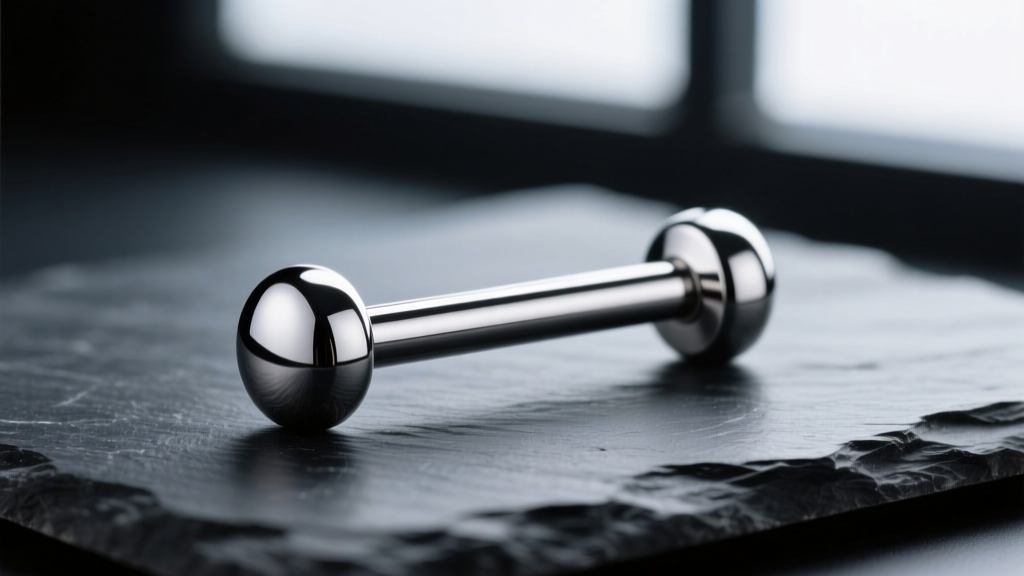
316L surgical steel jewelry is widely celebrated for its durability, mirror-like polish, and accessible price point. However, as of 2026, the market is saturated with mislabeled alloys, and even genuine 316L is not immune to mechanical wear, surface corrosion, or skin reactions. When your favorite pieces start causing contact dermatitis, developing rust spots, or suffering from stripped threads, you need actionable metallurgical solutions, not generic cleaning advice.
This guide dives deep into the material science of 316L stainless steel, providing expert troubleshooting frameworks to diagnose, fix, and prevent the most common failures in your jewelry collection.
The Hypoallergenic Myth: Troubleshooting Skin Irritation
One of the most pervasive misconceptions in the jewelry industry is that 316L surgical steel is entirely nickel-free. In reality, 316L is an austenitic stainless steel that contains between 10% and 14% nickel to maintain its crystalline structure and corrosion resistance. The 'hypoallergenic' label relies on the fact that the nickel is tightly bound within the alloy's matrix, trapped beneath a passive chromium oxide layer.
However, if you are experiencing redness, itching, or weeping skin around your piercings or contact points, the passivation layer has likely been compromised, leading to nickel leaching.
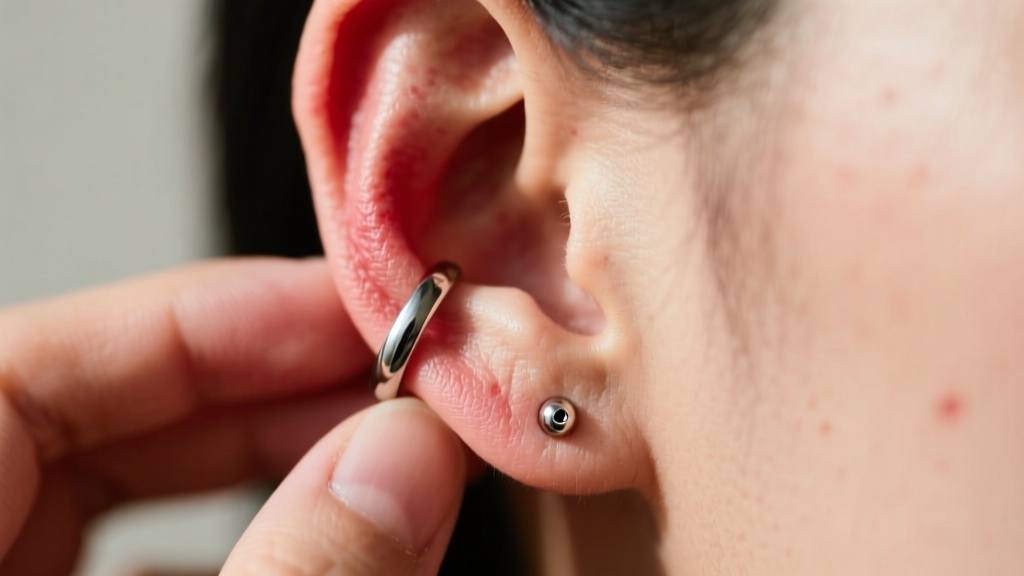
Diagnosing Nickel Contact Dermatitis
According to dermatological research on nickel-induced contact dermatitis, prolonged exposure to sweat (which is naturally acidic and contains chlorides) can break down the chromium oxide barrier on lower-quality 316L pieces. This is especially common in body jewelry worn in high-friction areas like navels or nostrils.
- The Fix (Surface Restoration): If the jewelry is genuine 316L but causing mild irritation, the passive layer can be restored. Soak the piece in a warm citric acid solution (5% concentration) for 20 minutes, rinse with distilled water, and polish with a microfiber cloth. This process, known as chemical passivation, strips free iron from the surface and encourages a fresh, uniform chromium oxide layer to form.
- The Fix (Material Upgrade): If passivation fails to stop the reaction, you likely have a severe nickel allergy. You must retire the 316L piece and upgrade to ASTM F136 Implant-Grade Titanium or Niobium, which contain zero nickel.
Surface Corrosion: Why Your Surgical Steel is Rusting
Stainless steel does not stain 'less'; it stains 'free' under normal conditions. But 316L is highly susceptible to pitting and crevice corrosion when exposed to halide ions, specifically chlorides found in swimming pools, hot tubs, and human sweat.
Identifying the Type of Corrosion
Before attempting to clean the piece, identify the failure mode:
- Surface Tea-Staining: Brownish, superficial rust. This occurs when the jewelry comes into contact with carbon steel tools or is stored in a humid environment without proper drying.
- Crevice Corrosion: Dark, pitted spots occurring in microscopic gaps, such as under gemstone bezels or inside the clasp mechanism. This happens when oxygen is depleted in a tight space, preventing the chromium oxide layer from repairing itself.
Expert Warning: Never use bleach, chlorine-based cleaners, or harsh abrasive pastes on 316L surgical steel jewelry. Chlorides will aggressively attack the molybdenum and chromium bonds, causing irreversible micro-pitting that harbors bacteria.
The Ultrasonic Cleaning Protocol
For stubborn tarnish or crevice corrosion, manual scrubbing will only push debris deeper into the microscopic pits. Instead, use an ultrasonic cleaner. Set the frequency to 40kHz and the temperature to 40°C (104°F). Use a mild, pH-neutral alkaline jewelry detergent. The cavitation bubbles will safely implode inside the crevices, lifting out chloride salts and dead skin cells without scratching the 316L surface.
Mechanical Failures in Body Jewelry
When dealing with 316L surgical steel jewelry designed for piercings, mechanical failure is not just an inconvenience; it is a biohazard. The Association of Professional Piercers strictly outlines how poor manufacturing tolerances in steel jewelry can tear the fistula (the piercing channel) and introduce pathogens.
| Failure Mode | Primary Cause | Troubleshooting Step |
|---|---|---|
| Stripped Threads | Cross-threading or external threading wear | Switch to internally threaded or threadless (press-fit) 316L components. |
| Clasp Spring Failure | Metal fatigue from repetitive tension | Replace with a lobster clasp; avoid spring rings for heavy 316L chains. |
| Barbell Bending | Using 16G (1.2mm) for high-stress areas | Upsize to 14G (1.6mm) or 12G (2.0mm) to leverage 316L's tensile strength. |
| Gemstone Loss | Prong fatigue or weak bezel crimping | Have a jeweler re-tighten prongs; avoid wearing during heavy impact. |
The Threading Tolerance Problem
Cheap 316L body jewelry often features external threading, where the screw pattern is cut into the post that passes through your skin. This creates sharp, jagged edges that act like a cheese wire upon insertion. Furthermore, mass-produced 316L often suffers from poor thread tolerances. If a 1.2mm (16-gauge) ball end is forced onto a slightly warped post, the steel will gall (cold-weld to itself), permanently locking the jewelry in place. Always invest in internally threaded 316L, where the smooth post passes through the skin, and the threads are safely housed inside the decorative end.
Verifying Authenticity: Spotting Fake 316L
A major troubleshooting hurdle is discovering your '316L' jewelry is actually 201 or 304 stainless steel, which lack the 2-3% molybdenum required for true pitting resistance. Dropshippers frequently mislabel cheaper alloys to cut costs.
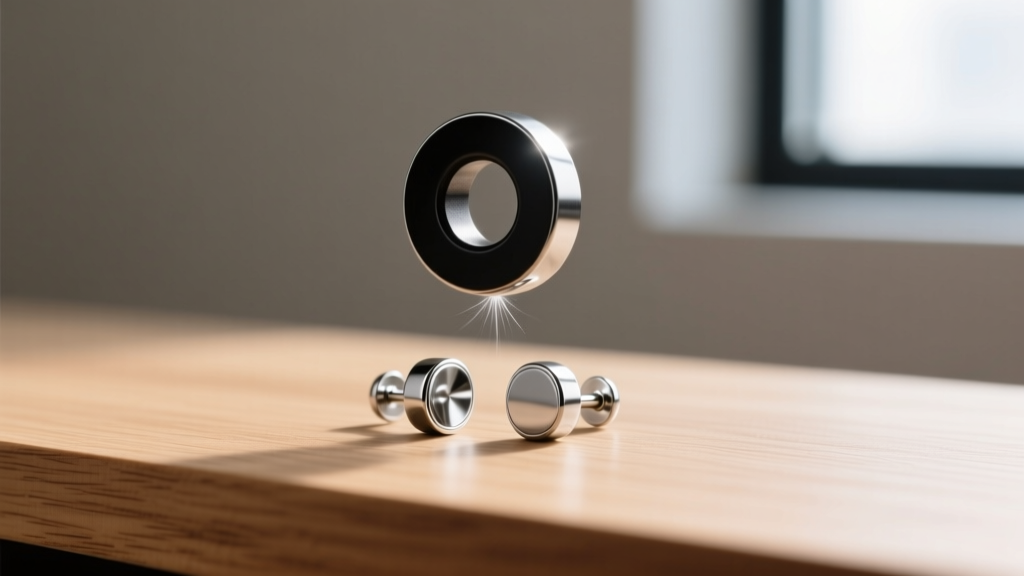
The Magnet and Spark Tests
While not foolproof, the neodymium magnet test is your first line of defense. True 316L is an austenitic steel and should be virtually non-magnetic. If your jewelry snaps aggressively to a strong magnet, it is likely a ferritic or martensitic steel (like 400-series), which will rust rapidly on the skin. Note: Severe cold-working during the manufacturing of small 316L components can induce a very slight magnetic pull, but it should never 'snap'.
For a definitive answer without destroying the piece, professional jewelers use an XRF (X-ray Fluorescence) analyzer to read the exact elemental breakdown, confirming the presence of molybdenum (Mo) which separates 316L from 304 steel.
When to Retire the Piece: Irreversible Damage Signs
Not all 316L surgical steel jewelry can be saved. Knowing when to discard a piece is critical for maintaining skin health and piercing integrity. Retire your jewelry immediately if you observe:
- Deep Micro-Scratches: If the mirror polish has degraded into a matte finish with visible, deep scratches, the jewelry will harbor Staphylococcus bacteria that cannot be removed with standard cleaning.
- Active Pitting: If you can feel tiny 'craters' with your fingernail, the structural integrity of the chromium layer is gone. The piece will continue to leach heavy metals and degrade.
- Galvanic Corrosion: If the 316L steel was stored touching sterling silver or carbon steel in a humid environment, it may suffer from galvanic corrosion, resulting in dark, permanent staining that cannot be polished out.
By understanding the metallurgical realities of 316L surgical steel jewelry, you can transition from simply reacting to broken or irritating pieces to proactively maintaining a safe, long-lasting, and brilliant jewelry collection.


