Stainless Steel Jewelry Care: Fixing Tarnish, Scratches & Dullness
Master stainless steel jewelry care with our troubleshooting guide. Learn to remove stubborn tarnish, fix surface scratches, and restore 316L shine.

The Reality of 'Stainless' Steel: Why 316L Loses Its Shine
When consumers purchase 316L surgical steel accessories, they are often sold on the premise that the metal is entirely impervious to environmental damage. While 316L stainless steel boasts incredible corrosion resistance due to its 16-18% chromium and 2-3% molybdenum content, it is not a magical, maintenance-free material. Proper stainless steel jewelry care requires an understanding of the metal's passivation layer—a microscopic, invisible film of chromium oxide that shields the underlying iron from oxidation.
When this passivation layer is compromised by hard water minerals, cosmetic chemicals, or embedded iron dust from manufacturing, the jewelry can exhibit dullness, white calcium spotting, or even localized brown rust. Troubleshooting these issues requires moving beyond generic 'soap and water' advice and addressing the specific metallurgical failure modes occurring on the surface of your pieces.
Diagnosing Surface Contamination vs. True Corrosion
Before applying any abrasive or chemical treatment, you must accurately diagnose the visual defect. True corrosion (pitting) in 316L is rare unless the jewelry has been exposed to high concentrations of halogens, like chlorine in swimming pools. Most of what consumers perceive as 'tarnish' is actually surface contamination.
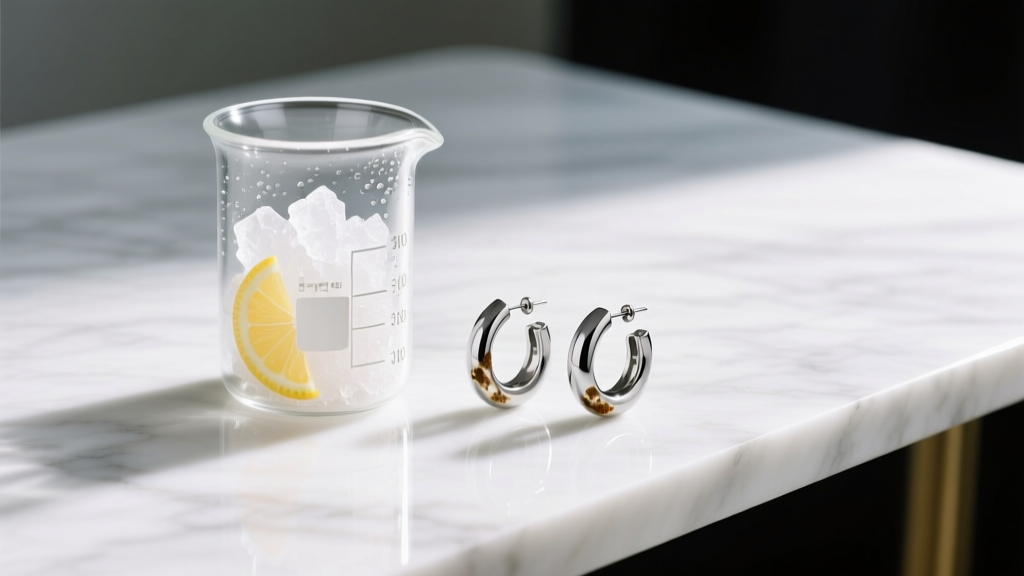
Troubleshooting Matrix: Identifying the Culprit
| Visual Symptom | Primary Cause | Metallurgical Impact | Targeted Solution |
|---|---|---|---|
| Cloudy white film or spots | Hard water calcium/magnesium deposits | Blocks light refraction; no damage to passivation layer | Weak acid bath (white vinegar or 5% citric acid) |
| Localized brown/orange specks | Embedded free iron particles from tools/machinery | Surface iron rusts; can initiate pitting if left untreated | Mechanical removal followed by chemical passivation |
| Uniform dullness or gray haze | Sebum, dead skin cells, and cosmetic polymers | Traps moisture against the metal, suffocating the chromium oxide layer | Ultrasonic cleaning with mild alkaline surfactant |
| Dark, pitted craters | Chloride exposure (bleach, pool water, heavy sweat) | Chlorides breach the passivation layer, attacking the iron matrix | Irreversible; requires professional re-polishing to remove craters |
Advanced Stainless Steel Jewelry Care Protocols
To restore heavily soiled or contaminated 316L pieces, you must employ methods that clean without stripping the metal's natural defenses. According to guidelines from the International Stainless Steel Forum, maintaining the integrity of the passive layer is the most critical aspect of long-term stainless steel care.
The Ultrasonic Method for Textured Chains
For complex pieces like Cuban link chains, rope chains, or filigree designs where cotton swabs cannot reach, an ultrasonic cleaner is the gold standard. However, frequency and solution chemistry matter immensely.
- Frequency: Use a 40kHz to 45kHz ultrasonic cleaner. Lower frequencies (20-25kHz) generate larger cavitation bubbles that can be too aggressive for delicate jewelry clasps or gemstone settings.
- Solution: Avoid harsh ammonia-based cleaners. Use a few drops of pH-neutral dish soap (like Dawn) in distilled water. The distilled water ensures no new calcium deposits are introduced during the cleaning cycle.
- Time Limit: Restrict cleaning sessions to 3–5 minutes. Prolonged cavitation can cause work-hardening or fatigue in thin wire components.
Warning: Never use ultrasonic cleaners on stainless steel jewelry featuring soft porous gemstones (like turquoise or pearls) or stones with fracture fillings, as the vibrations will shatter or cloud them. For gemstone safety protocols, always refer to the GIA Gem Care guidelines.
The Chemical Passivation Reset
If your surgical steel earrings or rings have developed stubborn brown specks (free iron contamination), mechanical scrubbing will only smear the rust. Instead, you need to dissolve the iron and encourage the chromium to re-oxidize.
- Submerge the jewelry in a 5% to 10% citric acid solution (easily made by dissolving food-grade citric acid powder in warm distilled water) for 20 minutes.
- The citric acid selectively chelates (binds to) the free iron particles without attacking the stainless steel matrix.
- Rinse thoroughly with distilled water and allow to air dry in an oxygen-rich environment for 24 hours. This exposure to oxygen rebuilds the vital chromium oxide passivation layer.
Eradicating Micro-Scratches on Mirror-Polished 316L
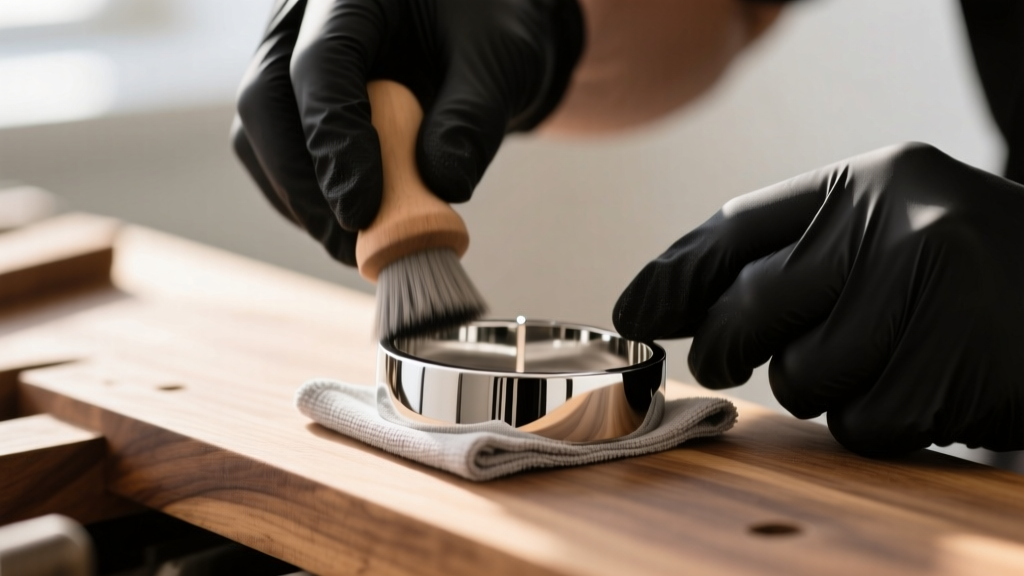
316L stainless steel registers around 5.5 to 6 on the Mohs hardness scale. While harder than silver or gold, it is softer than quartz (7), meaning everyday dust and airborne silica particles will inevitably cause micro-scratches on mirror-polished finishes over time.
Polishing Compounds and Grit Progression
Do not use standard silver polishing cloths, as they often contain mild abrasives designed for softer metals and will not effectively level steel scratches. Instead, utilize diamond lapping pastes:
- 3-Micron Diamond Paste (Green): Use this first on a hard felt bob or stiff microfiber cloth to cut down the peaks of visible, light-catching scratches.
- 1-Micron Diamond Paste (Yellow/White): Follow up with this finer grit to remove the haze left by the 3-micron paste and restore a true optical mirror finish.
Apply the paste using firm, linear pressure rather than circular motions to avoid creating new, visible swirl marks. Wipe away residue with isopropyl alcohol (90% or higher) to reveal the restored surface.
The PVD Coating Caveat
If your stainless steel jewelry features a gold, rose gold, or black finish, it has likely been treated with Physical Vapor Deposition (PVD). PVD coatings are incredibly hard but exceptionally thin (typically 0.3 to 1.5 microns). Never use abrasive polishing pastes, ultrasonic cleaners, or citric acid baths on PVD-coated stainless steel. Doing so will strip the color layer down to the raw silver-colored steel beneath. PVD care is strictly limited to gentle wiping with a damp microfiber cloth and mild soap.
Preventative Maintenance & Storage Protocols
The Chlorine Rule: Never expose 316L stainless steel to household bleach (sodium hypochlorite) or heavily chlorinated hot tubs. Chloride ions act as a catalyst for localized pitting corrosion, creating permanent microscopic craters that trap bacteria and dirt, ultimately rendering the piece unwearable for sensitive piercings.
To minimize the need for aggressive troubleshooting, implement a proactive storage and wear routine. Remove stainless steel rings and bracelets before applying lotions, sunscreens, or hairsprays, as the polymers in these products create a stubborn, water-resistant film. When storing, keep pieces in individual anti-tarnish flannel pouches or silicone-lined boxes to prevent them from tumbling against harder materials like tungsten carbide or sapphire, which will easily gouge the steel surface.
By understanding the metallurgy of 316L and utilizing targeted chemical and mechanical interventions, you can indefinitely extend the lifespan and brilliance of your surgical steel collection, proving that with the right knowledge, stainless steel truly can remain stainless.


