How to Buy 316 Stainless Steel Jewelry: A Complete Guide
Discover what to look for when buying 316 stainless steel jewelry. Learn about grades, gauges, hypoallergenic properties, and pricing in our expert guide.

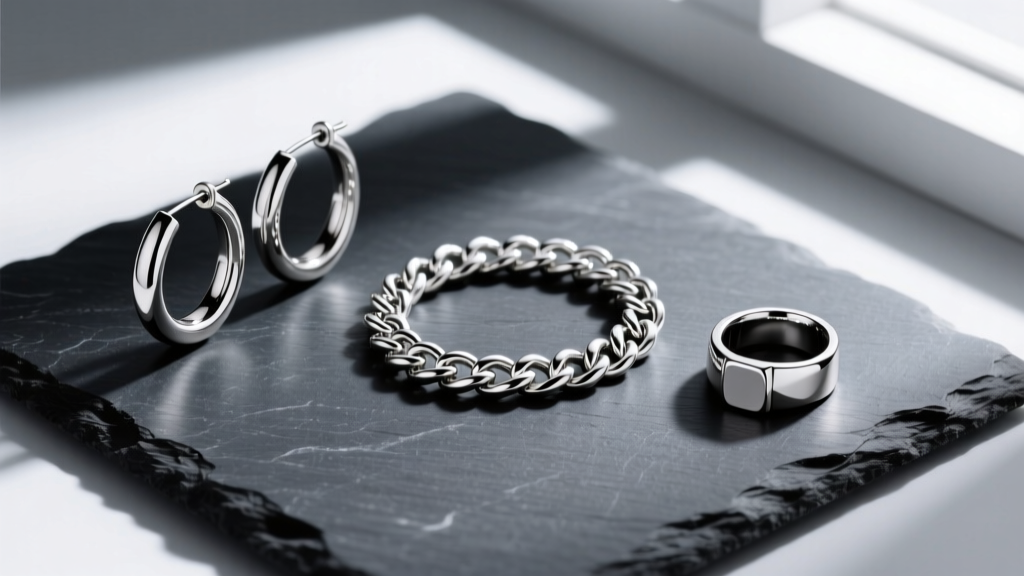
The Metallurgy of 316L: Why Molybdenum Matters
When shopping for durable, everyday accessories, 316 stainless steel jewelry stands out as the undisputed workhorse of the modern market. But not all stainless steel is created equal. To make an informed purchase, you must first understand the metallurgical makeup of the 316L alloy. Standard stainless steel relies on a protective layer of chromium oxide to resist rust. However, the 316 family introduces a crucial element: molybdenum. Comprising roughly 2% to 3% of the alloy, molybdenum drastically increases resistance to chloride pitting and corrosion. This means your jewelry can withstand the salt in your sweat, the chlorine in a swimming pool, and the harsh chemicals in everyday lotions without degrading.
The "L" in 316L stands for "Low Carbon," meaning the carbon content is restricted to a maximum of 0.03%. This specific detail is vital for body jewelry and seamless hoops. When standard 316 steel is welded or bent, high carbon levels can lead to carbide precipitation—a phenomenon where carbon binds with chromium, depleting the surrounding area of its rust-resistant properties. By utilizing 316L, manufacturers ensure that the weld points on seamless clicker rings and chain links remain entirely corrosion-resistant and safe for long-term skin contact.
Decoding the Markings: 316L, 304, and "Surgical Steel"
One of the most common pitfalls when buying 316 stainless steel jewelry is falling for misleading marketing terminology. You will frequently encounter the term "Surgical Steel." It is critical to understand that "Surgical Steel" is not a strictly defined metallurgical grade; it is a broad marketing umbrella. True implant-grade steel used for medical devices and fresh piercings must meet the ASTM F138 standard, which dictates strict limits on nickel leaching and surface finish. While ASTM F138 steel is a highly refined subset of 316L, generic "surgical steel" sold in mall kiosks is often just standard 304 stainless steel rebranded.
According to the British Stainless Steel Association, 304 stainless steel lacks molybdenum entirely. While 304 is perfectly fine for kitchen appliances or indoor handrails, it is highly susceptible to pitting when exposed to prolonged moisture and chlorides. If a piece of jewelry is not explicitly stamped or advertised as 316L or ASTM F138 compliant, assume it is 304 grade. For healed piercings, rings, and necklaces, verified 316L is the absolute minimum standard you should accept to prevent green skin, contact dermatitis, and structural pitting.
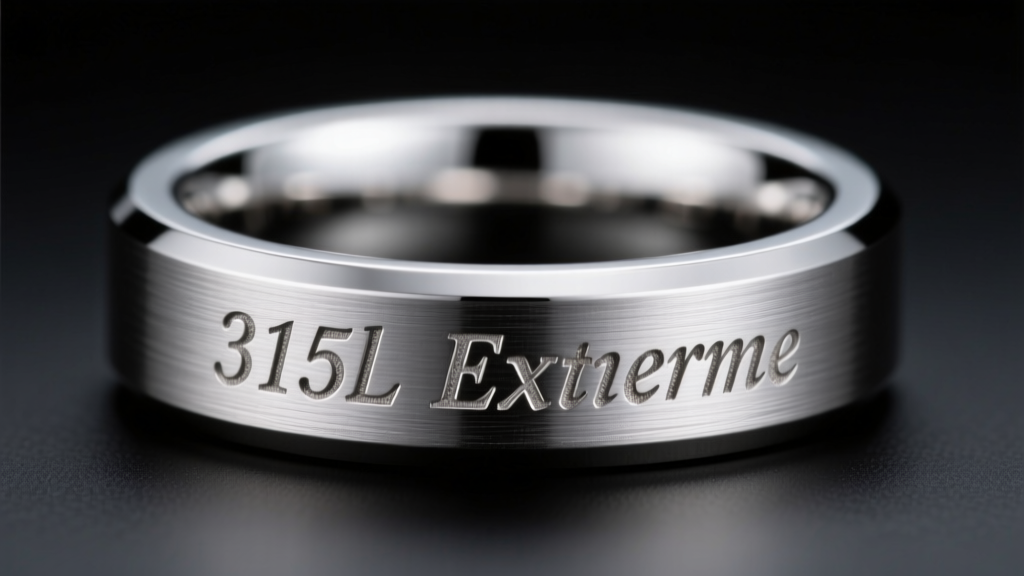
The Sizing Matrix: Gauge Thickness and Application
Beyond the alloy itself, buying body jewelry requires a precise understanding of the American Wire Gauge (AWG) system. Unlike standard ring sizing which measures the inner diameter, gauge measures the thickness of the metal passing through the skin. Wearing a gauge that is too thin can cause the "cheese-cutter effect," where the steel slowly migrates through the tissue, leading to rejection and scarring. Below is the definitive framework for 316L steel body jewelry gauges:
| Gauge (AWG) | Thickness (mm) | Primary Applications |
|---|---|---|
| 20G | 0.81mm | Standard nose studs, earlobe earrings, lightweight cartilage hoops. |
| 18G | 1.02mm | Nose hoops, standard earlobe jewelry, helix and tragus piercings. |
| 16G | 1.29mm | Cartilage, conch, daith, rook, and most lip piercings. |
| 14G | 1.60mm | Navel (belly button), industrial barbells, tongue, and septum clickers. |
| 12G | 2.00mm | Stretched lobes, nipple piercings, and heavy-duty structural body jewelry. |
When purchasing 316L barbells or clickers, always verify whether the threading is internal or external. External threading (where the screw is on the bar) can tear the fistula (the skin tunnel) during insertion. High-quality 316L jewelry will always feature internal threading or a threadless push-pin mechanism.
Red Flags: How to Spot Counterfeit or Downgraded Steel
Because 316L is more expensive to produce than zinc alloys or 304 steel, counterfeiters often plate base metals with a thin layer of chrome and stamp it with a fake 316L mark. Here is how to troubleshoot and verify your purchase:
- The Magnet Test Nuance: Austenitic stainless steels like 316L are fundamentally non-magnetic. However, the severe cold-working required to bend a thick steel wire into a tight seamless hoop can alter the crystalline structure, inducing a very slight magnetic pull. If a ring is completely non-magnetic, it is likely 316L or titanium. If it snaps aggressively to a magnet, it is a ferritic steel or plated base metal.
- The Weight and Temperature Test: 316L steel has a density of roughly 8.0 g/cm³, making it noticeably heavier than aluminum or titanium. Furthermore, steel is a poor conductor of heat compared to silver; it should feel cool to the touch but will not warm up to your body temperature as rapidly as precious metals.
- The Price Floor: CNC-machined 316L body jewelry requires precision tooling and extensive hand-polishing to achieve a mirror finish that will not harbor bacteria. If you see a complex, gem-set 14G septum clicker selling for $4.99 with free shipping, it is almost certainly cast zinc alloy with a micro-thin steel plating that will flake within weeks.
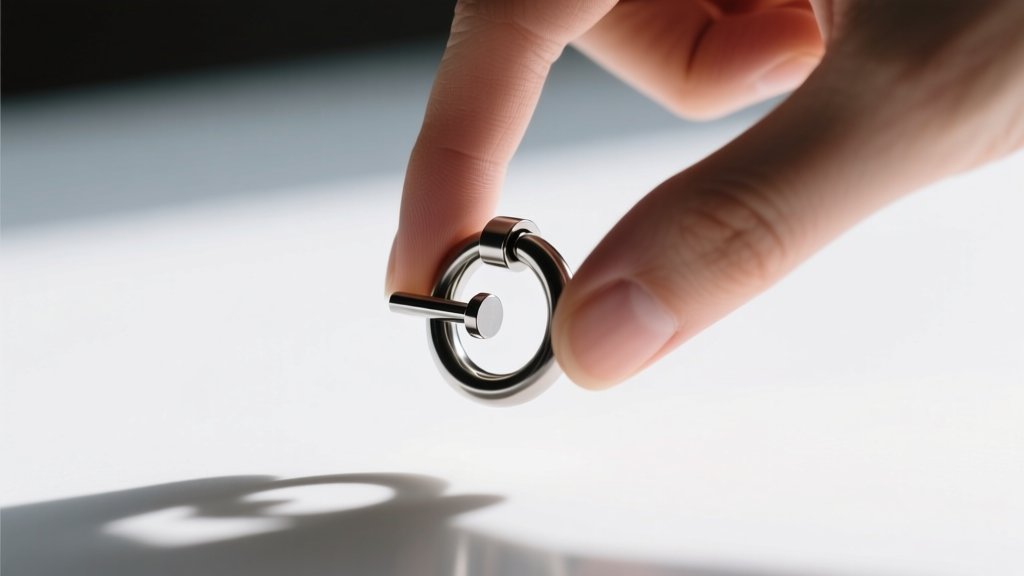
Realistic Pricing Tiers for 316 Stainless Steel Jewelry
Understanding the market rate for genuine 316L pieces protects you from both overpaying for mass-produced items and being scammed by suspiciously cheap alternatives. Pricing generally falls into three distinct tiers based on manufacturing complexity:
Tier 1: Mass-Market Fashion Jewelry ($12 - $30)
This includes simple PVD-coated bands, basic curb chains, and stamped pendants. These are usually cast or stamped from sheets and polished in bulk. They are excellent for external wear but may lack the mirror finish required for sensitive piercings.
Tier 2: Professional Body Jewelry ($30 - $65)
This tier encompasses internally threaded barbells, seamless segment rings, and hinge-clickers produced by reputable body jewelry brands. The metal is CNC-machined from solid 316L steel bars, ensuring perfect tolerances, flawless internal threading, and a mirror polish that meets APP safety standards.
Tier 3: Designer and Intricate Castings ($70 - $150+)
At this level, you are paying for complex lost-wax casting techniques, proprietary PVD color coatings (like rose gold or black titanium nitride), and the integration of high-end gemstones like Swarovski zirconia or genuine sapphires set in steel bezels.
Maintaining the Passivation Layer
The secret to the longevity of 316 stainless steel jewelry is its passivation layer—a microscopic, invisible film of chromium oxide that forms when the chromium in the alloy reacts with oxygen in the air. If this layer is scratched or chemically stripped, the steel becomes vulnerable to rust. To maintain this layer, avoid exposing your jewelry to harsh household bleach, which contains high concentrations of chloride that can aggressively pit the surface. If your jewelry becomes dull or develops minor surface oxidation from hard water exposure, you can restore the passivation layer by soaking it in a mild citric acid solution (like diluted lemon juice) for ten minutes, followed by a thorough rinse and a gentle polish with a microfiber cloth. By respecting the metallurgy and maintaining the surface, your 316L pieces will easily last a lifetime of daily wear.


