What Is Stainless Steel Jewelry? 2026 Style Trends
Discover what is stainless steel jewelry in 2026. We analyze 316L grades, PVD coating trends, gauge sizes, and the shift toward brutalist aesthetics.

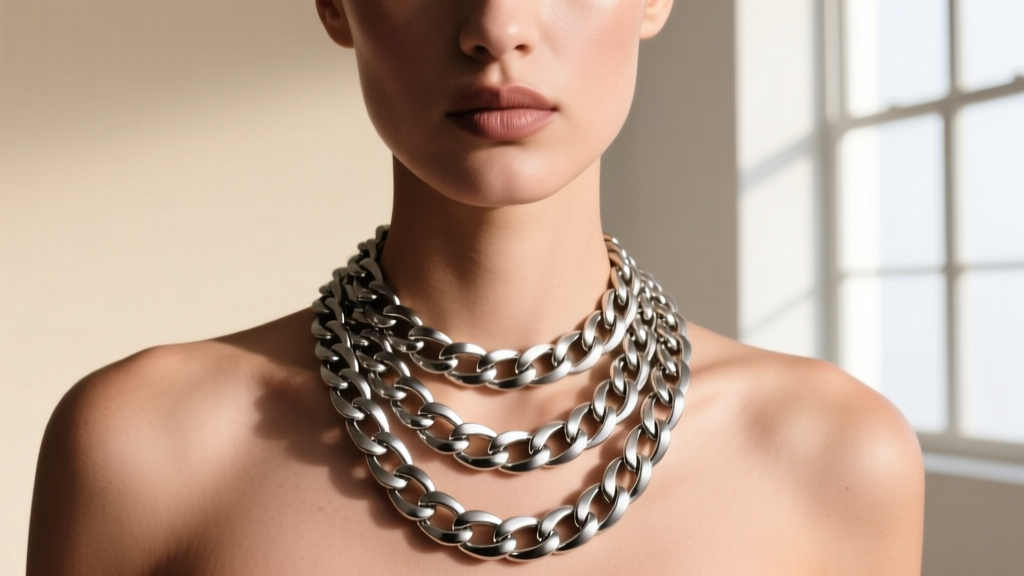
For decades, the question "what is stainless steel jewelry" was usually answered with a dismissive caveat: it was the cheap, mass-produced alternative to sterling silver or white gold, relegated to mall kiosks and basic hoop earrings. However, as we navigate the 2026 style landscape, that narrative has been entirely dismantled. Today, stainless steel is the foundational metal for avant-garde brutalist designers, high-end body modification artists, and luxury streetwear brands. It is no longer a compromise; it is an intentional aesthetic and metallurgical choice.
This comprehensive trend analysis breaks down the exact material grades driving the market, the advanced surface treatments replacing traditional plating, and the precise gauge standardizations that define modern body jewelry. Whether you are a collector, a stylist, or a curious consumer, understanding the current state of stainless steel requires looking past the surface and into the alloy itself.
The Metallurgical Reality: Beyond the Basic Definition
At its core, stainless steel is an iron alloy containing a minimum of 10.5% chromium. This chromium reacts with oxygen to form a microscopic, self-healing passive layer of chromium oxide, which prevents rust and corrosion. However, not all stainless steel is created equal, and the jewelry industry in 2026 strictly delineates between three primary grades. The presence of nickel and molybdenum dictates both the biocompatibility and the structural integrity of the piece.
While 304 stainless steel remains common in fast fashion due to its low cost and high malleability, it lacks the molybdenum required to resist chlorides and acidic environments (like human sweat or ocean water). The undisputed champion of contemporary jewelry is 316L surgical steel. The "L" stands for low carbon, which prevents carbide precipitation during welding and casting, while the addition of 2-3% molybdenum drastically increases its resistance to pitting and crevice corrosion. According to biomaterials research published by the National Center for Biotechnology Information (NCBI), 316L exhibits superior biocompatibility, making it the baseline requirement for initial body piercings and long-term dermal contact.
2026 Material Grade Comparison Chart
| Alloy Grade | Molybdenum Content | Nickel Release Profile | Primary 2026 Application | Market Tier |
|---|---|---|---|---|
| 201 Series | 0% | High (Manganese substituted) | Disposable fast-fashion, display props | Ultra-Budget |
| 304 (18/8) | 0% | Moderate (Can trigger severe allergies) | Casual fashion chains, non-pierced clips | Mass Market |
| 316L (Surgical) | 2.0% - 3.0% | Extremely Low (Trapped in crystal lattice) | Fine body jewelry, luxury streetwear, PVD bases | Premium / Artisan |
Dominant Aesthetic Trends Shaping the Market
The visual language of stainless steel has evolved far beyond the high-polish, mirror-finish chains of the early 2010s. In 2026, designers are manipulating the surface of 316L steel to mimic textures previously reserved for precious metals or industrial architecture.
The PVD Revolution and the "Dark Steel" Movement
The most significant technological shift in stainless steel jewelry is the total abandonment of electroplating in favor of PVD (Physical Vapor Deposition). Electroplating involves dipping a base metal into a chemical bath, resulting in a superficial microscopic layer that eventually flakes, tarnishes, and turns the wearer's skin green. PVD, conversely, takes place in a vacuum chamber where materials like Titanium Nitride (TiN) or Zirconium Nitride (ZrN) are vaporized into a plasma state and molecularly bonded to the 316L steel substrate.
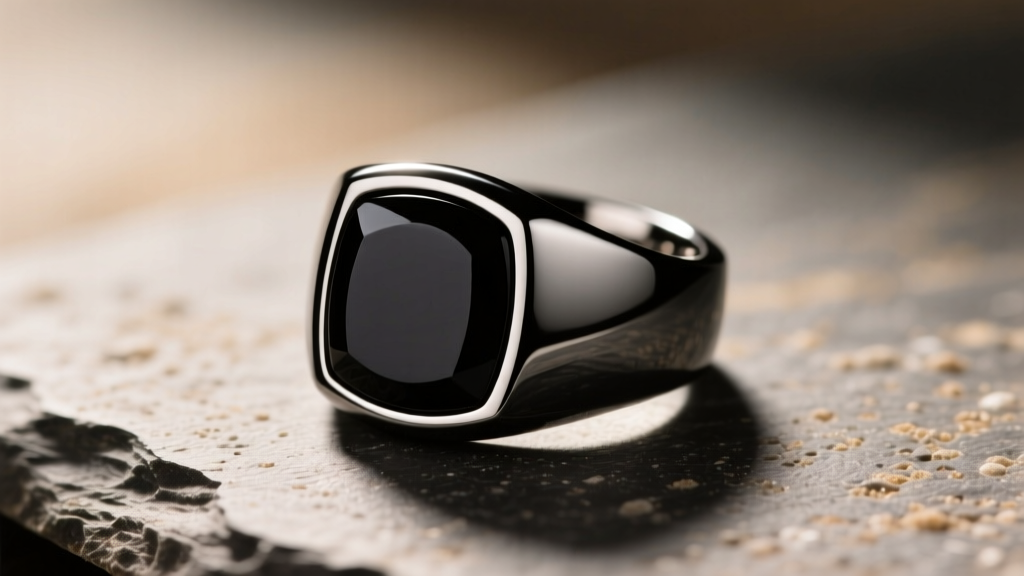
As detailed in ScienceDirect's materials science database, PVD coatings are exceptionally hard, highly corrosion-resistant, and typically range from 0.25 to 1.5 microns in thickness. This results in the massively popular "Dark Steel" and "Phantom Gold" trends of 2026. A PVD-coated black stainless steel signet ring will not chip or fade from daily wear, sweat, or UV exposure, effectively outlasting traditional rhodium-plated silver by a factor of ten. Designers are now pairing these ultra-dark, matte PVD finishes with high-contrast gemstone inlays like black onyx or lab-grown sapphires.
Brutalism, Raw Edges, and Wire-Brushed Finishes
Parallel to the sleekness of PVD is the rise of "Jewelry Brutalism." This trend embraces the industrial origins of stainless steel. Artisans are utilizing wire-brushing, sandblasting, and intentional oxidation (via controlled chemical patinas that cling to the alloy's microscopic pores) to create pieces that look excavated or forged in real-time. Heavy, asymmetrical cuff bracelets and raw-edged pendant casts are dominating high-fashion editorials. The inherent rigidity and high tensile strength of 316L allow jewelers to cast incredibly thin, architectural geometries that would warp or bend if attempted in softer metals like 24k gold or pure silver.
Body Jewelry and Gauge Standardization
Nowhere is the superiority of 316L stainless steel more rigorously tested than in the professional body modification community. In 2026, the industry has moved past the dangerous "one-size-fits-all" mall piercing gun era, adopting strict, standardized gauge sizing and threading protocols to ensure tissue health and aesthetic precision.
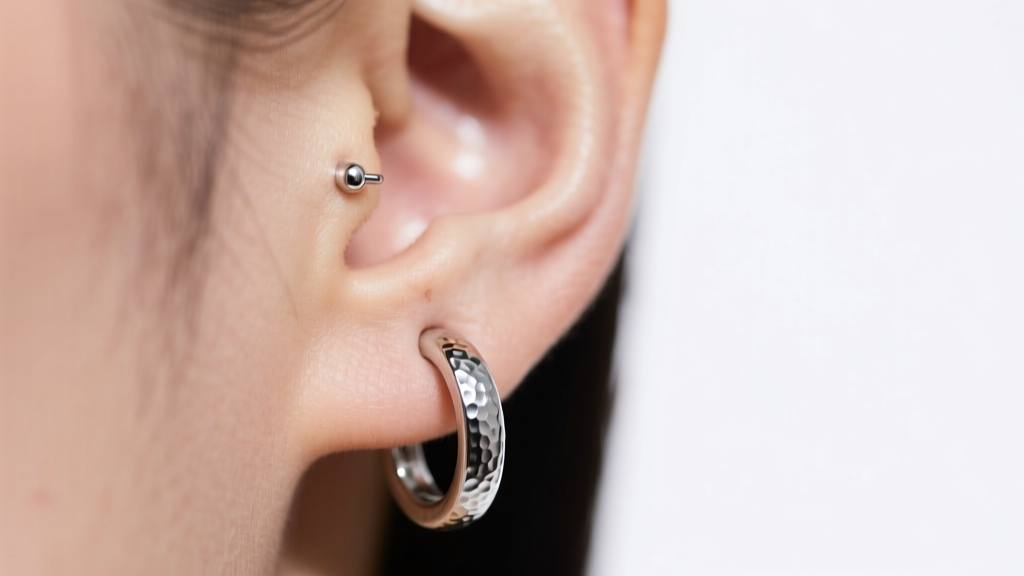
- 14G (1.6mm): The absolute standard for lobe piercings and many cartilage placements, offering the perfect balance of structural rigidity and tissue comfort.
- 16G (1.2mm): Primarily used for delicate cartilage work, tragus, and conch piercings where a slightly lower profile is desired.
- 8G (3.2mm) to 00G (10mm): Reserved for stretched lobes and heavy septum clickers, utilizing the extreme weight-bearing properties of surgical steel without the risk of nickel leaching.
Furthermore, top-tier brands have universally adopted internal threading. Instead of the sharp, tissue-tearing external screws of the past, modern 316L barbells feature a smooth post with an internal tap (usually M1.2 or M1.6 metric threading) that accepts the threaded gem or ball. This ensures that the only surface passing through the fistula is perfectly smooth, with a surface roughness (Ra) of less than 0.2 micrometers to prevent bacterial harboring and micro-tearing.
Price-to-Longevity Ratio Analysis
When evaluating stainless steel jewelry in the current market, consumers must separate the metal cost from the labor and technology cost. While the raw material price of 316L steel is a fraction of that of platinum or gold, the machining, PVD coating, and hand-polishing required for luxury pieces command a premium. Here is the realistic pricing landscape for 2026:
- Mass-Market 304 Fashion Pieces ($15 - $45): High-polish chains and basic hoops. Prone to scratching and eventual dulling. Acceptable for seasonal trend-chasing, but not for heirloom longevity.
- Premium 316L Basics ($50 - $150): Internally threaded body jewelry, solid Cuban links, and uncoated minimalist rings. These offer a lifetime of wear with basic soap-and-water maintenance.
- Artisan & PVD-Coated Designer ($150 - $450+): Hand-cast brutalist pieces, multi-micron PVD coated statement rings, and precision-machined mechanical jewelry (e.g., steel puzzle rings or kinetic pendants). Here, you are paying for the artisan's CAD design, the vacuum-chamber coating process, and the brand's architectural vision.
Final Verdict for Collectors and Stylists
So, what is stainless steel jewelry in the modern era? It is a high-performance, hypoallergenic canvas that has finally shed its "cheap alternative" stigma. For stylists, 316L steel offers an unbreakable, tarnish-proof foundation for layering and editorial styling. For collectors, the intersection of PVD technology and brutalist design represents a golden era of industrial-chic craftsmanship. By demanding 316L grades, internal threading for body mods, and PVD over electroplating, you ensure your collection remains as structurally sound and visually striking in 2036 as it is today.


