Top Rated Wholesale Fashion Jewelry Suppliers 2026: Starter Guide
Discover the top rated wholesale fashion jewelry suppliers 2026. Learn material grades, MOQs, pricing, and quality control basics.

Entering the Wholesale Jewelry Market: A Beginner’s Blueprint
Starting a jewelry boutique or expanding an existing retail line requires more than just an eye for aesthetics; it demands a rigorous understanding of supply chain mechanics, material sciences, and margin mathematics. For new buyers, the landscape of fashion jewelry wholesale can feel like a minefield of inconsistent quality and opaque pricing. When evaluating the top rated wholesale fashion jewelry suppliers 2026, beginners must look beyond flashy B2B portals and focus on verifiable manufacturing standards, compliance testing, and transparent minimum order quantities (MOQs).
This guide strips away the industry jargon and provides a practical, data-driven framework for sourcing fashion jewelry. Whether you are buying statement resin pieces, cubic zirconia tennis bracelets, or gold-plated brass hoops, understanding the exact specifications of your inventory is the only way to protect your brand's reputation and your bottom line.
Decoding Base Metals: What Are You Actually Buying?
Fashion jewelry is defined by its base metal and subsequent finishing. The cheapest suppliers will obscure the base material, simply listing it as 'alloy' or 'metal.' As a professional buyer, you must demand exact metallurgical compositions. Here are the three most common base metals in the 2026 wholesale market:
- Zinc Alloy (Zamak 3 / Zamak 5): The industry standard for cast, three-dimensional statement pieces. Zamak 3 is excellent for intricate molds but is relatively soft. It requires a copper strike layer before gold or silver plating to prevent the zinc from reacting with the topcoat. Wholesale cost: $0.80 - $2.50 per unit.
- Brass (CuZn39Pb3): A premium copper-zinc alloy favored for high-end fashion and demi-fine jewelry. It is highly durable, takes a brilliant polish, and holds plating exceptionally well. However, buyers must ensure the brass is lead-free and cadmium-free to meet international safety standards. Wholesale cost: $2.00 - $5.00 per unit.
- 316L Stainless Steel: The undisputed king of waterproof, tarnish-resistant everyday fashion jewelry. It cannot be cast like brass, so it is CNC-machined or stamped, limiting design complexity but maximizing durability. Wholesale cost: $1.50 - $4.00 per unit.
Plating Realities: Flash vs. Micron Thickness
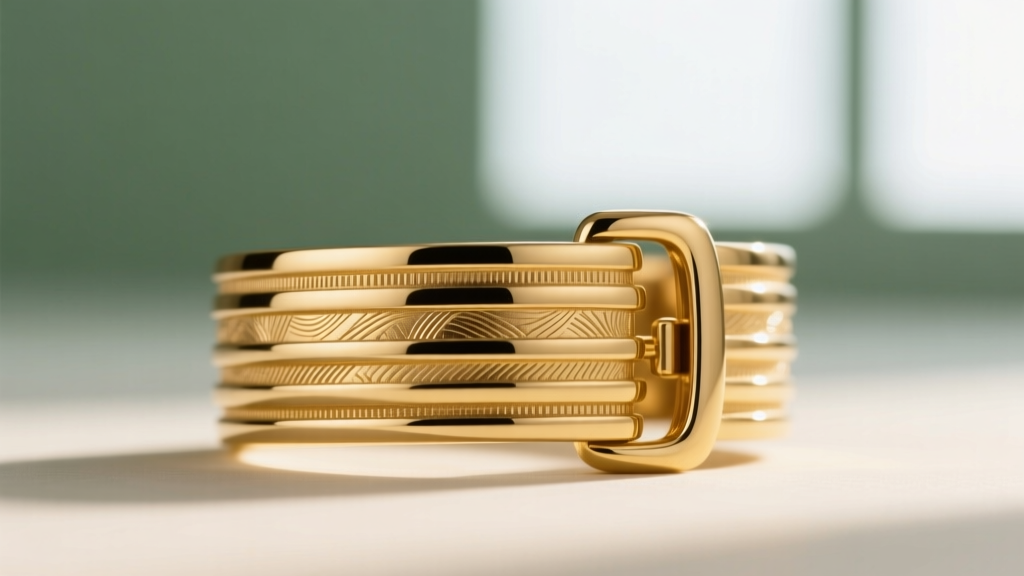
The most common point of failure in fashion jewelry is premature tarnishing. This is almost always a result of deceptive plating practices. When communicating with suppliers, you must specify the exact micron (µm) thickness of the gold or rhodium layer.
The Plating Hierarchy
| Plating Type | Thickness | Lifespan | Best Use Case |
|---|---|---|---|
| Flash Plating | 0.05 - 0.15 µm | 1 - 3 Months | Ultra-fast fashion, single-use event jewelry |
| Standard Electroplate | 0.5 - 1.0 µm | 6 - 12 Months | Standard boutique fashion jewelry |
| Heavy Gold Electroplate | 2.5+ µm | 2+ Years | Demi-fine, premium everyday wear |
Expert Tip: Always require an e-coating (electrophoretic lacquer) over the final metal plating. This microscopic clear coat prevents oxygen and sulfur from reaching the metal, extending the jewelry's shelf life and wearability by up to 300%.
Evaluating the Top Rated Wholesale Fashion Jewelry Suppliers 2026
Finding reliable partners means categorizing suppliers by their operational model. The 'best' supplier depends entirely on your capital availability and warehousing capabilities. Below is a structural comparison of the primary sourcing channels available to modern retailers.
| Supplier Type | Typical MOQ | Lead Time | Customization | Defect Rate Risk |
|---|---|---|---|---|
| Domestic Wholesalers (US/EU) | 12 - 50 pieces | 2 - 5 Days | None (Stock only) | Low (Pre-inspected) |
| Overseas Manufacturers (Direct) | 300 - 500 pieces | 25 - 45 Days | High (Custom molds) | Medium (Requires QC) |
| B2B Marketplaces (Alibaba/Global Sources) | 50 - 100 pieces | 10 - 20 Days | Medium (Logo/Light mods) | High (Varying quality) |
When vetting overseas manufacturers, request their ISO 9001 certification and ask for recent third-party lab test reports (such as SGS or Intertek) verifying their compliance with heavy metal restrictions.
The Landed Cost Formula: Protecting Your Margins
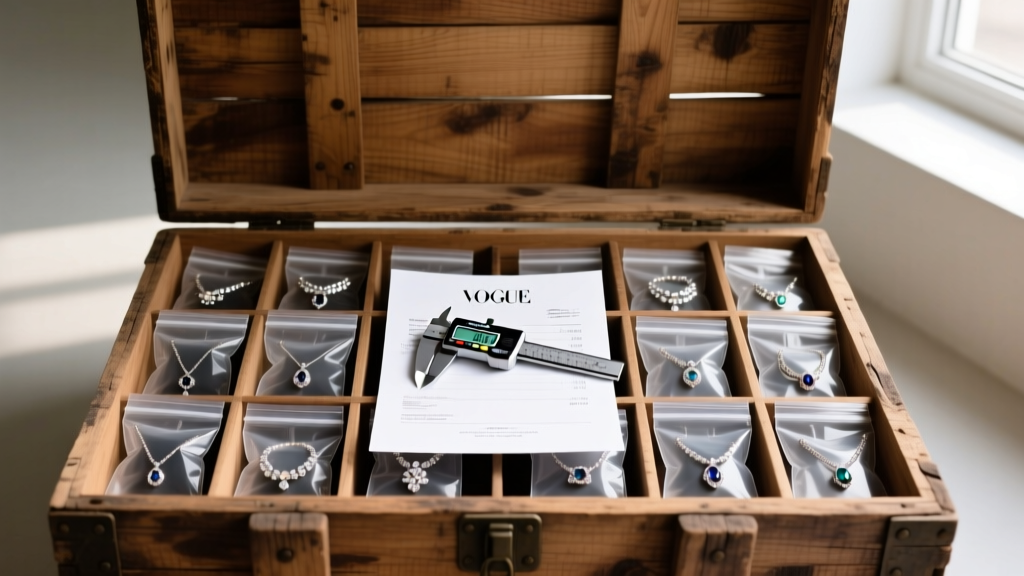
Beginners often make the fatal mistake of pricing their retail goods based solely on the supplier's unit price. In wholesale, the unit price is merely the starting point. To maintain a healthy 60% to 75% gross margin, you must calculate the Total Landed Cost (TLC).
TLC Formula:
(Unit Price + Packaging Cost + Freight/Shipping + Customs Duties + Insurance) / Total Units Received = True Landed Cost
For example, a pair of 18k gold-plated brass hoop earrings might cost $2.50 per unit from a manufacturer in Guangzhou. However, adding $0.30 for custom velvet pouches, $0.80 for air freight per unit, and a 5% import duty pushes the TLC to $3.74. If your target retail price is $38.00, your actual margin is roughly 90%, which is excellent. However, if you opted for heavy, ornate statement necklaces, the freight cost could easily triple due to volumetric weight, destroying your margin.
Navigating Compliance: Nickel and Lead Regulations
Selling fashion jewelry is not just about style; it is a legal liability if you ignore chemical compliance. Skin contact with cheap alloys can cause severe contact dermatitis, leading to lawsuits and brand destruction.
Key Regulatory Standards
- EU REACH Regulation: Strictly limits nickel release from jewelry intended for prolonged skin contact to less than 0.5 µg/cm²/week. It also heavily restricts lead and cadmium.
- California Proposition 65: Requires warning labels if jewelry contains detectable levels of lead or other listed chemicals. Most top rated wholesale fashion jewelry suppliers 2026 now offer 'Prop 65 Compliant' production runs, which utilize lead-free solder and high-purity brass.
Always refer to the FTC Jewelry Guides for accurate marketing terminology regarding metal content, and consult the CPSC guidelines for children's jewelry safety, which enforces a strict 100 ppm total lead limit.
Next Steps: Ordering and Testing Samples
Never place a bulk order without a rigorous sample testing phase. When your samples arrive, perform the following stress tests:
- The Sweat Test: Submerge the piece in a saline solution (simulating human sweat) for 24 hours. Flash-plated items will show green oxidation; properly e-coated pieces will remain pristine.
- The Tumble Test: Place the jewelry in a rotary tumbler with steel shot for 15 minutes to simulate months of friction and wear. Check for micro-chipping on any set cubic zirconia stones.
- The Magnet Test: Use a neodymium magnet. If your 'stainless steel' jewelry sticks strongly to the magnet, the supplier has substituted 316L with cheap, magnetic 200-series steel, which will rust.
By mastering these material specifications, cost calculations, and compliance checks, you transition from a novice buyer into a strategic sourcing director, fully equipped to leverage the best manufacturing partners the global market has to offer.