Cleaning Pieces From Demi Fine Jewelry Brands: Expert Care Guide
Discover expert cleaning and storage tips to protect gold vermeil and gold-filled pieces from your favorite demi fine jewelry brands.

The Material Science of Demi-Fine Jewelry
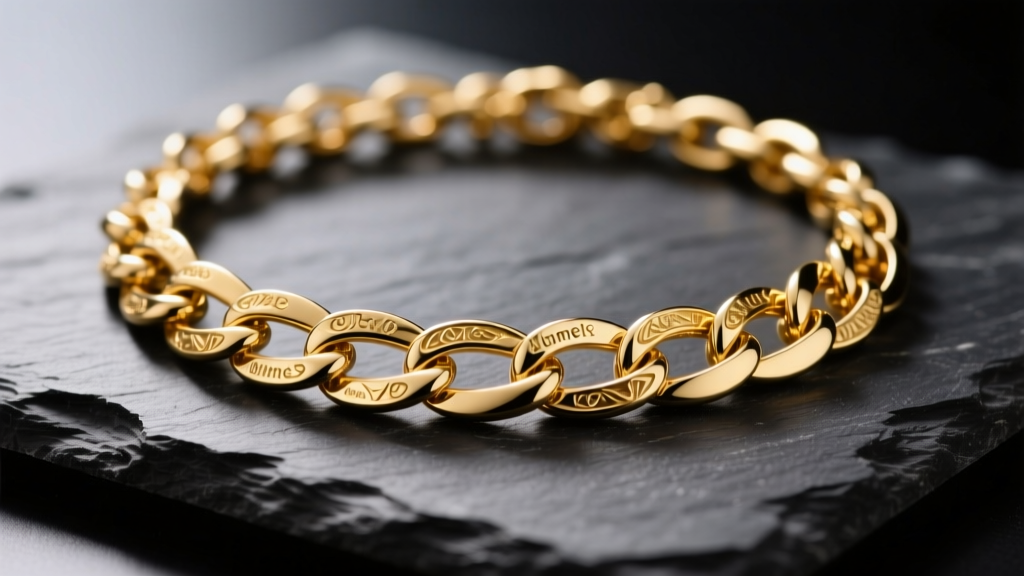
When you invest in pieces from top demi fine jewelry brands, you are purchasing a sophisticated middle ground between disposable costume jewelry and prohibitively expensive solid gold. However, this accessible luxury requires a highly specific approach to maintenance. To properly care for these pieces, you must first understand the metallurgy beneath the surface. The Federal Trade Commission Jewelry Guides strictly define 'gold vermeil' as a sterling silver base that has been plated with at least 2.5 microns of 10k, 14k, or 18k gold.
Unlike standard gold-plated brass, which can cause skin irritation and degrades rapidly, demi-fine jewelry relies on a 925 sterling silver foundation. Sterling silver is an alloy consisting of 92.5% pure silver and 7.5% copper. While the gold layer provides a warm, luxurious aesthetic and a hypoallergenic barrier, the copper hidden beneath is highly reactive. When the microscopic pores in the gold plating are exposed to moisture, sulfur, and oxygen, the copper oxidizes, leading to the dreaded black or green tarnish that can bleed through to the surface. Understanding this chemical vulnerability is the first step in mastering the care of your demi-fine collection.
The Golden Rules of Cleaning Vermeil and Gold-Fill
Cleaning demi-fine jewelry is not about aggressive polishing; it is about gentle surface tension removal. The goal is to lift sebum, lotion residue, and environmental dust without compromising the 2.5-micron gold layer. Follow this precise, expert-approved protocol for routine maintenance:
- Use Distilled Water: Tap water contains chlorine, fluoride, and heavy minerals that can cause micro-pitting in the gold layer over time. Always use lukewarm distilled water.
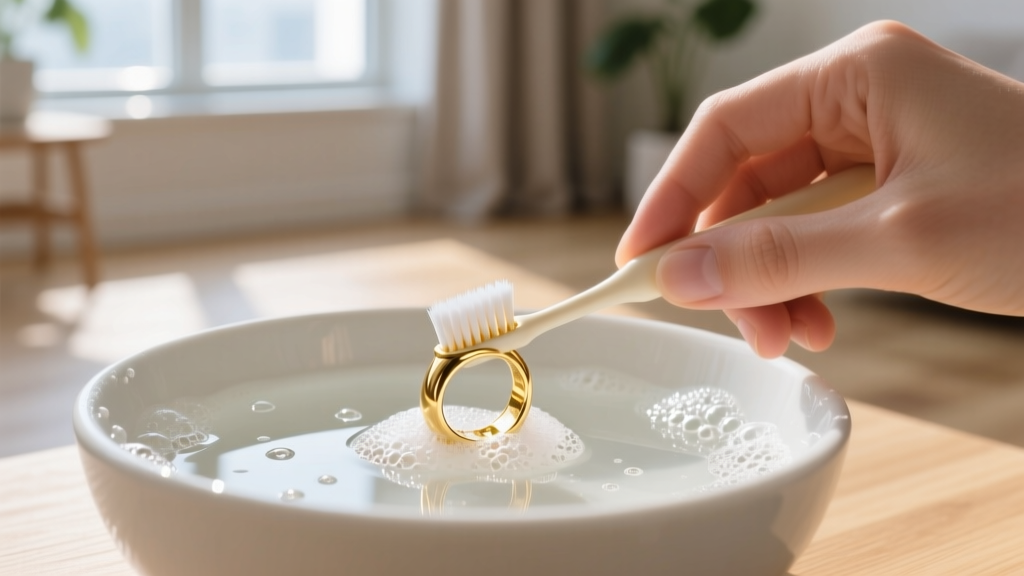
- Select Phosphate-Free Soap: Mix three drops of mild, phosphate-free, and dye-free liquid dish soap into a small bowl of distilled water. Phosphates can leave a cloudy film on high-karat gold plating.
- The Soak and Swish: Submerge your jewelry for no more than three to five minutes. Gently swish the water to dislodge surface oils. Never let vermeil soak overnight, as prolonged water exposure accelerates the oxidation of the underlying copper alloy.
- Micro-Brushing: For intricate settings or chain links, use an extra-soft baby toothbrush. Standard toothbrush bristles are too stiff and will create microscopic scratches in the gold, dulling its luster permanently.
- Precision Drying: Rinse briefly in clean distilled water and immediately pat dry with a lint-free microfiber cloth. Follow up by using a hairdryer on the 'cool' setting to ensure no moisture is trapped in the clasps or under gemstone settings.
The Danger Zone: What to Never Do
Many well-intentioned jewelry owners destroy their demi-fine pieces by applying cleaning methods meant for solid gold or pure sterling silver. The Gemological Institute of America (GIA) frequently warns against using abrasive or chemically harsh solutions on plated metals. Below is a breakdown of common cleaning mistakes and the specific metallurgical damage they cause.
| Cleaning Method | Chemical / Physical Action | Damage to Demi-Fine Jewelry |
|---|---|---|
| Ultrasonic Cleaners | High-frequency cavitation bubbles | The microscopic shockwaves literally strip the 2.5-micron gold plating off the sterling silver base, leaving patchy, raw silver. |
| Baking Soda Paste | Abrasive friction (Mohs 2.5) | Since 18k gold has a Mohs hardness of roughly 2.5 to 3, baking soda acts like sandpaper, creating permanent micro-scratches and dulling the finish. |
| Silver Dip Solutions | Thiourea-based acid reduction | Designed to strip sulfur from silver, these highly acidic chemicals will instantly dissolve the gold plating and pit the surface. |
| Toothpaste | Hydrated silica abrasives | Leaves deep, cloudy scratches in the gold layer and traps white residue in stone settings and chain links. |
Storage Chemistry: Preventing Tarnish Before It Starts
Proper storage is arguably more critical than cleaning when it comes to demi fine jewelry brands' pieces. The enemy of your jewelry is hydrogen sulfide gas, a naturally occurring atmospheric compound that reacts with the copper in the sterling silver base. To combat this, you must create a controlled micro-environment for your jewelry.
First, abandon the traditional velvet-lined jewelry box if it sits open on your dresser. Velvet traps ambient moisture and dust. Instead, store each piece individually in airtight polyethylene zip bags. Avoid PVC (polyvinyl chloride) plastics entirely; as PVC degrades, it emits sulfur compounds that will rapidly tarnish sterling silver.
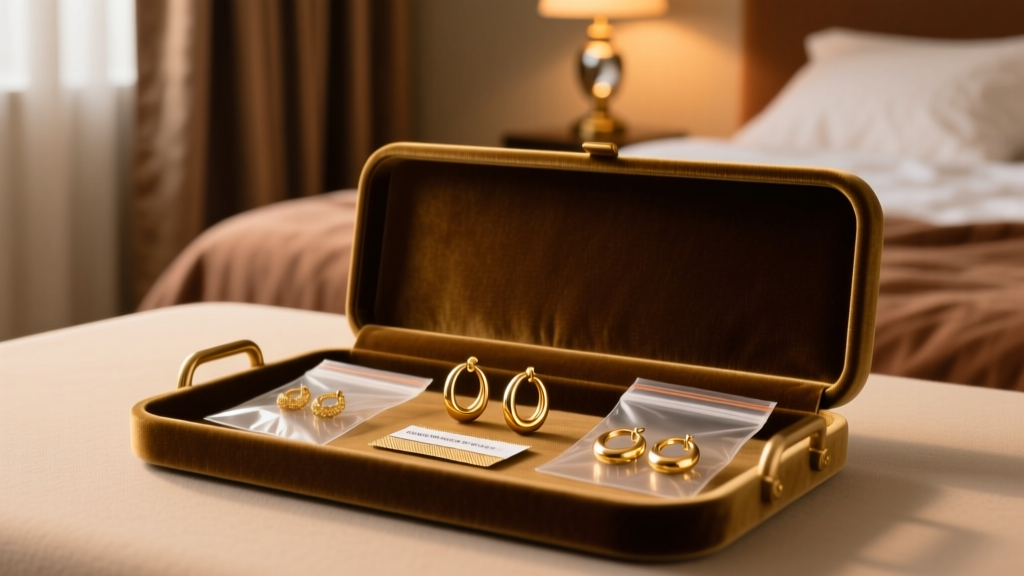
Inside each polyethylene bag, place a small strip of 3M anti-tarnish paper. These strips contain specialized particles that absorb and neutralize hydrogen sulfide and other corrosive gases in the immediate vicinity. For an extra layer of protection, toss in a mini silica gel packet to control humidity. Keep your stored jewelry in a cool, dark drawer away from direct sunlight and radiators, as heat accelerates chemical oxidation reactions.
Long-Term Maintenance and Replating Thresholds
Even with meticulous care, the gold layer on demi-fine jewelry will eventually experience wear, particularly on high-friction areas like the inside of rings or the clasps of necklaces. How do you know when a piece has crossed the threshold from 'cleanable' to 'requiring professional intervention'?
When the gold plating wears down to below 1 micron, the underlying sterling silver becomes exposed to the air. You will notice a distinct color shift—a pale, yellowish-white hue rather than the rich, warm tone of 14k or 18k gold. At this stage, no amount of cleaning or polishing will restore the color; in fact, polishing will only remove more of the remaining gold.
When this occurs, seek out a professional jeweler who specializes in electroplating. They can safely strip the remaining microscopic gold layer, polish the sterling silver base to remove any copper oxidation, and replate the piece with a fresh, thick layer of gold. Many premium demi fine jewelry brands even offer in-house replating services for a nominal fee, ensuring your favorite pieces remain in rotation for decades rather than seasons. By respecting the material science of demi-fine jewelry, you protect both your investment and the artistry of the designers who craft it.