Costume Jewelry Art: A 2026 Collector's Buying Guide
Discover how to authenticate, value, and collect costume jewelry art. Our 2026 buying guide covers Trifari, Haskell, material science, and market pricing.

What Elevates Costume Jewelry to 'Art'?
The line between mass-produced fashion accessories and collectible costume jewelry art is defined by intention, material innovation, and sculptural execution. While fast-fashion brands churn out disposable adornments, true costume jewelry art represents a specific intersection of mid-century industrial design, couture architecture, and avant-garde expression. Institutions like the Victoria and Albert Museum have long recognized that the most significant pieces of the 20th century were not always forged from precious metals, but rather carved from early plastics, cast in base metal alloys, and set with revolutionary glass pastes.
For the discerning collector in 2026, acquiring costume jewelry art requires a shift in perspective. You are not merely buying a necklace or a brooch; you are acquiring a wearable artifact of design history. This buying guide will equip you with the material science knowledge, condition grading frameworks, and market valuation data necessary to build a museum-quality collection.
The Masters of the Medium: Designers to Target
Trifari and the 'Jelly Belly' Phenomenon
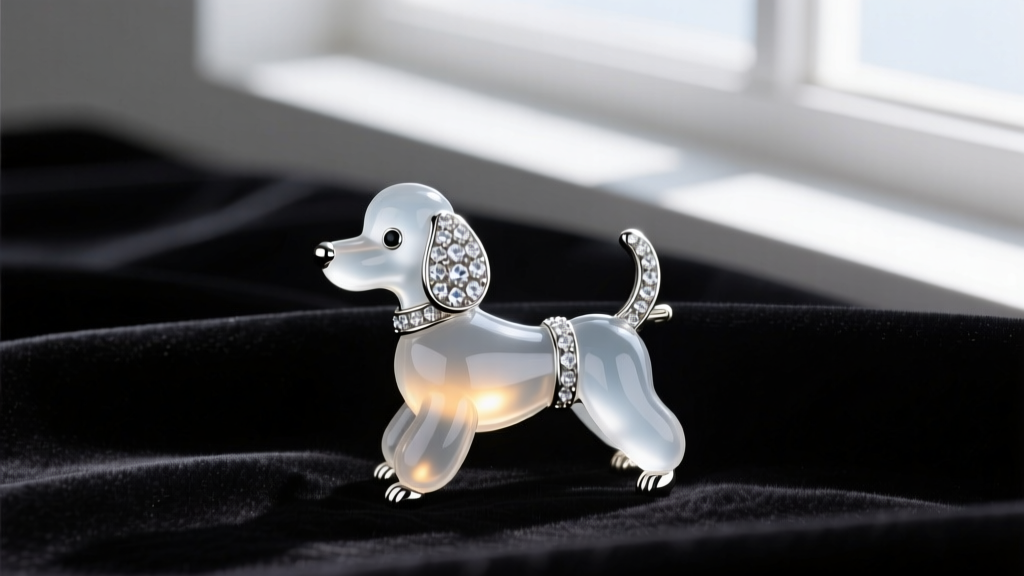
No discussion of costume jewelry art is complete without examining Alfred Philippe’s tenure as head designer for Trifari. Philippe, who previously designed fine jewelry for Cartier and Van Cleef & Arpels, brought high-jewelry construction techniques to base metals. His most coveted contribution to the art form is the 'Jelly Belly' series, patented in the 1940s. These pieces feature intricately cast sterling silver or gold-plated metal frames enclosing a polished, translucent Lucite cabochon. The carving and polishing of the Lucite required immense artisanal skill, making original Jelly Belly poodles, roosters, and penguins highly prized sculptural artifacts.
Miriam Haskell's Couture Architecture
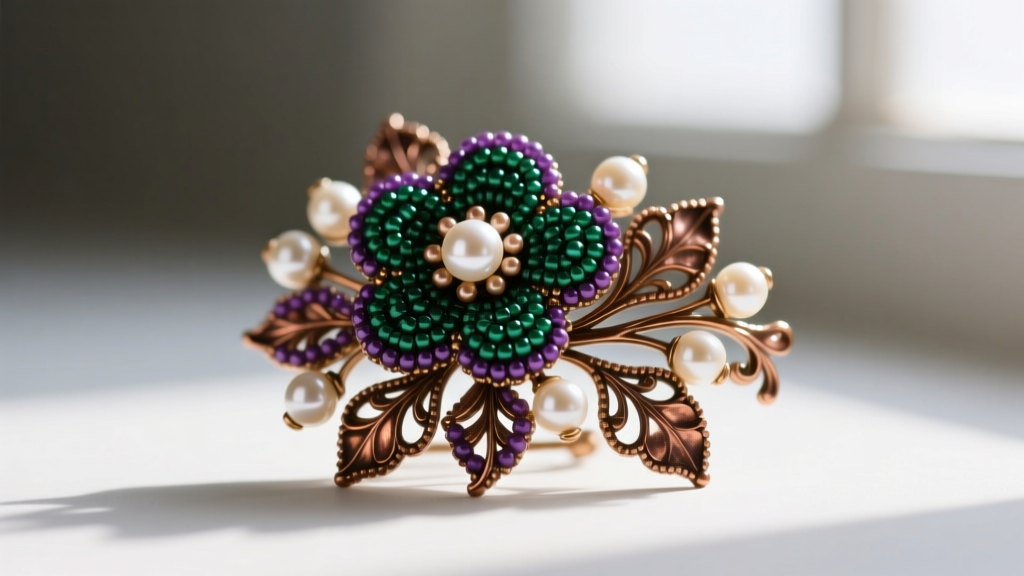
Miriam Haskell approached jewelry as a textile architect. Working closely with designer Frank Hess, Haskell’s pieces are defined by their complex, multi-layered wirework and the use of 'Russian Gold'—a proprietary, matte gold-plating process that resists tarnishing and mimics the soft luster of aged fine jewelry. Haskell’s floral and baroque motifs utilize thousands of hand-sewn seed pearls, glass beads, and faux turquoise, often backed by stamped brass filigree. The sheer labor hours required to construct a single Haskell couture collar necklace elevate it firmly into the realm of wearable art.
Elsa Schiaparelli and Surrealist Adornment
Schiaparelli treated her jewelry as an extension of her avant-garde fashion, collaborating with surrealist artists like Salvador Dalí and Jean Cocteau. Her jewelry art frequently features custom-poured glass buttons by Jean Clément, unconventional materials like vulcanite and wood, and early implementations of aurora borealis rhinestones. Schiaparelli pieces are less about traditional beauty and more about provocative, sculptural statements.
Material Science: Authenticating the Components
Authenticating costume jewelry art requires a deep understanding of mid-century material science. The plastics and glass pastes used between 1930 and 1960 possess distinct chemical and physical properties that modern reproductions fail to replicate accurately.
| Material | Era of Prominence | Authentication Markers & Tests | Common Failure Modes |
|---|---|---|---|
| Bakelite (Phenolic Resin) | 1920s - 1940s | Simichrome polish test (turns yellow); hot water test (emits formaldehyde odor); heavy, dense feel. | Micro-cracking, color darkening (oxidation), warping under high heat. |
| Lucite (Acrylic) | 1940s - 1950s | Optically clear, no odor when heated, can be carved and polished to a glass-like finish. | Surface scratching, yellowing from UV exposure, 'crazing' (internal stress fractures). |
| Aurora Borealis Glass | 1956 - Present | Introduced by Swarovski in 1956; features a micro-thin metallic vapor deposition coating that refracts rainbow light. | Coating wear from skin acids, flaking if cleaned with harsh chemicals. |
| Pâte de Verre | Art Deco Era | Glass paste cast in molds; exhibits slight internal bubbles, matte or semi-opaque finish, heavy weight. | Chipping at high-relief edges, thermal shock cracking. |
Condition Grading and Red Flags for Collectors
When evaluating a potential acquisition, condition is paramount. However, the definition of 'mint' in costume jewelry art differs from fine jewelry. Patina on metal can be desirable, but chemical degradation is fatal. Use this framework to assess condition:
- Verdigris (Copper Chloride/Acetate): This green, powdery corrosion occurs when copper alloys in the base metal react with moisture and skin acids. Verdigris is contagious and will actively destroy adjacent stones and plating. Verdict: Pass on the piece unless you are skilled in chemical stabilization.
- Foil Death: Early rhinestones were backed with silver or gold foil to enhance brilliance. If moisture breaches the setting, the foil oxidizes, turning black or flaking away. This 'foil death' reduces a stone's brilliance and drops the piece's market value by 40% to 60%.
- Clasp Provenance: A replaced clasp is a major red flag for serious collectors. If a 1930s Art Deco collar necklace features a modern lobster claw instead of the original trombone, barrel, or hook-and-eye clasp, its historical integrity is compromised. Always inspect the solder points on the jump rings for signs of modern, shiny solder versus aged, oxidized joins.
- Plating Wear vs. Patina: 'Russian Gold' or high-karat gold wash will naturally wear on high-friction areas (like clasp contacts). This is acceptable patina. However, 'brassing'—where the underlying yellow brass or white pot metal is exposed in large, unsightly patches—significantly detracts from the aesthetic and financial value.
Expert Insight: Never use ultrasonic cleaners or commercial silver dips on vintage costume jewelry art. The vibrations will shatter the foil backing of antique rhinestones, and the harsh chemicals will instantly strip fragile gold-wash platings and dissolve the adhesive holding glass cabochons in place.
Hallmarks and Copyright Dating
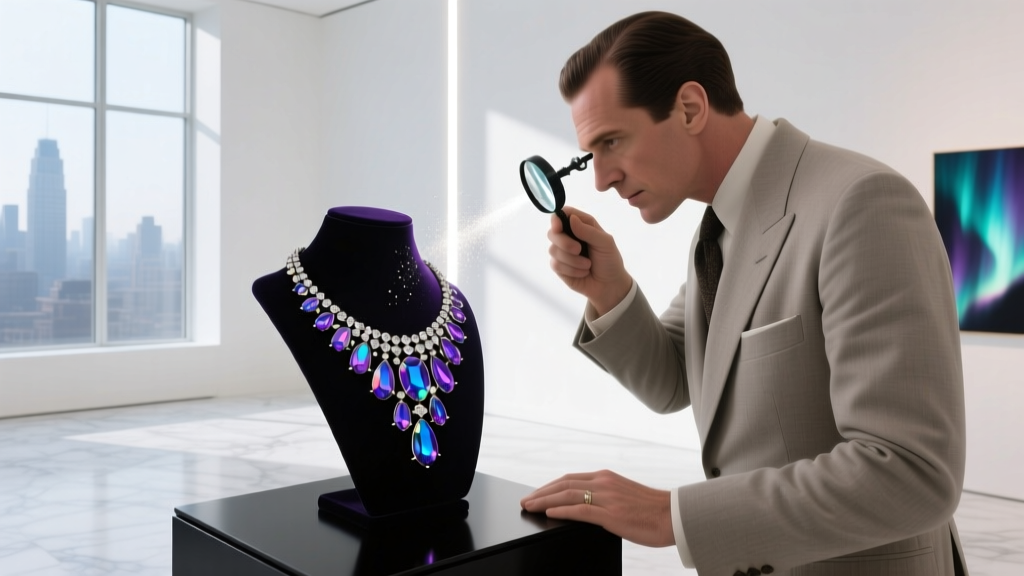
Understanding hallmark evolution is critical for accurate dating and valuation. For example, Trifari’s markings evolved significantly. Early 1920s pieces may feature 'KTF' (Kruess, Trifari, Fishel). By the late 1930s, the 'Crown over Trifari' mark became standard. Crucially, following a landmark 1955 copyright court case, Trifari began stamping pieces with the © symbol. Finding a © mark on a piece that stylistically dates to the 1930s indicates it is a later reproduction or a re-issue from the 1960s, which carries a vastly different market valuation. Archives maintained by platforms like Collectors Weekly are invaluable for cross-referencing these obscure hallmark timelines.
2026 Market Valuations and Pricing Tiers
The market for museum-quality costume jewelry art has matured, with institutional buyers and serious private collectors driving up prices for pristine, documented examples. Here is a realistic pricing framework for the 2026 market:
- Tier 1: Entry-Level Collectible ($150 - $450)
Unsigned but high-quality Art Deco pot metal brooches, standard 1950s aurora borealis parures, and heavily worn but authentic Trifari Crown pieces with minor stone replacements. - Tier 2: Mid-Century Masterworks ($800 - $3,500)
Excellent condition Miriam Haskell couture collars, documented Trifari 'Jelly Belly' sterling silver animal brooches (non-rare species), and complete, signed Schiaparelli surrealist sets with original clasps and zero foil death. - Tier 3: Museum-Grade Sculptural Art ($5,000 - $25,000+)
Rare, large-scale Trifari Jelly Belly penguins or roosters in pristine condition, early 1930s Bakelite carved figurative bracelets by Hagler or Craft, and documented, one-of-a-kind runway pieces from contemporary avant-garde artisans pushing the boundaries of 3D-printed resins and mixed-media sculpture.
Strategic Sourcing for the Serious Collector
Finding true costume jewelry art requires moving beyond standard antique malls and generic online marketplaces. Focus your acquisition efforts on specialized auction houses that employ dedicated jewelry historians, such as Heritage Auctions or Bonhams. Additionally, building relationships with vetted dealers who specialize in specific houses (e.g., Haskell-only or Art Deco-only specialists) ensures you receive pieces with verified provenance. When buying online, always demand high-resolution macro photography of the reverse side of the piece to inspect the wirework, solder joints, and hallmark stamps before committing capital to a high-tier acquisition.


