Gehena Fashion Jewelry Store Fixes: Tarnish, Clasps & Skin
Troubleshoot common issues with your Gehena fashion jewelry store purchases. Learn to fix tarnished plating, broken clasps, and copper skin reactions.

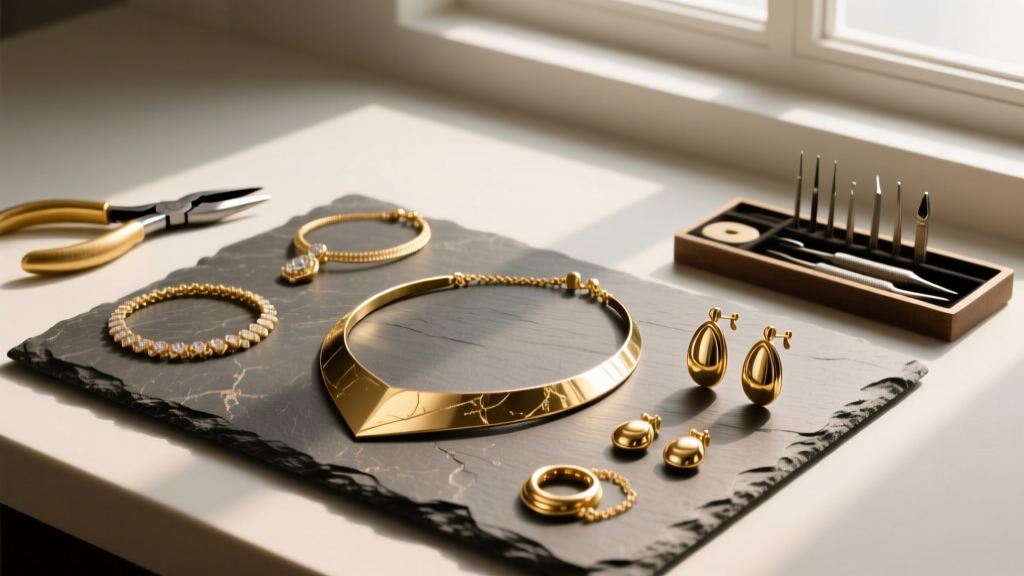
Scoring a bold, trend-forward haul from the gehena fashion jewelry store is a staple for fashion lovers looking to elevate their 2026 wardrobes without investing in solid gold. However, the reality of fashion and demi-fine accessories is that they require active maintenance. Unlike fine jewelry crafted from solid 14k or 18k gold, fashion pieces rely on base metals and microns-thin plating that are highly susceptible to environmental stressors, mechanical fatigue, and chemical reactions.
As a jewelry repair specialist, I see countless statement pieces discarded simply because the owner didn't know how to troubleshoot a failing lobster clasp, reverse copper oxidation, or safely clean flash-plated brass. This comprehensive troubleshooting guide will walk you through diagnosing and repairing the most common failure modes found in fashion jewelry, ensuring your favorite statement pieces survive beyond a single season.
The Reality of Fashion Alloys: Diagnosing the Damage
Before you can fix a piece, you must understand its metallurgical anatomy. Most statement rings, chunky chain necklaces, and oversized hoops from popular fashion retailers are cast from Zamak (a zinc alloy with aluminum, magnesium, and copper) or standard jeweler's brass. According to the Gemological Institute of America (GIA), these base metals are chosen for their low melting points and excellent casting detail, but they are inherently unstable when exposed to oxygen and moisture.
To mimic the look of fine jewelry, these alloys are electroplated with gold or rhodium. However, fashion jewelry typically features 'flash plating,' which is exceptionally thin—often between 0.175 and 0.5 microns. By comparison, high-quality demi-fine vermeil requires a minimum of 2.5 microns. When the microscopic pores of flash plating are compromised by sweat or friction, the underlying brass or zinc rapidly oxidizes, leading to the dreaded dark tarnish or structural pitting.
Identifying Plating Failure vs. Base Metal Corrosion
- Surface Tarnish: Appears as a dull, dark, or reddish film. This is usually just surface-level oxidation of the plating or the very top layer of the base metal. It can often be polished away.
- Plating Flaking: Looks like peeling skin or reveals a stark silver/grey under-metal. Once plating flakes, it cannot be polished back; it requires professional re-plating.
- Structural Pitting: Small, rough craters on the metal surface. This indicates the base zinc alloy is actively corroding from the inside out. The piece is structurally compromised.
Troubleshooting the 'Green Skin' Copper Reaction
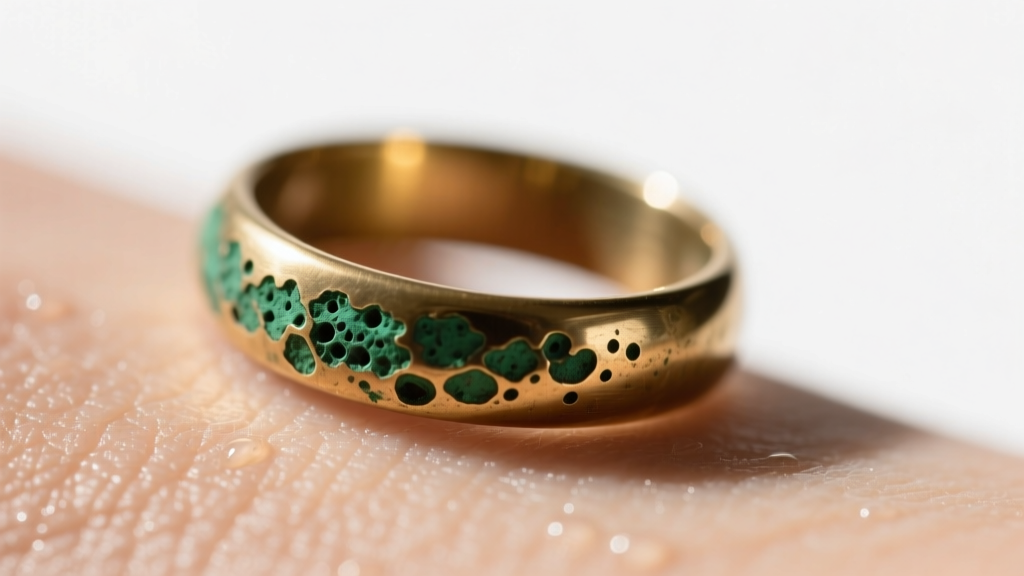
There is nothing more frustrating than removing a stunning cocktail ring only to find a vibrant green band stained on your finger. This is not an indicator of 'toxic' jewelry, nor does it mean the piece is fake; it is a simple, predictable chemical reaction. Brass alloys contain significant amounts of copper. When copper mixes with the salts, acids, and lotions on your skin, it creates copper chloride, a green compound that transfers directly to your epidermis.
The American Academy of Dermatology (AAD) notes that while this green stain is harmless and washes off with soap and water, the acidic environment that causes it can also trigger contact dermatitis in sensitive individuals. Here is how to troubleshoot and prevent the reaction:
The Polyurethane Barrier Method
For rings and bangles that sit flush against the skin, apply a thin, even coat of clear, water-based polyurethane or a specialized jewelry shield lacquer to the interior band. This creates an invisible, flexible barrier that prevents your skin's pH from interacting with the copper alloy. Reapply every 4 to 6 weeks, as friction will eventually wear the coating down.
Upgrading Earring Posts to Surgical Steel
If your Gehena fashion earrings are causing itchy, green-stained lobes, the culprit is the brass earring post. You can easily troubleshoot this by snipping off the base metal post with flush cutters and soldering—or using a strong, jewelry-grade cyanoacrylate adhesive to attach—a 316L surgical steel or niobium post. 316L steel is highly biocompatible and will completely eliminate the copper reaction on your earlobes.
Bench Jeweler Tip: Never use clear nail polish as a long-term barrier. The acetone and solvents in standard nail enamels can actually dissolve the delicate gold flash-plating on fashion jewelry, accelerating the very tarnish you are trying to prevent.
Mechanical Failures: Fixing Clasps and Jump Rings
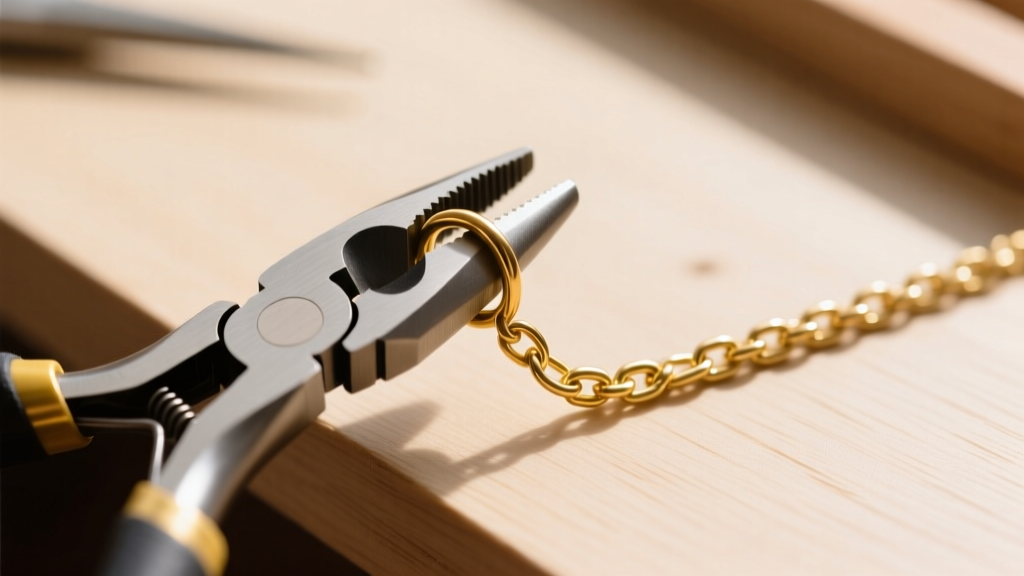
Fashion jewelry is notorious for mechanical weak points. Because the materials are softer and mass-produced, the hardware often fails long before the chain or pendant breaks.
The Jump Ring Pull-Apart
The most common point of failure on any fashion necklace is the jump ring connecting the pendant to the chain or the clasp to the chain. Mass-produced jump rings are 'butt-cut,' meaning the two ends of the wire simply touch; they are not soldered closed. When subjected to tension, these rings pull apart in a 'V' shape.
The Fix: Never pull the ends apart laterally to close them, as this weakens the brass wire and creates a permanent oval shape. Instead, use two pairs of pliers (ideally one chain-nose and one bent-nose) to grip the jump ring on either side of the split. Twist one end toward you and the other away, bringing the ends back together in a tight, overlapping spiral. This maintains the structural integrity and circular tension of the ring.
Lobster Clasp Spring Fatigue
If your lobster clasp refuses to snap shut or feels 'mushy,' the internal steel spring has either fatigued or become clogged with skin oils and debris. You can often revive a sluggish clasp by placing a single drop of lightweight sewing machine oil into the lever mechanism and working it back and forth with a toothpick. If the spring is entirely dead, use your jump-ring twisting technique to remove the faulty clasp and replace it with a neodymium magnetic clasp, which is far more durable and easier to operate.
Diagnostic Chart: Fashion Jewelry Failure Modes
| Symptom | Root Cause | Repair Strategy | Difficulty Level |
|---|---|---|---|
| Green/Black skin stains | Copper alloy reacting to skin pH and moisture | Apply polyurethane barrier; replace posts with 316L steel | Easy |
| Dull, reddish surface film | Oxidation of flash-plating or exposed brass | Wash with mild surfactant; gently buff with microfiber | Easy |
| Chain snapping at the clasp | Butt-cut jump ring pulled open by tension | Twist jump ring closed using dual chain-nose pliers | Medium |
| Flaking or peeling gold layer | Plating adhesion failure due to chemical exposure | Cannot be polished; requires professional electroplating | Advanced (Outsource) |
Safe Cleaning Protocols for Plated Fashion Pieces
The biggest mistake consumers make when troubleshooting tarnished fashion jewelry is treating it like solid gold. The Federal Trade Commission (FTC) Jewelry Guides strictly regulate how plating thickness is marketed, but they don't protect you from ruining a 0.5-micron gold layer with harsh chemicals.
Never use ultrasonic cleaners on fashion jewelry. The high-frequency cavitation bubbles will literally blast the microscopic flash-plating right off the Zamak base metal. Similarly, avoid baking soda and aluminum foil baths; the galvanic reaction is far too aggressive for thin gold layers and will leave your brass pieces looking raw and pink.
The Surfactant Soak Method
- Mix a few drops of pH-neutral dish soap (a mild surfactant) into a bowl of lukewarm distilled water. Tap water contains chlorine and minerals that can accelerate tarnishing.
- Submerge the jewelry for no more than 3 to 5 minutes to loosen sebum and lotion buildup.
- Use an extra-soft baby toothbrush to gently agitate the crevices. Never use stiff-bristled brushes, which will leave micro-scratches in the soft gold plating.
- Rinse briefly in distilled water and immediately dry with a lint-free microfiber cloth. Air-drying leaves water spots that can etch into the base metal over time.
When to Retire a Piece: Beyond Repair
Not every piece from your favorite fashion boutique is meant to become a lifelong heirloom, and that is perfectly fine. Troubleshooting and maintenance can extend the life of your fashion jewelry by years, but you must recognize when a piece has reached the end of its lifecycle. If the Zamak base metal is actively crumbling, if the structural integrity of a heavy statement earring is failing at the solder joint, or if the piece causes persistent allergic reactions despite post-swaps, it is time to retire it. By understanding the metallurgy and mechanics of your accessories, you can curate a sustainable, long-lasting rotation of statement pieces that look just as luxurious as fine jewelry.


