Your Step-by-Step Fine Jewelry Materials and Quality Guide
Learn how to evaluate pieces with our step-by-step fine jewelry materials and quality guide. Master karats, hallmarks, and gemstone grades.

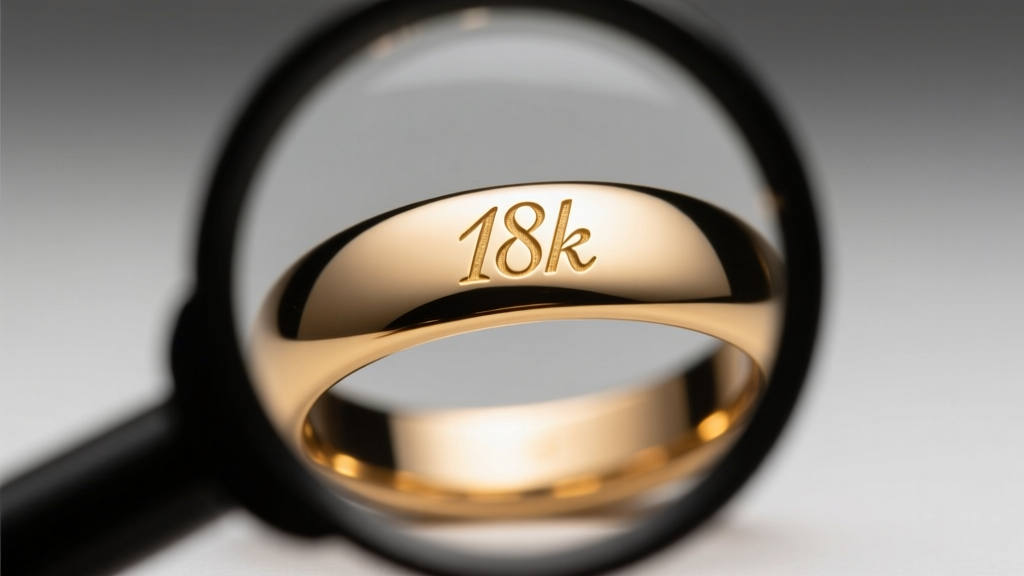
Navigating the jewelry market can feel like deciphering a secret language. Between deceptive marketing terms like 'gold-filled' and 'lab-created,' understanding what you are actually paying for is critical. Whether you are investing in an engagement ring, an heirloom pendant, or a pair of everyday hoops, knowing how to assess intrinsic value separates savvy buyers from those who overpay for demi-fine pieces masquerading as luxury.
This comprehensive, step-by-step fine jewelry materials and quality guide will teach you how to evaluate precious metals, decode gemstone treatments, and inspect structural integrity like a seasoned gemologist.
Step 1: Decode the Precious Metal Hallmarks
The foundation of any fine jewelry piece is its metal. True fine jewelry utilizes solid precious metals, never plated brass or stainless steel. Your first step is to locate the hallmark—usually stamped inside a ring band or on the back of a pendant clasp.
Understanding Gold Alloys and Hardness
Pure 24-karat gold is too soft for daily wear, so it is alloyed with metals like copper, silver, and zinc to increase durability. Here is how the tiers break down in real-world performance:
- 10k Gold (41.7% Pure): The legal minimum to be called 'gold' in the US. Highly durable (approx. 150 Vickers Hardness) but prone to a pale, slightly brassy color. Best for budget-conscious, high-impact pieces like class rings.
- 14k Gold (58.3% Pure): The industry standard for durability and color. With a Vickers Hardness of roughly 135, it resists scratching better than higher karats while maintaining a rich, warm hue. Ideal for engagement rings and daily-wear chains.
- 18k Gold (75% Pure): Prized for its deep, saturated yellow color and hypoallergenic properties. It is softer (approx. 120 HV) and will develop a soft patina over time, making it better suited for earrings, pendants, or low-impact rings.
Platinum vs. White Gold
Many buyers confuse white gold and platinum, but their long-term wear behaviors are vastly different. White gold is an alloy of yellow gold and white metals (like nickel or palladium), plated with rhodium to achieve a bright white finish. This rhodium plating will wear off in 1 to 3 years, revealing the yellowish alloy beneath and requiring costly re-plating.
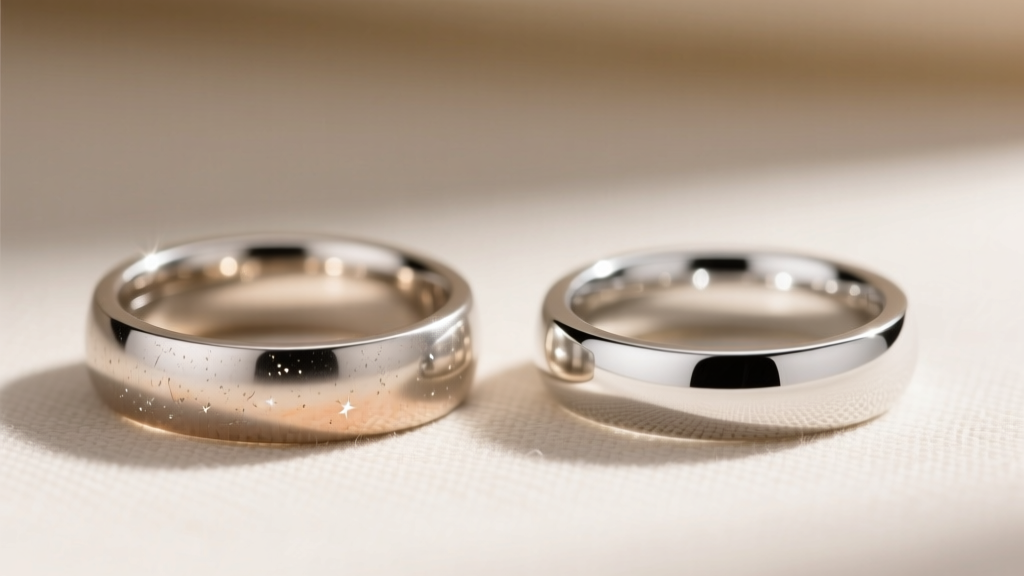
Platinum, typically stamped 'Pt950' or '950 Plat', is 95% pure platinum alloyed with 5% ruthenium or iridium. It is naturally white and will never require rhodium plating. According to the Federal Trade Commission Jewelry Guides, platinum is denser and heavier than gold. While it scratches more easily than 14k gold, it does not lose metal when scratched; instead, the metal displaces, creating a desirable, soft matte patina over time.
Step 2: Evaluate Gemstone Quality and Disclosures
Once the metal is verified, turn your attention to the stones. Fine jewelry relies on natural, earth-mined gemstones or high-grade lab-grown equivalents, evaluated on specific parameters.
The Diamond Sweet Spot
When evaluating diamonds, avoid the trap of paying for perfection you cannot see. For the best balance of price and visual perfection, target the following specifications:
- Color: G to H (Near Colorless). Mounted in yellow or rose gold, even an I or J color will face up white to the naked eye.
- Clarity: VS1 to VS2 (Very Slightly Included). These stones are 100% eye-clean but cost significantly less than VVS or Flawless grades.
- Cut: Always prioritize Excellent/Ideal cut. A poorly cut D-color flawless diamond will look dull and lifeless compared to a well-cut H-color VS2.
Colored Gemstone Treatments
The colored gemstone market is rife with treatments that drastically alter value. The World Jewellery Confederation (CIBJO) mandates strict disclosure for these enhancements. Use the table below to understand what you are buying:
| Treatment Type | Description | Market Acceptance & Value Impact |
|---|---|---|
| Standard Heat | Heating stones to improve color/clarity. | Universally accepted. Minimal impact on price compared to unheated. |
| Beryllium Diffusion | Adding beryllium during heating to alter color (common in sapphires). | Must be disclosed. Drastically reduces value (often 80-90% less). |
| Fracture Filling | Injecting glass/resin into surface-reaching cracks (common in rubies). | Unstable and unacceptable for fine jewelry. Severely depresses value. |
| Oiling | Cedar oil used to mask fissures in emeralds. | Standard practice. Minor to moderate impact depending on oil amount. |
Step 3: Inspect Construction and Prong Work
A piece can feature flawless 18k gold and a D-color diamond, but if the construction is poor, the stone will eventually fall out. Fine jewelry requires meticulous bench work. Here is how to perform a structural audit.
Check for Casting Porosity
Most commercial jewelry is cast using the lost-wax method. If the metal is poured at the wrong temperature, it traps gas bubbles, resulting in 'porosity'—tiny, pinprick holes on the metal surface. Inspect the shank (band) of a ring and the gallery (the basket holding the stone) under good lighting. If you see a cluster of tiny pits, the structural integrity is compromised, and the ring may snap under pressure.
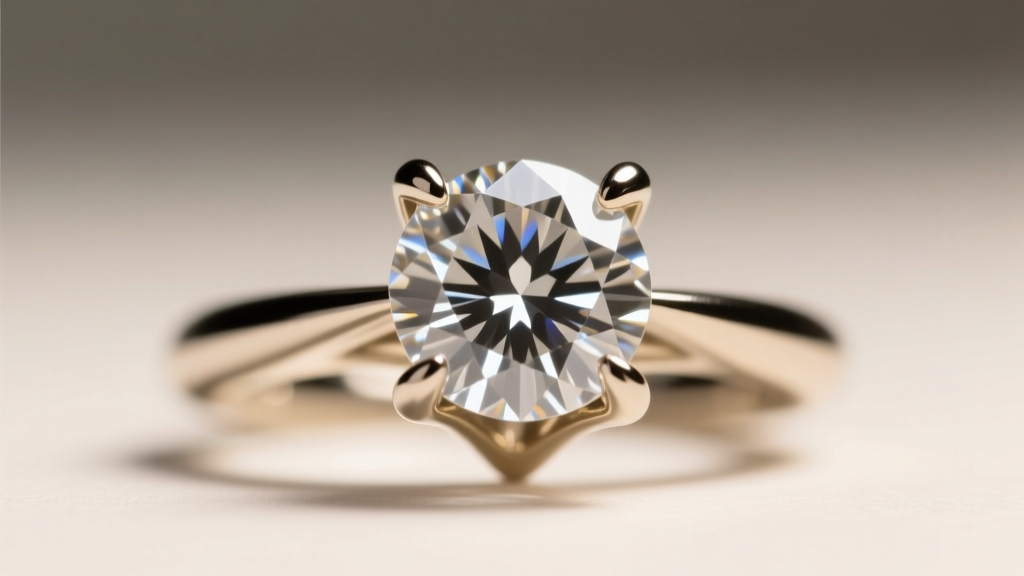
The Prong and Gallery Test
Prongs should be uniform, symmetrical, and perfectly flush against the gemstone's crown. Run a piece of silk fabric or a soft cotton swab over the prongs. If it snags, there are 'burrs' (microscopic sharp metal edges) left behind by lazy polishing. Furthermore, inspect the gallery wire beneath the stone. It should be solid and smoothly soldered. Hollowed-out galleries are a hallmark of mass-produced, low-tier manufacturing designed to save grams of gold at the expense of durability.
Step 4: Verify Provenance and Certifications
The final step in our fine jewelry materials and quality guide is verifying the paperwork. For any center diamond over 0.50 carats, or any high-value colored gemstone, an independent laboratory report is non-negotiable.
- GIA (Gemological Institute of America): The global gold standard for diamond and colored stone grading. Their color and clarity grades are the most stringent and reliable in the industry. Learn more about their grading systems via the GIA Education Portal.
- AGS (American Gem Society): Now integrated with GIA, historically renowned for their strict light-performance cut grading.
- Gübelin or SSEF: The premier laboratories for high-end colored gemstones, specifically for determining geographic origin (e.g., Kashmir sapphire, Burmese ruby) and detecting advanced synthetic treatments.
Beware of in-house 'certificates' or appraisals provided by the seller. An appraisal is merely an insurance valuation document, not a scientific grading report. Always demand a laser-inscribed report number on the diamond's girdle that matches the physical dossier.
Summary: Your Pre-Purchase Checklist
Before finalizing any fine jewelry purchase, ensure you can check off the following:
- Locate and verify the metal hallmark (14k, 18k, Pt950).
- Confirm the exact alloy and understand its long-term wear characteristics (e.g., rhodium maintenance for white gold).
- Request full disclosure on all gemstone treatments (heat, diffusion, filling).
- Visually inspect the piece for porosity, snagging prongs, and hollow galleries.
- Verify the independent lab report (GIA, Gübelin) and match the laser inscription.
By applying this systematic approach, you strip away the marketing fluff and evaluate jewelry based on its true material science and craftsmanship. This ensures your investment will not only retain its intrinsic value but will also stand the test of time as a genuine fine jewelry heirloom.


