What to Do With Old Costume Jewelry: A Buyer's Repurposing Guide
Discover what to do with old costume jewelry. This buyer's guide covers evaluating vintage pieces, material grades, and upcycling vs. reselling strategies.

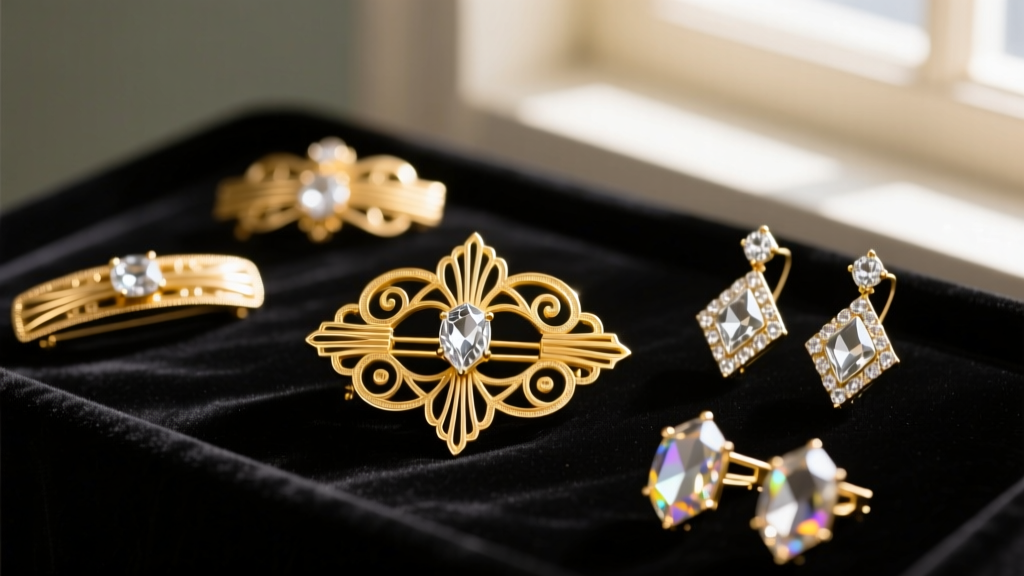
When scouring estate sales, flea markets, or inherited collections, buyers and upcyclers frequently ask: what to do with old costume jewelry that is broken, tarnished, or seemingly out of style? The answer requires a discerning eye for historical value, material composition, and component salvageability. Unlike fine jewelry, where the intrinsic melt value of gold or platinum dictates the baseline, costume jewelry valuation relies heavily on provenance, designer hallmarks, and the integrity of its glass or synthetic stones. This comprehensive buyer's guide will help you evaluate vintage and retro pieces, determine their structural viability, and decide whether to resell, restore, or harvest them for modern upcycling projects.
Decoding the Drawers: Evaluating Vintage and Retro Eras
Before deciding a piece's fate, you must identify its era and maker. The golden age of American costume jewelry spans from the 1930s through the 1960s, driven by wartime metal rationing and the rise of Hollywood glamour. When evaluating a lot, look for specific designer hallmarks stamped on the reverse of brooches, clasps, or earring clips.
- Trifari (1920s-1990s): Look for the 'K' with a crown over it (Crown Trifari). Pieces from the 1940s featuring 'Jelly Belly' lucite centers are highly collectible, often commanding $800 to $2,500 at auction, and should never be dismantled.
- Coro and CoroCraft (1900s-1970s): Known for their mechanical 'Duette' and 'Quadrette' convertible brooches. If the locking mechanism is intact, these are prime candidates for resale rather than upcycling.
- Miriam Haskell (1920s-Present): Early pieces are unmarked but feature complex, hand-wired Russian gold-plated filigree and faux baroque pearls. Later pieces bear an oval plaque. The intricate wirework is highly prized by restoration experts.
If a piece lacks a hallmark, examine the clasp hardware. Barrel clasps and simple C-clamps generally indicate pre-1950s manufacturing, while standard roll-over safety clasps became ubiquitous in the late 1950s and 1960s. According to the Gemological Institute of America (GIA), understanding these hardware evolutions is critical for accurately dating unsigned vintage pieces and determining their collector viability.
The Material Reality: Base Metals and Plating Grades
To know what to do with old costume jewelry, you must understand what it is actually made of. Costume jewelry relies on base metals, which dictate how the piece will age and whether it can be safely cleaned or soldered.
Zinc Alloys (Pot Metal and Zamak)
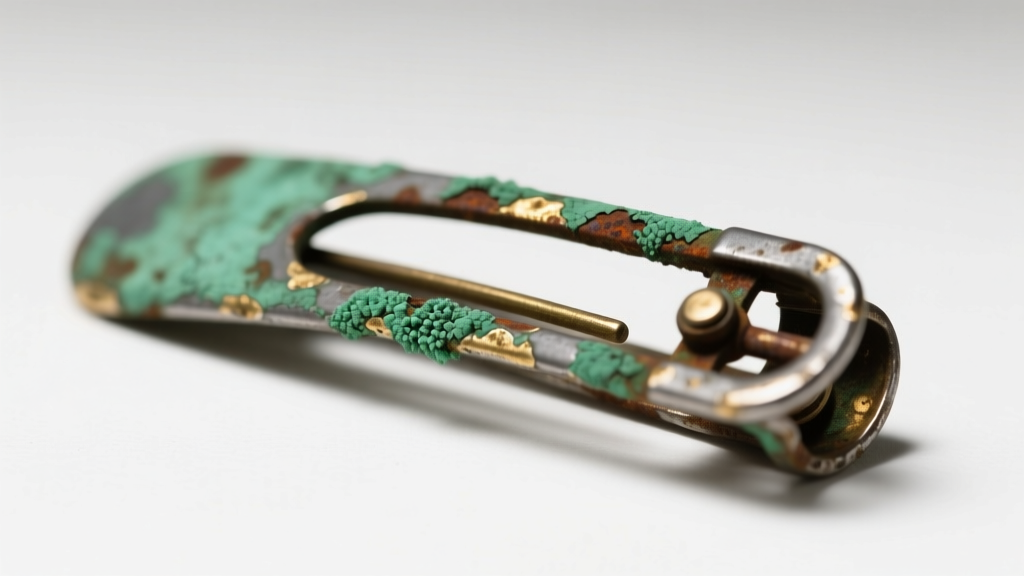
Predominantly used in the 1930s and 1940s due to brass and copper shortages, 'pot metal' (often Zamak, an alloy of zinc, aluminum, magnesium, and copper) is heavy but highly brittle. Failure mode: Zamak is notorious for intergranular corrosion. If you see bubbling beneath the gold electroplating or deep structural pitting, the metal is oxidizing from the inside out. These pieces cannot be soldered or polished; they are strictly for display or stone harvesting.
Brass and Copper Bases
Post-1950s costume jewelry heavily utilized brass and copper due to their malleability and excellent adhesion to electroplating. High-end mid-century pieces often feature thick rhodium or 22k gold electroplating. If the plating is worn but the base brass is structurally sound, these pieces can be professionally re-plated or carefully polished. The Federal Trade Commission (FTC) Jewelry Guides outline the strict definitions for gold electroplate and gold flash, which can help buyers identify the thickness and durability of the original finish.
Decision Matrix: Resell, Restore, or Harvest?
Use this framework to quickly triage your acquisitions based on condition, material, and historical significance.
| Condition & Era | Base Material | Stone Integrity | Recommended Action | Estimated Value/Use |
|---|---|---|---|---|
| 1940s-50s, Hallmarked, Intact | Brass / Sterling Vermeil | Original Foil-Backs Intact | Resell / Collect | $150 - $2,000+ (Collector Market) |
| 1960s-80s, Unsigned, Tarnished | Copper / Heavy Gold Plate | Cloudy Glass / Acrylic | Restore / Wear | $20 - $60 (Vintage Boutique) |
| Any Era, Broken Clasps/Pins | Zamak / Pot Metal | Intact AB or Marquise Glass | Harvest Components | $0.50 - $5.00 per harvested stone |
| Severe Verdigris, Flaking Metal | Unknown Base Alloy | Missing or Dead Stones | Discard / Recycle | Scrap Metal Value (Pennies) |
Sourcing for Upcycling: Harvesting High-Quality Components
When a piece is beyond repair, it becomes a treasure trove of raw materials for modern jewelry designers. Knowing what to do with old costume jewelry in this context means mastering the art of the 'harvest'.
Identifying Harvestable Rhinestones
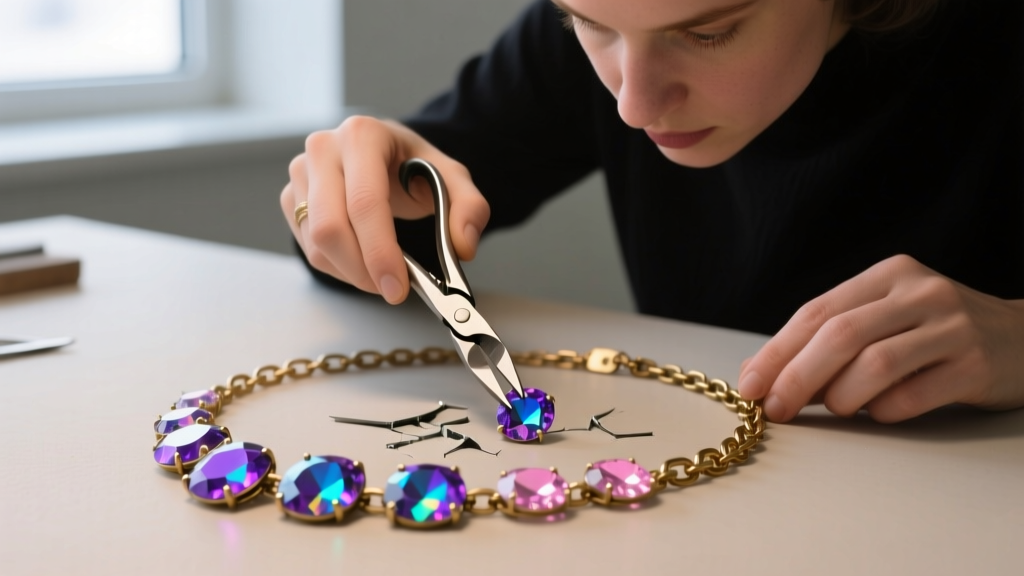
Not all rhinestones are created equal. Look for Aurora Borealis (AB) stones, a iridescent coating pioneered by Swarovski in 1955. Vintage AB stones possess a distinct, oily rainbow sheen that modern mass-produced acrylics cannot replicate. Additionally, seek out navette (marquise) and baguette cut glass stones, which are expensive to source new but abundant in 1950s floral brooches.
Extraction Protocols
To remove stones without shattering them or scratching the foil backing, avoid prying from the top. Instead, use a pair of precision flush cutters to carefully snip the four metal prongs from the reverse side of the setting. If the stones are glued (common in 1970s and later pieces), apply a localized drop of acetone to the back of the setting using a micro-brush, wait 60 seconds for the adhesive to soften, and gently push the stone out from the back using a wooden orangewood stick. Never use metal tweezers on the face of a foiled stone, as the glass is easily scratched.
Safe Handling and Restoration Protocols
If you choose to restore a piece for resale or personal wear, aggressive cleaning is the enemy. The most common issue buyers face is verdigris—the green, powdery corrosion that forms on copper and brass alloys when exposed to moisture and skin acids.
'Never submerge vintage costume jewelry in liquid cleaners or ultrasonic baths. The water will seep beneath the foil backing of the rhinestones, turning them black and instantly destroying their reflective properties and value.' — Conservation Guidelines for Mixed Media Adornments.
For localized verdigris on metal surfaces away from stones, dip a cotton swab in distilled white vinegar and gently roll it over the corrosion. The mild acetic acid will dissolve the copper carbonate without stripping the surrounding gold electroplate. Immediately neutralize the area with a swab dipped in distilled water, and dry thoroughly with a microfiber cloth. For comprehensive conservation techniques, the Victoria & Albert Museum's jewelry care archives strongly advise against using commercial silver dips or brass polishes on plated costume pieces, as the abrasives will strip the microscopic layers of precious metal plating down to the base brass.
Ultimately, deciding what to do with old costume jewelry requires a balance of historical appreciation and practical material science. By accurately identifying base metals, recognizing the hallmarks of master artisans, and employing safe harvesting techniques, buyers can rescue forgotten pieces from the landfill and reintroduce their brilliance into the modern market.


