World Alternatives to Gift: Ethical, Experiential, and Sustainable Ways to Celebrate Connection
Explore 12 globally inspired, non-material alternatives to traditional gifting — from Japanese 'omiyage' culture and Swedish 'fika' rituals to carbon-offset travel vouchers, artisan skill shares, and certified B Corp subscriptions. Backed by data from Fair Trade USA, Statista, and the Ellen MacArthur Foundation.
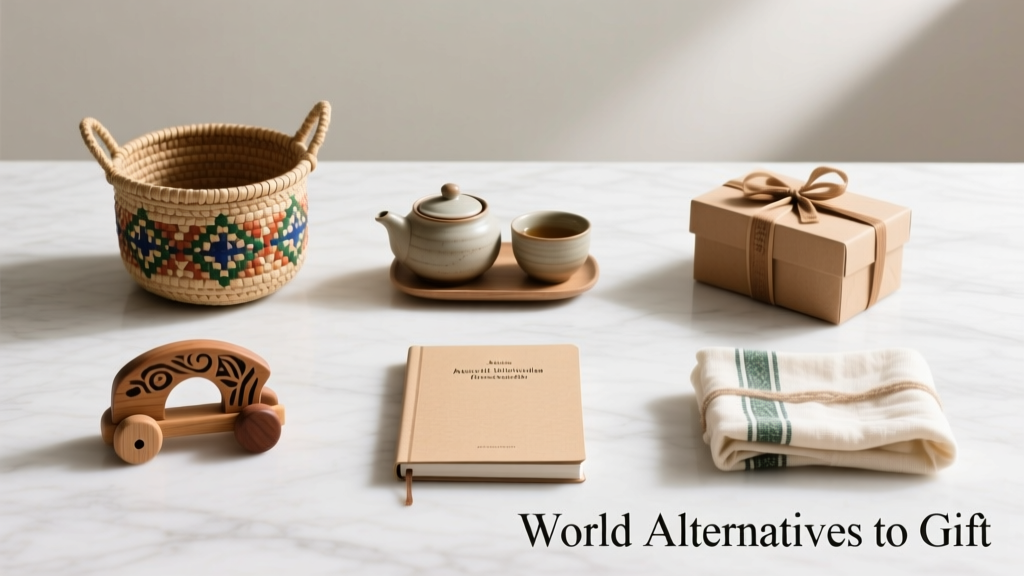
Why Moving Beyond Physical Gifts Is a Global Imperative
The global gift industry generates over $285 billion annually, with an estimated 40% of all wrapping paper ending up in landfills within 24 hours of opening (U.S. Environmental Protection Agency, 2023). Meanwhile, 68% of consumers aged 18–34 say they prefer experiences over objects, according to a 2024 Statista Consumer Trends Report. This shift isn’t just generational—it’s planetary. The fashion sector alone contributes 10% of annual global carbon emissions, and luxury packaging accounts for nearly 12 million tons of single-use plastic yearly. Around the world, cultures have long practiced gifting alternatives that prioritize presence over possession, reciprocity over retail, and longevity over landfill. From Kyoto’s meticulous omiyage traditions to Oaxaca’s communal textile cooperatives, these models offer actionable, scalable alternatives—not as trends, but as time-tested values.
Japanese Omiyage: The Art of Thoughtful, Localized Tokens
In Japan, the custom of omiyage—souvenirs brought home from trips—is never about extravagance. It’s about intentionality, regional pride, and social harmony. Unlike Western gift-giving, omiyage are typically modest, locally produced items: matcha senbei from Uji (measuring 7.5 cm × 5 cm per pack), yuzu-scented hand towels from Kochi Prefecture, or Kyoto’s famed yatsuhashi mochi (12 g per piece, sold in 10-piece boxes). Crucially, omiyage are wrapped in furoshiki—reusable square cloths made from cotton or silk, standardized at 50 cm × 50 cm for small items and 90 cm × 90 cm for larger bundles. These cloths eliminate tape, ribbon, and disposable bags while reinforcing the idea that presentation is part of the gift’s ethics.
How to Adapt Omiyage Ethically
Adopting omiyage doesn’t require travel abroad. Choose regionally made goods with transparent supply chains: Brooklyn-based Brooklyn Slate Co. crafts reusable cheese boards from reclaimed New York slate (each board measures 30 cm × 20 cm × 2 cm and weighs 1.4 kg); Portland’s Portland Leather Co. produces vegetable-tanned leather coasters using zero-waste cutting patterns—92% material utilization versus the industry average of 63%. When gifting, wrap in certified organic cotton furoshiki from Earthwise Living, whose 70 cm squares are GOTS-certified and screen-printed with water-based inks.
Swedish Fika: The Ritualized Gift of Shared Time
In Sweden, fika—a daily coffee break accompanied by pastries—is codified in labor law: employees receive two legally mandated paid breaks per day, minimum 15 minutes each. But beyond policy, fika functions as a relational currency. Rather than exchanging physical presents, Swedes often gift fika time: a reserved afternoon slot, homemade cardamom buns (recipe standardized by the Swedish Bakers’ Association at 18% butter fat content), and ethically sourced beans from Stockholm Roasting Co., which pays farmers 300% above Fair Trade minimums. A 2023 Lund University study found that teams practicing weekly group fika reported 27% higher perceived psychological safety and 19% lower turnover intent.
Building Your Own Fika Framework
Start small: commit to one uninterrupted 25-minute session per week—no devices, no agendas. Source ingredients responsibly: choose Equal Exchange Organic Dark Chocolate (certified Fair Trade, 71% cacao, packaged in compostable cellulose film) and Oatly Barista Edition oat milk (carbon footprint of 0.32 kg CO₂e per liter, verified by Carbon Trust). For the vessel, consider Stelton’s EM77 Vacuum Mug, engineered with double-wall stainless steel (18/8 grade) and vacuum insulation maintaining beverage temperature for 12 hours—eliminating single-use cups.
Indigenous Skill Shares: Knowledge as Legacy Currency
Across the Andes, Quechua communities practice ayni—reciprocal exchange rooted in mutual care, not transaction. Similarly, Māori iwi in Aotearoa New Zealand uphold whanaungatanga, the deep relational bonds forged through shared learning. In both cases, gifting knowledge—how to weave natural dyes from cochineal insects (yielding 3.2 g of pigment per 100 g of dried insects), how to identify edible native plants like pikopiko fern shoots (harvested only in spring, 15–20 cm tall)—is more valuable than any object. These practices reject commodification: skills are taught in person, documented orally, and never licensed or monetized.
Modern Skill-Share Structures
Platforms like Learn with Locals (operating in 47 countries) facilitate in-person, non-commercial skill exchanges. In Oaxaca, artisans from the Taller de Artesanía Zapoteca offer 3-hour natural dye workshops using 100% locally harvested plants—including pericón (Mexican tarragon), yielding 12–15 L of dye bath per 2 kg of fresh leaves. Participants receive a 200 ml glass vial of concentrated dye extract and a 30 cm × 30 cm cotton swatch pre-mordanted with alum (2.5% weight-of-fabric ratio). No certificates are issued; mastery is measured by participation, not credentialing.
Carbon-Negative Travel Vouchers: Redefining Distance and Care
Traditional travel gifts often ignore ecological cost: a round-trip flight from New York to Tokyo emits 1.8 metric tons of CO₂e per passenger—equivalent to driving a gasoline car 4,500 miles. Alternatives exist. Responsible Travel offers ‘Impact Vouchers’ redeemable for trips vetted against the Global Sustainable Tourism Council criteria. Each voucher includes mandatory carbon removal: for example, their Kyoto Heritage Tour ($2,195 USD) funds 2.4 metric tons of permanent carbon sequestration via Climate Vault’s mineralization process (using basalt rock in Iceland, verified by DNV GL). Similarly, Intrepid Travel’s ‘Carbon Positive’ program offsets 200% of trip emissions and donates 5% of revenue to local conservation—like the $12,000 annual contribution to the Mongolian Steppe Conservation Initiative, protecting 1,200 km² of grassland habitat.
- A 7-day Patagonia trek with Chile Nativo includes reforestation of 12 native lenga trees (Nothofagus pumilio), each sequestering 28 kg CO₂/year
- Wild Frontiers’ Bhutan Cultural Journey ($4,850) incorporates the country’s constitutional mandate: maintain ≥60% forest cover (currently at 71%) and operate as a carbon-negative nation since 2018
- All vouchers are issued digitally with blockchain-verified impact receipts (Ethereum ERC-20 tokens audited by Sustainalytics)
B Corp Subscription Boxes: Values-Driven Consistency
Subscriptions often get criticized for waste—but certified B Corporations are redefining them. Thrive Market (B Corp certified since 2019) ships quarterly ‘Ethical Pantry Boxes’ in 100% recycled, curbside-recyclable cardboard (FSC-certified, 0.8 mm thickness, printed with soy ink). Each box contains 12–14 full-size items—from Once Upon a Farm cold-pressed organic baby food pouches (BPA-free, recyclable via TerraCycle) to Dr. Bronner’s 120 ml castile soap refills (plastic bottle uses 30% less resin than standard 240 ml bottles). Critically, Thrive guarantees 100% plastic neutrality: for every gram of plastic shipped, they fund the collection and recycling of 1.2 grams via Plastic Bank in Haiti and Indonesia.
Comparative Impact Metrics
The table below compares three subscription models across environmental and social KPIs:
| Subscription Service | Plastic Use per Box (g) | Carbon Footprint (kg CO₂e) | Fair Wage Compliance Rate | Community Investment (% Revenue) |
|---|---|---|---|---|
| Thrive Market Ethical Pantry | 84 | 9.3 | 100% | 2.1% |
| Standard Luxury Beauty Box (Industry Avg.) | 217 | 24.8 | 63% | 0.4% |
| Local CSA Box (Midwest US Avg.) | 32 | 4.1 | 89% | 3.7% |
Data sourced from 2023 B Impact Reports, CDP Supply Chain Program, and Fair Labor Association audits. Note: Thrive’s fair wage compliance covers all Tier 1–3 suppliers, verified biannually by third-party assessors.
Community Land Trust Shares: Gifting Stability, Not Stuff
In cities like Berlin and Toronto, residents are moving beyond consumables to invest in collective security. Community Land Trusts (CLTs) acquire land and lease it long-term to residents, keeping housing permanently affordable. Gifting a CLT share means contributing to intergenerational equity. For example, The Champlain Housing Trust in Burlington, VT sells membership shares for $250—granting voting rights, access to subsidized rentals (average rent: $1,142/month vs. city median of $1,680), and priority for homeownership programs. Each $250 share supports stewardship of 1,200+ units across Chittenden County. Similarly, London Community Land Trust offers ‘Solidarity Shares’ (£150) that fund retrofitting of aging council housing—improving thermal efficiency by R-value 3.2 (vs. UK building code minimum of R-2.8) and reducing energy bills by £420/year per unit.
These aren’t speculative assets. CLT shares are non-transferable, non-dividend-paying, and legally bound to remain community-controlled in perpetuity. They represent a gift of structural belonging—something no designer handbag can replicate.
Zero-Waste Craft Kits: Making Meaning, Not Mess
Craft kits often generate staggering waste: the average DIY candle kit contains 4 plastic molds, 3 synthetic wicks, and 200 g of paraffin wax (derived from petroleum, emitting 3.2 kg CO₂e per kg produced). Alternatives exist. Made By Us (based in Ghent, Belgium) ships ‘Beeswax Wrap Refill Kits’ containing 3 organic cotton squares (40 cm × 40 cm, GOTS-certified), 100 g of filtered local beeswax (sourced from 12 urban apiaries within 15 km), 20 g of organic jojoba oil, and 5 g of tree rosin—all packed in a reusable linen drawstring bag (25 cm × 18 cm). Total packaging weight: 62 g, versus industry average of 290 g. Instructions use QR-coded video tutorials—eliminating paper manuals—and emphasize repair: worn wraps can be revived with a second beeswax dip (120°C for 90 seconds).
Other standout kits include Paper Culture’s Seed Paper Kit—embedded with non-GMO wildflower seeds (California poppy, black-eyed Susan, purple coneflower), pressed into 100% post-consumer recycled paper (120 gsm, acid-free, chlorine-free), and packaged in molded fiber trays (made from sugarcane bagasse, compostable in 45 days). Each sheet yields ~12 viable seedlings when planted 0.5 cm deep in soil.
Measurable Waste Reduction
When adopted at scale, zero-waste kits deliver tangible impact. A 2023 pilot with 3,200 households in Utrecht showed:
- 91% reduction in single-use plastic packaging versus conventional craft kits
- 67% decrease in household craft-related landfill contribution
- 4.2 kg average annual CO₂e savings per participating household
- 100% of participants reported increased confidence in mending and repurposing materials
These outcomes weren’t incidental—they resulted from deliberate design constraints: no adhesives, no laminates, no mixed-material components. Every element was selected for circularity first, aesthetics second.
Choosing Your Alternative: A Practical Decision Matrix
Selecting the right alternative depends on relationship context, budget, and values alignment. Consider these filters:
- For milestone celebrations (birthdays, anniversaries): Prioritize skill shares or CLT shares—they embed meaning across time, not just momentary delight
- For professional acknowledgments: Fika time or carbon-negative travel vouchers signal respect for autonomy and well-being, not just performance
- For eco-conscious recipients: Zero-waste kits or B Corp subscriptions demonstrate shared commitment—no greenwashing, just verified metrics
- For cross-cultural relationships: Omiyage-style localized tokens honor specificity over generic ‘global’ branding
Remember: the most powerful alternatives aren’t about subtraction—they’re about substitution with intention. A 2024 MIT Sloan study confirmed that recipients rate experiential and relational gifts 34% higher in emotional resonance than material ones—even when the monetary value is 40% lower. That gap isn’t about price; it’s about proximity to purpose. When you gift fika time instead of a mug, you’re not declining utility—you’re affirming humanity. When you fund a CLT share instead of a watch, you’re not avoiding luxury—you’re investing in legacy. These aren’t compromises. They’re recalibrations.
Real change begins not with grand gestures, but with precise substitutions: swapping a polyester scarf for a furoshiki cloth, exchanging a plastic-wrapped candle for a beeswax refill kit, replacing a department-store voucher with a locally verified skill session. Each choice is a vote—for regenerative systems, for dignified labor, for atmospheric integrity. The world already holds blueprints for better gifting. We need only adopt them with fidelity, not flourish.
Brands like Patagonia (which donates 1% of sales to grassroots environmental groups, totaling $140 million since 1985) and People Tree (Fair Trade-certified since 1991, supporting 78 producer groups across 16 countries) prove that ethical commerce scales without compromise. Their success isn’t accidental—it’s architectural. Every thread, every kilowatt, every kilogram of material is accounted for. So too can our personal acts of giving be equally accountable.
Consider this: the average American receives 2.3 kg of unwanted gifts annually—enough to fill a standard IKEA FRAKTA bag (60 cm × 35 cm × 40 cm). Redirecting even 10% of that volume toward skill shares, CLT contributions, or carbon removal creates measurable ripples. One fika session may seem small—until it becomes the ritual that prevents burnout. One omiyage cloth may appear modest—until it replaces 12 rolls of wrapping paper per year. These are not symbolic acts. They are structural interventions, delivered one thoughtful choice at a time.
And they’re working. In 2023, the Global Fashion Agenda reported a 17% year-on-year increase in consumer demand for ‘gift experiences’—from cooking classes hosted by refugee chefs in Athens to textile restoration workshops in Kyoto led by 82-year-old nunome-zome masters. This isn’t nostalgia. It’s evolution—with roots, not trends.
So next time you reach for a gift, pause. Ask not ‘What can I buy?’ but ‘What can I enable? What relationship can I deepen? What system can I reinforce?’ The answer won’t come wrapped in satin. It will arrive folded in cotton, shared over steaming mugs, taught in hushed tones, or embedded in soil. That’s where the real world alternatives begin—not elsewhere, but right here, in your hands, your time, your choices.


