Decoding Old Money Jewelry: Alloys, Gauges & Settings Guide
Discover the technical anatomy of old money jewelry. Explore 18k gold alloys, dainty chain gauges, and low-profile settings for timeless capsule wardrobes.

The Engineering of Quiet Luxury
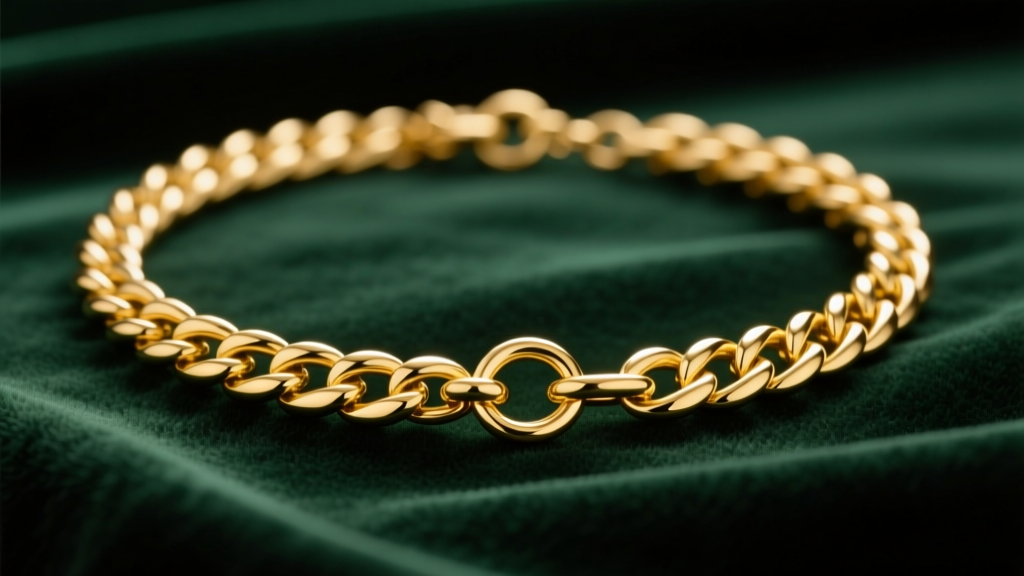
In 2026, the quiet luxury movement has evolved far beyond mere aesthetics. True old money jewelry is not defined simply by a lack of logos or a minimalist silhouette; it is defined by rigorous metallurgical standards, precise structural engineering, and heirloom-grade longevity. When we dissect the anatomy of heritage jewelry, we uncover a reliance on specific alloy compositions, exact gauge tolerances, and time-tested setting techniques that prioritize durability alongside dainty elegance.
For the discerning collector building a capsule jewelry wardrobe, understanding these technical specifications is paramount. A delicate chain is only as valuable as its tensile strength, and a minimalist pendant is only as enduring as its bail connection. This expert deep dive explores the material science and structural mechanics that separate genuine old money jewelry from mass-produced minimalist trends.
Metallurgy: Alloys, Hardness, and Hypoallergenic Profiles
The foundation of any fine jewelry piece lies in its alloy composition. Pure 24-karat gold is exceptionally soft, registering a mere 25 to 30 on the Vickers Hardness (HV) scale, making it entirely unsuitable for the daily wear demanded by a capsule wardrobe. To achieve the structural integrity required for dainty jewelry, gold must be alloyed with secondary metals.
The 18k vs. 14k Debate in Heritage Jewelry
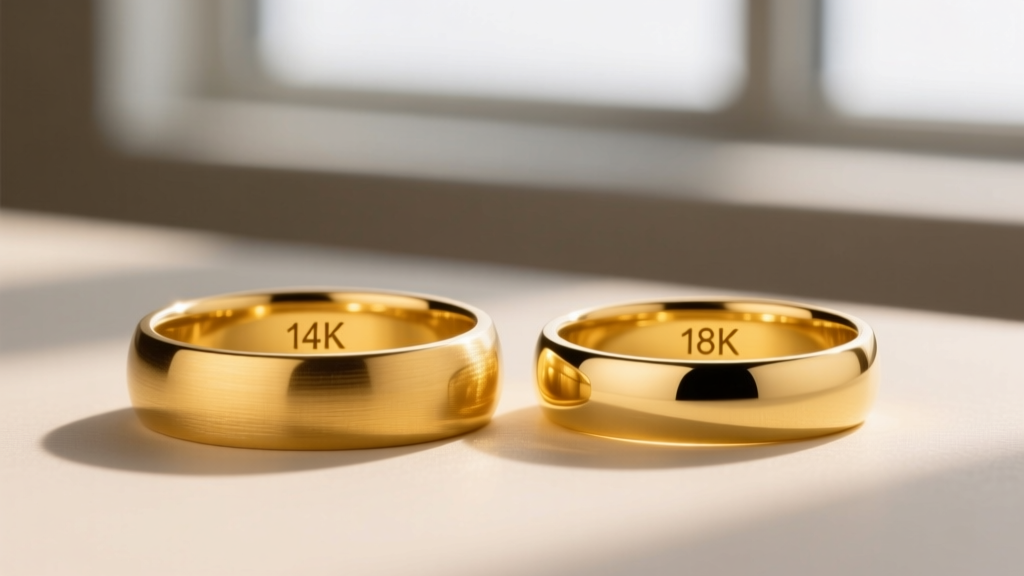
European old money estates have historically favored 18-karat gold (75% pure gold). When alloyed with a precise ratio of copper and fine silver, 18k gold achieves a Vickers Hardness of approximately 120-135 HV. This provides a rich, deep luster and superior hypoallergenic properties, though it requires slightly more care in ultra-fine gauges. According to the Gemological Institute of America (GIA), the specific trace metals used in 18k alloys dictate not just color, but long-term oxidation resistance.
Conversely, American heritage brands often utilize 14-karat gold (58.5% pure gold) for their daintiest chain styles. 14k gold registers between 140-160 HV, offering higher tensile strength. This makes it the technically superior choice for ultra-thin cable chains (under 1.0mm) that must withstand the micro-tensions of daily wear without stretching or snapping.
The Palladium-White Gold Standard
A critical hallmark of authentic old money jewelry is the avoidance of rhodium-plated white gold. Traditional white gold is alloyed with nickel or palladium and then plated with rhodium to achieve a stark white finish. As the plating wears away, the underlying yellowish-grey alloy is exposed. True heritage pieces utilize palladium-white gold alloys (often 14k or 18k with 10-15% palladium). While more expensive and technically challenging to cast due to palladium's high melting point, it yields a naturally white, hypoallergenic metal that never requires replating, maintaining its quiet luxury aesthetic indefinitely.
Chain Architecture and Gauge Tolerances
The backbone of minimalist jewelry is the chain. The structural geometry of the links determines the piece's drape, tensile strength, and susceptibility to work hardening (the process where metal becomes brittle and snaps after repeated bending).
- Cable Chains (0.9mm - 1.1mm): The classic oval-link cable chain is a staple. However, at gauges thinner than 0.9mm, the soldered joints become the primary failure point. For dainty pendants, a 1.0mm solid cable chain offers the optimal balance of delicate aesthetics and structural safety.
- Wheat Chains (1.0mm - 1.5mm): Composed of interlocking, braided oval links, wheat chains distribute tension across multiple contact points rather than a single soldered joint. This makes them exceptionally resistant to snapping, earning them a preferred status in heirloom capsule collections.
- Box Chains (1.2mm+): Constructed from square, interlocking links, box chains are highly durable but prone to catastrophic failure if a single link is crushed or bent, as the geometric precision is easily compromised.
When evaluating chain links under magnification, look for laser-welded joints rather than traditional torch-soldered links. Laser welding provides a microscopic, high-heat fusion that doesn't anneal (soften) the surrounding work-hardened wire, preserving the chain's overall tensile strength.
Structural Engineering: Settings and Clasps
The intersection of gemstones and precious metals is where minimalist jewelry faces its greatest structural challenges. Old money jewelry prioritizes low-profile, snag-free settings that protect the stone while maintaining a sleek silhouette.
Flush and Bezel Settings
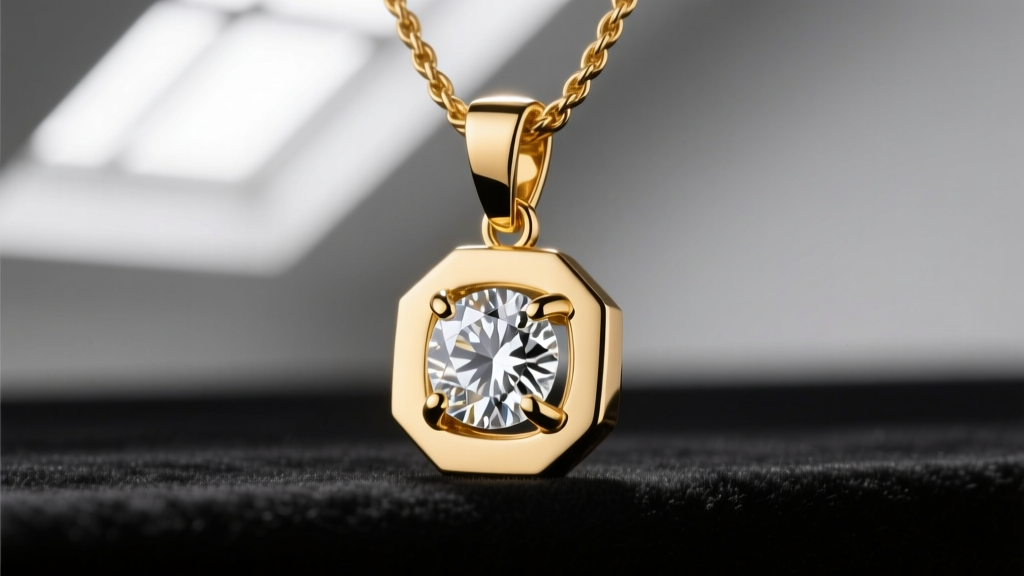
While prong settings maximize light return, they are structurally vulnerable. Heritage minimalist pieces overwhelmingly favor bezel settings, where a continuous rim of metal surrounds the gemstone's girdle. For ultra-dainty rings and pendants, a flush (or gypsy) setting is often employed, where the stone is set directly into a drilled hole in the metal band, leaving the table of the gemstone perfectly level with the surface. This eliminates all snag points and protects the stone's edges from impact damage.
Clasp Mechanics and Safety Catches
The clasp is the most common mechanical failure point in any necklace or bracelet. Mass-market jewelry relies on hollow, stamped spring rings that easily deform. In contrast, technical old money jewelry utilizes solid cast spring rings or precision-machined lobster clasps with reinforced jump rings. For dainty tennis bracelets or heavier minimalist chains, the standard is a hidden box clasp equipped with a dual figure-eight safety catch. This mechanism distributes the tensile load across the internal tongue-and-groove box rather than relying solely on the tension of a tiny spring.
Technical Specifications for Capsule Wardrobes
When sourcing or commissioning pieces for a permanent jewelry capsule, use the following technical benchmarks to ensure heirloom-grade quality:
| Component | Ideal Specification | Old Money Standard | Common Failure Mode |
|---|---|---|---|
| Daily Wear Chain | 1.0mm - 1.2mm Gauge | Solid Wheat or Cable | Link separation at solder joints |
| White Gold Alloy | 14k or 18k Palladium | Unplated, Natural White | Rhodium wear revealing yellow base |
| Pendant Bail | Integrated or Laser-Welded | Seamless Cast Bail | Bail friction wearing through chain |
| Gemstone Setting | Bezel or Flush | Low-profile, Snag-free | Prong lifting and stone loss |
| Bracelet Clasp | Box with Figure-8 Safety | Internal Tongue & Groove | Spring tension fatigue and unclasping |
Hallmark Verification and Provenance
Authenticating old money jewelry requires a keen eye for hallmarks, which serve as the metallurgical fingerprint of the piece. According to the World Gold Council, hallmarking laws vary by region, but heritage pieces consistently feature strict assay marks.
In the UK and Europe, look for the 750 (18k) or 585 (14k) millesimal fineness marks, often accompanied by a maker's mark and an assay office symbol (such as the anchor for Birmingham or the leopard's head for London). In the United States, while the Karat mark (18k, 14k) is standard, the presence of a registered maker's trademark is legally required to guarantee the karatage. A piece lacking a maker's mark, even if stamped 14k, fails the provenance test of true heritage jewelry.
"True quiet luxury is invisible to the untrained eye but immediately recognizable to a jeweler. It is found in the seamless integration of a bezel setting, the precise tension of a figure-eight safety catch, and the rich, unplated warmth of a palladium alloy."
Conclusion: Building a Technically Sound Capsule
The appeal of old money jewelry lies in its promise of permanence. By prioritizing specific alloy compositions like palladium-white gold, demanding precise gauge tolerances for dainty chains, and insisting on structurally sound bezel settings and box clasps, you elevate your jewelry box from a collection of fleeting accessories to a vault of enduring engineering. As the minimalist trend continues to mature in 2026, the most sophisticated collectors are those who look past the surface polish and demand excellence at the microscopic level. For further reading on precious metal standards, consult the GIA Gem Encyclopedia to deepen your metallurgical expertise.


