Egyptian Cartouche Jewelry: Expert Guide to Authenticity & Craft
Discover the technical details of Egyptian cartouche jewelry. Learn about metal grades, hieroglyph accuracy, and how to spot authentic artisan craftsmanship.

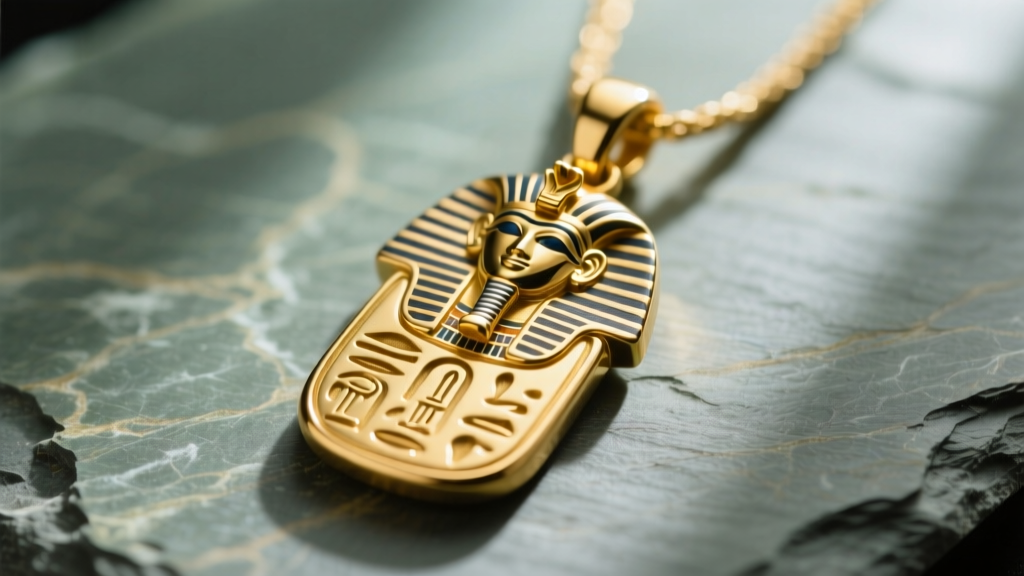
The Anatomy of a True Cartouche: Dimensions and Proportions
The term "cartouche" was coined by Napoleon’s soldiers who thought the oval shape resembled a paper cartridge, but its ancient Egyptian origin is the shen ring—a loop of rope symbolizing infinity and divine protection. When elongated to accommodate royal names, it became the shenu. For collectors and jewelers evaluating Egyptian cartouche jewelry, understanding this anatomical lineage is critical.
A technically accurate cartouche must feature the solar bar (the base line). This line represents the earth and the sun's path. Without it, the piece is merely an oval plaque, not a true cartouche. Furthermore, the aspect ratio of historically accurate pieces typically ranges from 2.5:1 to 3:1. Mass-produced tourist pieces often use a squat 1.5:1 ratio to save on gold weight, which distorts the vertical flow of the hieroglyphic column.
Metallurgical Standards: Gold Karats and Silver Alloys
Authentic Egyptian gold jewelry is rarely 14k or 10k. The domestic market and high-end export artisans predominantly work in 21k (87.5% purity) and 18k (75% purity). 21k gold possesses a distinct, buttery yellow hue due to its high gold-to-alloy ratio, usually mixed with a precise blend of copper and silver to maintain tensile strength for deep engraving. Silver pieces are almost exclusively 925 Sterling, though vintage mid-century pieces may be struck in 800/1000 coin silver.
Identifying the Assay Marks
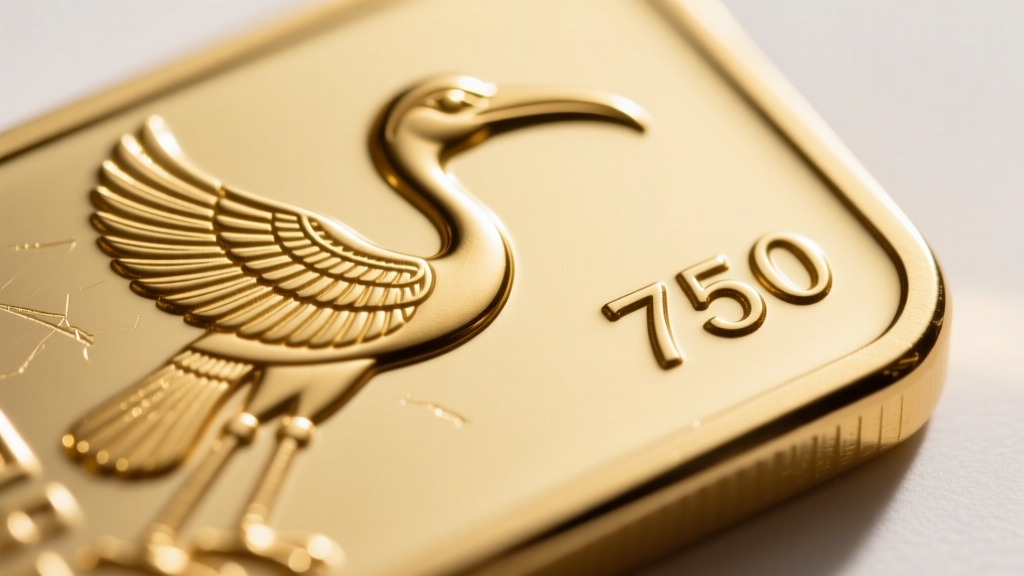
The Egyptian government maintains strict assay offices. Genuine Egyptian cartouche jewelry sourced from Cairo or Luxor will bear specific hallmarks. According to the Metropolitan Museum of Art's archives on regional metalwork, modern Egyptian hallmarks often feature the ibis (for 18k gold) or the camel (for silver), alongside numeric purity stamps like 750 or 925. If a piece claims to be 21k but lacks the corresponding Egyptian assay stamp or a recognized master jeweler's cipher, it is likely an overseas imitation cast in lower-karat alloys.
Hieroglyphic Accuracy: The Translation Trap
The most common failure mode in commercial Egyptian cartouche jewelry is linguistic. Mass manufacturers use a limited matrix of uniliteral (single-consonant) signs to phonetically spell Western names. This results in what Egyptologists call "alphabet soup"—a string of sounds that ignores the complex rules of Middle Egyptian orthography.
Bespoke artisan pieces, however, utilize biliteral signs and proper determinatives. For instance, the name "David" (beloved) should not just be phonetic consonants; it can be translated conceptually using the hieroglyph for "beloved" (the hoe and mouth signs) combined with the divine determinative, depending on the client's preference for phonetic vs. semantic translation. Resources like UCL Digital Egypt provide the Gardiner Sign List, which master jewelers use to verify the grammatical correctness of a custom commission.
The Role of Determinatives
Determinatives are silent glyphs placed at the end of a word to indicate its semantic category (e.g., a seated man for male names, a papyrus scroll for abstract concepts). Tourist pendants almost never include determinatives to save space. A true expert-level cartouche will always feature the appropriate gender or conceptual determinative at the base of the name column, resting just above the solar bar.
| Feature | Mass-Market Tourist Piece | Bespoke Artisan Piece |
|---|---|---|
| Sign Selection | Uniliteral phonetic approximations | Biliteral signs with semantic nuance |
| Determinatives | Omitted entirely | Correct gender/concept determinatives included |
| Orientation | Sometimes reversed or stacked improperly | Strict top-to-bottom, right-to-left reading order |
| Gardiner Compliance | Low; frequent sign mutations | High; strict adherence to standard sign list |
Fabrication Techniques: Hand-Engraved vs. Cast
Evaluating the physical execution of the hieroglyphs separates investment-grade jewelry from souvenir trinkets. There are two primary methods used in Egyptian cartouche jewelry: lost-wax casting and hand-chasing (engraving).
- Lost-Wax Casting: The design is carved into wax or generated via CAD, then cast. The resulting hieroglyphs have soft, U-shaped recesses. Edges are slightly rounded, and under a 10x loupe, you may detect minor porosity or a uniform, machine-like perfection that lacks soul.
- Hand-Chasing / Engraving: A master jeweler uses a graver (burin) to cut the metal directly. The recesses are sharp, V-shaped, and feature crisp, 90-degree interior corners that casting cannot replicate. You will also see microscopic, parallel tool marks on the background plane, proving human execution.
Pricing Tiers and Sourcing Framework
As of 2026, the market for authentic, hand-finished Egyptian cartouche jewelry is stratified by metal weight, karat, and the complexity of the translation. When sourcing directly from master workshops in Khan el-Khalili (Cairo) or reputable international importers, expect the following pricing frameworks:
"A true cartouche is not priced by the gram alone; you are paying for the lapidary and engraving hours. A 15-gram 18k gold pendant with a complex, grammatically correct 5-sign name will cost exponentially more than a hollow-cast 15-gram tourist piece." — Master Jeweler, Cairo Assay Guild.
Market Pricing Guide (USD):
- Entry-Level (Cast 925 Silver, 5-8g): $60 - $120. Phonetically spelled, lacks determinatives, soft cast edges.
- Mid-Tier (Solid 18k Gold, 8-12g): $800 - $1,400. Hand-finished castings, basic uniliteral translations, standard assay marks.
- Investment/Bespoke (21k Gold, 15-25g): $2,500 - $5,000+. Fully hand-engraved, grammatically precise with determinatives, custom proportions, and master-cipher hallmarks.
Care and Patina Management for Antiqued Finishes
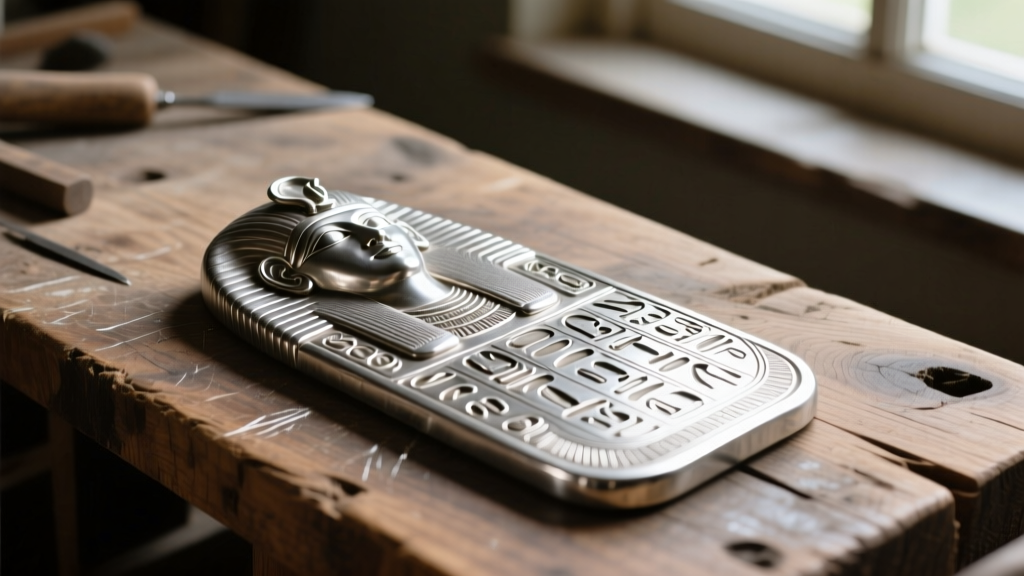
Many high-end artisan cartouches feature an intentional antiqued finish—typically achieved using liver of sulfur or potassium polysulfide—to darken the recessed hieroglyphs and create high contrast against the polished raised surfaces.
To maintain this technical finish, never use ultrasonic cleaners or thiourea-based chemical dips (like commercial silver polish). These will strip the oxidation from the recesses, flattening the visual depth of the carving. Instead, clean the piece using a mild, phosphate-free dish soap, lukewarm water, and a soft horsehair detailing brush. Gently agitate the recesses to remove skin oils and environmental dust, then pat dry with a microfiber cloth, avoiding aggressive rubbing on the darkened background planes.


