Egyptian Jewelry Scarab Materials: Properties & Guide
Discover the material properties of the Egyptian jewelry scarab. Compare lapis, carnelian, turquoise, and faience for durability and authenticity.

The Enduring Allure of the Scarab
The Egyptian jewelry scarab is far more than a decorative motif; it is a profound symbol of rebirth, transformation, and solar cycles, rooted in the behavior of the dung beetle (Scarabaeus sacer). For collectors, historians, and jewelry enthusiasts, understanding the material composition of these amulets is critical. Whether you are evaluating an authentic New Kingdom artifact or a modern artisan reproduction, the physical and chemical properties of the materials dictate the piece's durability, value, and historical accuracy. This comprehensive guide breaks down the mineralogy, metallurgy, and synthetic alternatives used in scarab jewelry, providing you with the technical knowledge needed to curate a resilient and authentic collection.
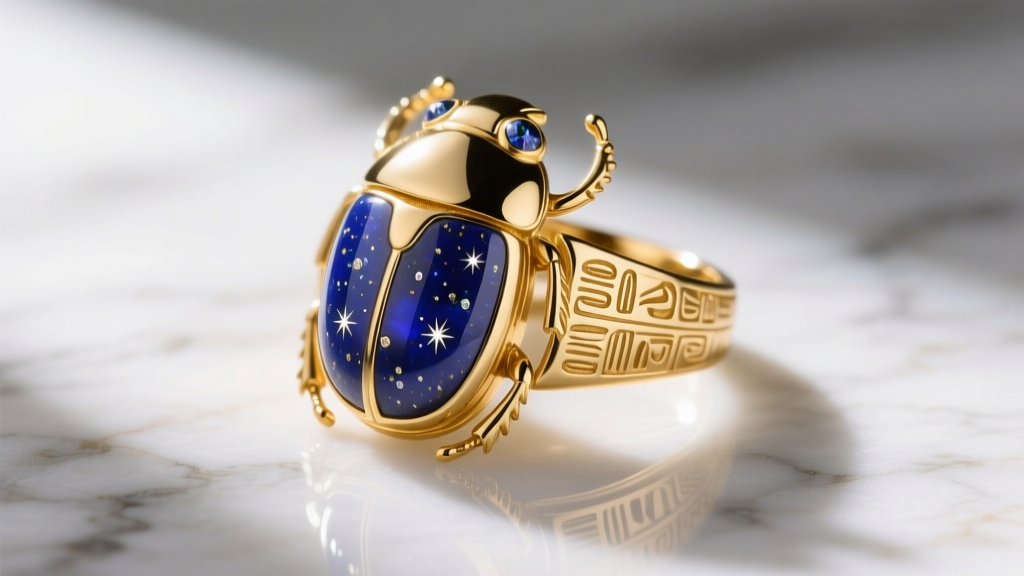
Ancient vs. Modern: The Evolution of Scarab Materials
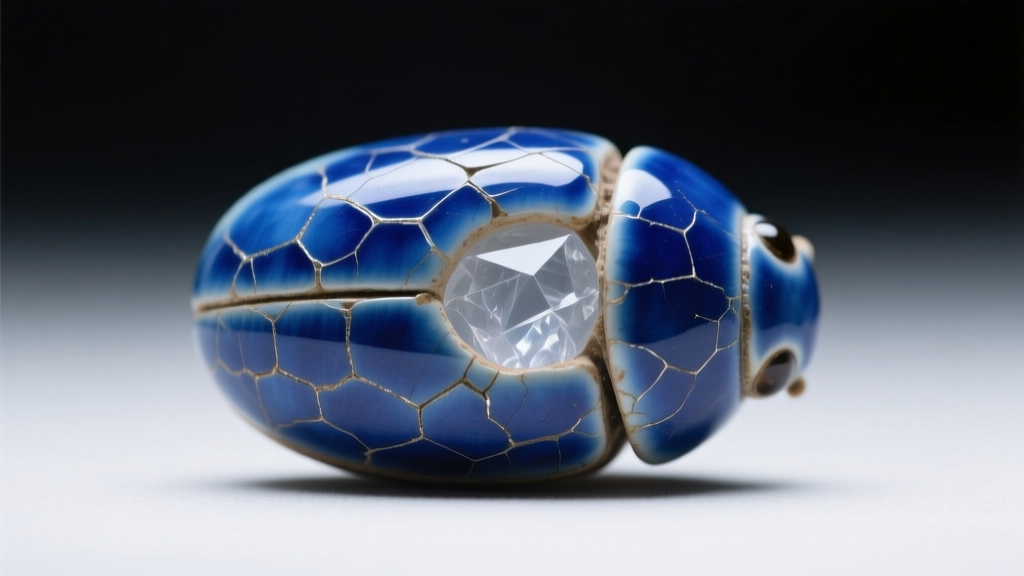
In ancient Egypt, the creation of scarabs was a highly specialized craft. Artisans primarily utilized steatite (soapstone), a soft talc-schist that is easily carved and subsequently hardened through a firing process. According to the Metropolitan Museum of Art, steatite scarabs were often coated in a vibrant blue or green glaze, mimicking the highly prized but difficult-to-carve turquoise and lapis lazuli. This early ceramic-like material, known as Egyptian faience, is a sintered-quartz compound that exhibits a bright, glassy surface.
Modern reproductions and historically inspired pieces have shifted away from traditional faience due to the complexity of the efflorescence glazing method. Today, high-end artisan jewelers favor genuine semi-precious stones, while mass-market manufacturers rely on dyed howlite, cast resin, and molded glass. Understanding the transition from ancient quartz-based ceramics to modern geological and synthetic materials is the first step in assessing any Egyptian jewelry scarab.
Core Gemstone Properties: Lapis, Carnelian, and Turquoise
The holy trinity of ancient Egyptian gemstones—lapis lazuli, carnelian, and turquoise—remains the standard for premium scarab jewelry today. However, their distinct mineralogical properties require specific care and setting techniques.
Lapis Lazuli: The Stone of the Heavens
Lapis lazuli is not a single mineral but a metamorphic rock composed primarily of lazurite, calcite, and pyrite. The deep, celestial blue is caused by sulfur content within the lazurite. When selecting a lapis scarab, look for Grade A Afghan material, which exhibits a uniform, intense royal blue with minimal white calcite veining and evenly distributed pyrite flecks. With a Mohs hardness of 5 to 5.5, lapis is relatively soft and highly porous. It must never be cleaned in an ultrasonic cleaner or exposed to harsh chemicals, as the calcite matrix will dissolve and the stone will lose its polish. According to the Gemological Institute of America (GIA), lower-grade lapis is frequently dyed to improve its color, which can be detected by wiping the stone with a cotton swab dipped in acetone.
Carnelian: The Blood of Isis
Carnelian is a reddish-orange variety of chalcedony (microcrystalline quartz), colored by iron oxide impurities. It boasts a superior Mohs hardness of 6.5 to 7, making it an excellent choice for everyday wear in signet rings or heavy pendants. Historically, carnelian scarabs were carved with intaglio hieroglyphs on the flat base, serving as functional seal rings. Today, buyers must be wary of 'carnelian' that is actually dyed and heat-treated agate. Natural carnelelian exhibits a cloudy, deep translucency when held to the light, whereas dyed agate often shows concentrated color banding along the crystal fractures.
Turquoise: The Protective Talisman
Turquoise is a hydrous phosphate of copper and aluminum, prized for its robin's-egg blue to green hues. It is inherently porous and fragile, with a Mohs hardness ranging from 5 to 6 depending on the mine source. In the modern jewelry market, over 90% of turquoise is 'stabilized' using an epoxy or polymer resin to prevent it from absorbing oils and changing color over time. While purists may seek out untreated, natural Persian or Sleeping Beauty turquoise for their scarab amulets, stabilized turquoise is actually more practical for rings and bracelets, as it resists cracking and chemical degradation from skin acids.
Material Comparison Matrix: Durability & Maintenance
When designing or purchasing an Egyptian jewelry scarab, matching the material to the intended wear scenario is crucial. The table below outlines the physical properties and maintenance requirements of the most common scarab materials.
| Material | Mohs Hardness | Porosity | Typical Treatment | Price Range (USD) | Cleaning Method |
|---|---|---|---|---|---|
| Lapis Lazuli (Grade A) | 5.0 - 5.5 | High | None / Occasional Dye | $50 - $120 / ct | Warm soapy water, soft brush |
| Carnelian (Natural) | 6.5 - 7.0 | Low | Heat Treatment | $15 - $40 / ct | Ultrasonic safe, mild soap |
| Turquoise (Stabilized) | 5.0 - 6.0 | Sealed | Epoxy / Polymer Resin | $10 - $30 / ct | Damp cloth only |
| Egyptian Faience (Modern) | 6.0 - 7.0 | None (Glazed) | None | $80 - $250 / piece | Mild soap, avoid thermal shock |
| Dyed Howlite | 3.5 | Very High | Chemical Dye | $2 - $5 / ct | Dry cloth only |
The Base Metals: Gold, Silver, and Bronze Alloys
The bezel and shank holding the scarab are just as important as the stone itself. Ancient Egyptian metallurgists were masters of alloying, and modern bench jewelers continue to use specific metals to complement the weight and aesthetic of scarab carvings.
Karat Gold and Electrum
For high-end scarab rings, 18k gold (75% pure gold) is the industry standard. It offers a rich, warm hue that perfectly complements the deep blues of lapis and the reds of carnelian, while providing sufficient Vickers hardness (approx. 125 HV) to protect the stone's edges. For a historically accurate touch, some artisan jewelers use Electrum, a natural alloy of gold and silver (typically 70-80% gold), which was heavily utilized in the Old and Middle Kingdoms. Electrum provides a slightly paler, greenish-yellow luster that gives the piece an authentic, antique patina.
Oxidized Sterling Silver and Bronze
Sterling silver (92.5% silver, 7.5% copper) is a popular choice for modern Egyptian revival pieces. To enhance the intricate hieroglyphic carvings on the scarab's elytra (wing cases), jewelers often apply a liver of sulfur oxidation, turning the recessed areas black while polishing the high points. Bronze and brass alloys are also frequently used for budget-friendly or historically inspired pieces, though they require a lacquer coating to prevent the copper content from reacting with skin acids and causing green discoloration.
Identifying Fakes: Faience, Resin, and Dyed Howlite
The market is flooded with counterfeit scarabs marketed as ancient artifacts or premium gemstones. Developing a critical eye for material anomalies is essential for any serious collector. Here are the primary testing methods for identifying common imitations:
- The Hot Pin Test (Resin vs. Faience): Authentic faience is a fired quartz ceramic and will not melt. If a heated needle touches a resin or plastic scarab, it will emit a harsh chemical smell and leave a permanent indentation.
- UV Fluorescence (Dyed Howlite): Howlite dyed to mimic turquoise or lapis lazuli often exhibits a chalky, unnatural fluorescence under long-wave UV light, and the dye will concentrate heavily in the natural gray veining of the stone.
- Thermal Conductivity (Glass vs. Stone): Glass scarabs, often sold as 'obsidian' or 'onyx,' will feel warm to the touch much faster than genuine crystalline quartz or chalcedony, which remain cool due to higher thermal inertia.
- Acetone Wipe (Dyed Lapis/Agate): A cotton swab lightly moistened with acetone or nail polish remover will pick up blue or red dye from treated, low-grade stones, whereas natural lapis and carnelian will remain completely colorfast.
Conclusion: Curating Your Collection
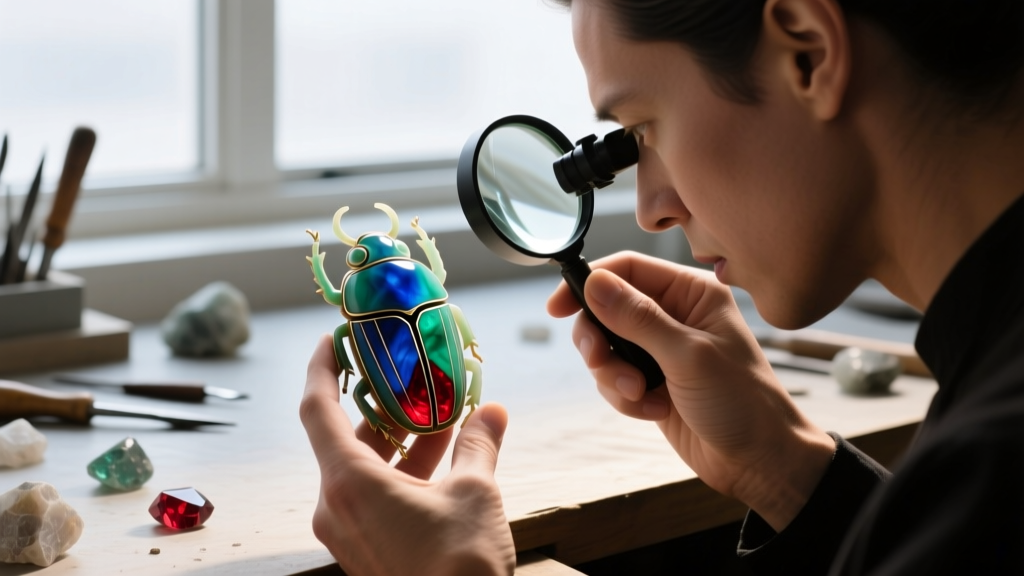
Whether you are drawn to the historical mystique of a glazed faience bead or the luxurious durability of an 18k gold and carnelian signet, the Egyptian jewelry scarab remains a masterclass in symbolic design. By prioritizing material integrity—understanding the Mohs hardness, porosity, and chemical treatments of your chosen stones—you ensure that your jewelry not only honors its ancient origins but also withstands the test of time. Always purchase from reputable dealers who provide full transparency regarding gemstone treatments and metal alloys, allowing you to wear your scarab with both confidence and reverence.
'The scarab is a testament to the ancient Egyptian belief in eternal renewal. When we select materials that endure, we participate in that very legacy of permanence.'


