Guide to Lakota Indian Jewelry Materials & Properties
Explore the material properties of authentic Lakota Indian jewelry. Compare metals, seed beads, quillwork, and pipestone for collectors.

The Material Evolution of Lakota Adornment
Lakota (Teton Sioux) jewelry represents one of the most dynamic material evolution stories in North American indigenous art. For collectors, historians, and enthusiasts navigating the market in 2026, understanding the physical properties and historical context of these materials is essential. Authentic Lakota Indian jewelry is not defined by a single medium, but rather by a masterful adaptation to available resources—transitioning from pre-contact organic elements to post-contact trade metals and glass. To truly appreciate and properly care for these pieces, one must examine the metallurgical, mineralogical, and organic properties that define them.
According to the Smithsonian National Museum of the American Indian, Plains Indian material culture shifted dramatically with the introduction of European trade goods in the 18th and 19th centuries. However, the Lakota did not simply replace traditional materials; they integrated them, creating a complex layered aesthetic that relies on specific material grades, tension techniques, and carving properties.
Organic Foundations: Porcupine Quills vs. Glass Seed Beads
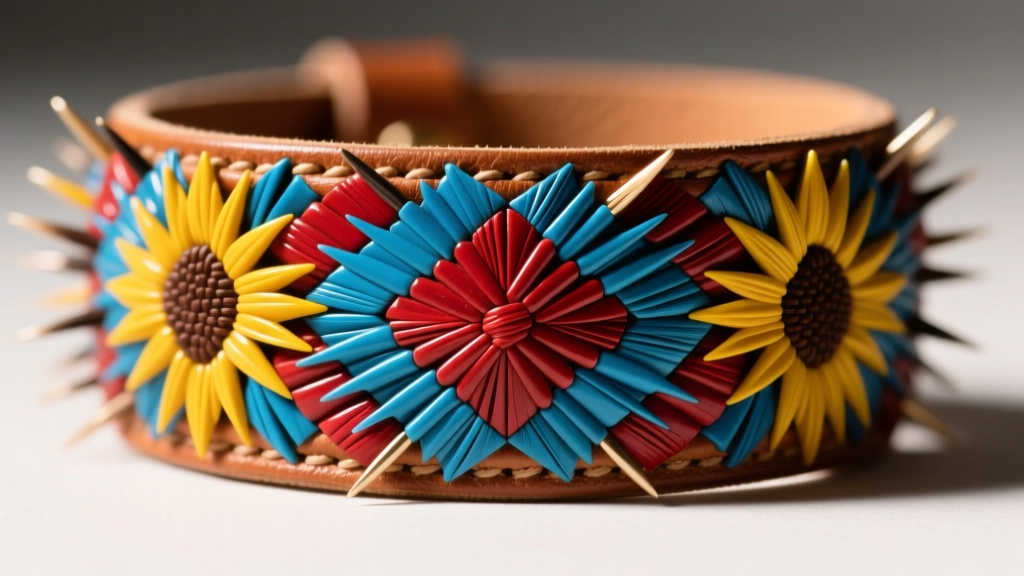
Before the widespread availability of glass trade beads, porcupine quillwork was the primary decorative medium for Lakota adornment. Quillwork remains a highly respected, time-intensive art form today. The quills of the North American porcupine (Erethizon dorsatum) are naturally hollow, waterproof, and possess a rigid keratin exterior. Artisans flatten these quills using bone tools or their teeth, then weave them into tight geometric patterns on brain-tanned deer or elk hide.
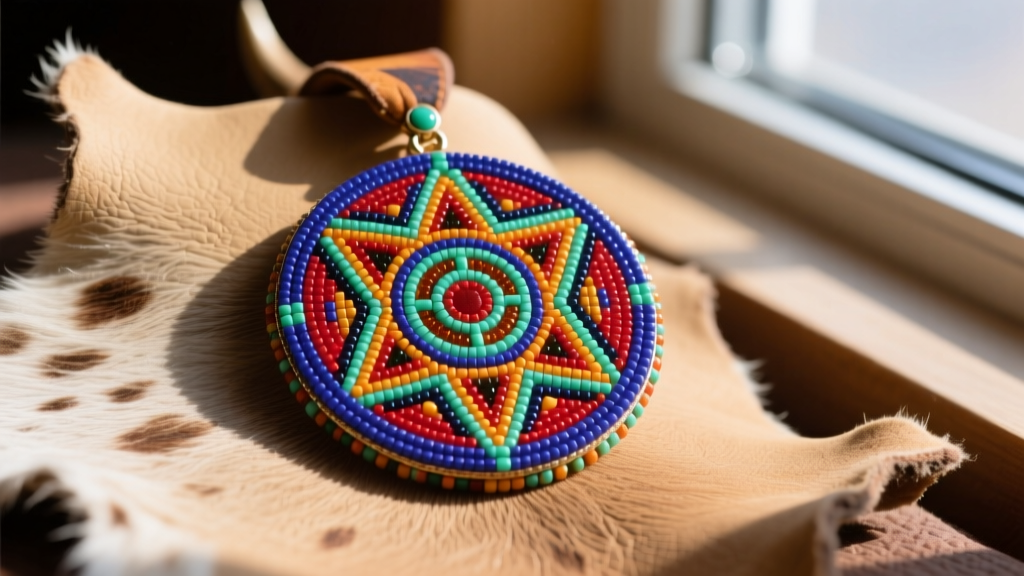
The introduction of glass seed beads in the mid-19th century revolutionized Lakota jewelry. Today, authentic beadwork relies heavily on specific sizes and origins of glass. While Japanese Miyuki beads offer laser-cut uniformity, many traditional Lakota beadworkers prefer Czech glass seed beads (often size 11/0). Czech beads possess a slightly irregular, rounded profile that mimics the organic feel of early trade beads and sits more naturally on hide.
Sizing, Thread Tension, and Backing Materials
The structural integrity of a beaded medallion or cuff depends entirely on thread tension and backing material. Size 11/0 beads (approximately 1.3mm in diameter) are the standard for classic Lakota geometric patterns, while size 13/0 beads are reserved for micro-beading and fine detail work. Historically, artisans used sinew, which swells when wet to lock beads in place. In 2026, most master beadworkers use bonded nylon threads like Nymo (Size D) or gel-spun polyethylene lines like Fireline (6lb test), which offer superior tensile strength and resistance to UV degradation. The backing is almost exclusively brain-tanned or commercially smoked buckskin, chosen for its supple drape and resistance to stiffening when exposed to moisture.
Metallurgy of the Plains: Copper, Brass, and Silver Alloys
Metalwork in Lakota jewelry is often misunderstood by novice collectors who assume all silver-toned pieces are sterling. The historical reality is far more nuanced, involving specific alloys chosen for their work-hardening properties, availability, and polish retention.
German Silver vs. Coin Silver vs. Sterling
German Silver, also known as Nickel Silver, was the dominant metal in Plains Indian jewelry from the 1880s through the 1930s. Despite its name, it contains zero elemental silver. It is an alloy of copper (60%), nickel (20%), and zinc (20%). Lakota metalsmiths favored German silver for stamping conchos, hair pipes, and armbands because it is significantly harder than sterling silver, resists denting, and takes a brilliant, mirror-like polish that mimics precious metals without the prohibitive cost.
Coin silver, conversely, was created by melting down US silver dollars and other circulating currency prior to 1965. With a composition of 90% silver and 10% copper, coin silver is softer than modern sterling (92.5% Ag) and develops a distinct, dark, velvety patina over time. Sterling silver only became the standard for Native American jewelry in the mid-to-late 20th century as commercial sheet metal became widely accessible.
| Metal Alloy | Composition | Mohs Hardness | Tarnish Profile | Typical Use in Lakota Jewelry |
|---|---|---|---|---|
| German Silver | 60% Cu, 20% Ni, 20% Zn | 3.0 - 3.5 | Low (maintains bright polish) | Hair pipes, conchos, armbands |
| Coin Silver | 90% Ag, 10% Cu | 2.5 - 2.7 | High (dark, velvety patina) | Early 20th-century rings, pendants |
| Sterling Silver | 92.5% Ag, 7.5% Cu | 2.5 - 3.0 | Moderate (standard tarnish) | Contemporary settings, bezels |
| Raw Brass | 65% Cu, 35% Zn | 3.0 - 4.0 | High (oxidizes to deep brown) | Trade-era bells, decorative rivets |
Sacred Earth: Pipestone (Catlinite) Properties
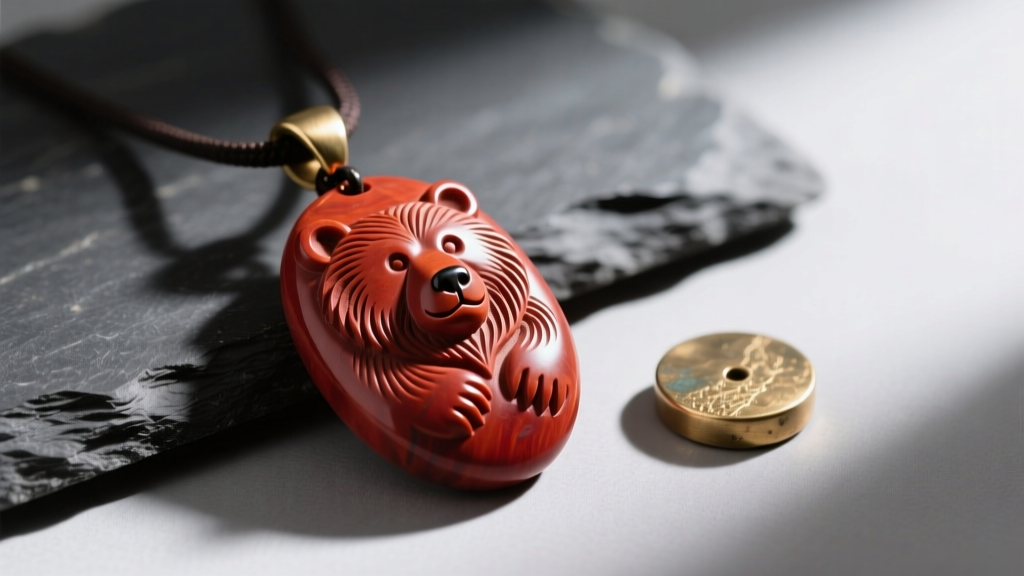
No discussion of Lakota materials is complete without Catlinite, commonly known as pipestone. Sourced primarily from the Pipestone National Monument in Minnesota, this metamorphic mudstone holds profound spiritual significance. From a material science perspective, pipestone is prized for its carving properties. It registers a mere 2.5 on the Mohs hardness scale, making it soft enough to be carved with standard steel tools or even a heavy pocket knife, yet durable enough to hold intricate relief carvings without chipping.
The deep red color of authentic Catlinite is derived from high concentrations of iron oxide (hematite) trapped within the clay matrix during the Precambrian era. When sourcing pipestone jewelry, collectors must be aware of imitations. Dyed resin or low-grade red shale are frequently passed off as Catlinite. Genuine pipestone feels dense, possesses a matte, slightly waxy luster when polished, and will leave a faint red streak when scraped against an unglazed ceramic tile. The National Park Service strictly regulates the quarrying of this stone, ensuring that only enrolled members of federally recognized tribes can extract it, which inherently limits the supply of authentic raw material.
Authentication and the Indian Arts and Crafts Act
As the secondary market for vintage and contemporary Native American jewelry expands, verifying material authenticity is only half the battle; verifying the artisan's heritage is equally critical. Under the Indian Arts and Crafts Act of 1990, it is illegal to market art as 'Indian-made' unless the creator is an enrolled member of a state or federally recognized tribe. When purchasing Lakota Indian jewelry, always request documentation of the artist's tribal affiliation.
True provenance in Lakota jewelry relies on a dual-authentication framework: verifying the geological and metallurgical integrity of the materials, alongside the legal and cultural lineage of the artisan.
For buyers navigating online marketplaces, the Indian Arts and Crafts Board provides resources and directories to help identify legitimate Native American enterprises and report fraudulent claims.
Long-Term Care Framework for Organic and Metal Elements
Caring for Lakota jewelry requires a bifurcated approach, as the materials often react inversely to standard cleaning methods. What benefits the silver may destroy the hide.
- Hide and Beadwork: Never submerge brain-tanned hide in water. The smoking process makes it water-resistant, but prolonged exposure will wash out the natural oils, causing the leather to stiffen and crack. Clean glass beads using a soft, dry microfiber cloth. If grime is stubborn, use a slightly damp cotton swab on the glass only, avoiding the nylon thread and hide.
- German Silver and Brass: These can be polished with a mild, non-abrasive jeweler's cloth. Avoid liquid dips, which can seep into the stamping crevices and cause localized corrosion.
- Pipestone (Catlinite): Due to its low Mohs hardness and porous nature, pipestone should never be cleaned with ultrasonic cleaners or chemical solvents. Wipe gently with a dry, soft brush. Store pipestone pendants separately from harder gemstones like turquoise or quartz to prevent severe surface scratching.
By understanding the precise material properties—from the tensile strength of Nymo thread to the iron oxide matrix of Catlinite—collectors can preserve the physical and cultural integrity of Lakota Indian jewelry for generations to come.


