Caring for Egyptian Revival Jewelry: Expert Cleaning Guide
Discover expert care, cleaning, and maintenance tips for Egyptian revival jewelry. Protect lapis, enamel, and gold pieces with our detailed guide.

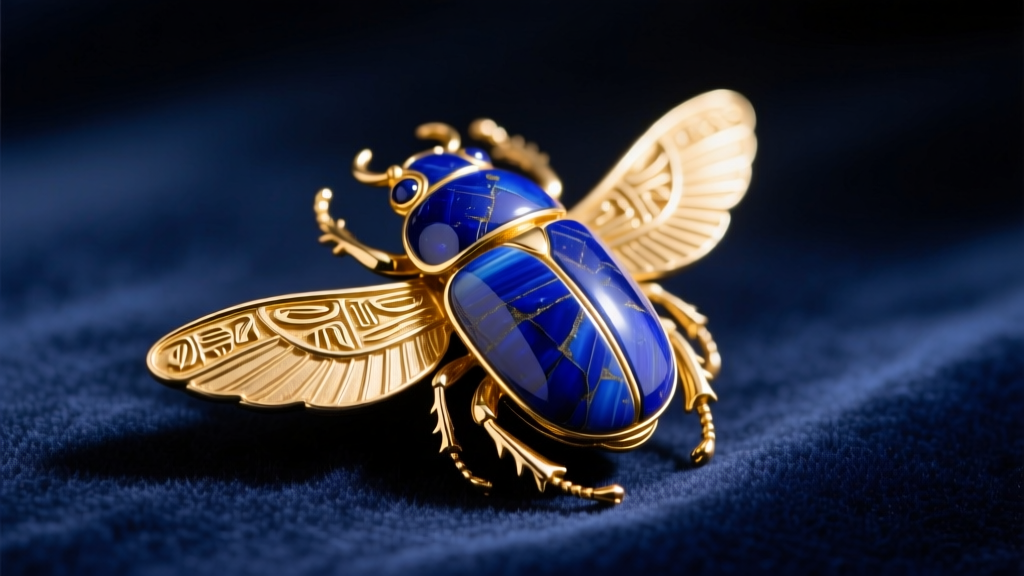
Egyptian revival jewelry represents one of the most fascinating intersections of archaeology, art, and wearable design. Sparked initially by Napoleon’s campaigns, exploding in the 1920s following the discovery of Tutankhamun’s tomb, and experiencing massive resurgences in the 1970s and early 2000s, these pieces are highly sought after by collectors and style enthusiasts alike. However, caring for Egyptian revival jewelry requires a highly specific approach. Unlike modern minimalist jewelry, these pieces often combine porous gemstones, fragile enamel work, and intricate metal alloys that react poorly to standard commercial cleaning methods.
As of 2026, conservation science has advanced significantly, yet the fundamental vulnerabilities of the materials used in these historical and contemporary revival pieces remain unchanged. This comprehensive guide provides actionable, expert-level protocols for cleaning, maintaining, and storing your Egyptian revival treasures without compromising their structural integrity or historical value.
The Material Anatomy of Egyptian Revival Pieces
To clean these pieces safely, you must first understand the materials. Egyptian revival designers—ranging from 1920s powerhouses like Cartier and Boucheron to 1970s artisans and modern independent jewelers—relied heavily on a specific palette of stones and techniques meant to mimic ancient Egyptian artifacts.
Common Gemstones and Their Vulnerabilities
- Lapis Lazuli: A staple in revival pieces, lapis is a rock (not a mineral) composed of lazurite, calcite, and pyrite. With a Mohs hardness of 5-6, it is relatively soft. More importantly, its calcite inclusions make it highly reactive to acids, and its porous nature means it will absorb chemicals, oils, and water, leading to permanent dullness or discoloration.
- Malachite: Prized for its vivid green banding, malachite is a copper carbonate hydroxide. It is exceptionally soft (Mohs 3.5-4) and highly sensitive to ammonia, acids, and even prolonged exposure to plain water, which can strip its natural polish and cause the copper to oxidize.
- Turquoise: Often used in American-made 1920s revival pieces, turquoise is a porous copper-aluminum phosphate. It is notorious for absorbing skin oils and cosmetics, which can alter its color from bright blue to a muddy green over time.
- Carnelian and Onyx: These are varieties of chalcedony (Mohs 7). They are much more durable, non-porous, and generally safe for traditional mild soap-and-water cleaning methods.
The Enamel Factor
Many high-end Egyptian revival pieces feature guilloché or cloisonné enamel to replicate the vibrant colors of ancient faience. Enamel is essentially glass fused to metal. While hard, it is brittle and highly susceptible to thermal shock (cracking from sudden temperature changes) and micro-fractures from ultrasonic vibrations.
Step-by-Step Cleaning Protocols by Material
Never use a one-size-fits-all approach. Commercial jewelry dips, ultrasonic cleaners, and steamers are strictly prohibited for the majority of Egyptian revival jewelry. Below are the conservation-approved protocols for specific material combinations.
Protocol A: Porous Stones (Lapis Lazuli, Turquoise, Malachite)
According to the Gemological Institute of America (GIA), ultrasonic and steam cleaning are absolute hazards for lapis and turquoise. For malachite, the GIA strongly advises against even mild acids.
- Dry Dusting: Use a clean, soft-bristled makeup brush (like a goat-hair blending brush) to gently sweep away dust and grit from crevices and bezel settings. Grit can act as sandpaper against soft stones.
- Damp Wiping: Lightly mist a microfiber cloth with distilled water (never tap water, which contains chlorine and minerals). Wring it out until it is barely damp.
- Surface Cleaning: Gently wipe the surface of the stone. Do not scrub. Avoid the metal settings as much as possible to prevent water from getting trapped under the bezel.
- Immediate Drying: Immediately dry the piece with a separate, bone-dry microfiber cloth. Allow it to air dry in a low-humidity room for an hour before storing.
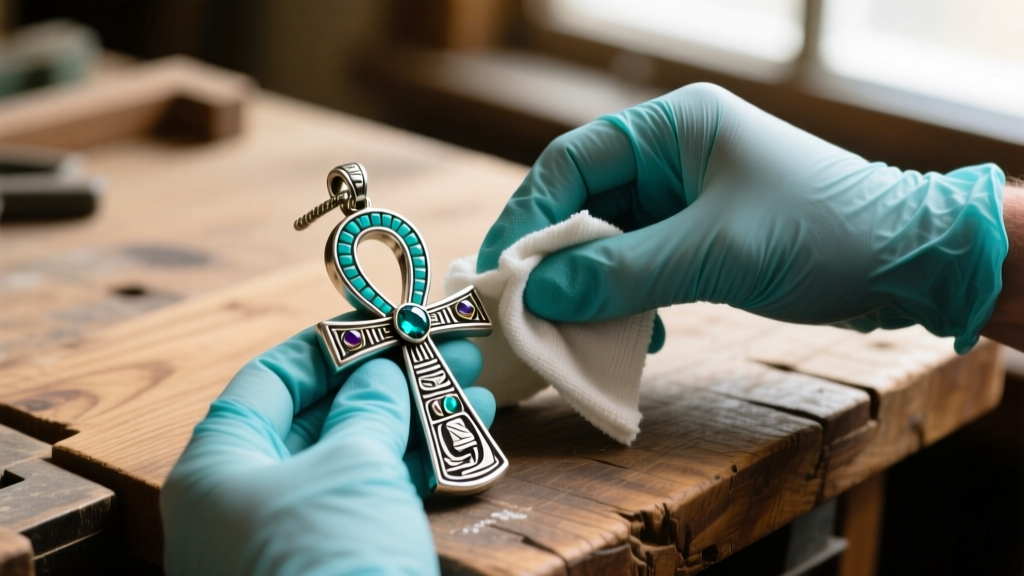
Protocol B: Enamel and Guilloché Work
Enamel requires gentle handling to prevent chipping and thermal shock.
- Temperature Control: Ensure the piece is at room temperature. Never run cold enamel under warm water, as the differing expansion rates of the glass enamel and the metal substrate will cause immediate spider-web cracking.
- Mild Solution: Mix a drop of pH-neutral dish soap (like Dawn) into a bowl of room-temperature distilled water.
- Soft Agitation: Dip an extra-soft baby toothbrush into the solution, shake off excess water, and gently brush the enamel in circular motions.
- Rinsing: Rinse briefly under a slow trickle of room-temperature distilled water.
- Drying: Pat dry with a lint-free cloth and use a can of compressed air (held upright) to blow water out of the intricate metal filigree surrounding the enamel.
Protocol C: Solid Gold and Silver Metalwork (Without Porous Stones)
If your piece is purely metal (e.g., a solid 14k gold scarab ring or a sterling silver Isis pendant) and contains no porous stones or enamel, you have more flexibility.
- Gold: Soak in warm water with a few drops of mild dish soap for 10 minutes. Brush gently with a soft toothbrush, rinse, and dry. For high-karat gold (22k or 24k, sometimes used in modern artisan revivals), avoid any abrasive polishing cloths, as the metal is soft and will scratch easily.
- Silver: Use a dedicated silver polishing cloth impregnated with anti-tarnish compounds. Never use liquid silver dips on oxidized or antiqued silver, as these dips will strip the intentional dark patina from the crevices that gives Egyptian revival pieces their three-dimensional, archaeological aesthetic.
Troubleshooting Common Damage Scenarios
Accidents happen. Here is how to handle specific emergencies common to these materials.
Emergency: Malachite exposed to perfume or acidic skin sweat.
Malachite will quickly lose its polish and develop dull, white, or yellowish etched spots when exposed to acids. If this occurs, do not attempt to polish it yourself. Polishing malachite requires specialized lapidary equipment and toxic dust precautions. Take it to a professional lapidary for a professional re-polish and wax sealing.
Emergency: Turquoise absorbing skin oils and turning green.
While some collectors appreciate the 'patina' of aged turquoise, if you wish to stabilize it, a jeweler can apply a modern, breathable opticon resin sealant. Do not bake the stone or use harsh chemical degreasers, which will destroy the stone's internal matrix.
Storage and Environmental Threats
Proper storage is 90% of jewelry maintenance. Egyptian revival pieces often feature mixed materials that require specific environmental controls. Storing a lapis lazuli and silver piece in a standard jewelry box can result in the silver tarnishing and releasing sulfur gases that degrade the stone's polish over time.
Environmental Threat Matrix
| Environmental Threat | Affected Material | Damage Mechanism | Prevention Strategy |
|---|---|---|---|
| High Humidity (>60%) | Silver, Copper alloys, Malachite | Accelerates oxidation and tarnishing; promotes copper bloom on malachite. | Store with silica gel desiccant packets in an airtight container. |
| Sulfur Gases / Urban Pollution | Sterling Silver | Causes rapid black tarnishing of silver settings and chains. | Use Pacific Silvercloth pouches or 3M anti-tarnish strips in storage drawers. |
| Direct UV Sunlight | Turquoise, Dyed Howlite, Enamel | Fades dyed materials; prolonged heat can dry out turquoise, causing crazing. | Store in opaque, lined boxes; avoid displaying in sunlit windows. |
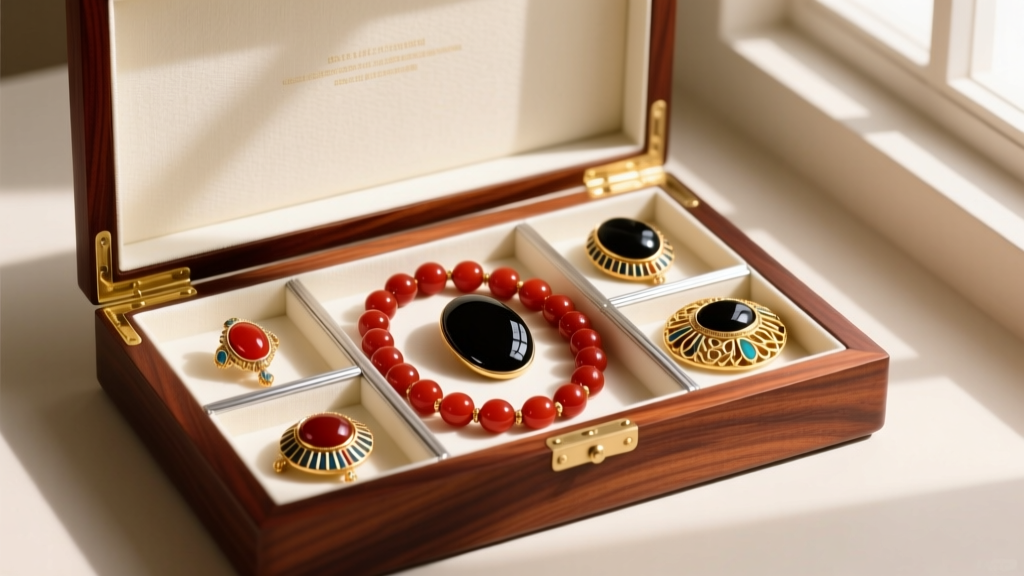
| Physical Abrasion | Lapis, Malachite, Gold | Harder stones (carnelian/onyx) will scratch softer stones and metal bezels. | Store each piece individually in soft flannel pouches or compartmentalized boxes. |
Professional Maintenance Schedules
Even with meticulous home care, Egyptian revival jewelry requires professional attention to maintain its structural integrity. The intricate bezel settings and delicate filigree work common in these designs are prone to loosening over time.
Annual Jeweler Inspection
Take your pieces to a certified gemologist or master jeweler once a year. They should perform the following:
- Bezel Tightening: Scarab and cabochon stones are typically held in bezel settings. Over time, the metal rim can lift slightly. A jeweler will use a bezel pusher to snug the metal back against the stone without scratching it.
- Prong Checking: If your piece features claw prongs (common in 1970s revival pieces holding faceted carnelian or citrine), ensure the prong tips are not worn thin.
- Microscopic Cleaning: A professional can safely clean the underside of the settings (the gallery) where skin cells and lotions accumulate, using specialized tools that won't damage the stone's culet or the metalwork.
Re-Stringing Beaded Necklaces
Many Egyptian revival necklaces feature alternating beads of lapis, carnelian, and turquoise. If these are strung on silk thread, they must be re-strung every 2 to 3 years if worn frequently, as silk degrades from skin acidity and stretches under the weight of the stones. Upgrade to modern bonded nylon threads (like Griffin Power) for superior longevity, or insist on knotted silk with gold or silver spacer beads to prevent the porous stones from grinding against one another.
Final Thoughts on Preservation
Caring for Egyptian revival jewelry is an exercise in material science and historical preservation. By understanding the distinct chemical and physical properties of lapis lazuli, malachite, turquoise, and enamel, you can avoid the catastrophic damage caused by generic commercial cleaners. As of 2026, the best approach remains a conservative one: when in doubt, use less water, less pressure, and consult a professional conservator. Treat these pieces not just as accessories, but as wearable artifacts that deserve meticulous, informed stewardship.
For further reading on specific gemstone care, consult the GIA's comprehensive guide on turquoise maintenance to ensure your revival pieces remain as vibrant as the day they were crafted.


