Restoring & Authenticating Ancient African Jewelry: A Guide
Learn how to authenticate, clean, and restore ancient African jewelry. Expert troubleshooting for bone, bronze, and trade bead degradation.

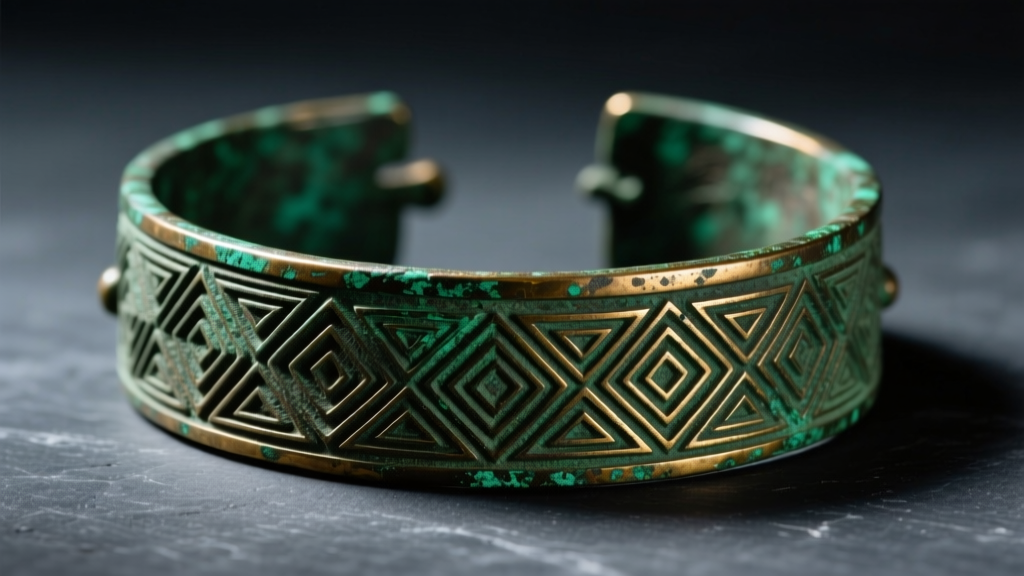
The market for ancient African jewelry has seen a massive surge in collector interest, driving up the value of authentic Saharan copper alloys, West African trade beads, and carved organic artifacts. However, this heightened demand has also flooded the market with sophisticated counterfeits and poorly preserved pieces suffering from severe environmental degradation. As a collector or conservator, navigating the complexities of authentication and material stabilization requires a deep understanding of regional metallurgy, organic decay mechanisms, and historical manufacturing techniques.
This comprehensive troubleshooting guide addresses the most critical failure modes encountered in ancient African adornments, providing actionable, expert-level solutions for authentication, chemical stabilization, and structural repair.
The Authentication Challenge: Fakes vs. Genuine Artifacts
Authenticating ancient African jewelry requires moving beyond superficial visual inspections. Modern forgers frequently use aged resins, artificially patinated brass, and chemically treated bone to mimic centuries of burial and wear. Troubleshooting authenticity demands a multi-sensory and sometimes chemical approach.
Identifying Authentic Cowrie Shell and Bone Carvings
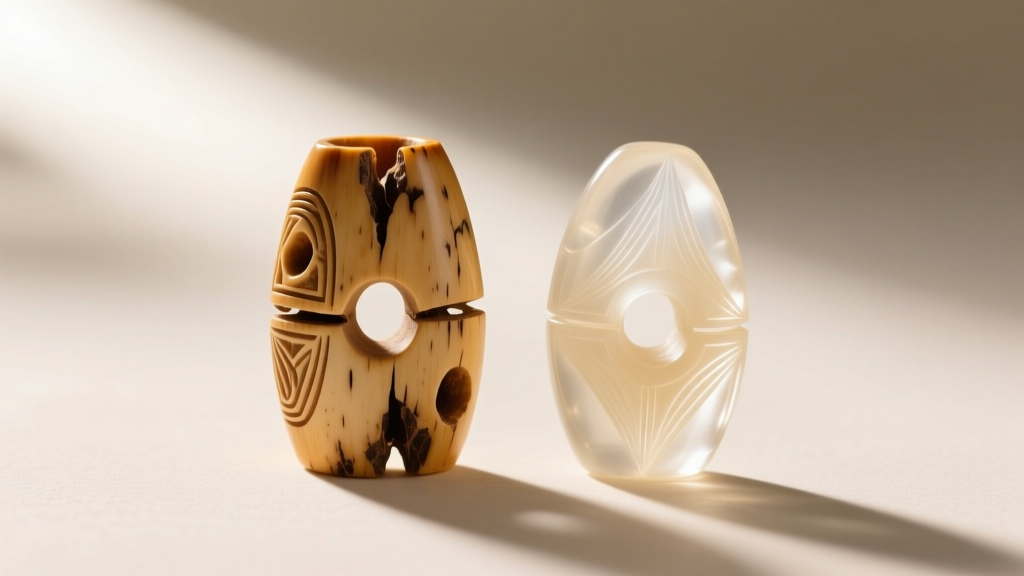
Carved bone, ivory, and cowrie shells were foundational to early African adornment, particularly in Nilotic and West African cultures. To distinguish genuine ancient bone from modern synthetic replicas or heavily bleached modern bone, utilize ultraviolet (UV) fluorescence testing. Genuine, unsealed ancient bone and ivory will typically fluoresce a bright, chalky white under long-wave UV light (365nm). In contrast, modern epoxy resins and plastics will either absorb the light (appearing dark) or fluoresce in unnatural hues of blue or green.
For a more definitive test on questionable beads, the 'hot pin test' remains a standard, albeit destructive, troubleshooting method. Heat a fine steel needle until it glows red and touch it to an inconspicuous area, such as the interior of a drill hole. Genuine bone will emit the distinct odor of burning hair and leave a black carbon mark, while synthetic polymers will melt, emit a chemical scent, and leave a hard, melted bead of plastic.
The Trade Bead Dilemma: Venice vs. West Africa
West African powder glass beads, particularly those from the Krobo people of Ghana, are highly sought after. However, distinguishing ancient indigenous powder glass from 19th-century European trade beads (like Venetian millefiori or Czech wound beads) requires specific gravity and microscopic analysis. Authentic ancient Krobo powder glass beads are characterized by a matte, porous surface and visible striations from the clay molds used in their creation. Under a 10x jeweler's loupe, you should see trapped micro-bubbles and uneven pigment distribution, whereas mass-produced European glass will exhibit a uniform, glossy finish and perfectly centered cane patterns.
Troubleshooting Material Degradation
Once authenticity is established, the immediate priority for any collector is halting active degradation. Ancient African jewelry was frequently crafted from reactive metals and porous organics that are highly susceptible to environmental fluctuations.
Curing 'Bronze Disease' in West African Copper Alloys
Artifacts from the Benin Empire, Mauritanian copper mines, and various Saharan trade routes often feature copper, bronze, and brass. The most catastrophic failure mode for these pieces is 'bronze disease'—a cyclical, destructive chemical reaction where cuprous chloride interacts with atmospheric moisture to form hydrochloric acid and basic copper chloride. This manifests as powdery, bright green or pale blue spots on the metal's surface that actively flake away.
Troubleshooting Protocol:
- Isolation: Immediately quarantine the affected piece in a low-humidity environment (below 15% RH) to halt the reaction.
- Mechanical Removal: Using a wooden or plastic scalpel (never steel, which can cause galvanic corrosion), gently scrape away the powdery green pustules under magnification.
- Chemical Stabilization: Submerge the artifact in a 3% solution of Benzotriazole (BTA) dissolved in ethanol for 24 hours. BTA acts as a corrosion inhibitor, forming a stable, polymeric complex with the copper ions. According to guidelines from the Getty Conservation Institute, BTA treatment is the gold standard for stabilizing active bronze disease in archaeological metals.
- Sealing: Once fully dried, coat the piece with a microcrystalline wax (such as Renaissance Wax) to create a moisture barrier.
Stabilizing Desiccated Bone and Ivory
Ancient organic materials often suffer from severe desiccation, leading to micro-cracking, warping, and structural delamination. Water-based cleaners or high-humidity environments will cause rapid expansion and catastrophic shattering. To consolidate friable or cracking bone, conservators rely on Paraloid B-72, an ethyl methacrylate copolymer. Dissolve Paraloid B-72 pellets in pure acetone to create a 5% to 10% consolidation solution. Apply the solution via capillary action using a fine syringe directly into the cracks. As the acetone evaporates, the acrylic resin forms a stable, reversible internal scaffold that prevents further fragmentation without altering the artifact's visual patina.
Cleaning Protocols for Porous Organic Materials
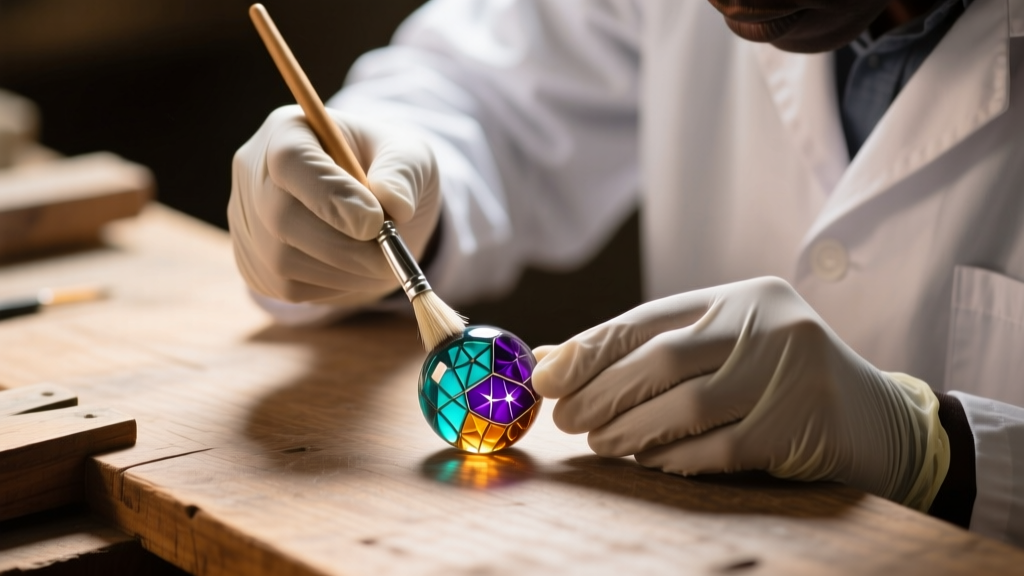
Cleaning ancient African jewelry requires a highly conservative approach. The goal is to remove damaging surface accretions (like burial salts or mold) without stripping the historical patina or compromising the structural integrity of the material. Below is a troubleshooting matrix for common materials.
| Material | Recommended Cleaning Agent | Risk Level | Dwell Time / Technique |
|---|---|---|---|
| Carved Bone / Ivory | Mineral Spirits / Soft Brush | Low | Light mechanical agitation; no soaking. |
| Cowrie Shell | Distilled Water + 1% Non-ionic Surfactant | Medium | Maximum 2 minutes; rinse and dry immediately. |
| Powder Glass (Krobo) | Ethanol / Cotton Swab | Low | Spot clean only; avoid prolonged contact. |
| Wrought Iron / Copper | Mechanical Scalpel / Micro-abrasive | High | Under 10x magnification; avoid patina removal. |
For pieces recovered from high-salinity burial environments, such as coastal West African sites, desalination is critical. The Smithsonian National Museum of African Art emphasizes that residual chlorides in porous ceramics and organics will eventually crystallize and fracture the piece from the inside out. Submerge the artifact in successive baths of distilled water, testing the bathwater with silver nitrate until no white precipitate (silver chloride) forms, indicating all soluble salts have been extracted.
Structural Repair: Re-stringing and Wire Weaving
Ancient African necklaces and waist beads were originally strung on organic cordage—such as twisted animal sinew, bark fibers, or palm leaf strips—which inevitably rots away over centuries. A common mistake made by amateur collectors is re-stringing heavy brass manillas, stone beads, and ancient bronze amulets on standard nylon or silk threads. These materials lack the tensile strength and abrasion resistance required, leading to sudden catastrophic failure and loss of artifacts.
Choosing the Right Cordage for Heavy Artifacts
When troubleshooting structural integrity for heavy, multi-component ancient African jewelry, modern synthetic cordage offers the best balance of historical discretion and mechanical reliability. Spectra or Dyneema ultra-high-molecular-weight polyethylene (UHMWPE) cords are the industry standard for heavy ethnographic jewelry. A 1.5mm Dyneema cord boasts a breaking strength exceeding 200 lbs, yet it remains flexible and can be dyed to mimic the earthy tones of original sinew or leather.
For pieces requiring rigid structural support, such as heavy copper anklets or iron bracelets that have warped out of shape over centuries, cold-working the metal is strictly prohibited. Ancient smelting techniques often resulted in high-slag, brittle metals that will snap if bent at room temperature. Instead, use custom-fabricated, clear acrylic armatures to support the jewelry in its current, warped state, preserving its historical geometry without risking structural failure.
'Provenance and material stability are inextricably linked. When we stabilize a piece of ancient Saharan bronze, we are not just arresting a chemical reaction; we are preserving the physical evidence of early trans-Saharan trade networks.' — Conservation Notes, Ethnographic Materials Division.
Final Considerations for the Modern Collector
Troubleshooting and preserving ancient African jewelry is an exercise in restraint and scientific rigor. Whether you are neutralizing active bronze disease on a 15th-century manilla, consolidating a fractured Nilotic bone pendant, or authenticating a strand of rare Krobo powder glass beads, the interventions you choose must be reversible and well-documented. By adhering to these conservation-grade protocols, collectors and curators can ensure that these profound cultural artifacts survive for future generations to study and admire.


