The Ultimate Care Guide for Indian Traditional Jewelry
Discover expert cleaning, storage, and maintenance tips for Indian traditional jewelry, including Kundan, Polki, Meenakari, and Temple pieces.

The Unique Vulnerabilities of Indian Heritage Pieces
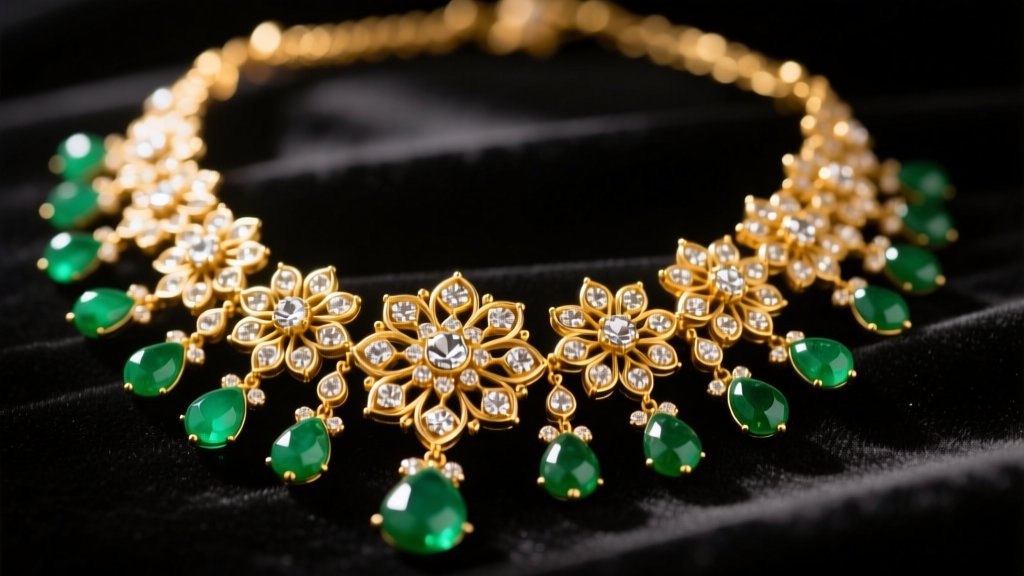
Indian traditional jewelry represents a pinnacle of artisanal metallurgy and gem-setting, but its intricate construction makes it highly susceptible to damage from standard commercial cleaning methods. Unlike modern cast jewelry, heritage Indian pieces—such as Kundan, Polki, Meenakari, and South Indian Temple jewelry—rely on organic adhesives, delicate gold foils, and fused glass enamels. According to conservation guidelines from the Victoria and Albert Museum, treating these composite artifacts like standard solid gold or diamond jewelry will result in irreversible structural failure, stone loss, and enamel stripping.
To preserve the investment and historical integrity of your collection, you must abandon ultrasonic cleaners, steamers, and harsh chemical dips. Instead, adopt a material-specific conservation approach tailored to the unique failure modes of Indian craftsmanship.
Material-Specific Cleaning Protocols
The first rule of maintaining Indian traditional jewelry is identifying the specific technique used in its creation. Each method dictates a vastly different cleaning protocol.
Polki and Kundan: The Water Warning
Kundan setting involves securing uncut diamonds (Polki) or glass using a highly refined 24-karat gold foil (varak) and a natural tree resin known as lac (or lakh). The foil is burnished around the stone to hold it in place, while the lac provides a supportive backing.
- The Failure Mode: Water exposure is catastrophic for Kundan. Moisture softens the lac resin and oxidizes the silver or gold foil backing. This causes the uncut diamonds to turn cloudy, gray, or black, and eventually dislodge from their settings.
- The Protocol: Never submerge Kundan or Polki jewelry in water. Avoid steam and ultrasonic cleaners entirely, as the high-frequency cavitation will shatter the brittle gold foil. To clean, use a dry, ultra-soft makeup brush or a clean, dry baby toothbrush to gently sweep dust from the crevices. Wipe the metal framework with a dry, lint-free microfiber cloth.
Meenakari Enamel: Avoiding Chemical Stripping
Meenakari is the art of fusing vibrant colored glass powder into engraved metal recesses, often found on the reverse side of Kundan pieces or as standalone bangles and jhumkas.
- The Failure Mode: Enamel is essentially glass. Sudden temperature changes can cause micro-fractures, while ammonia-based cleaners and commercial silver dips will strip the glossy finish and cloud the colors. Ultrasonic vibrations can cause antique enamel to chip away from the metal backing.
- The Protocol: Clean Meenakari only with a slightly damp microfiber cloth. If grime builds up in the metal recesses surrounding the enamel, use a wooden toothpick (never metal) to gently dislodge the debris. For deeper cleaning, consult a professional conservator.
Temple Jewelry and Kemp Stones
Originating from South India, Temple jewelry is typically crafted from 22-karat gold (91.6% purity) and adorned with uncut rubies and emeralds, or red and green glass Kemp stones set with tree resin.
- The Failure Mode: While 22k gold is highly resistant to tarnish, the copper and silver alloys used to strengthen it can oxidize in the deep, intricate crevices of Temple designs. Furthermore, prolonged soaking will dissolve the resin holding the Kemp stones.
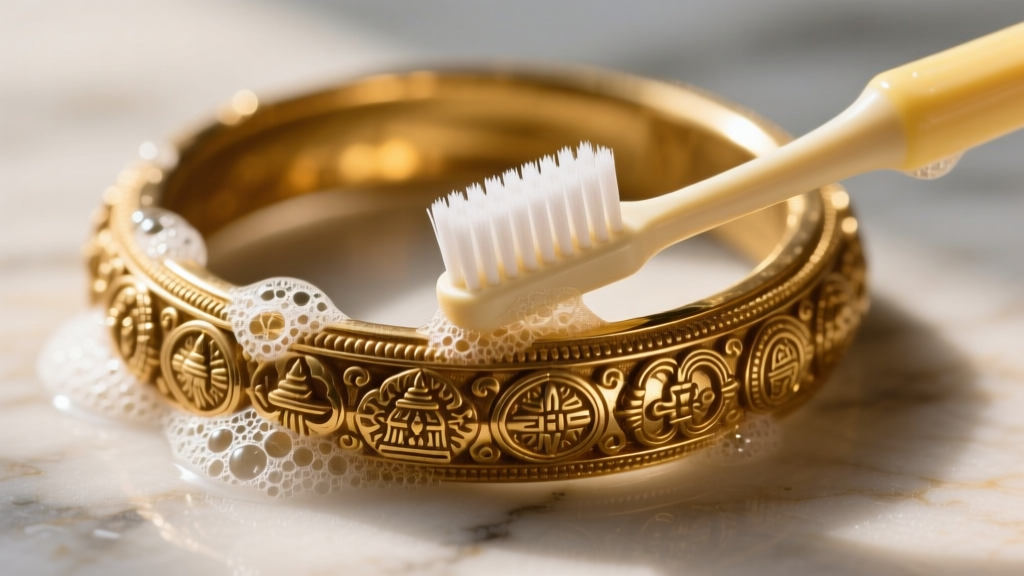
- The Protocol: Create a mild solution of distilled water and a few drops of phosphate-free dish detergent. Dip a soft-bristled baby toothbrush into the solution, shake off excess water, and gently brush the gold crevices. Avoid scrubbing the stones directly. Rinse quickly under a gentle stream of distilled water and immediately pat dry with a microfiber cloth. Use a hair dryer on the 'cool' setting to ensure no moisture remains trapped behind the stones.
Oxidized Silver: Preserving the Patina
Oxidized silver is heavily featured in Indian tribal and bohemian designs, where the metal is intentionally treated with sulfur to create a dark, antique patina that highlights the intricate repoussé work.
- The Failure Mode: Over-polishing with standard silver cloths or using baking soda pastes will strip the intentional oxidation, leaving the piece looking flat, overly bright, and ruined.
- The Protocol: Do not use silver polish or abrasive pastes. Simply wipe the piece with a soft, dry cotton cloth to remove skin oils and sweat. If the piece becomes sticky or heavily soiled, wash it quickly in cool water with a mild, non-citrus soap, and dry immediately.
Step-by-Step Wet Cleaning Method (For Solid 22k Gold)
For solid 22-karat gold Indian jewelry without delicate foil settings or enamel (such as plain gold bangles, chains, or mangalsutras), a gentle wet cleaning is safe and effective. The Gemological Institute of America (GIA) recommends mild, non-abrasive approaches for high-purity gold and diamond jewelry to prevent scratching the relatively soft metal.
- Prepare the Solution: Mix one cup of lukewarm distilled water with three drops of mild, phosphate-free dish soap in a glass bowl. Avoid tap water, as chlorine and hard minerals can leave microscopic deposits.
- Soak Briefly: Submerge the solid gold piece for no more than 3 to 5 minutes. This loosens sebum, lotions, and environmental grime.
- Agitate Gently: Use a dedicated, ultra-soft jewelry brush or a clean baby toothbrush to lightly sweep the back of the settings and the links of the chain.
- Rinse and Dry: Rinse under lukewarm distilled water. Place the jewelry on a clean paper towel and use a cool-air blower to dry hard-to-reach areas. Finish by buffing the gold with a clean, untreated microfiber cloth.
Storage Framework: Preventing Tarnish and Foil Degradation
Improper storage is the leading cause of degradation in Indian traditional jewelry. High humidity accelerates the tarnishing of alloyed metals and degrades organic adhesives. Furthermore, storing pieces in standard cotton-lined boxes introduces sulfur, which reacts with silver and copper alloys to form silver sulfide (tarnish).
| Storage Material | Verdict | Reasoning & Best Practice |
|---|---|---|
| Cotton Wool / Flannel | Avoid | Contains sulfur and acidic compounds that accelerate tarnishing and can scratch soft 22k gold and enamel. |
| Acid-Free Tissue Paper | Excellent | Chemically inert. Wrap each piece individually to prevent diamonds from scratching adjacent gold or enamel. |
| Polyethylene Zip Bags | Excellent | Creates a micro-environment. Squeeze out excess air before sealing to limit oxygen and humidity exposure. |
| Anti-Tarnish Strips | Highly Recommended | Use 3M or similar activated carbon strips inside zip bags to absorb airborne sulfides and moisture. |
| Silica Gel Packets | Use with Caution | Good for moisture control, but direct contact can over-dry and crack organic lac resin in Kundan settings. |
The Ideal Storage Environment
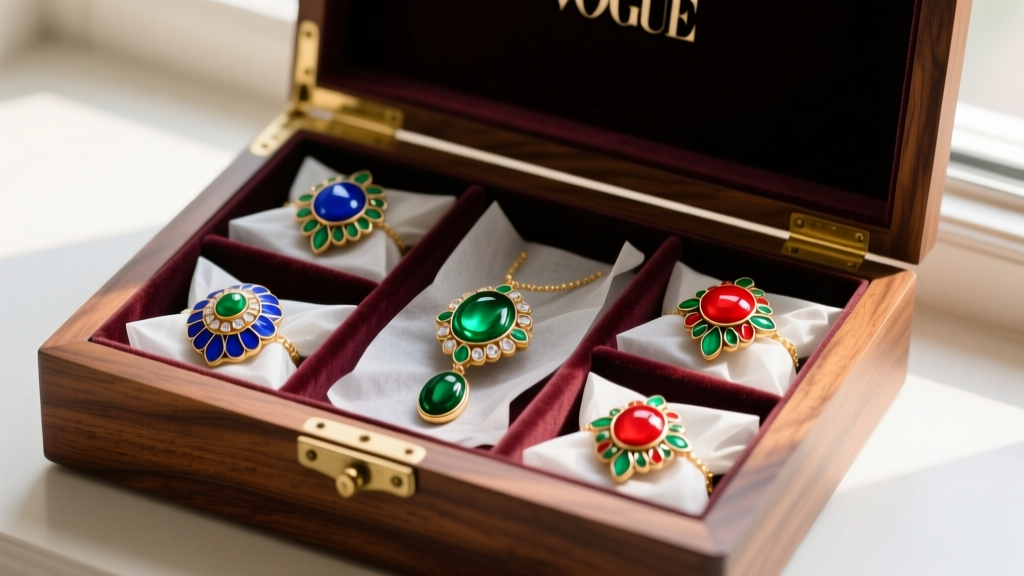
Store your wrapped and bagged Indian jewelry in a climate-controlled interior room. Avoid bathrooms or basements where humidity fluctuates wildly. For heavy bridal sets, lay the necklaces flat in wide, shallow drawers to prevent the weight of the gold from stressing the delicate stringing threads or solder joints. Never hang heavy Kundan or Temple necklaces on hooks, as gravity will warp the soft 22k gold framework over time.
When to Seek Professional Conservation
While routine maintenance can be performed at home, certain issues require the expertise of a master jeweler or a specialized metals conservator. Seek professional help if you notice:
- Stone Rattling: If a Polki diamond or Kemp stone shifts when gently tapped, the lac backing has degraded. A jeweler must carefully remove the stone, clean the oxidized foil, and re-apply fresh lac resin.
- Enamel Flaking: If Meenakari enamel is lifting from the metal recess, stop wearing the piece immediately. A conservator can stabilize the edges using specialized, reversible conservation-grade adhesives.
- Thread Fraying: Traditional Indian necklaces are often strung on silk or cotton threads. If the thread appears fuzzy or frayed near the clasp, have the piece professionally re-strung before the gold and gems are lost.
By understanding the specific material science behind Indian traditional jewelry, you can ensure these breathtaking cultural artifacts remain vibrant and structurally sound for generations to come.


