Ancient Greek Jewelry Stone Trends: A 2026 Style Analysis
Explore the 2026 revival of the ancient Greek jewelry stone. Discover styling trends, material grades, and intaglio techniques for modern wear.

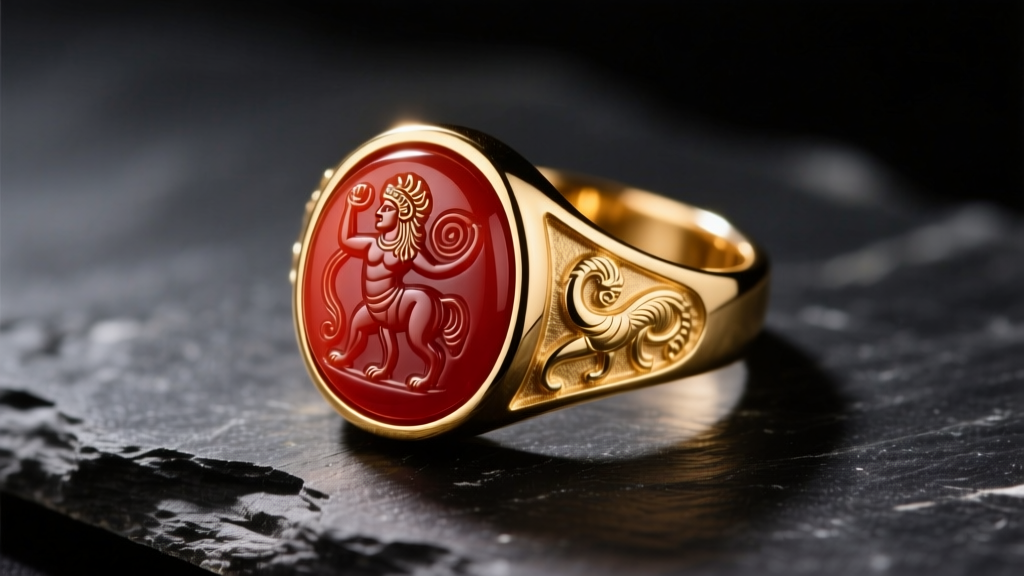
The landscape of fine jewelry in 2026 has pivoted sharply from ultra-minimalism to what historians and trend forecasters are calling "Archaeological Maximalism." At the heart of this movement is the ancient Greek jewelry stone—a category of gems and carving techniques that defined the Hellenistic period. Modern collectors and designers are no longer satisfied with mass-produced, laser-etched baubles. Instead, they are seeking out historically accurate cabochons, hand-carved intaglios, and raw inlays that echo the craftsmanship of 300 BCE. This style analysis breaks down the specific stones driving this revival, the material grades you should demand, and how to integrate these ancient artifacts into a contemporary wardrobe.
The Hellenistic Revival: Why Historical Stones Are Dominating 2026
The current fascination with antiquity is deeply rooted in a desire for permanence and narrative. According to The Metropolitan Museum of Art's archives on Greek and Roman jewelry, Hellenistic goldsmiths were masters of integrating vibrant stones into intricate gold granulation and repoussé work. Today’s revival focuses heavily on the tactile nature of these pieces. Consumers want jewelry that feels unearthed, possessing a weight and texture that modern, high-polish manufacturing often strips away. The ancient Greek jewelry stone is prized not for its diamond-like brilliance, but for its depth, opacity, and the way it interacts with yellow and rose gold alloys.
Decoding the Core Stones of Antiquity
To understand the trend, we must look at the specific materials that ancient artisans favored. The Greeks did not have access to the faceted diamonds or bright sapphires of later eras; instead, they relied on stones that could be carved, polished into smooth domes (cabochons), or crushed for inlay.
Carnelian and the Art of Intaglio
Carnelian, a reddish-orange variety of chalcedony (Mohs hardness 6.5-7), was the undisputed king of the ancient signet ring. The stone’s translucency and lack of internal cleavage made it the perfect canvas for intaglio—the technique of carving an image into the stone so it could be pressed into hot wax to leave a raised relief seal. In 2026, bespoke jewelers are reviving hand-carved carnelian intaglios, moving away from flat, laser-engraved alternatives. A genuine, hand-carved carnelian intaglio from a master lapidary typically costs between $600 and $2,500, depending on the complexity of the mythological motif.
Lapis Lazuli and Chalcedony Inlays
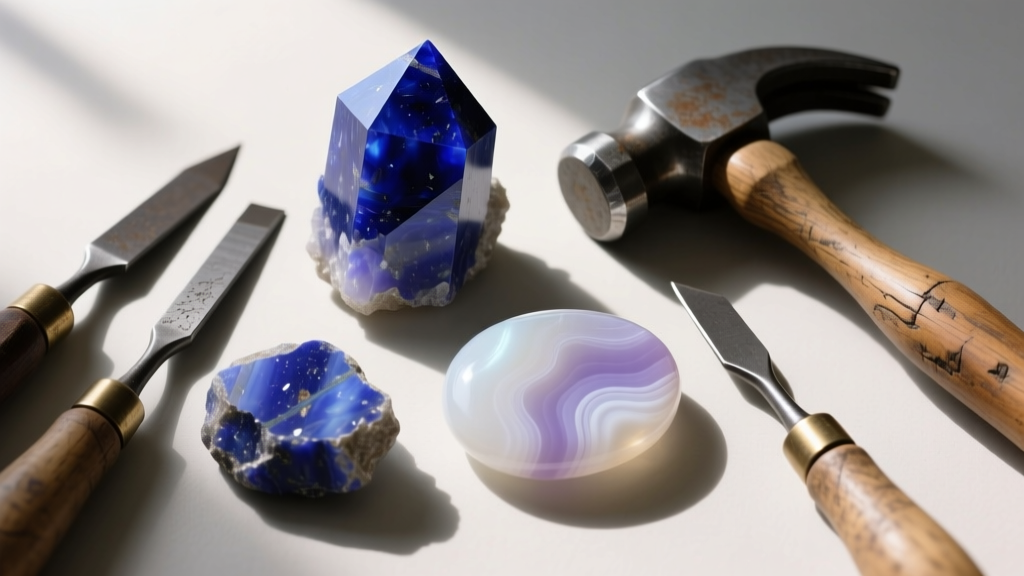
While the Greeks are often associated with marble, their jewelry was incredibly colorful. Lapis lazuli (Mohs 5-6), imported via ancient trade routes from modern-day Afghanistan, was highly prized for its deep, celestial blue. Unlike modern jewelers who often use uniform, dyed howlite as a substitute, the 2026 trend demands genuine, untreated Afghan lapis with visible, natural pyrite flecks. Chalcedony, particularly the softer blue and lavender varieties, was frequently used in bezel settings for earrings and pendants, providing a matte contrast to high-karat gold.
Almandine Garnet: The Cloisonné Effect
When you picture the deep, blood-red accents in Hellenistic gold crowns and diadems, you are looking at almandine garnet (Mohs 7-7.5). Ancient artisans would slice these stones into incredibly thin, flat cabochons and set them into tiny gold cells—a precursor to cloisonné enamel. Modern interpretations of this technique use precision-cut garnet slices (often 1.5mm to 2mm thick) set over patterned gold foil to amplify the stone's internal fire, a technique that requires exceptional bench-jeweler expertise.
Material Grades & Authenticity: What to Look For
When shopping for pieces inspired by or genuinely reflecting this era, understanding the intersection of stone quality and metal alloy is critical. The gold used in antiquity was often 22k or 24k, which is too soft for daily modern wear. The 2026 standard for high-end historical revival jewelry is 18k gold (75% pure) alloyed with a higher copper-to-silver ratio. This creates a warm, rose-gold-adjacent hue that accurately mimics the patina of ancient electrum and unalloyed gold.
| Stone Type | Historical Cut & Use | 2026 Modern Interpretation | Estimated Price Range (Loose Stone) |
|---|---|---|---|
| Carnelian | Deep intaglio carving for wax seals | Hand-carved mythological intaglios in heavy signets | $600 - $2,500 |
| Lapis Lazuli | Smooth cabochons and crushed inlay | Untreated Afghan cabochons with natural pyrite | $150 - $400 per carat |
| Almandine Garnet | Thin slices set in gold cloisonné cells | Precision-cut 1.5mm slices over patterned gold foil | $50 - $120 per carat |
| Amethyst | Large, polished cabochons for pendants | Deep Siberian color cabochons in bezel settings | $70 - $200 per carat |
Styling the Antiquity: Integrating Historical Pieces Today
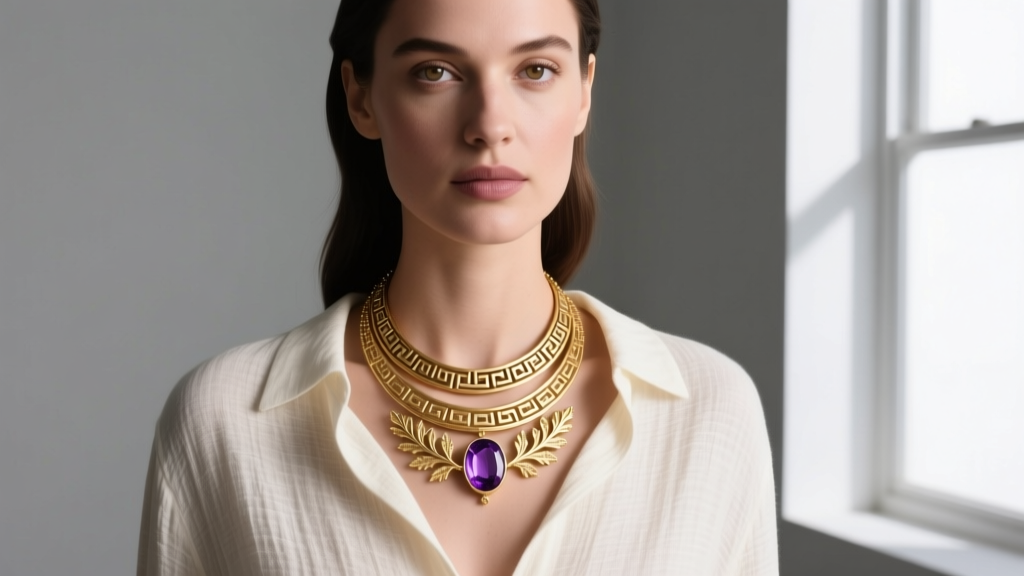
The key to wearing the ancient Greek jewelry stone in 2026 without looking like you are wearing a museum replica is contrast. The current styling framework relies on juxtaposing the heavy, textured, and opaque nature of these stones with modern, fluid silhouettes.
- The Statement Signet: Pair a heavy, 22-gram 18k gold signet ring featuring a carnelian intaglio with a sharply tailored, modern blazer. The organic, slightly asymmetrical edges of the ancient-style goldwork will soften the rigid lines of contemporary menswear or womenswear suiting.
- Layered Chalcedony: Instead of a single, massive pendant, opt for a layered necklace stack featuring three to four small (6mm-8mm) blue chalcedony cabochons set in matte-finished gold. This mimics the ancient practice of wearing multiple amulets while maintaining a sleek, modern profile.
- Textural Mixing: Combine the high-polish gold granulation typical of Hellenistic designs with raw, uncut lapis lazuli. This bridges the gap between archaeological artifact and avant-garde contemporary art.
Sourcing, Care, and Preservation
Owning jewelry that utilizes historical techniques and softer stones requires a departure from modern, careless maintenance habits. According to conservation guidelines outlined by institutions like The British Museum, ancient and historically-inspired pieces demand specific care protocols.
First, never place lapis lazuli, chalcedony, or garnet intaglios in an ultrasonic cleaner. The high-frequency vibrations can easily fracture stones with internal inclusions or cause the stone to pop out of the delicate, historically accurate bezel settings. Second, avoid steam cleaning. The sudden thermal shock can cause the natural pyrite inclusions in lapis lazuli to expand and crack the surrounding stone. Instead, use a soft, lint-free microfiber cloth and a mild, pH-neutral soap solution with lukewarm water, gently brushing the stone with a baby-hair brush to remove oils from the carved crevices of an intaglio.
Conclusion
The resurgence of the ancient Greek jewelry stone is more than a fleeting aesthetic trend; it is a return to narrative-driven, tactile luxury. By understanding the specific material grades, the historical context of the intaglio and cabochon cuts, and the proper care required for these softer, opaque gems, collectors can invest in pieces that feel both profoundly ancient and strikingly relevant. As we move through 2026, the most sophisticated jewelry boxes will be those that look less like a modern boutique display, and more like a beautifully curated archaeological dig.


